



 sales@resultfirst.com
 +1-888-512-1890
Product Variant SEO: Avoiding Cannibalization in Large Stores

Large ecommerce stores are built to offer choice. As catalogs expand, products branch into colors, sizes, materials, configurations, bundles, and regional versions. From a merchandising perspective, this is a strength. From a search perspective, it is often the root of silent performance decay.
Many large stores experience inconsistent rankings, unstable indexation, and declining visibility without obvious technical errors. Individual product pages may rank temporarily, yet authority fails to consolidate. Over time, search engines struggle to determine which version of a product represents the primary answer to a query.
This problem is rarely caused by poor optimization. It is caused by unclear relationships between product variants. Product Variant SEO exists to address this challenge by ensuring that variants support product authority instead of fragmenting it, especially in modern search environments where clarity and interpretability matter more than sheer page volume.
At this scale, brands require SEO services for ecommerce stores that address product variant complexity at the structural level, ensuring authority is consolidated, primary products are clearly defined, and search visibility remains stable as catalogs grow.
How Search Engines Actually Interpret Product Variants
Search engines do not inherently understand merchandising logic. They do not know which product versions are central and which are optional unless that relationship is made explicit through structure and signals.
When multiple URLs share similar titles, descriptions, internal links, and intent signals, search engines are forced to interpret them as separate competitors. Each page attempts to answer the same query with minimal differentiation. This creates ambiguity.
In AI-driven search systems, ambiguity is penalized. When search engines cannot confidently identify a primary reference for a product, they often hedge by rotating rankings or excluding all variants from synthesized answers. Product Variant SEO is about reducing that ambiguity so search systems can assign authority with confidence.
Read More: How AI Search Is Transforming Ecommerce Product Discovery
Why Variant Cannibalization Is a Structural Issue, Not a Content Issue
Variant cannibalization is often misdiagnosed as duplicate content. In reality, the problem is structural.
Large stores typically rely on automated systems that:
- Generate unique URLs for every variant
- Apply similar metadata across variants
- Allow variants to inherit category-level intent
- Replicate internal linking patterns at scale
These systems are designed for operational efficiency, not semantic clarity. Over time, they produce hundreds or thousands of pages competing for the same search intent.
Product Variant SEO addresses this by redefining how variants are positioned within the site’s information architecture, not by rewriting descriptions or chasing keyword tweaks.
The Mismatch Between Search Intent and Variant Proliferation
Most product searches express product-level intent, not variant-level intent.
Users typically search for the product first, then refine their choice once they arrive. When every variant is optimized as if it deserves standalone discovery, search intent is misaligned with site structure.
This mismatch causes:
- Authority dilution across variants
- Internal competition for the same queries
- Confusing signals for search engines
- Unstable rankings across similar URLs
Product Variant SEO realigns variant visibility with actual intent depth. Discovery belongs to the primary product. Variants belong to selection and conversion.
Why AI-Driven Search Makes Variant Clarity Non-Negotiable
AI-driven search systems are designed to answer questions, not list inventory.
When users ask evaluative queries such as “best,” “features,” or “comparison,” AI systems look for a clear, authoritative explanation. They are cautious about referencing multiple near-identical pages because it increases the risk of inconsistency.
If a store presents ten versions of the same product without a clear hierarchy, AI systems struggle to model that product as a single entity. The result is exclusion from AI-generated answers, even when individual variant pages rank traditionally.
Product Variant SEO helps consolidate product understanding so AI systems can confidently reference a single, authoritative source while still supporting variant choice downstream.
How Authority Breaks When Variants Compete
Authority in search is cumulative. It strengthens when signals converge and weakens when they disperse.
When variants compete:
- Internal links distribute equity across many URLs
- Backlinks point to different versions inconsistently
- User engagement signals fragment
- Crawl resources are spent redundantly
Instead of building one strong product authority node, the site creates many weak ones. Over time, this leads to volatility and sensitivity to algorithm changes.
Product Variant SEO restores authority by defining a clear center of gravity for each product and ensuring variants reinforce that core rather than competing with it.
Variant Management as an Information Architecture Problem
Effective Product Variant SEO begins with information architecture, not templates.
Key considerations include:
- Which URL represents the product concept
- How variants are expressed in relation to that concept
- Which differences matter to search intent
- Which differences are purely transactional
Variants should be structured as expressions of a product, not separate interpretations of it. This distinction is critical for search engines and AI systems attempting to model product meaning at scale.
Where Large Stores Commonly Lose Control of Variants
Variant issues often originate from business decisions rather than SEO oversight.
Common failure points include:
- Merchandising systems that auto-index every SKU
- Global templates that override intent signals
- Faceted navigation creating indexable duplicates
- Regional variants competing for the same queries
- Lack of governance over product URL creation
These issues rarely cause immediate ranking loss. Instead, they quietly erode clarity until performance becomes unpredictable.
Product Variant SEO introduces governance into this chaos by defining how variants are allowed to exist within the search ecosystem.
Why Consolidation Is Not the Same as Suppression
A common misconception is that fixing variant cannibalization requires hiding or removing pages. This is rarely the case.
Product Variant SEO does not eliminate variants. It repositions them.
Variants remain accessible to users for selection and conversion. What changes is how they signal intent to search engines. By clarifying hierarchy and relationships, variants stop competing at the discovery level while continuing to serve transactional needs.
This balance preserves user experience while restoring search clarity.
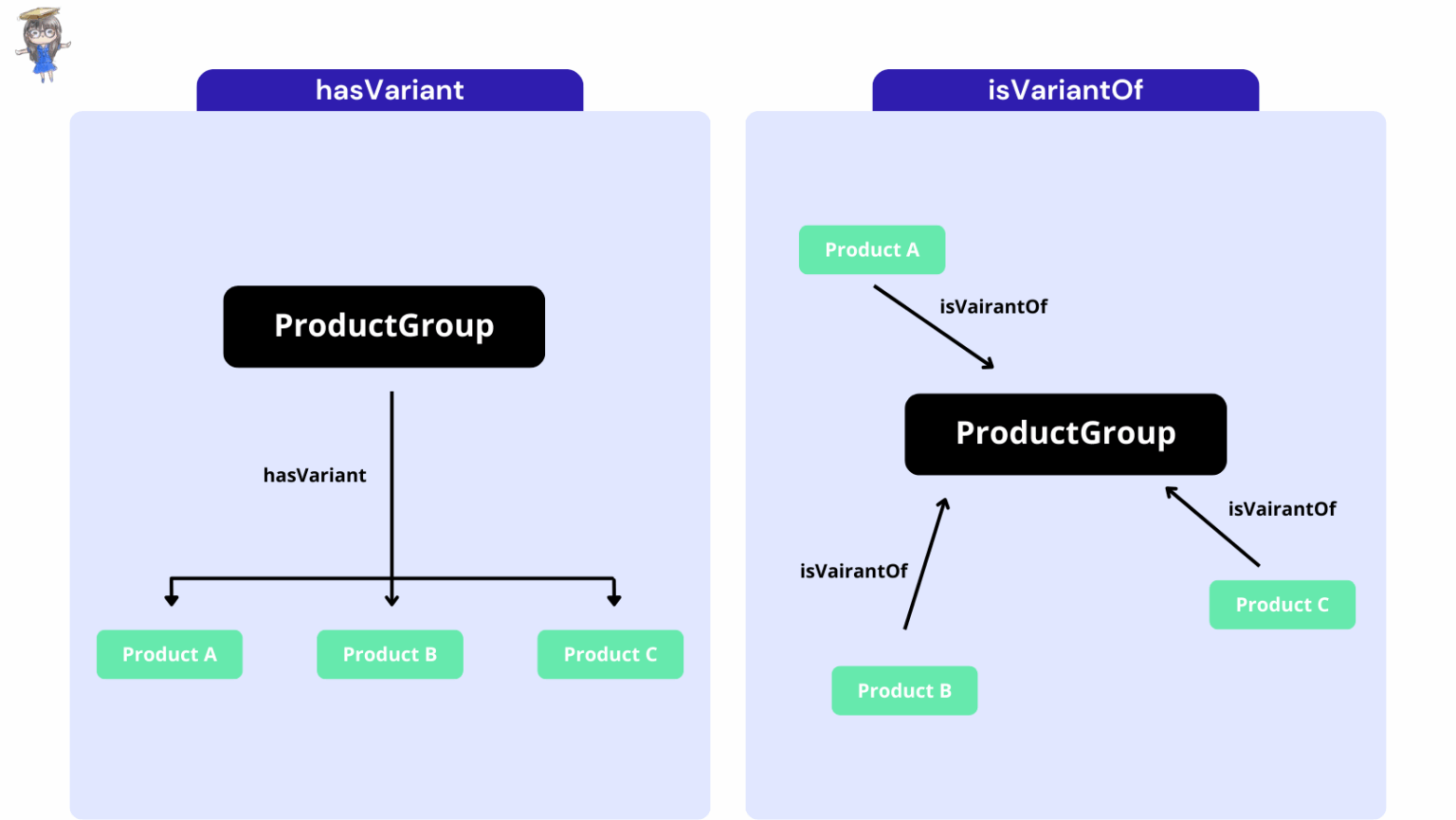
Source: Aubrey Yung
How Variant Strategy Impacts Crawl Behavior
Search engines allocate crawl resources based on perceived importance.
When variants are treated as equal, crawl budget is wasted revisiting near-identical pages. High-value products may not be crawled as frequently or deeply as needed.
Product Variant SEO improves crawl efficiency by:
- Concentrating importance on primary product URLs
- Reducing redundant crawl paths
- Clarifying which pages deserve prioritization
This is especially important for large stores where crawl inefficiencies scale exponentially.
Product Variant SEO as a Scalability Requirement
For small catalogs, variant confusion is manageable. For large stores, it becomes a growth ceiling.
As product lines expand:
- Manual corrections stop working
- Variant logic becomes inconsistent
- AI visibility declines
- Authority dilution accelerates
Product Variant SEO provides a framework that allows catalogs to grow without sacrificing interpretability. It ensures that adding products increases visibility rather than diluting it.
Conclusion
Product Variant SEO is essential because large stores cannot rely on automation alone to preserve search clarity. As catalogs expand, unchecked variants fragment authority, confuse interpretation, and weaken visibility across both traditional and AI-driven search experiences. Avoiding cannibalization requires intentional structure that reflects how users search and how search engines assign relevance, which is increasingly addressed through specialized ecommerce SEO services designed for scale and complexity.
As a performance-driven Ecommerce SEO Company, ResultFirst approaches Product Variant SEO as an architectural discipline rather than a reactive cleanup task. Variant strategy is treated as part of product design, not page optimization. ResultFirst helps large ecommerce stores create variant frameworks that consolidate authority, stabilize rankings, and improve AI search eligibility so product visibility scales alongside catalog growth.
FAQ’s:
WHAT TO READ NEXT
READY TO BUILD PREDICTABLE ORGANIC GROWTH?
We are the only TOP SEO services agency providing Real Results in a Real Performance model. We help growth hungry companies outperform their competition and achieve 300%+ growth in their digital marketing initiatives.
- San Jose, CA, 95120

- +1-888-512-1890

- sales@resultfirst.com

300K+
KEYWORDS RANKED
546M+
REVENUE GENERATED
18 Years
SOLVING COMPLEX SEO
150+
TEAM MEMBERS