



 sales@resultfirst.com
 +1-888-512-1890
Law Firm SEO Audit Checklist: What Every Legal Website Needs to Fix

A legal website should do more than look good. It should bring in the right clients at the right time. Many firms spend on ads or post on social media, yet still miss steady search traffic.
The reason is often simple. The site has hidden issues that block rankings and hurt leads. An audit helps you find those issues so you can fix them in a clear order. Plus, it helps you avoid wasting time on tactics that do not prove effective.
Studies show that 89% of marketers consider SEO critical to business growth. For law firms, that means visibility is not optional. It is foundational. A structured law firm SEO audit helps you identify what blocks performance and what needs immediate attention.
This article is a practical checklist you can use step by step. It covers technical fixes, content gaps, local search, and trust signals. If you run a law firm SEO audit on a schedule, you can spot problems early and keep growth steady.
Set Clear Goals And Tracking First
Before you change anything, you should know what success looks like. Start by listing your main practice areas and the cities you serve. Then map each goal to a metric. For instance, calls from organic search, form fills, chat leads, and booked consultations.
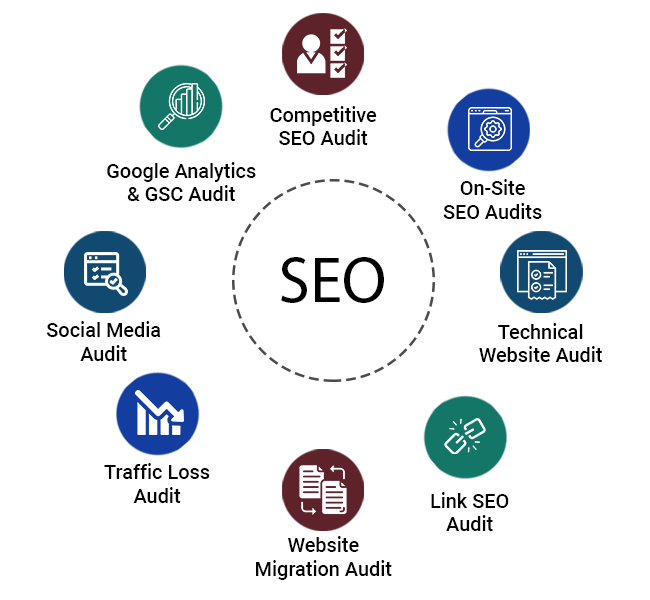
Image Source: Webomaze
Next, set up clean tracking. Make sure analytics and search tools are installed and working. Check that you can see organic traffic, landing pages, and conversions. In addition, confirm that phone tracking does not break page speed or user experience. If your firm uses a CRM, connect it so you can see which pages lead to signed matters.
Also, review your baseline data. Note current rankings for your top terms. Note the traffic by the practice page. Note local visibility in the map results. Here is the point. If you do not measure the starting point, you cannot prove the impact of fixes.
Check Indexing And Crawl Health
Search engines must be able to find and understand your pages. Start by checking how many pages are indexed. Compare that number with the pages you want to rank. If the index count is far higher, you may have thin pages, tag pages, or old URLs still live. If the index count is far lower, you may have blocks that prevent crawling.
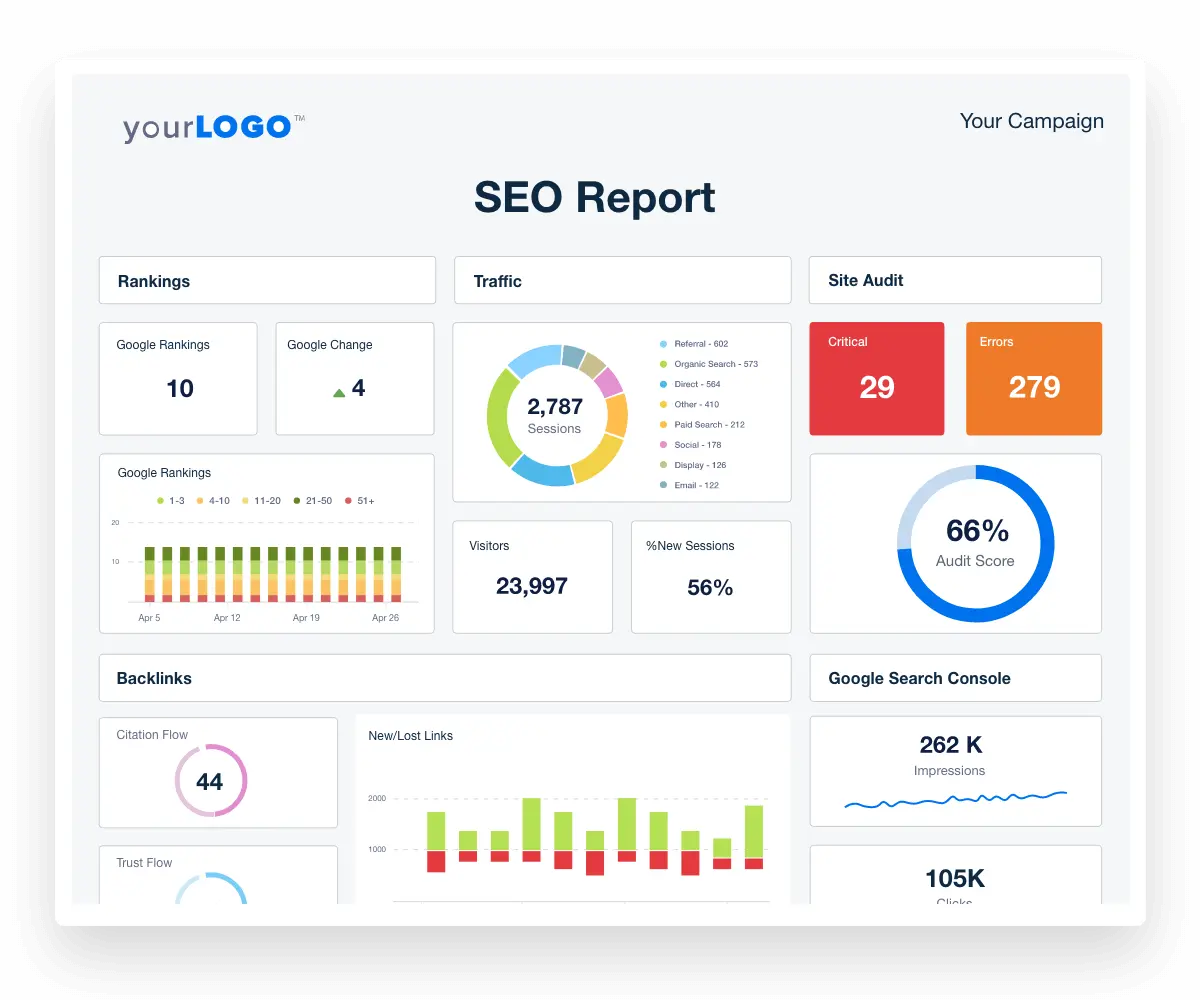
Image Source: Agency Analytics
Review your robots.txt file, and meta robots tags. Make sure key pages are not set to noindex. In addition, check for accidental blocks on images, scripts, or CSS. If those files are blocked, Google may not render pages correctly.
Next, look at the XML sitemap. It should list important pages only. It should update when you add or remove pages. Also, confirm the sitemap is submitted in Search Console.
Then scan for crawl errors. Fix 404 pages that get traffic or links. Redirect retired pages to the closest match. Avoid chains and loops. As a result, link equity flows, and users land on the right content.
Improve Site Speed And Core Web Vitals
Legal websites often use heavy themes and large images. That slows pages and frustrates users. Speed also affects rankings. So test performance on mobile first.
- Compress and resize images so they load fast on every device.
- Use modern formats when possible and lazy load images below the fold.
- Remove unneeded scripts and plugins so the page does less work.
- Delay non-critical scripts such as chat widgets until after the main content loads.
- Use caching and a CDN if it fits your setup and budget.
Core Web Vitals matter too.
- Improve Largest Contentful Paint by speeding up the server and optimizing hero sections.
- Improve Interaction to Next Paint by cutting heavy scripts and simplifying forms.
- Improve Cumulative Layout Shift by setting image sizes and preventing layout jumps.
Meanwhile, keep forms simple and fast. Clients who need help now will not wait for a slow page.
Fix Mobile Usability And Page Layout
Most legal searches happen on phones. In fact, 58% of all Google searches come from phones. Yet many law sites still feel like desktop sites squeezed into a small screen. So review every key page on mobile.
Check font size, tap targets, and spacing. Buttons should be easy to tap. Forms should not be long. In addition, avoid pop-ups that cover content or block navigation.

Image Source: Webomaze
Make the layout predictable. Put your main phone number and consultation button where users can find them. Keep headers clean and menus short. Not only that, keep paragraphs short so pages are easy to scan.
Also, check accessibility basics. Add alt text to images that matter. Use clear headings. Ensure color contrast is strong. As a result, you improve user experience and reduce risk.
Review Site Structure And Internal Links
A strong site structure helps both users and search engines. It also helps practice pages rank for the right intent.
Start with your navigation. It should reflect your main services. Each practice area should have a hub page. Then add supporting pages for specific topics when needed.
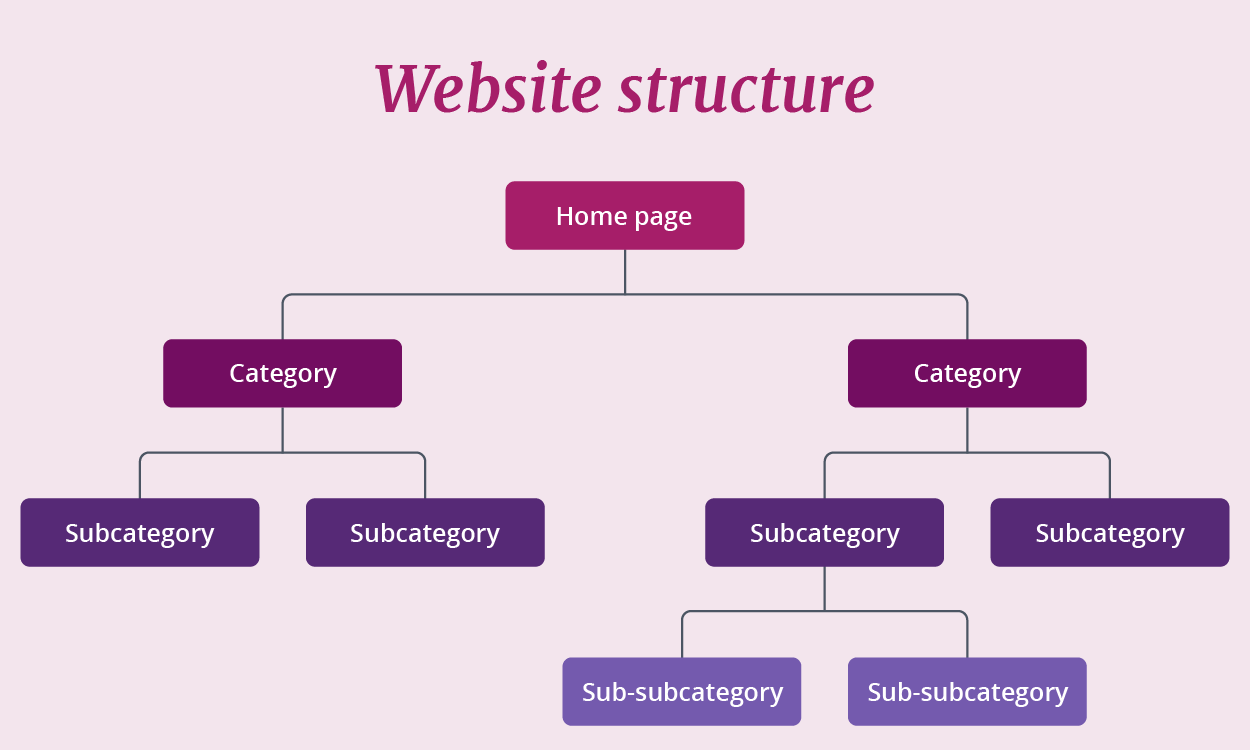
Image Source: Yoast
Next, check URLs. Keep them short and clear. Avoid long strings and random numbers. Use consistent naming across the site.
Internal linking is a major lever. Link from blogs to relevant practice pages. Link between related practice pages when it makes sense. In addition, add breadcrumbs for deeper pages.
Also, watch for orphan pages. If a page has no internal links, it may not rank. So connect it to the right hub. Here’s the point. Internal links guide authority and help Google understand your priorities.
Audit On Page SEO For Every Key Page
On-page SEO is where many legal sites fall short. Yet these are easy wins.
Check title tags. Each page needs a unique title that matches search intent. Put the practice and the city when relevant. Keep it natural and clear.
Check meta descriptions. They do not directly rank, but they affect clicks. Write them like short ads. Include the benefit and a clear reason to choose your firm.
Review headings. Use one H1 per page. Then use H2 and H3 to organize sections. Keep headings specific. Avoid vague labels like Services or Info.
Check content depth. Practice pages should answer key questions: Who do you help? What problems do you solve? What the process looks like. What results may be possible? Also include clear next steps.
Then check keyword targeting. Each page should focus on one main intent. Avoid trying to rank one page for multiple different practice areas.
Finally, review images and media. Rename files in plain words. Add descriptive alt text. In addition, make sure videos do not slow the page.
Strengthen Local SEO Signals
Most firms want local clients. So local SEO is not optional.
- Check your Google Business Profile details so they match your website.
- Choose the right primary and secondary categories for your services.
- Add service areas and keep photos fresh.
- Post updates so your profile looks active.
Then check local citations.
- Keep name, address, and phone consistent across directories.
- Fix duplicates and remove old addresses.
- Prioritize major listings that people actually use.
Add location pages only when they are real and useful. Do not create thin pages for every suburb. Instead, build strong pages for cities where you truly serve clients.
Also, add local content. Explain court locations and practical steps. For instance, a page for a county can list the courthouse address and common filing steps.
Meanwhile, collect reviews. Ask past clients in a compliant way. Reply to reviews with care. Do not reveal private details.
Check Content Quality And E E A T
Legal topics are sensitive. Search engines look for trust and credibility. So your content must show real expertise.
Review the author information. Add clear attorney bios. Link to bar profiles where possible. Include education and practice focus.
Check for outdated posts. Update laws, deadlines, and local rules. Add dates and update notes. In addition, remove weak posts that add no value.
Look for thin pages. If a post is 300 words and repeats general advice, it will not compete. Expand it with examples, steps, and practical guidance.
Also, ensure your tone is helpful and clear. Avoid jargon. Explain terms in simple words. Not only that, but add disclaimers so readers know it is not legal advice.
Add proof points. Case results may help if allowed by your rules. Testimonials can help too. Awards and memberships can support trust. However, do not overdo badges. Use only what is real and current.
Review Schema Markup For Legal Sites
Schema helps search engines understand your business and content. It can also improve how listings look in results.
Start with LocalBusiness or LegalService markup. Include your name, address, phone, hours, and logo.
Then add Attorney markup for key lawyers. Include job title, practice areas, and social links when appropriate.
If you publish FAQs, add the FAQ schema. If you publish reviews, use proper markup and follow policy rules.
Validate schema with testing tools. Fix errors and warnings that matter. As a result, your site sends clearer signals and may earn richer results.
Audit Backlinks And Off-Site Authority
Links still matter in legal SEO. Yet not all links help.
- Review your link profile and look for relevant and real sites.
- Prioritize links from local news, chambers, legal groups, and universities.
- Watch for toxic patterns, such as many low-quality directory links.
- Check for sudden link spikes that may signal spam.
Then check which pages earn links.
- If links mostly point to the home page, you may need more linkable resources.
- Publish guides and local resources that others want to cite.
- Compare competitor links and pursue the strongest local opportunities.
If you find spammy links, do not panic. Often, you can ignore them. However, if you see clear attacks or manual actions, you may need a cleanup plan.
Find And Fix Content Cannibalization
Many law firms create pages that target the same topic. That can confuse Google. It can also split ranking signals.
Look for multiple pages that target the same practice and city. For instance, one page for personal injury and several posts that repeat the same target.
Choose a primary page for each core service. Then update other pages to support it. Merge similar pages when needed. Redirect old URLs to the stronger page.
In addition, check your blog tags and categories. Too many indexable tag pages can create thin content at scale. Consider noindex for tag pages if they add no value.
Here’s the point. One strong page usually beats five weak pages.
Build A Fix List And A Simple Roadmap
After you run checks, you need a plan. List issues by impact and effort.
Start with fixes that unblock crawling and indexing. Then fix speed and mobile issues. Next, improve practice pages and internal links. After that, work on local SEO and content expansion.
Keep a change log. Track what you changed and when. Watch for ranking and lead changes over the next weeks. Meanwhile, keep publishing content that supports your top services.
If your team is small, you may want expert help. An experienced law firm SEO services provider can manage technical improvements, content strategy, and local visibility within a structured growth plan. Yet you should still understand the checklist so you can judge the work and set priorities.
Ready To Turn Your Audit Into Results
If you want clarity beyond a checklist, ResultFirst can run a comprehensive law firm SEO audit and prioritize the fixes that drive measurable results. Our SEO services for law firms combine technical optimization, content strategy, and local visibility into one structured growth roadmap built specifically for legal practices.
Conclusion
A strong legal website depends on clarity, performance, and trust. A structured law firm SEO audit reveals what holds your visibility back and where growth opportunities exist.
When you fix crawl issues, improve speed, strengthen internal structure, and align local signals, rankings become more stable and conversions more predictable.
SEO success in legal marketing is rarely about one big change. It is about consistent, prioritized improvements over time.
FAQ’s:
WHAT TO READ NEXT
READY TO BUILD PREDICTABLE ORGANIC GROWTH?
We are the only TOP SEO services agency providing Real Results in a Real Performance model. We help growth hungry companies outperform their competition and achieve 300%+ growth in their digital marketing initiatives.
- San Jose, CA, 95120

- +1-888-512-1890

- sales@resultfirst.com

300K+
KEYWORDS RANKED
546M+
REVENUE GENERATED
18 Years
SOLVING COMPLEX SEO
150+
TEAM MEMBERS