


 +1-888-512-1890
A Complete SEO Checklist for Your Website (2026)

Search engine optimization is no longer a checklist of isolated tactics. Modern SEO is a system built around clarity, intent, accessibility, trust, and usefulness. Search engines no longer simply rank pages; they interpret content, evaluate reliability, and increasingly surface information through AI-driven summaries and recommendations.
Today, platforms such as Google analyze websites as interconnected information ecosystems. They assess how clearly a site explains topics, how well pages satisfy user intent, and how reliably the site performs across devices and environments.
This guide presents a complete SEO checklist for modern websites, structured according to how search engines and AI systems actually work today. It is designed to help you build sustainable search visibility that remains effective well beyond short-term algorithm changes.
1. Build Search Readiness Before Chasing Rankings
One of the most common SEO mistakes is optimizing content before a website is truly search-ready. Search readiness refers to your site’s ability to be consistently accessed, crawled, rendered, and interpreted without friction.
Search engines cannot rank what they cannot reliably reach or understand.
Search-readiness checklist
- The website loads securely over HTTPS
- All important pages are accessible to crawlers
- Navigation is logical and predictable
- Mobile usability is stable across devices
- No critical content is blocked by scripts, parameters, or incorrect robots rules
Search readiness directly impacts indexing consistency, crawl efficiency, and AI summarization reliability. Without this foundation, even excellent content struggles to perform.
2. Establish Clear Topical Focus Across the Website
Modern SEO begins with topical clarity, not keyword targeting.
Instead of asking which keywords to rank for, high-performing websites answer a more strategic question:
What topics should this site be trusted to explain?
Search engines evaluate websites as topic ecosystems, where each page contributes to a broader understanding of a subject.
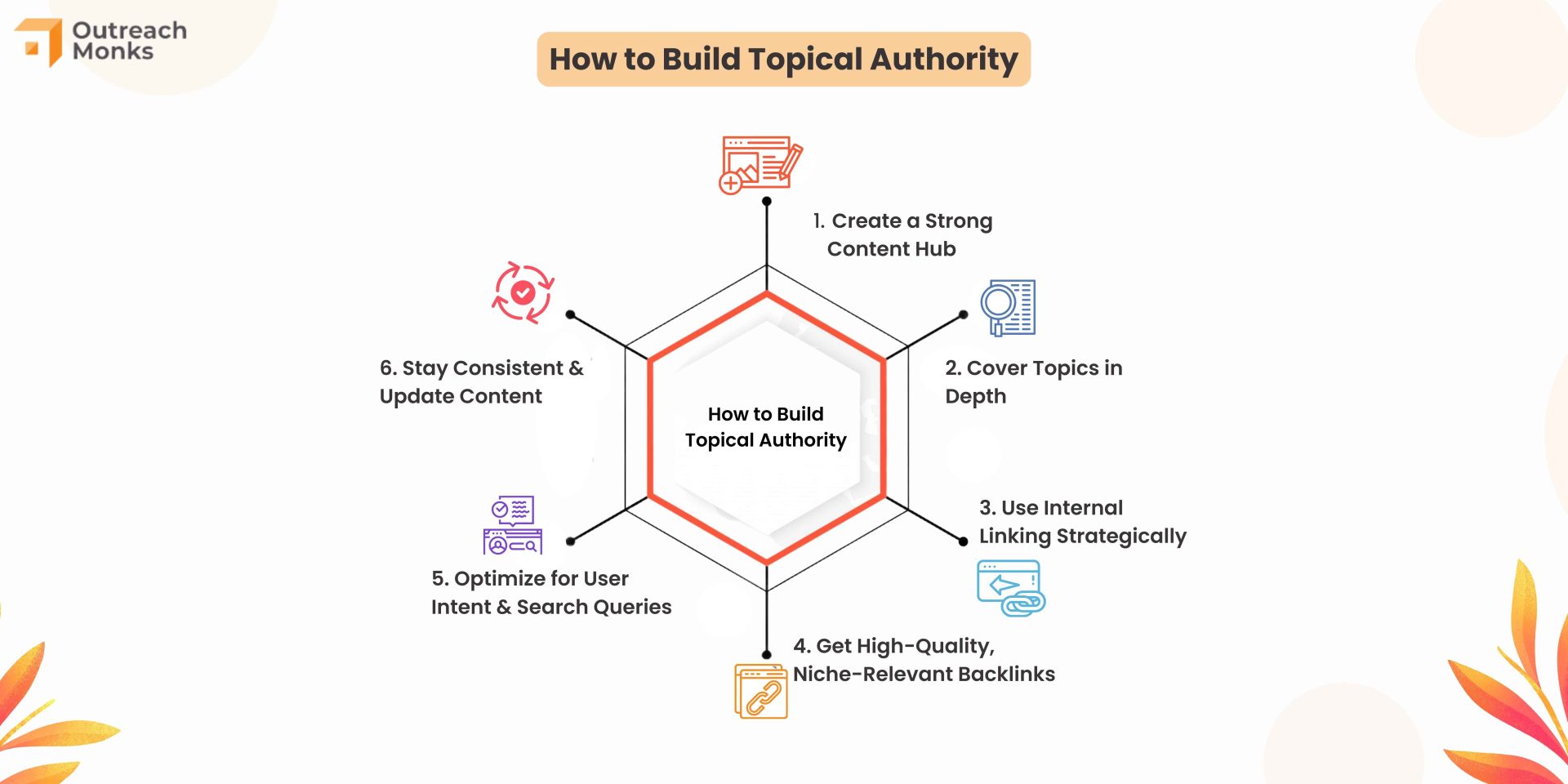
Source: Outreach Monks
Topical-focus checklist
- Define a limited number of core topics
- Assign one primary topic to each page
- Avoid multiple pages competing for the same intent
- Structure navigation and internal links around topic groupings
Clear topical focus improves crawl prioritization, ranking stability, and AI-driven content extraction.
3. Map Every Page to a Single, Clear User Intent
Search intent is one of the strongest ranking and visibility signals in modern SEO. Pages that fail to match intent may rank briefly but rarely sustain performance.
Each page should exist to solve one dominant problem for the user.
Primary intent categories
- Informational: learning, understanding, definitions
- Comparative: evaluating options, comparisons
- Transactional: purchasing, contacting, converting
Intent-alignment checklist
- Identify the dominant intent for each page
- Match content depth to the user’s decision stage
- Remove content that distracts from the main goal
- Provide a clear next step
Intent clarity improves engagement metrics, reduces pogo-sticking, and increases eligibility for AI-generated answers.
4. Structure Content for Understanding, Not Keywords
Modern search engines do not read pages line by line. They analyze structure, sections, and relationships.
Content structure is how meaning is communicated efficiently.
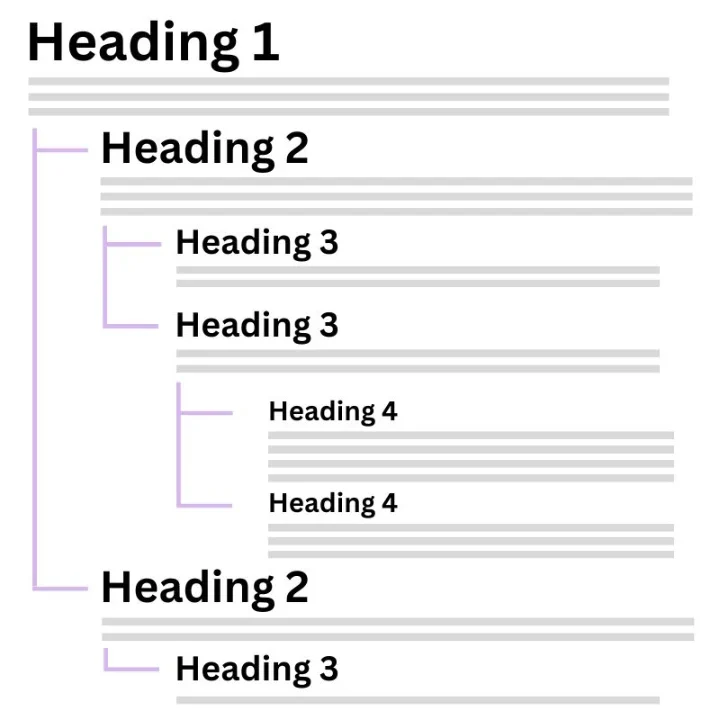
Source: Glide Marketing
Content-structure checklist
- Use descriptive, intent-driven headings
- Keep sections focused and concise
- Present ideas in logical progression
- Avoid redundant explanations
Well-structured content helps:
- Users scan and understand faster
- Search engines identify relevance
- AI systems extract accurate summaries
Keywords support structure, but structure carries meaning.
5. Optimize Content for AI Interpretation and GEO
AI-driven search systems summarize, compare, and recommend content. To appear in these environments, your content must be explicit, factual, and logically organized.
This is where Generative Engine Optimization (GEO) becomes essential.
GEO-focused optimization checklist
- Clearly define the topic early on the page
- Answer common questions directly
- Use consistent terminology throughout
- Avoid vague introductions and buried explanations
Content that explains concepts clearly and directly is more likely to be cited, summarized, and trusted by AI systems.
6. Use Visuals to Reinforce Meaning and Clarity
Visuals are no longer decorative assets. They are interpretation aids that help users and AI systems understand complex ideas faster.
Visual-SEO checklist
- Use images that directly support the text
- Keep the main subject clearly visible
- Write alt text that describes context, not keywords
- Avoid generic or irrelevant stock images
Visuals that enhance understanding improve engagement and support multi-modal search experiences.
7. Ensure Technical Reliability and Performance Stability
Technical SEO in modern search is less about optimization tricks and more about operational reliability. Search engines favor websites that perform consistently across devices, connection speeds, and usage scenarios. If your site loads slowly, breaks under certain conditions, or behaves inconsistently, search visibility will erode over time even if content quality is strong.
Beyond crawlability, modern systems evaluate how stable a page feels during interaction. Layout shifts, delayed rendering, or blocked content can quietly degrade both user experience and search performance. These issues often do not affect every visitor equally, which makes them easy to overlook without ongoing monitoring.
What to prioritize for long-term stability
- Maintain clean, crawlable URL structures
- Reduce unnecessary redirects and duplicate paths
- Ensure JavaScript-rendered content is accessible
- Improve server response time, not just front-end assets
- Monitor layout stability and interaction delays
A technically reliable site sends strong trust signals that compound over time.
8. Improve Content Quality Through Information Gain
In competitive search results, most pages cover similar ideas. What separates high-performing content is information gain—the degree to which a page improves understanding compared to what already exists.
Modern search engines and AI systems favor content that clarifies confusion, explains complex ideas more simply, or connects concepts in a meaningful way. Content that merely restates existing information may still be indexed, but it rarely earns sustained visibility.
Information gain does not require originality for its own sake. It comes from practical depth, clearer explanations, and addressing real user uncertainty.
How to add value beyond existing results
- Identify gaps or weak explanations in ranking pages
- Expand on “why” and “how,” not just “what”
- Update outdated assumptions or examples
- Remove pages that add no distinct value
Content that advances understanding builds long-term relevance and trust.
9. Build Authority Through Relevance and Usefulness
Authority in modern SEO is contextual, not numerical. Search engines evaluate why other websites reference your content and how it fits within a broader topic ecosystem. A smaller number of highly relevant references often outweighs a large volume of low-context links.
Authority also grows internally. When multiple pages on your site consistently demonstrate depth and clarity around related subjects, search engines begin to associate your brand with expertise in that space. This association strengthens ranking stability and improves eligibility for AI-driven citations.
Signals that strengthen topical authority
- Content that others naturally reference
- Editorial links earned through insight
- Strong internal linking between related pages
- Consistent quality across topic clusters
True authority is earned through usefulness, not manufactured through volume.
10. Strengthen Local and Brand Trust Signals
Local and brand trust signals help search systems distinguish between credible businesses and low-confidence entities. Consistency, transparency, and responsiveness all contribute to how reliably a brand can be recommended across search, maps, and AI assistants.
Even businesses that do not rely heavily on local traffic benefit from strong brand trust signals. Inconsistent business details, neglected profiles, or unmanaged reviews can introduce doubt, limiting visibility even when SEO fundamentals are sound.
Signals that reinforce real-world legitimacy
- Consistent business information across platforms
- Active management of reviews and feedback
- Real images, updates, and profile activity
- Content that reflects regional or market relevance
Trust signals support discoverability wherever users search for reliable answers.
11. Monitor Performance and Iterate With Purpose
SEO success is rarely the result of one perfect execution. It comes from continuous observation and informed iteration. Search behavior evolves, competitors adjust, and content expectations change. Monitoring performance allows you to adapt without overreacting.
The goal is not to track every metric, but to identify meaningful trends. Short-term fluctuations are normal. Long-term patterns reveal where improvements are needed and where momentum is building.
How to turn data into decisions
- Focus on long-term traffic and engagement trends
- Compare performance across similar pages
- Identify content decay and refresh opportunities
- Use insights to prioritize high-impact updates
Iteration, not perfection, is what drives sustainable SEO growth.
Conclusion
Modern SEO is built on clarity, intent, trust, and accessibility. Websites that succeed communicate topics clearly, align content with real user needs, and remain technically reliable over time. As search evolves toward AI-driven discovery, these fundamentals become even more critical.
At ResultFirst, SEO is treated as a long-term visibility system rather than a collection of isolated tasks. By focusing on structure, intent alignment, and information quality, ResultFirst helps brands remain discoverable across both traditional search results and emerging AI-powered experiences.
If you are looking for a reliable SEO services provider that builds strategies designed for sustainable growth rather than short-term wins, working with a team that understands modern search behavior can help future-proof your digital presence.
On the other hand, activities done outside of your website to affect your rankings within search engine results pages (SERPs) are referred to as off-page SEO.
WHAT TO READ NEXT
READY TO BUILD PREDICTABLE ORGANIC GROWTH?
We are the only TOP SEO services agency providing Real Results in a Real Performance model. We help growth hungry companies outperform their competition and achieve 300%+ growth in their digital marketing initiatives.
- San Jose, CA, 95120

- +1-888-512-1890

- sales@resultfirst.com

0K+
KEYWORDS RANKED
0M+
REVENUE GENERATED
0 Years
SOLVING COMPLEX SEO
0+
TEAM MEMBERS