



 sales@resultfirst.com
 +1-888-512-1890
Best Local SEO Tools for Data-Driven Local SEO Strategies

Local search is no longer driven by guesswork. It is driven by evidence. When you track what people search for and how they act, you can make better choices. You can see which pages bring calls. You can spot which listings lose clicks. You can also find the small gaps that hold you back.
That is why the best local SEO tools matter. They turn daily activity into clear signals you can use. Plus, they help you move faster because you can test ideas and learn from real results.
This guide focuses on tools that support a data-driven workflow. It also shows how to connect each tool to a practical local plan, so every action has a reason and a result.
What Data-Driven Local SEO Means
A data-driven approach starts with a simple promise. You will choose actions based on proof. Then you will measure outcomes and adjust.
So you begin with goals that match local intent. In fact, 4 in 5 consumers make use of search engines to look for local businesses. For instance, you may want more calls from map results. You may want more direction requests. You may want more bookings.
Next, you define the signals that show progress. These signals include ranking changes. They include clicks on your listing. They include form fills. They also include review volume and rating trends.
Then you connect signals to actions. If impressions rise but calls do not, then your listing may need better offers. If rankings improve but traffic stays flat, then your pages may not match intent. As a result, you keep refining your plan with each cycle.
How To Choose Tools Without Getting Overwhelmed
Tools are useful but only when they fit your workflow. So start by listing the tasks you must do every month.
You will need keyword research that is local. You will need tracking for map packs and organic results. You will need listing checks and updates. You will need review monitoring. You will also need a report that shows what changed and why.
After that, choose tools that cover the core tasks with minimal overlap. Meanwhile, keep an eye on setup time. A tool that saves ten minutes a week is great. A tool that takes two days to configure may not be.
Finally, pick tools that can export data. Data exports help you build your own view in a sheet or dashboard. Not only that they help you compare months and locations with less effort.
Keyword And Intent Research Tools
Local keyword research is not only about volume. It is also about intent and context. People add neighborhoods, add landmarks, service types, and change phrasing on mobile.
Google Keyword Planner And Google Trends
Keyword Planner is a solid starting point. It gives broad ideas and relative volume. However, it can hide real long tail phrases. So pair it with Google Trends. Trends help you see seasonality and local interest patterns.
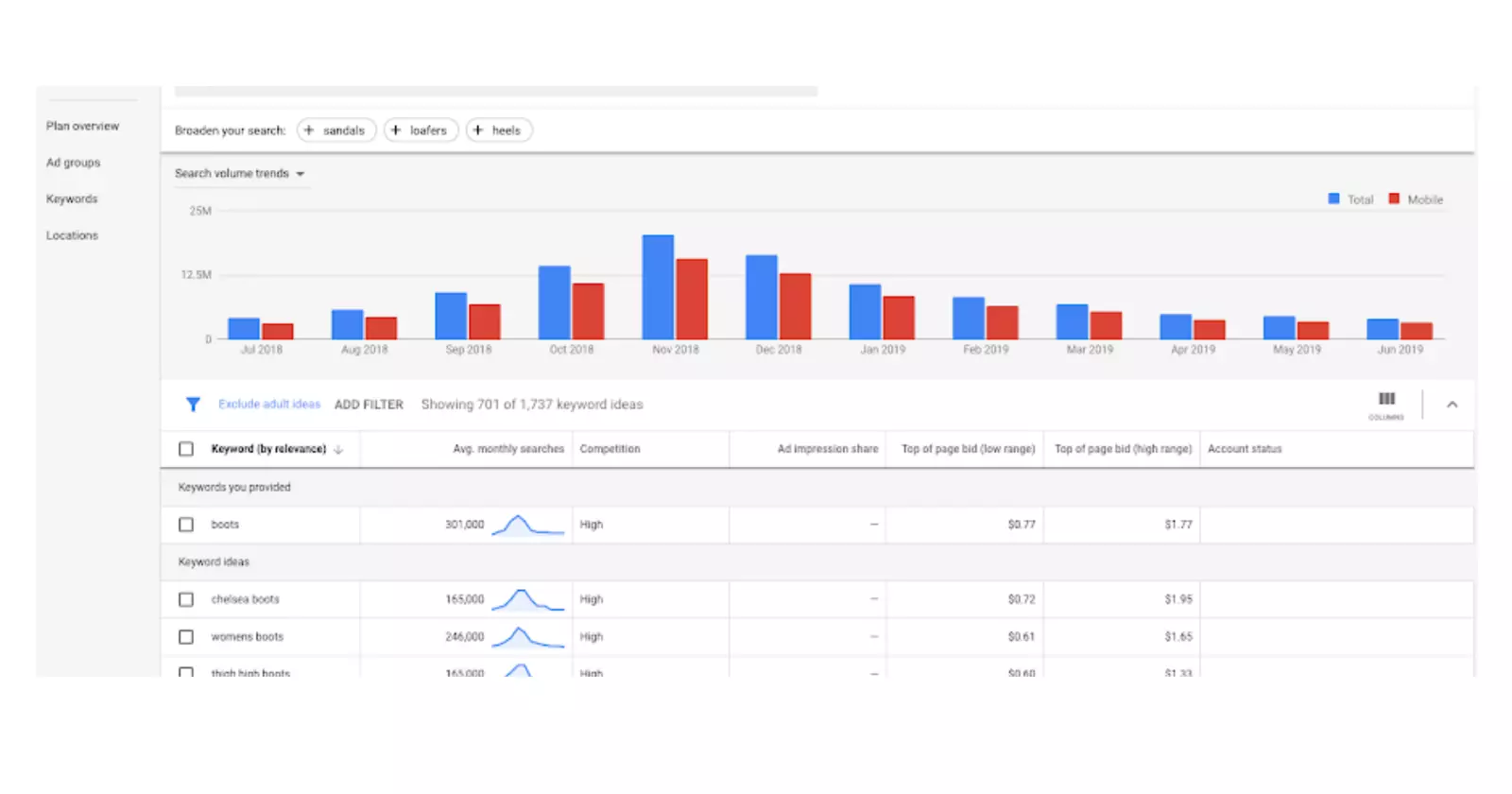
Image Source: Search Engine Journal
For instance, you may find that demand peaks in the weeks before a holiday. As a result, you can publish pages and offers earlier.
Learn how to use Google Keyword Planner.
Google Search Console For Real Queries
Search Console is often the most honest source. It shows what people actually typed before they clicked. Plus, it shows which pages earn those clicks. You can filter by page to see if a location page attracts local phrases.
Meanwhile, you can track how new content changes impressions and clicks over time.
People Also Ask And Related Searches
When you search on Google, you will see question boxes and related searches. These ideas can guide service pages and FAQ content.
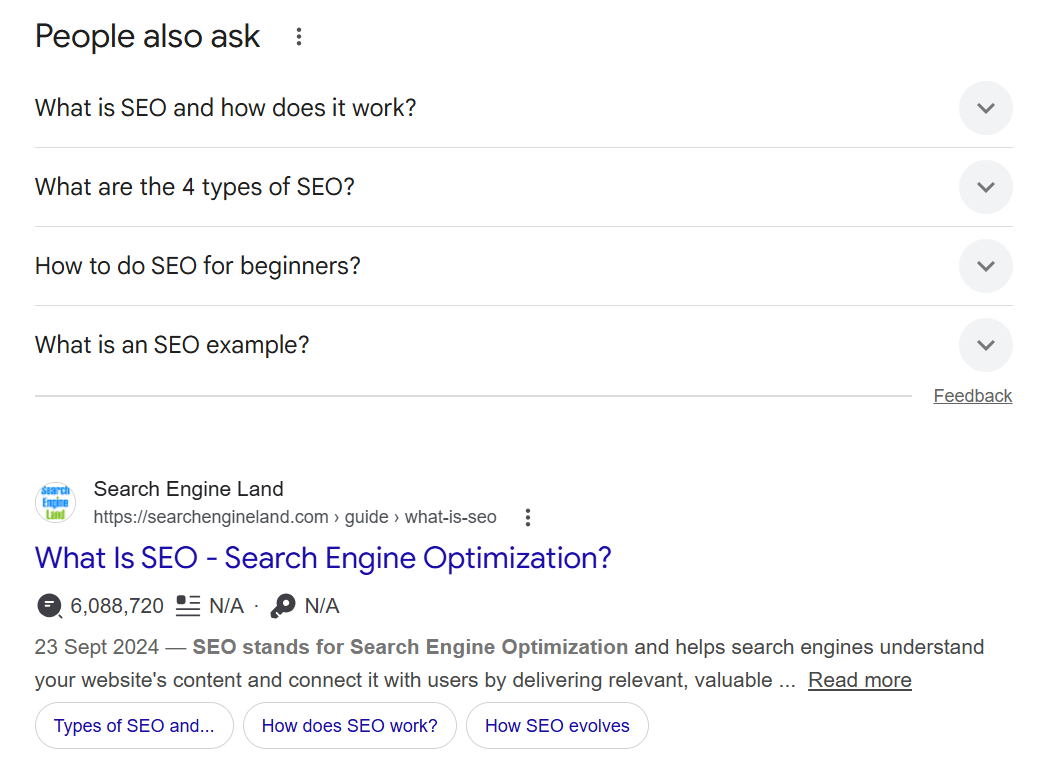
Image Source: Search Engine Land
For instance, if many people ask about pricing, then you can add a clear pricing range. Here’s the point. Small additions can increase trust and raise conversions.
See the complete list of keyword research tools.
Google Business Profile And Map Performance Tools
Google Business Profile is often the center of local visibility. Data-driven work depends on knowing what the listing does each week.
GBP Insights And Performance Export
The in-platform metrics show search views and actions. They also show photo views and direction requests. Use the export option when available.
Then save monthly snapshots. As a result, you can spot trends. If calls drop, you can check whether rankings fell or whether demand changed.
UTM Tracking For Listing Links
Add UTM tags to your website link and appointment link. This lets analytics tools attribute traffic to your listing. However, be consistent with naming. Use the same source and medium for all locations. In addition, document your UTM format so future updates do not break reports.
Map Rank Trackers
Map results can shift from one street to another. So a single tracking point is not enough. Use a tracker that supports grid or geo tracking. It shows how rankings change across a radius. Meanwhile, it helps you understand where you win and where you lose.
Read more about Google Business Profile optimization in AI search.
Local Rank Tracking And Competitive Tools
Rank tracking is helpful when it answers a business question. So focus on local keywords that lead to calls and bookings.
BrightLocal
BrightLocal is popular for local audits and tracking. It supports local rank reports and citation checks. It also offers reputation features. Use it to compare locations.
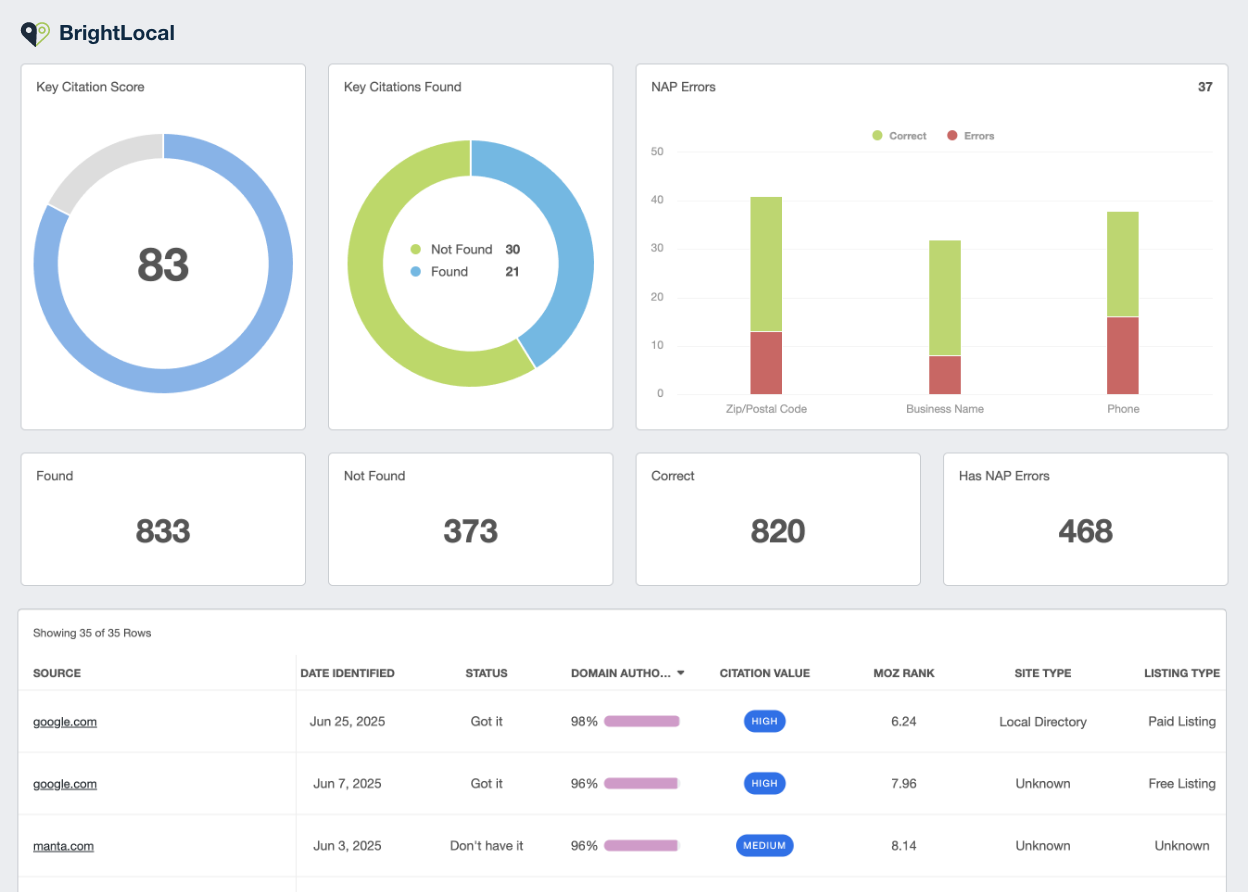
Image Source: Agency Analytics
For instance, you can see which branch gained reviews and which one slipped. As a result, you can act fast.
Semrush Local
Semrush includes local listing tools and local position tracking. It is useful when you also need broader SEO features.
However, you should still define a local set of keywords and locations. Plus, use competitor views to spot gaps in content and category coverage.
Ahrefs For Local Competitor Research
Ahrefs is strong for link analysis and content gaps. While it is not purely local, it helps you see why competitors rank. You can check which pages get links. You can also find content themes that earn traffic.
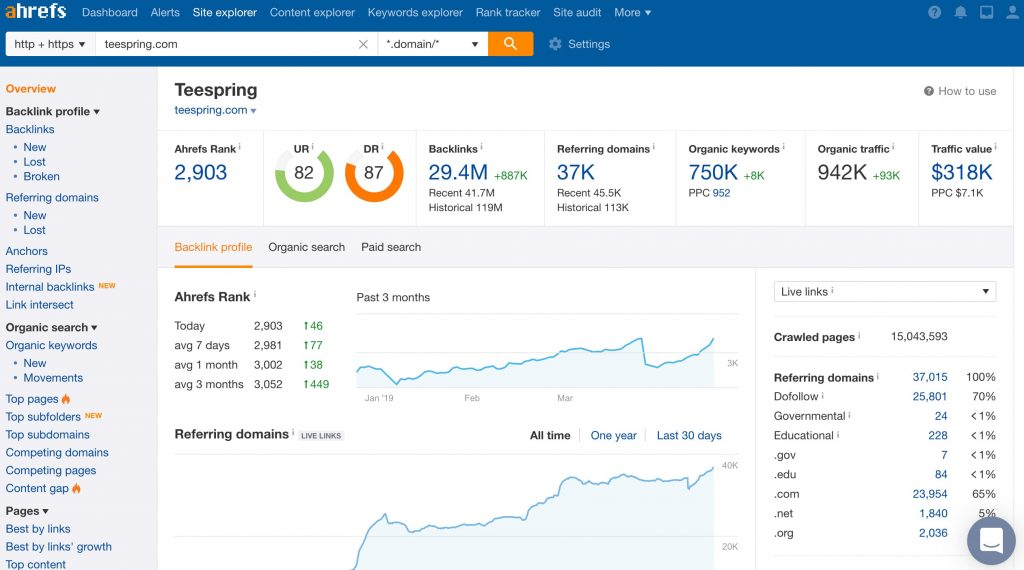
Image Source: Rockstar Marketing
Meanwhile, you can discover local directories that link to others but not to you.
Whitespark
Whitespark is known for citation research and local rank tracking. Its citation finder can reveal niche directories. Those directories can boost trust signals.
As a result, you can build a cleaner citation profile with less waste.
Listing And Citation Management Tools
Listings matter because they shape trust. They also shape map visibility. Data-driven work means you verify accuracy and track changes.
Google Business Profile Manager
Start with the basics. Keep name, address, and phone consistent. Keep categories aligned with real services. Add services and products when relevant.
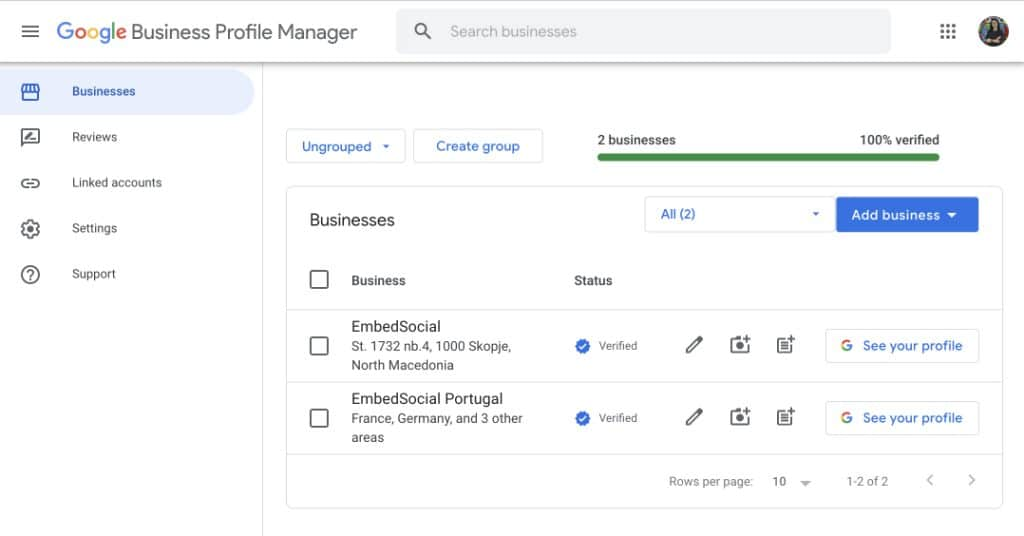
Image Source: Embed Social
In addition, post updates when you have offers. These actions create more signals. They also give users more reasons to act.
Moz Local
Moz Local helps you distribute and maintain listings. It also provides visibility into errors and duplicates. Use it when you manage multiple locations. Meanwhile, review the network coverage in your country and industry to understand what you will get.
Yext
Yext is a strong option for real-time control. It can push updates to many networks fast. However, it can be costly. So it fits best when listings change often.
For instance, seasonal hours and special events. As a result, you reduce the risk of wrong hours and missed calls.
Birdeye And Similar Platforms
Tools like Birdeye can connect listings and reviews. They also help with messaging and reporting.
Plus, they may support surveys and feedback loops. This can help you catch issues before they become bad reviews.
Review And Reputation Tracking Tools
Reviews are not only social proof. They are also a data source. They show what people value and what frustrates them.
Google Business Profile Reviews
Read reviews weekly. Tag themes like speed, price, friendliness, and quality. Then share a short summary with the team.
Meanwhile, respond to reviews with calm and clear language. This builds trust and can improve conversions.
ReviewTrackers And Podium
These tools help you watch reviews across sites. They can also send alerts and reports. Use them when you need coverage beyond Google.
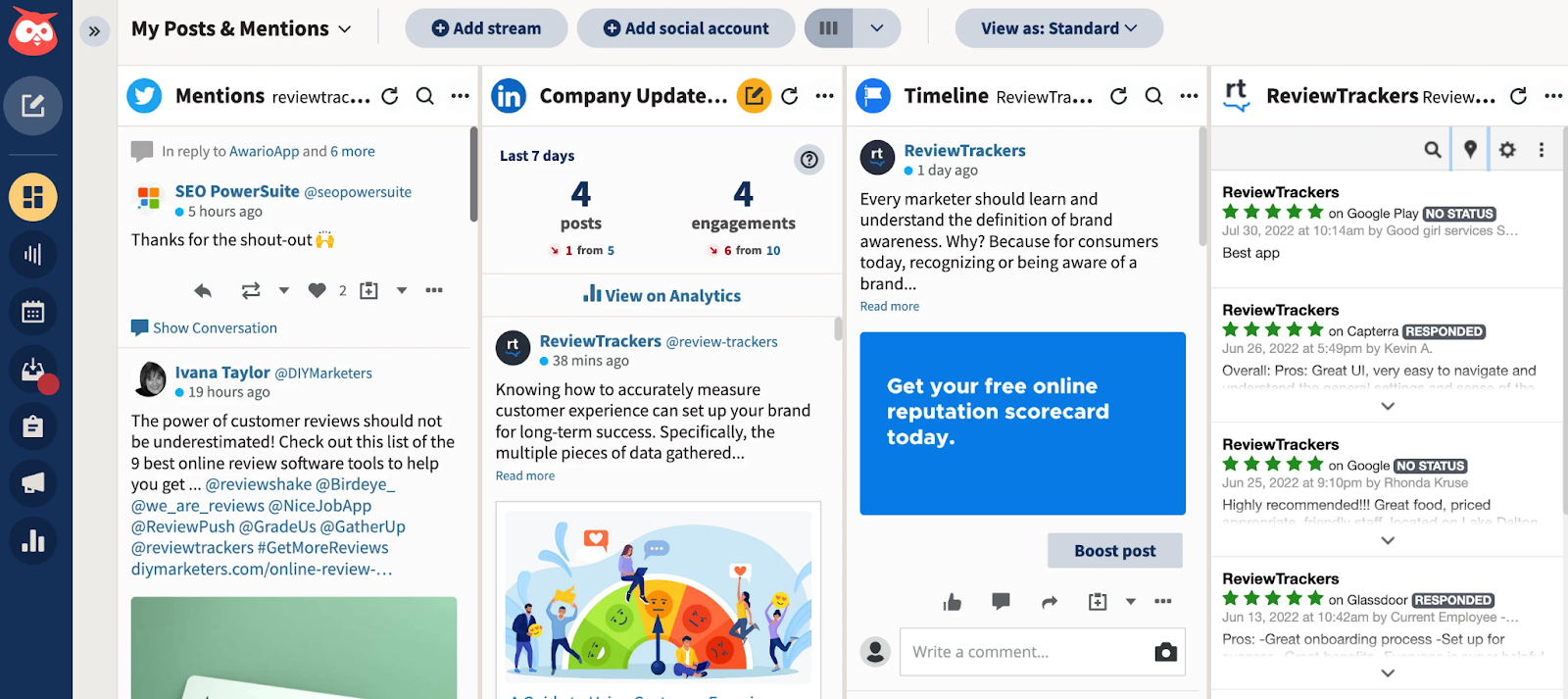
Image Source: Review Trackers
Plus, use sentiment and theme reports to guide training and service changes.
Simple Review Dashboards
You can also build a simple dashboard in a sheet. Pull review counts and ratings every month. Then track changes.
As a result, you can see whether a campaign increased review flow.
Analytics And Conversion Tools
Traffic is useful, but actions pay the bills. So your tools should connect visibility to outcomes.
Google Analytics 4
GA4 can track form fills, phone clicks, and booking events. Set up conversion events that match your goals.
Plus, use location page groups so you can compare branches. Meanwhile, watch engagement and path reports to see where people drop off.
Google Tag Manager
Tag Manager helps you track calls and clicks without changing the site code each time. You can track click to call buttons. You can track map clicks. You can track chat starts. As a result, you see which pages create real leads.
Call Tracking Tools
Call tracking can reveal which keywords and pages drive phone leads. Use dynamic number insertion with care.
However, make sure your main number stays consistent in key listings. In addition, use a call recording policy that follows local laws.
Heatmaps And Session Recording
Tools like Hotjar or Microsoft Clarity show how people use a page. They show scroll depth and rage clicks. They also show which sections get ignored.
Meanwhile, you can test changes such as moving a booking button higher.
Content And On-Page Tools For Local Pages
Local pages should match local intent. They should also be clear and helpful. Data helps you refine the details.
Screaming Frog
Screaming Frog crawls your site and finds issues. It can spot missing titles. It can spot duplicate content. It can also detect broken links and redirect chains. As a result, you fix technical friction that hurts rankings.
Surfer And Similar On-Page Helpers
On-page tools can help you compare your content to top pages. However, do not copy patterns blindly. Use them to confirm coverage. In addition, focus on clear writing and useful sections like service areas and FAQs.
Schema Markup Tools
Schema markups helps search engines understand your business. Use tools that validate the schema. Add LocalBusiness markup. Add FAQ markup where it fits. Meanwhile, keep data accurate. An incorrect schema can confuse search engines and users.
Reporting And Dashboard Tools
Reports should tell a story. They should show what changed. They should also show what you will do next.
Looker Studio
Looker Studio can combine data from Search Console GA4 and other sources. You can build a dashboard per location. You can also build an overview for leaders. In addition, use date comparisons and trend charts. As a result, you can explain progress with fewer slides.
Sheets For Quick Analysis
A simple sheet can still be powerful. You can track rankings across grid points. You can track calls and bookings. You can also track review volume. Meanwhile, you can add notes for changes like new pages or new offers. Those notes help you connect cause and effect.
Automated Alerts
Set alerts for sharp drops in traffic or calls. Set alerts for listing suspensions. Set alerts for new reviews. As a result, you respond fast and protect revenue.
A Practical Tool Stack For Different Local Needs
The right stack depends on business size and goals. So here are three common setups.
Single Location And Tight Budget
Start with Google Business Profile tools plus Search Console and GA4. Add a crawler like Screaming Frog when needed. Use a simple rank tracker for your top keywords. Then report in a sheet. This stack can still support local SEO services when the work is focused and consistent.
Multi Location And Growing Fast
Add a listing manager like Moz Local or Yext. Add a grid tracker for map visibility. Add a review platform for alerts. Build a Looker Studio dashboard. Meanwhile, assign owners for each metric so actions do not stall.
Agency Or In-House Team With Advanced Needs
You may need Semrush or Ahrefs for research. You may need BrightLocal or Whitespark for local tracking. You may also need call tracking and heatmaps. With this setup, a local SEO company can deliver deeper insights. It can also show clearer proof of impact.
Ready To Turn Tools Into Results
Want faster progress without guesswork? ResultFirst can help you build a clear local search plan based on data. Our team can audit your listings and fix tracking. We can also improve location pages and set up dashboards that show calls and bookings.
You get a simple roadmap and weekly priorities. You also get reporting you can trust. If you want a partner focused on measurable outcomes, then consider ResultFirst for your next local growth push.
Conclusion
A strong local strategy is built on clear positioning and consistent execution. Tools and platforms support progress, but they only create impact when guided by a focused plan and steady optimization.
Start with the fundamentals. Strengthen your local listings. Improve your key service and location pages. Track real outcomes like calls, bookings, and direction requests. Then refine what performs and fix what slows growth.
Meanwhile, stay focused on qualified actions instead of surface-level metrics. That is where sustainable local growth happens. As a performance-driven local SEO agency, ResultFirst helps businesses connect local search visibility with measurable lead outcomes—so every optimization effort supports real business results, not just higher rankings.
Explore free SEO tools worth using in 2026
FAQ’s:
WHAT TO READ NEXT
READY TO BUILD PREDICTABLE ORGANIC GROWTH?
We are the only TOP SEO services agency providing Real Results in a Real Performance model. We help growth hungry companies outperform their competition and achieve 300%+ growth in their digital marketing initiatives.
- San Jose, CA, 95120

- +1-888-512-1890

- sales@resultfirst.com

300K+
KEYWORDS RANKED
546M+
REVENUE GENERATED
18 Years
SOLVING COMPLEX SEO
150+
TEAM MEMBERS