



 sales@resultfirst.com
 +1-888-512-1890
SEO for Divorce Attorneys Competing in Crowded Local Markets

In a busy city, a divorce attorney can feel invisible online. There may be dozens of firms on the same street and hundreds more within driving range.
Most people will not scroll far when they search for help. They click the first few results, and they often choose from the map pack too. So the real contest is local, and it is fast. In fact, 5.9 million Google searches happen every minute.
That is why SEO for Divorce Attorneys matters so much in crowded markets. The goal is not to chase every keyword in the state. The goal is to show up for the right people in the right place at the right moment.
In this guide, you will learn practical steps that fit a small firm or a growing practice. You will also see how to build trust with content and reviews.
Why SEO for Divorce Attorneys Is More Competitive
Divorce law is one of the most competitive legal categories online. And there are a lot of reasons for that. Here are some of them:
- High case value per client
- High emotional urgency
- Strong search demand in metro areas
- Expensive Google Ads cost per click
- Many established firms are competing for the same keywords
In many cities, “divorce lawyer” related keywords can cost $20 to $75+ per click in paid ads. That makes organic rankings even more valuable. The high cost of running a campaign reflects the competitive nature of the space.
And because the financial stakes are high, SEO for divorce attorneys requires a structured and long-term strategy rather than surface-level optimization. This is something only a professional team can provide.
Understand The Local Search Fight
Local search is not just about rankings. It is about intent. A person searching “divorce lawyer near me” often needs help soon. They may be scared, and they may not know what to do next. Meanwhile, search engines try to match that urgent need with nearby and reliable options.

Image Source: Scale Delight
In crowded markets, small differences decide who gets the click. For instance, one firm may have clearer practice pages. Another may have stronger reviews. A third may have faster pages and better mobile design. Google blends all of that into one visible result set. So the first step is to accept that local SEO is a system. It includes your site, your local listings, your reputation, and your content. As a result, you need a plan that covers each part with steady effort.
How SEO for Divorce Attorneys Generates Real Clients
One thing you need to know about SEO is that it is not just about traffic. Leads are just as important. For example, when someone searches:
- divorce attorney near me
- uncontested divorce lawyer [city]
- child custody lawyer consultation
They are often ready to speak to someone.
Organic search traffic converts differently from social traffic. In many law firm cases, website conversion rates range between 2% and 8%, depending on clarity and trust signals.
Unlike paid ads, organic rankings:
- Build long-term visibility
- Lower cost per lead over time
- Improve credibility
- Generate calls even outside office hours
That is why divorce lawyer SEO services focus on high-intent keywords rather than general informational traffic.
Choose A Clear Position In The Market
If you sound like everyone else, you will look like everyone else. That is true on your website and in your listing, too. So begin with focus. Decide what you want to be known for in your area.
You may handle complex assets, contested custody, or high-conflict cases. You may be strong in mediation and peaceful solutions. You can also serve a specific community or language group.
This is not about narrowing your practice in a risky way. It is about clear messaging. A clear message supports local SEO because it shapes your page topics, your headings, and your calls to action. It also helps prospects feel seen. Meanwhile, it helps you avoid thin pages that try to cover everything in one place.
Build Strong Practice Area Pages
In crowded cities, generic pages do not win. You need practice pages that answer real questions and show real experience. Start with your core services: divorce, child custody, child support, spousal support, property division, and domestic violence orders, when relevant. Mediation is offered when.
Each page should be built for a searcher with a problem. Explain the process in simple steps. Show what the first meeting looks like. Explain timelines and common issues. Add local context without using fluff. For example, mention that county rules and court schedules vary. Then invite them to call for a case review.
Keep the pages easy to read. Use short sections. Use plain words. Use real examples without sharing client details. Also, add internal links. A custody page should link to your divorce page and your parenting plan page. That structure helps visitors, and it helps search engines understand your site.
Create Location Pages With Care
Many firms try to rank in many nearby cities. That can work. However, it only works when the pages are useful and unique. If you copy the same text and swap city names, you create thin pages. That can hurt trust and rankings.

Image Source: ContentWriters
A good location page is not a sales pitch with a map. It should explain how you serve that area. Mention the courthouses you commonly appear in. Mention travel and parking tips if it makes sense. Mention the type of families and work patterns you often see. Keep it true and helpful.
Also, keep the number of location pages realistic. Pick the places you actually serve. If you cover ten towns, you can build ten good pages over time. If you try to cover fifty at once, you will likely publish weak pages. So go slow and do it right.
Win The Map Pack With Google Business Profile
In many local searches, the map pack is the main battleground. Your Google Business Profile must be complete and active. Start with the basics.
- Use your exact business name and keep it consistent everywhere
- Choose one primary category that fits, like a Divorce lawyer or Family law attorney
- Add secondary categories only when they truly match your work
- Fill out the services and write a short, clear description
- Add photos of your office and team so people feel comfortable
- Set hours and make sure your phone number is correct
- Post updates with short tips and simple firm news
- Answer questions in the Q and area without giving legal advice
That activity helps people trust you. It can also improve engagement and visibility.
Get Reviews That Build Real Trust
Reviews are a ranking factor and a conversion factor. In crowded markets, they can be the deciding factor. However, do not chase review volume in a way that feels pushy. Instead, build a simple system.
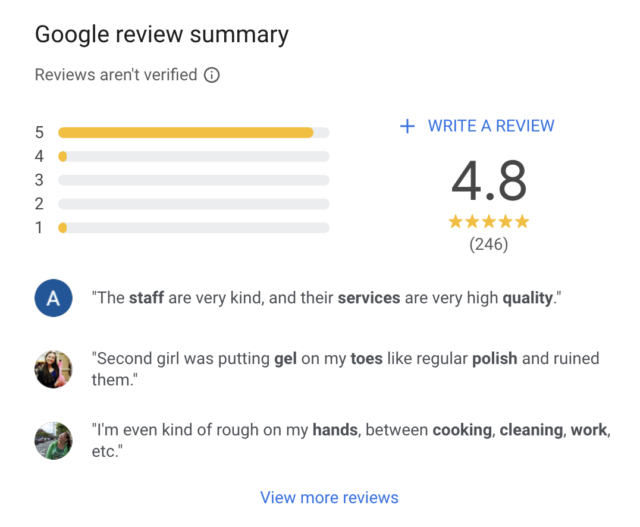
Image Source: BrightLocal
- Ask for a clear win, such as a hearing result or a signed agreement
- Send one direct link and make the next step easy
- Respect the privacy if a client does not want to review
- Reply to positive reviews with a short thank you
- Reply to negative reviews with calm language and no case details
Meanwhile, keep your tone steady and professional. A thoughtful response can reduce doubt for the next person who reads it.
Create Content That Matches Local Questions
Content is how you show expertise before a call. In local divorce SEO, the best content answers what people ask on day one. They ask about filing steps, residency rules, costs, and how custody works. They also ask emotional questions. They want to know what happens next.

Image Source: Search Engine Journal
Start with a list of real questions from consults. Then turn each into a short post or guide. Use simple language. Add local terms like county names only when it makes sense. Also, add clear disclaimers that your content is general.
You can also create helpful resources. Checklists for the first consult. A list of documents to gather. A guide to mediation. A timeline overview. These are easy to share, and they earn links over time.
This is where SEO for Divorce Attorneys becomes more than rankings. It becomes a trust system. People who feel informed are more likely to call. As a result, your content supports both search and intake.
Use Internal Links And Topic Clusters
Search engines reward sites that cover a topic well. So group your content into clusters. A divorce cluster can include divorce basics, filing steps, contested cases, uncontested cases, and mediation. A custody cluster can include parenting plans, relocation, and modifications.
Link each post back to the main practice page. Then link related posts to each other. This builds a web of meaning. It also keeps readers on your site longer. Meanwhile, it makes your site easier to crawl.
Keep your anchor text simple and descriptive. Avoid vague links like “click here.” Instead, use phrases like “child custody guide” or “uncontested divorce process.” That helps both people and search engines.
Improve On-Page SEO Without Overdoing It
On-page SEO is still important. It helps search engines, and it helps people scan your pages with ease.
- Write clear page titles that match the topic
- Use headings that describe the next section in plain words
- Add meta descriptions that invite clicks and set expectations
- Use image alt text that explains the image
- Keep paragraphs short so the page feels light to read
- Make sure pages load fast, since slow sites lose attention
However, do not over-optimize with repeated phrases. Write for humans first. If a line sounds odd, rewrite it. Clear writing wins.
Strengthen Technical SEO And Mobile Experience
Many divorce searches happen on phones. So your mobile experience must be strong. Use a clean design. Make text readable. Make buttons easy to tap. Place your phone number high on the page. Add a short contact form.
Also, check page speed. Large images and heavy scripts slow down your site. That can raise bounce rates. It can also reduce your map pack performance. Use compressed images. Use caching. Use modern formats like WebP.
Make sure your site is secure with HTTPS. Fix broken links. Submit a sitemap. Keep your navigation simple. Technical work is not glamorous. However, it creates a stable base for growth.
Build Local Links The Right Way
Local links still matter. They are a sign of trust. But not all links help. Avoid spammy directories and paid link schemes.
Instead, look for real local signals. Sponsor a community event. Join local bar sections. Offer a short talk on co-parenting at a local group. Support a charity and ask for a listing. Write a guest article for a local publication on safe and general topics.
You can also build links through resources. A strong checklist can earn links from therapists and mediators. A guide to local court basics may earn a citation from community groups. Not only that, these links bring real referral traffic.
Compete With Bigger Firms Using Smart Targeting
Large firms often have bigger budgets. They may publish more content and earn more links. Yet smaller firms can compete with focus.
Target long tail local searches. For example, “uncontested divorce in [city]” or “custody modification [county].” Build the best page on that topic. Add clear steps and FAQs. Use local proof, such as years in practice and courtroom experience.
Also, use speed as an advantage. You can update pages faster. You can respond to reviews quickly. You can publish timely posts when laws change. Meanwhile, you can test new offers like a free checklist or a short consult guide.
When you do need outside help, choose partners who understand legal ethics and local SEO. Some firms invest in SEO services who can handle technical fixes and ongoing content. That can free your team to focus on clients.
Why Choose ResultFirst for Divorce Lawyer SEO Services
If your firm operates in a competitive market, you do not need strategies that do not give you results. You need a structured strategy that brings qualified calls from the right cases.
As a performance-driven law firm SEO agency, ResultFirst focuses on measurable growth, ethical execution, and long-term competitive positioning for divorce and family law practices.
We build systems designed to turn search visibility into real consultations.
Here is what sets our approach apart:
Strategy Built Specifically for Divorce and Family Law
We do not use generic SEO templates. Divorce law is emotionally sensitive and highly competitive. As a performance-driven law firm SEO agency, we build keyword strategy, content architecture, and conversion flow specifically around divorce, custody, support, and property division searches.
Our approach aligns with how potential clients actually search during high-stress situations.
Local Market Domination Framework
Competitive metro markets require more than basic optimization.
We focus on:
- Map pack optimization
- High-intent local keywords
- Authority-driven practice area pages
- Review growth systems
- Reputation positioning
This structured local SEO framework allows divorce attorneys to compete effectively even in saturated markets.
Conversion-Focused Website Optimization
Traffic without conversions does not grow a law practice.
As a performance-driven law firm SEO agency, we structure:
- Clear call-to-action placement
- Trust-building content sections
- Click-to-call functionality
- Mobile-first design
- Intake-focused page hierarchy
The objective is consultation growth, not vanity traffic metrics.
Ethical and Compliant SEO Execution
Legal marketing must follow professional advertising standards. Our strategies are designed to align with ethical requirements while maintaining strong ranking performance.
We prioritize sustainable growth rather than risky short-term tactics.
Transparent Reporting and Measurable Results
Performance means accountability.
We track:
- Keyword ranking improvements
- Map pack movement
- Organic traffic growth
- Call and form conversions
- Cost-per-lead trends
You see exactly how SEO performance connects to real business growth.
Long-Term Competitive Positioning
SEO for divorce attorneys is not a short-term campaign. It is a long-term digital asset.
As a performance-driven law firm SEO agency, our focus is on building durable rankings that reduce dependence on expensive paid advertising and strengthen your firm’s market authority over time.
Real Growth Example: Turning Local Visibility into Qualified Divorce Leads
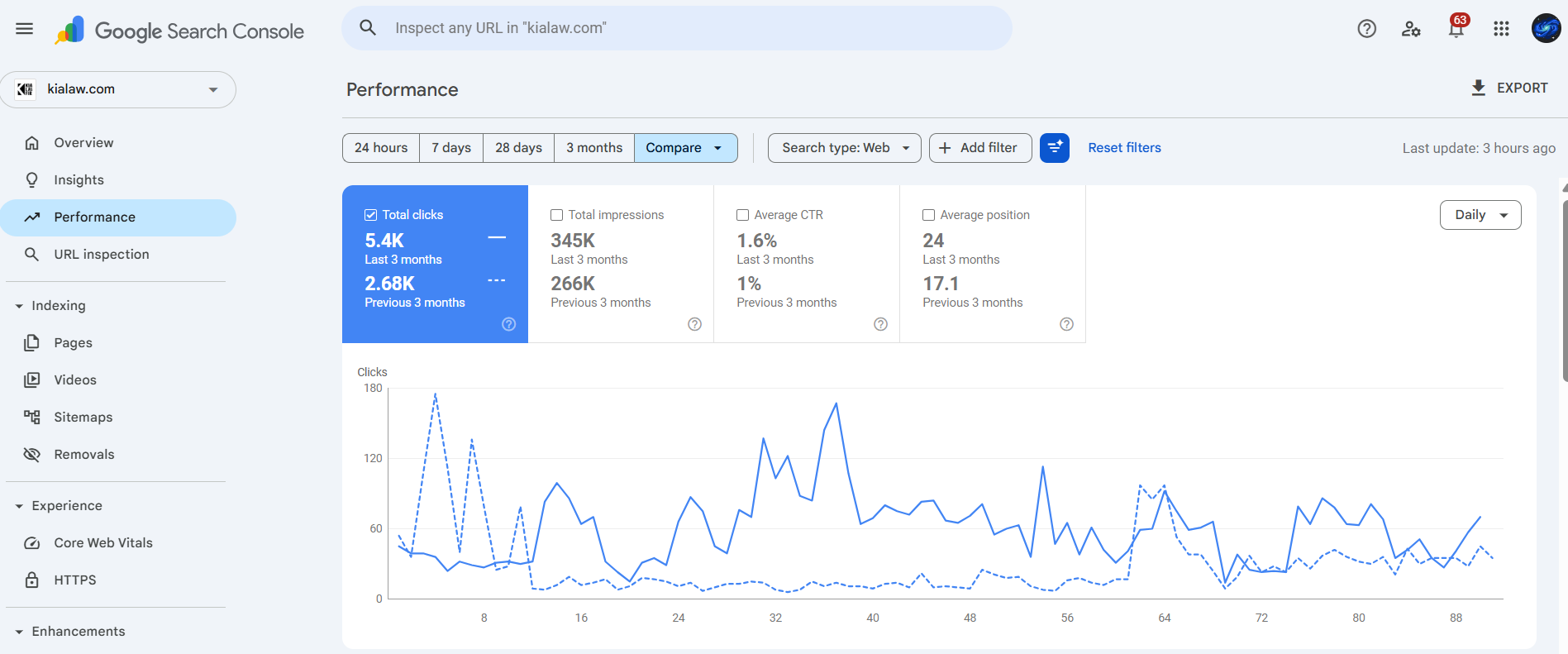
Kia Law, a growing legal services firm, partnered with ResultFirst to improve visibility in competitive local search results and attract more qualified consultations. The strategy focused on high-intent local queries, trust signals, and content aligned with how users search, including AI-driven and conversational queries.
Within three months, the firm achieved:
- Clicks: 2,675 → 5,396 (approx. 101% increase)
- Impressions: 266,261 → 345,307 (approx. 29% growth)
More importantly, the growth came from users actively searching for legal help, resulting in stronger inquiry quality and consistent consultation flow.
Explore More:
- SEO for Personal Injury Lawyers
- SEO for Criminal Defense Lawyers
- SEO for Employment Lawyers
- SEO for Family Law Firms
- SEO for Bankruptcy Lawyers
- SEO for Estate Planning Lawyers
- SEO for Tax Lawyers
- SEO for Immigration Lawyers
Conclusion
Crowded local markets can feel tough. Yet the path to growth is clearer than it looks. Focus on local intent and show up where people decide.
Build strong practice pages and real location pages. Keep your Google Business Profile active. Earn reviews and respond with care. Publish content that answers the questions people are afraid to ask. Then connect that content with smart internal links.
Also, fix the technical basics so your site works well on phones. Over time, these steps build trust and visibility. That is the real goal of SEO for Divorce Attorneys in a busy city.
If you stay consistent, you can compete with larger firms and still keep your message human.
FAQ’s:
WHAT TO READ NEXT
READY TO BUILD PREDICTABLE ORGANIC GROWTH?
We are the only TOP SEO services agency providing Real Results in a Real Performance model. We help growth hungry companies outperform their competition and achieve 300%+ growth in their digital marketing initiatives.
- San Jose, CA, 95120

- +1-888-512-1890

- sales@resultfirst.com

0K+
KEYWORDS RANKED
0M+
REVENUE GENERATED
0 Years
SOLVING COMPLEX SEO
0+
TEAM MEMBERS