



 sales@resultfirst.com
 +1-888-512-1890
WooCommerce SEO in 2026: Advanced Strategies to Outrank Competitors and Win AI Search

Really want to take your WooCommerce store to the next level? WooCommerce is certainly the key to your success. In the crowded world of e-commerce, visibility is everything.
WooCommerce is arguably the most friendly e-commerce platform. It helps your store to get the right people at the right time. It gives you complete control of your site, from site speed to product pages to every small improvement that can boost your visibility. This is also where well-planned WooCommerce SEO services can support growth by aligning your store with how users search and how platforms rank content today.
Also, the way people search is changing. It means your store needs to be optimized for the new, smarter, and conversational way of searching with AI engines like ChatGPT, Gemini, and more.
So, today, let’s dive into some advanced technical SEO, the latest 2026 ranking factors, and optimizing for AI-powered searches. This article is going to be helpful whether you’re doing your WooCommerce SEO in-house or you’re using a WooCommerce SEO agency.
What is WooCommerce SEO?
Source: Woostify
WooCommerce SEO is the optimization of e-commerce sites for more visibility in search engines like Google or AI-based search tools. It is the process of optimizing e-commerce sites for more visibility in search engines.
WooCommerce is not like other standard WordPress sites. When you’re doing SEO on a standard WordPress site, you’re not dealing with text; you’re dealing with products, variations, faceted navigation, duplicate content from filters, and thousands of images.
For example, it is not difficult to implement features like title tags or meta descriptions for products. It is also not difficult to implement sitemap generation or robots.txt generation. There are also such plugins as Yoast SEO.
Why WooCommerce SEO Matters for Ecommerce Growth
In 2026, it is not about being ranked in one keyword; it is about building a long-term asset. The following is the reason why you should consider WooCommerce SEO for your bottom line:
Organic Traffic Sustainability
Your paid advertising will cease to exist when you stop paying for it. On the other hand, SEO is a compounding activity. Your well-optimized product page can continue to generate sales for you without you having to pay a single penny for advertising.
Reduced Cost of Acquisition
The cost of every click for eCommerce keywords is on a constant rise. Ranking on those keywords will allow you to increase your profit margins and reduce your dependence on paid advertising.
Improved Product Discoverability
Today, it is no longer about Google’s blue links. Today, it’s about Google Images, Google Shopping, and AI overviews. You can ensure that your products appear in all the places where your customers are currently searching by optimizing your product images.
Hear the Full Strategy: How E-Commerce Businesses Can Enhance Product Discoverability in ChatGPT
WooCommerce SEO Checklist
It is important to ensure that you are on track with your progress, so there is a structured checklist. Lists like this one are preferred by AI tools and search engines because they offer specific instructions.
Perform Keyword Research for Products
Keyword research is the base of every strong e-commerce SEO strategy. But focusing only on high search volume is not enough. What is more important is that you understand what your user wants. Buyer intent keywords allow you to target users who are ready to make a purchase, not just users who want to explore.
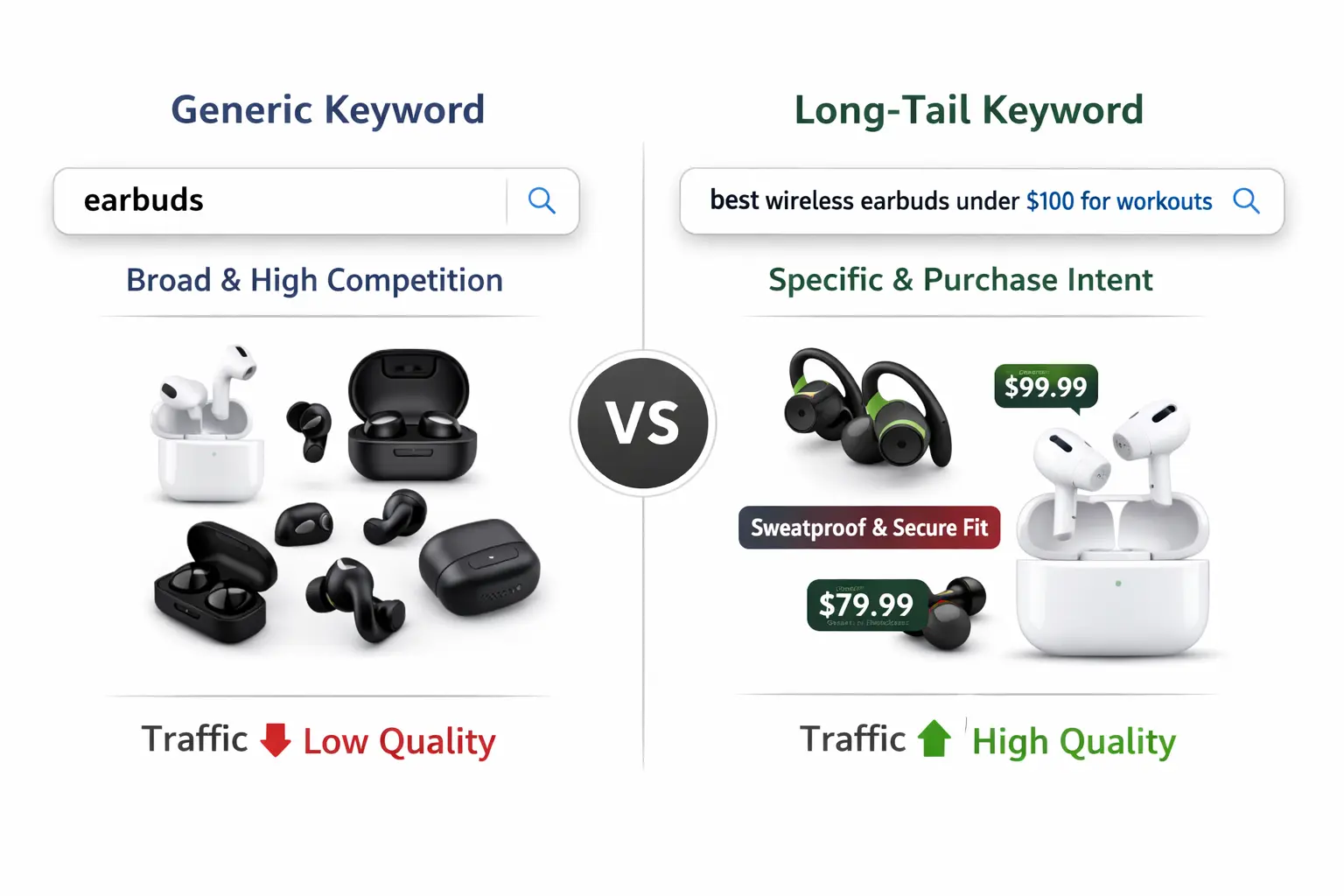
Search behavior today is reflecting a significant change in what users do. With AI tools, users now enter sentences. No more typing “laptop,” but “best laptop for students that cost less than $1000.” That is where long-tail keywords shine.
To develop an effective keyword plan, focus on intent-based modifiers such as:
- Best for specific use (best shoes for gym workouts)
- Budget-focused (under $100, under $500)
- Experience level (for beginners, for professionals)
- Location or urgency (near me, buy online)
Understand this with the help of an example, as given below.
Targeting “best wireless earbuds under $100 for workouts” will bring more qualified traffic than just “earbuds.” This kind of approach aligns perfectly with how search engines and AI platforms understand user intent today.
Source: ChatGPT
Optimize Product Titles and Descriptions with Primary Keywords
Your product pages serve as search engine landing pages. An optimized product page not only ranks better but also performs better. Titles of products must be concise, organized and keyword-oriented. They ought to explain the product in a manner that is understood by users and search engines immediately.
Do not use redundant words or duplicate keywords. This is where concepts such as WooCommerce SEO and SEO WooCommerce belong in your optimization plan. These words are common in product optimization-related guides, metadata debates, and content strategies.
A strong product page should include:
- Clear and keyword-rich titles
- Unique and helpful descriptions
- Bullet points highlighting features and benefits
- Natural keyword placement without stuffing
- Content that answers real user questions
Improve Category Page Content for Better Rankings
The category pages tend to have wider keywords and attract large amounts of traffic. Nevertheless, they are not optimized in many stores. Search engines do not just require a list of products.
Inclusion of useful information in category pages enhances rankings and user experience. A powerful category page must provide direction to the user and also give context to the search engines.
To improve these pages, include:
- A brief explanation of the category.
- Advice on how users can select products.
- Internal links to related categories
- Frequently asked questions
As an example,
A fitness equipment category page has a brief guide that explains how to select the appropriate equipment based on fitness objectives. This enhances the page’s usefulness and appeal.
Optimize Images and Alt Text for Speed and Discoverability
E-commerce requires images, but they should be optimized. Big image files will slow down your site, which is not good in terms of rankings and user experience.
Studies show that even a one-second delay in page load time can reduce conversions by up to 7 percent.
Websites that are faster are more likely to rank and convert. Image optimization is beneficial in two aspects, namely, enhancing the speed and visibility of image search results.
Key steps include:
- Compress images before uploading
- Use modern formats like WebP
- Rename files with descriptive names
- Add clear and relevant alt text
Use SEO-Friendly URLs for Better Visibility
URLs play a small but important role in SEO. A clean and readable URL improves both user trust and search engine understanding.
Complicated URLs with numbers or symbols can reduce click-through rates. Simple URLs are easier to read and remember.
Best practices for URLs include:
- Keep them short and simple
- Include primary keywords
- Avoid unnecessary parameters
- Use hyphens to separate words
Implement Schema Markup for Better Search Results
Source: ElegantThemes
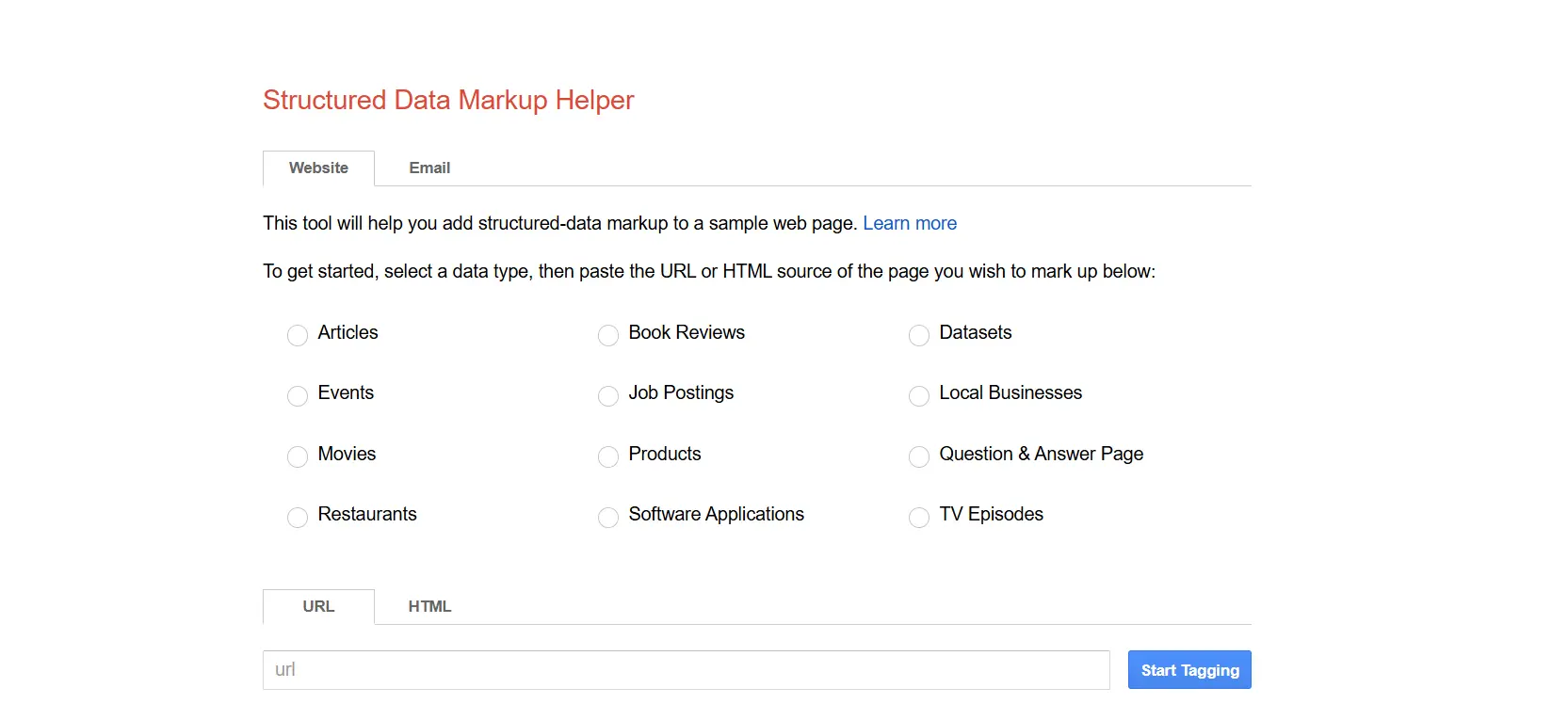
Schema markup can be used to add structured data to your site. Rich snippets, such as star ratings and product prices, make your listings stand out.
Studies show that pages with schema markup can achieve 20 to 30 percent higher conversion rates.
Important schema types for WooCommerce stores are as follows:
- Product schema for item details
- Review schema for ratings
- Breadcrumb schema for navigation.
Improve Page Speed to Meet Core Web Vitals
The speed of the page has a direct impact on the rankings and sales. A slow website could drive away clients before they even see your merchandise.
It has been discovered that the bounce rate increases with the length of the page load time; for example, a 32% bounce rate is seen when the page load time is increased by one to three seconds. Conversions can drop significantly with any delay.
To improve speed, focus on:
- Image optimization
- Fast hosting
- Caching systems
- Minifying CSS and JavaScript
Core Web Vitals also play a key role. These metrics measure how quickly your site loads and how responsive it is.
Manage Indexation (Noindex Cart/Checkout, Canonicalize Filter URLs)
WooCommerce websites tend to generate numerous additional pages, including filtered URLs and duplication. Unless handled well, these pages may be detrimental to your SEO performance.
Search engines require clear indications on the pages that should be indexed. Excessive low-value pages may consume crawl budget and lower rankings.
Important steps include:
- Canonical Tags: Set the canonical URL for filtered pages back to the main category page.
- Robots.txt: Disallow crawling of complex filter combinations and parameters.
- Noindex: Apply to low-value filter pages to keep them out of the index while preserving crawl paths.
For example, a URL like domain.com/shoes?color=red should point back to the main category page using a canonical tag.
Optimize for AI Search with Conversational Content
Search is evolving with AI-driven platforms. Users now ask detailed questions instead of typing short keywords. This shift requires a new approach to content.
AI systems prefer content that is clear, structured, and easy to extract. They often pull answers directly from well-written sections.
To optimize for AI search:
- Use natural and conversational language
- Add clear definitions and summaries
- Include FAQ sections
- Structure content with headings and bullet points
- Use schema markup
It is also at this point that the debate of scaling the SEO efforts comes in, and businesses can consider professional WooCommerce SEO services to match their strategy with the AI-driven search trends. As an example, rather than writing about a smartphone, you can write about the answer to the question. Which smartphone is best under 500 to play games? This is consistent with users’ current search habits.
Technical SEO for WooCommerce Stores
Technical SEO optimization is the key to the visibility of a WooCommerce store. The search engines can crawl and index your site with built-in features such as title tags, meta descriptions, and XML sitemaps.
Quick page loads are essential; large images may slow down the performance, and compression is the solution. The use of breadcrumbs enhances user experience and navigation, as it helps visitors keep track of their position.
Duplicate Content & Canonical Tags
WooCommerce is well-known for creating duplicate content, especially with product variations and filter parameters (e.g., ?color=red&size=large).
Canonical tags are used to tell Google that a specific URL is the original version of a URL. The canonical in filtered pages should refer to the main category page so as to focus ranking signals. As an example, in case multiple URLs contain the same product, a canonical tag will ensure that the indexing and ranking of one page is performed.
Pagination
Rel=prev and rel=next tags are applied in the case of more than one page category page (pages 1, 2, and 3). Page 2 to Page 1: Canonicalize and you will de-index your deeper products.
Related Post: E-Commerce Pagination: A Complete Guide
XML Sitemap
Make sure that your XML sitemap is created and uploaded to Google Search Console. It must include only pages that can be indexed (products and categories) and not the non-essential pages, such as the cart and the checkout.
Crawl Optimization
Use robots.txt to block search engines from crawling irrelevant pages like /cart/, /checkout/, and /my-account/. This helps preserve your crawl budget for the pages that matter.
Best WooCommerce SEO Plugins
Although it is necessary to hire a WooCommerce SEO company to do the heavy lifting, it is necessary to use the appropriate plugins in the day-to-day management.
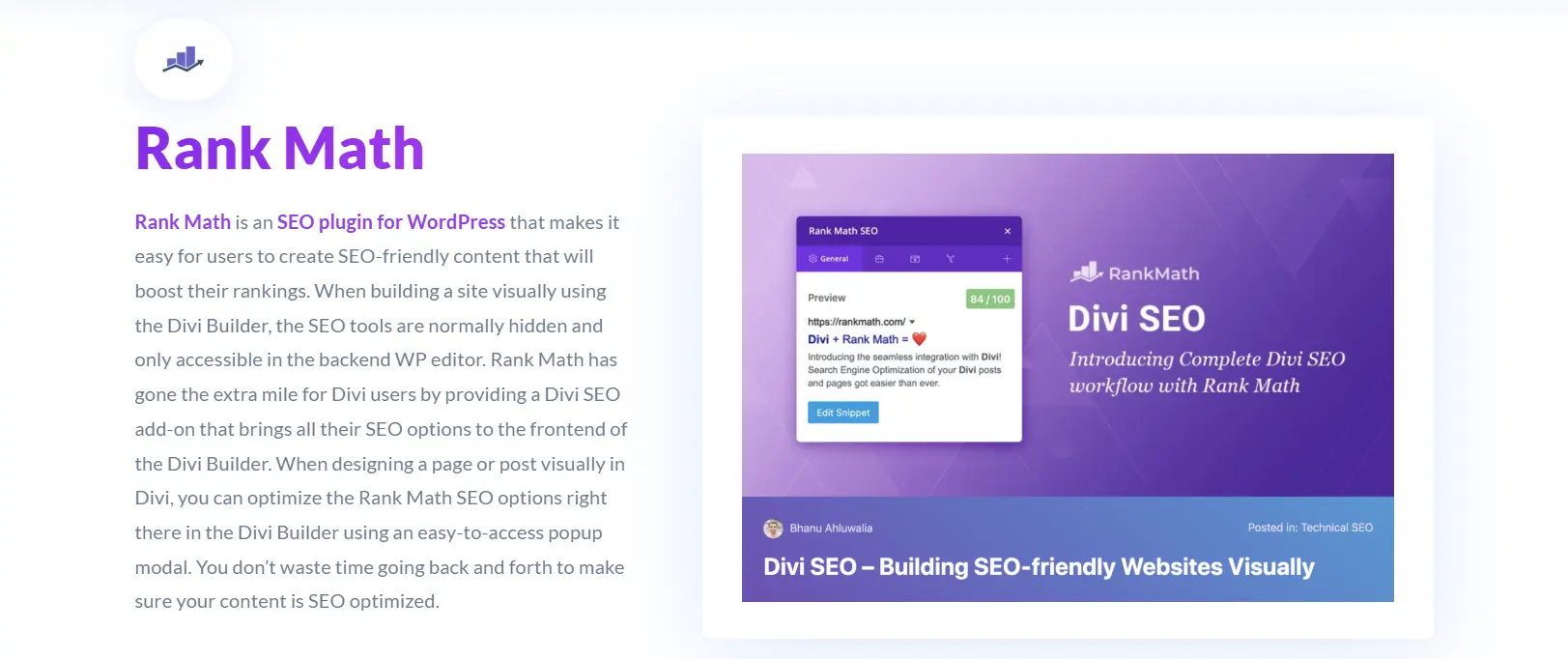
Yoast SEO / Rank Math: The industry standards. They handle meta tags, sitemaps, and basic schema markup. Rank Math offers more advanced WooCommerce-specific controls.
Source: ElegantThemes
- WP Rocket / LiteSpeed Cache: Caching plugins are vital for meeting Core Web Vitals. They speed up your site significantly.
- WPSSO Core: This is the most full-fledged schema markup control system, with hundreds of schema types and Google Merchant errors fixed.
- All-in-One SEO: It is a superb WordPress SEO plugin with premium WooCommerce SEO features, such as easy product and category page optimization. This plugin can help you raise the search engine ranking of your store.
How a WooCommerce SEO Agency Can Help Grow Your Store
SEO management of a WooCommerce store may get complicated, particularly when the number of products in your catalog increases. It is here that the services of a WooCommerce SEO agency can come in.
An agency will introduce skills, resources, and experience to manage every aspect of SEO. They do not have to guess what works but rely on the proven strategies on the basis of data and industry trends.
A WooCommerce SEO firm usually deals with several optimization fields. This entails improving product pages, fixing technical issues, and creating a strong content strategy.
A specialized agency brings the following:
- Technical audits: They find canonical tag conflicts, broken schema, and crawl errors that most store owners overlook.
- Content Strategy: They help in creating category pages and “best for” guides that target high-intent, long-tail keywords, which are essential for success in AI overviews.
- Performance Optimization: They make sure your image delivery, caching, and hosting are set up to pass Core Web Vitals.
AI Search Optimization: They streamline your content to be found by AI engines (such as Google SGE) when they generate answers, so that your products are found in the generative answers.
Conclusion
WooCommerce SEO is no longer just about adding keywords to product pages. It is a complete system that combines technical optimization, structured content, user experience, and AI search readiness to drive consistent growth. When your store is built around clean architecture, fast performance, and intent-driven content, it becomes easier to attract high-value traffic and convert it into revenue.
If you want to move faster and avoid guesswork, working with a performance-driven partner can make a clear difference. As a performance-based ecommerce SEO agency, ResultFirst helps eCommerce brands implement data-backed WooCommerce SEO strategies that focus on real outcomes, not just rankings. From technical fixes to AI-driven visibility, the goal is simple: turn your store into a consistent revenue engine. If you are ready to scale your growth with a structured approach, this is the right time to take action
FAQs
Get in touch with us to talk about SEO!

WHAT TO READ NEXT
READY TO BUILD PREDICTABLE ORGANIC GROWTH?
We are the only TOP SEO services agency providing Real Results in a Real Performance model. We help growth hungry companies outperform their competition and achieve 300%+ growth in their digital marketing initiatives.
- San Jose, CA, 95120

- +1-888-512-1890

- sales@resultfirst.com

0K+
KEYWORDS RANKED
0M+
REVENUE GENERATED
0 Years
SOLVING COMPLEX SEO
0+
TEAM MEMBERS