

 sales@resultfirst.com
 +1-888-512-1890
9 Best Enterprise SEO Tools For 2027

The top 9 enterprise SEO tools for 2027 include Semrush, Ahrefs, Moz Pro, Screaming Frog SEO Spider, DebugBear, BrightEdge, Lumar, JetOctopus, and Conductor.
These platforms help large organizations manage SEO across websites with thousands or millions of pages, covering areas such as technical SEO, keyword research, rank tracking, backlink analysis, site crawling, content optimization, competitor research, website performance, and enterprise reporting.
Each tool has a different focus. Semrush and Ahrefs cover keywords, competitors, backlinks, and visibility. Moz Pro supports rankings, links, and site optimization. Screaming Frog, Lumar, and JetOctopus focus on technical SEO. DebugBear specializes in performance and Core Web Vitals, while BrightEdge and Conductor provide enterprise SEO, content optimization, reporting, and workflow management.
The right tool depends on your website size, SEO goals, technical needs, reporting requirements, integrations, and team workflow. Below, we compare all nine enterprise SEO tools in detail.
What Are Enterprise SEO Tools?
Enterprise SEO tools are comprehensive, cloud-based software platforms built to manage, scale, and analyze SEO across large organizations with thousands or millions of web pages.
Unlike basic SEO tools, enterprise platforms need to handle large URL inventories, multiple websites, international markets, extensive keyword sets, large backlink databases, and multiple users or teams.
They can help enterprises:
- Crawl large websites and identify technical SEO problems
- Track thousands of keywords across locations and devices
- Analyze competitors and their search visibility
- Research keywords and search intent
- Monitor backlinks and referring domains
- Find content optimization opportunities
- Monitor website performance and Core Web Vitals
- Analyze search-engine crawling and log files
What Are The Best Enterprise Seo Tools For 2027?
Semrush, Ahrefs, Moz Pro, Screaming Frog SEO Spider, DebugBear, BrightEdge, Lumar, JetOctopus, and Conductor are some of the best enterprise SEO tools for 2027.
| Tool | Best For |
| Semrush | All-around SEO, keyword research, technical audits, competitors, backlinks |
| Ahfers | Backlink analysis, competitor research, keywords, content, site audits |
| Moz Pro | Keyword research, rank tracking, links, and website optimization |
| Screaming Frog | Technical SEO crawling and URL-level auditing |
| DebugBear | Website performance and Core Web Vitals |
| Lumar | Enterprise SEO, content performance, forecasting, and reporting |
| BrightEdge | Large-scale technical SEO and website quality |
| JetOctopus | Large crawls and log-file analysis |
| Conductor | Enterprise SEO, content, and AI search visibility |
1. Semrush: Best All-Around Enterprise SEO Tool
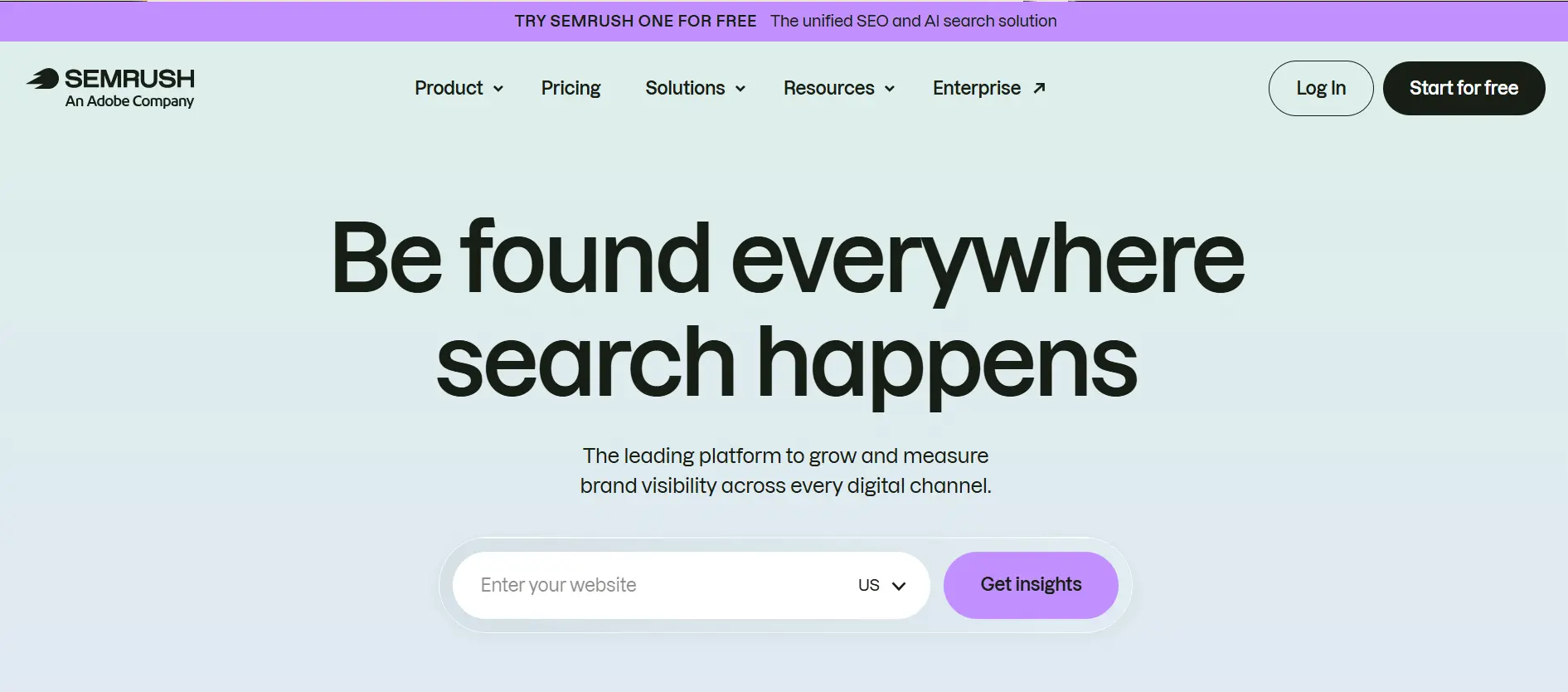
Semrush is a strong enterprise SEO platform for organizations that need keyword research, rank tracking, competitor analysis, backlink analysis, technical auditing, and content-related SEO capabilities in one ecosystem.
Its broad feature set makes it useful for SEO teams that need to move between research, technical analysis, competitive intelligence, and reporting without relying on a separate tool for every task.
Key Semrush features
- Keyword research
- Keyword intent analysis
- Keyword gap analysis
- Daily rank tracking
- Backlink analysis
- Competitor analysis
- Technical SEO audits
- On-page SEO analysis
- Organic traffic research
- SERP analysis
- Content optimization
- SEO reporting
Its Keyword Magic Tool is particularly useful for expanding a keyword set and finding related search terms that may reveal additional opportunities.
For enterprise teams, the value comes from bringing multiple SEO workflows together. Instead of looking only at rankings, teams can investigate why competitors are visible, where technical problems exist, and which keywords or topics deserve attention.
Best for
Semrush is best for enterprises that want a broad, all-in-one SEO platform.
What to consider
Its large feature set can create a learning curve for new users. Enterprises should also evaluate whether its data, integrations, user access, and reporting capabilities match their specific workflow before committing to a platform.
2. Ahrefs: Best for Backlink and Competitor Research
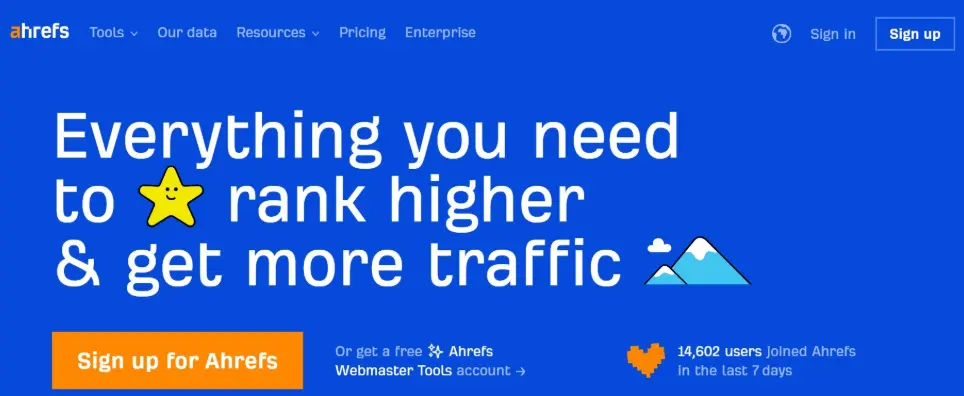
Ahrefs is particularly strong for backlink analysis, competitor research, keyword research, content research, and technical website analysis.
One of Ahrefs’ biggest strengths is its backlink database. According to Ahrefs, its live index contains over 15 trillion backlinks and is updated every 15–20 minutes, giving SEO teams detailed insight into backlinks, referring domains, anchor text, lost links, and competitors’ link activity.
Its enterprise platform includes Site Explorer, Keywords Explorer, Site Audit, Rank Tracker, competitive research, and Google Search Console integration. Ahrefs also provides raw HTML, rendered HTML, extracted text, and hreflang analysis within Site Audit.
Key Ahrefs features
- Backlink analysis
- Competitor research
- Keyword research
- Content research
- Rank tracking
- Site auditing
- Link-building research
- Historical ranking analysis
- Hreflang analysis
- Google Search Console integration
- Keyword cannibalization analysis
One of Ahrefs’ major strengths is the depth of its link data. SEO teams can examine referring domains, backlinks, anchor text, lost links, and competitors’ strongest linked pages.
Its keyword tools can also help teams identify related topics, estimate search opportunities, and organize keywords around broader content themes.
Best for
Ahrefs is best for enterprises where backlinks, competitors, keyword research, and content opportunities are major priorities.
What to consider
Ahrefs is data-rich, so teams need a clear SEO process to turn its findings into actions. Enterprises should also evaluate the platform’s integrations and reporting requirements before choosing it as their primary system.
3. Moz Pro: Best for Core SEO Management
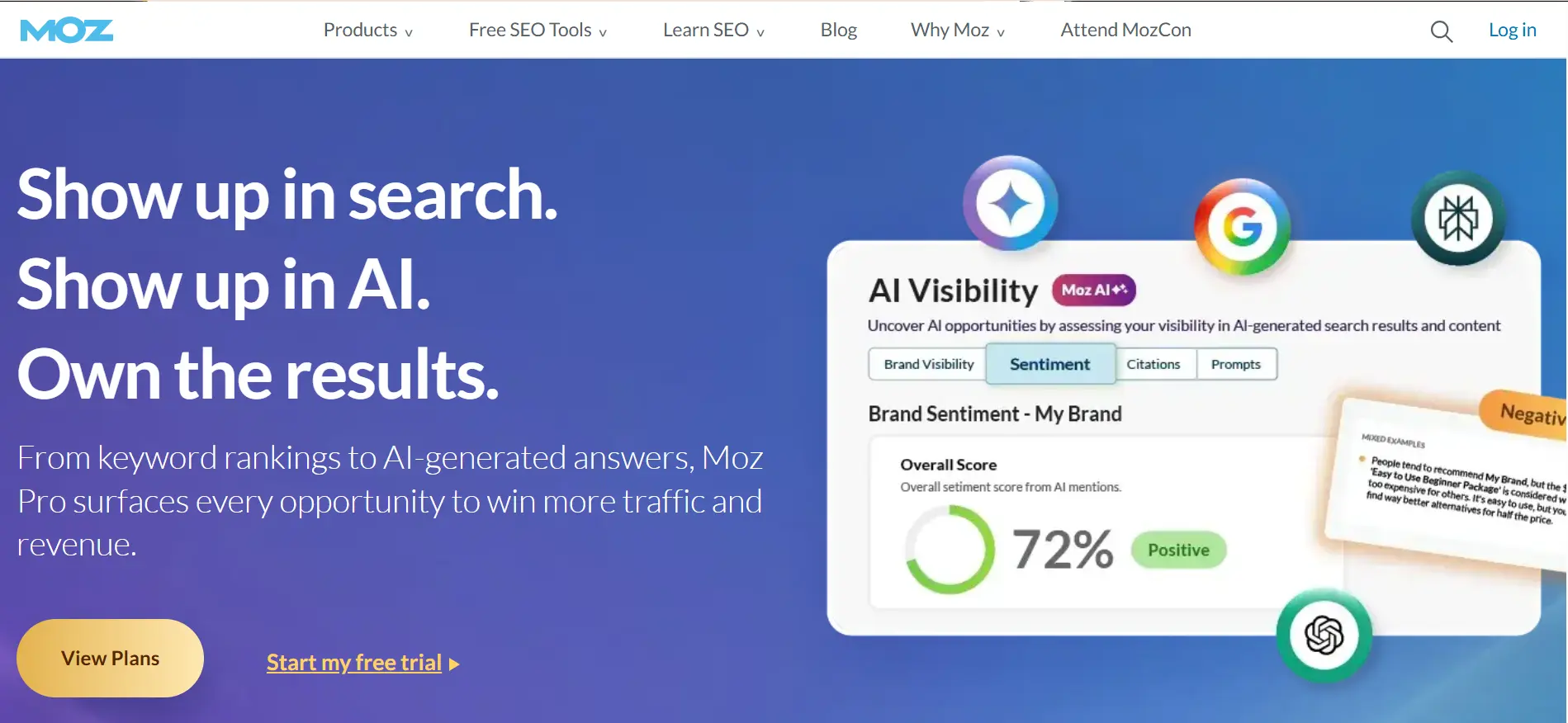
Moz Pro is an all-in-one SEO platform covering keyword research, rank tracking, site auditing, link analysis, and page optimization.
It can help enterprise teams monitor rankings, identify technical problems, research keywords, analyze links, and find opportunities to improve individual pages.
Key Moz Pro features
- Keyword research
- Rank tracking
- Website crawling
- Site audits
- Backlink analysis
- Page optimization
- Competitor research
- Link opportunity discovery
- Custom reporting
Moz’s ecosystem also includes local-search capabilities, which can be relevant for organizations managing many physical locations.
For enterprise SEO teams, Moz Pro can work well when the goal is to maintain a consistent set of core SEO workflows rather than build a highly specialized technical stack.
Best for
Moz Pro is best for organizations that want established SEO capabilities for keywords, rankings, links, and on-page optimization.
What to consider
For extremely large technical audits, some teams may prefer a dedicated crawler such as Screaming Frog, Lumar, or JetOctopus alongside their main SEO platform.
4. Screaming Frog SEO Spider: Best for Technical SEO
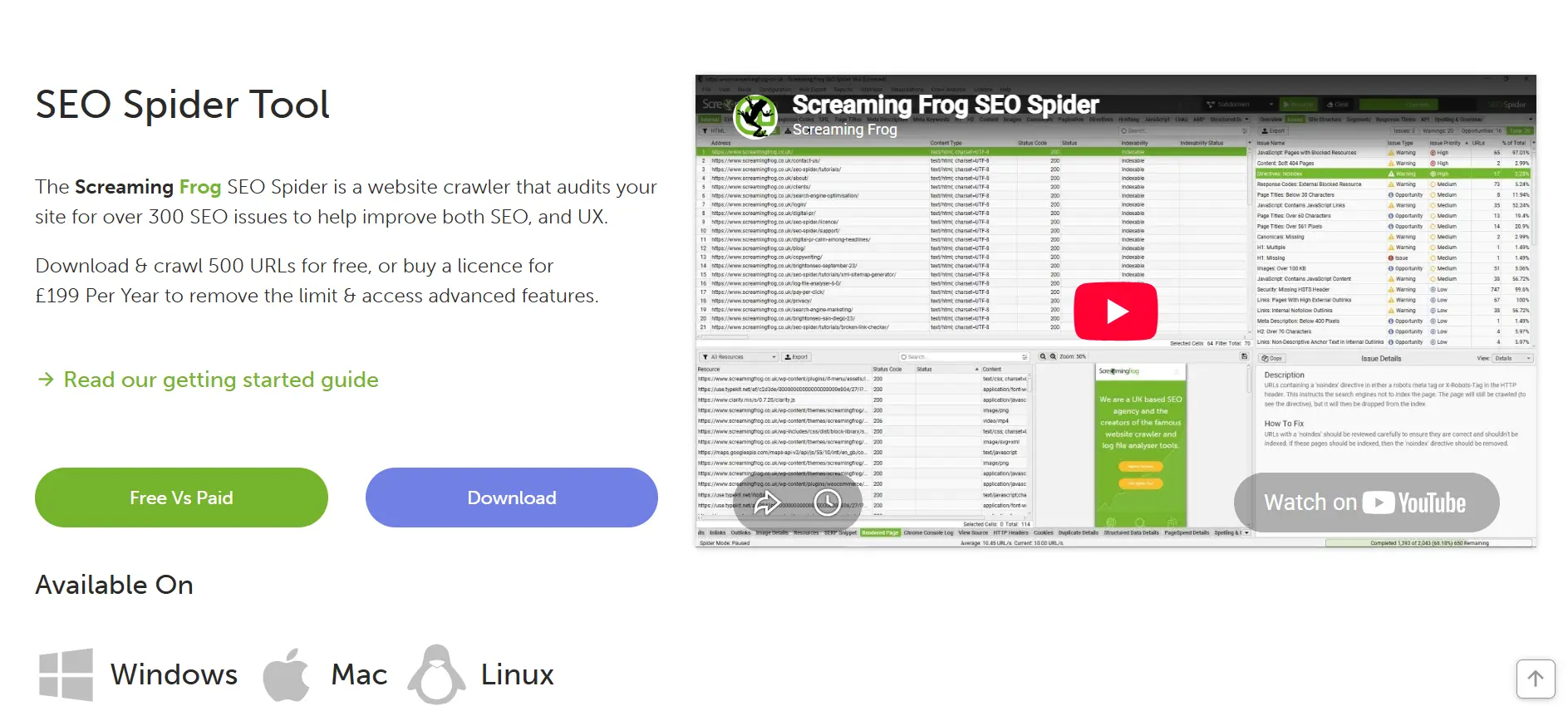
Screaming Frog SEO Spider is a desktop website crawler designed for detailed technical SEO analysis.
It is particularly useful when an SEO team needs URL-level information rather than only high-level dashboard metrics.
Key Screaming Frog features
- Broken-link detection
- Redirect auditing
- Page-title analysis
- Meta-description analysis
- Duplicate-content discovery
- Canonical analysis
- Robots directives review
- XML sitemap generation
- JavaScript crawling
- Site architecture visualization
- XPath data extraction
- Google Analytics and Search Console integrations
It can identify issues such as missing metadata, broken links, duplicate tags, incorrect redirects, and other technical problems. The original article also highlights its ability to crawl JavaScript websites and visualize site architecture.
Best for
Screaming Frog is best for technical SEOs who need detailed crawling and URL-level analysis.
What to consider
Very large crawls can require careful configuration and processing resources. It is also more specialized than an all-in-one SEO platform.
5. DebugBear: Best for Website Performance and Core Web Vitals
DebugBear is a specialized website-performance platform for monitoring page speed, Core Web Vitals, and real-user performance.
It should not be viewed as a replacement for a full SEO suite. Instead, it complements enterprise SEO tools by giving technical teams deeper performance data.
DebugBear provides synthetic monitoring, real-user monitoring, Google CrUX data, and performance analysis.
Key DebugBear features
- Core Web Vitals monitoring
- Real-user monitoring
- Synthetic testing
- Google CrUX data
- Page-speed monitoring
- Performance alerts
- Lighthouse-based testing
- Custom dashboards
- Performance experiments
- Website scans
- API capabilities
It can help teams investigate LCP, INP, and CLS, identify slow pages, and understand how real users experience website performance.
Best for
DebugBear is best for enterprises that need continuous website performance and Core Web Vitals monitoring.
What to consider
It is a performance-focused platform, so most enterprise SEO teams will still need a separate platform for keywords, backlinks, competitors, and broader SEO intelligence.
6. BrightEdge: Best for Enterprise Search Visibility and Reporting
BrightEdge is built for enterprise organizations that need search visibility, content performance, competitive intelligence, reporting, and forecasting at scale.
One of its established concepts is Share of Voice, which measures a brand’s visibility in search compared with competitors. BrightEdge describes Share of Voice as a way to understand competitive visibility and identify gaps in content coverage.
Key BrightEdge capabilities
- Enterprise rank tracking
- Competitive recommendations
- Content recommendations
- Search opportunity forecasting
- Technical site auditing
- Backlink management
- Local SEO
- Global SEO
- Mobile search analysis
- Customized reporting
- Performance measurement
- Enterprise integrations
The platform is particularly relevant when SEO data needs to be communicated beyond the SEO department.
A large organization may need separate views for SEO specialists, content teams, marketing leaders, product teams, and executives. Enterprise reporting can make that data easier to organize and distribute.
Best for
BrightEdge is best for large organizations that need enterprise SEO intelligence, content recommendations, forecasting, and reporting.
What to consider
Enterprise platforms can involve higher costs and more implementation work than standalone SEO tools. The value depends on how extensively the organization uses its enterprise capabilities.
7. Lumar: Best for Large-Scale Technical SEO
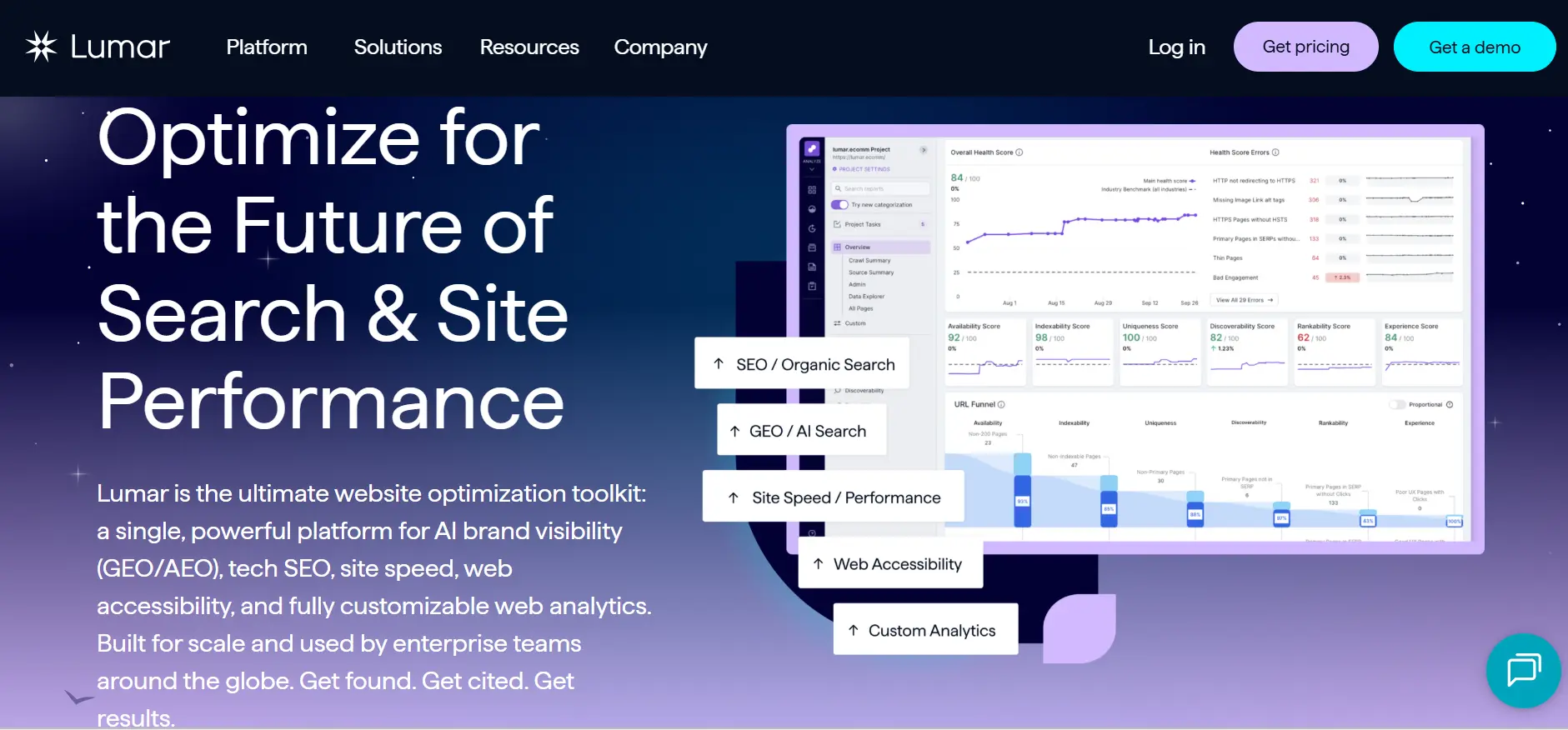
Lumar is the current platform associated with DeepCrawl and focuses heavily on technical SEO, website crawling, and website quality.
The original article identifies DeepCrawl as Lumar and highlights its ability to run multiple crawls, monitor trends, identify technical patterns, and provide granular URL-level data.
Key Lumar capabilities
- Large-scale website crawling
- Technical SEO analysis
- Website quality monitoring
- Indexability analysis
- Crawl comparisons
- URL-level analysis
- Custom reporting
- Shared reports and workflows
- Technical issue monitoring
Lumar is useful when an enterprise needs to understand how technical changes affect a large website.
Best for
Lumar is best for enterprises with large websites and complex technical SEO requirements.
What to consider
Its technical depth can make it less approachable for beginners. Teams should have a defined process for prioritizing and resolving the issues it identifies.
8. JetOctopus: Best for Large Crawls and Log Analysis
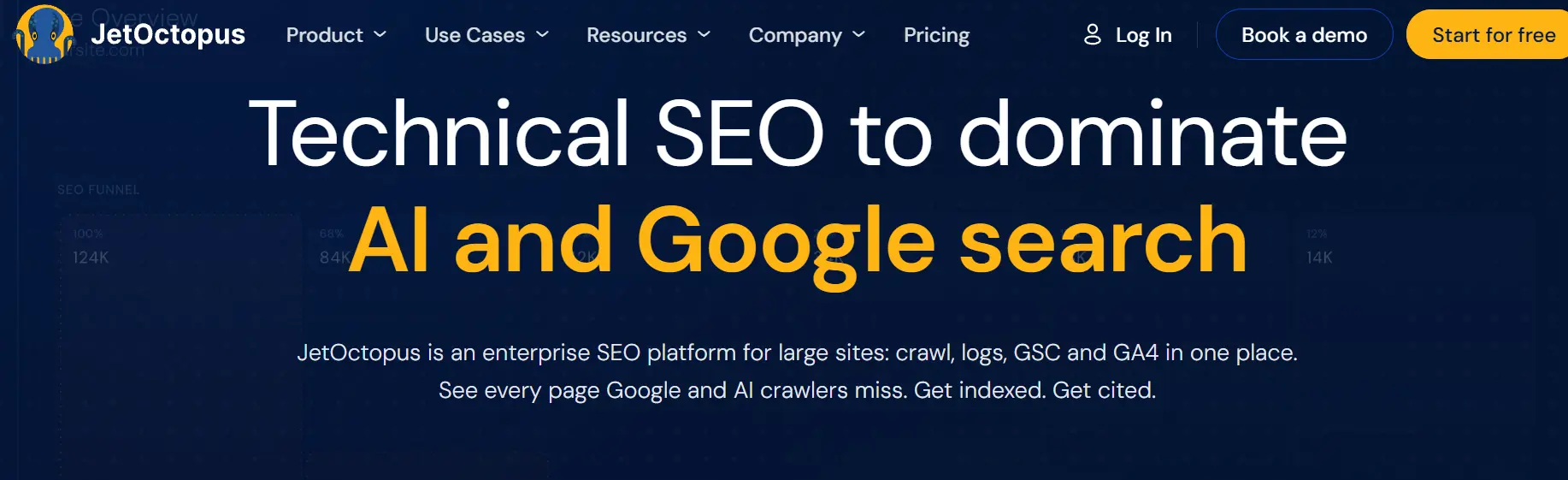
JetOctopus combines website crawling with log-file analysis, making it useful for enterprises that need to understand both website structure and search-engine crawling behavior.
The original article highlights its ability to analyze duplicates, 404 errors, hreflang, orphan pages, page-speed issues, and logs, while integrating with Google Search Console.
Key JetOctopus features
- Large-scale website crawling
- Log-file analysis
- Google Search Console integration
- Orphan-page analysis
- Hreflang analysis
- Duplicate-page analysis
- 404 analysis
- Internal-link analysis
- Crawl comparisons
- SEO data analysis
Log analysis is especially valuable for large websites because it can show how search-engine bots interact with a site.
This helps SEO teams investigate whether important pages are being crawled, whether crawl resources are being spent on low-value URLs, and whether technical changes have affected crawler behavior.
Best for
JetOctopus is best for enterprise technical SEO teams that need large crawls and detailed log analysis.
What to consider
The amount of data can become difficult to interpret without a clear technical SEO framework. Its cost should also be evaluated against the amount of crawling and log analysis your team actually needs.
9. Conductor: Best for Enterprise SEO and AI Search Visibility
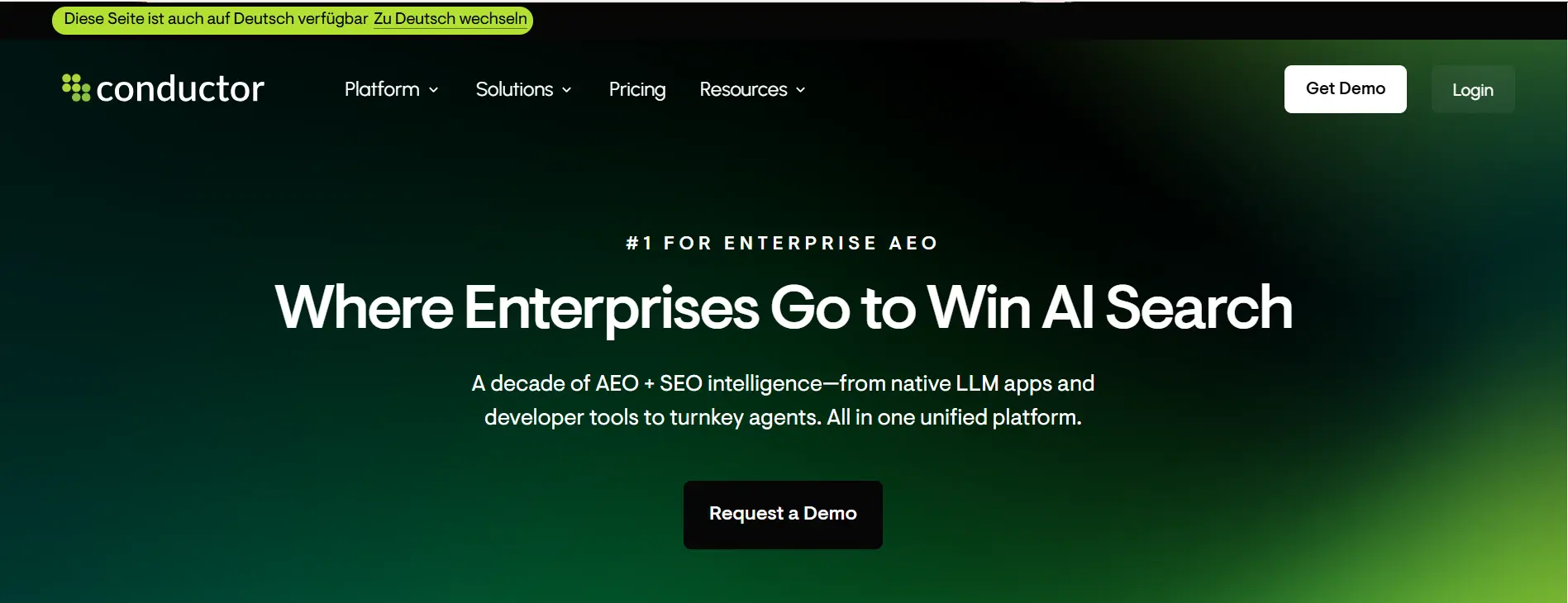
Conductor is now positioned around both traditional SEO and AI search visibility, making it particularly relevant for enterprises managing search across Google and AI answer engines.
Its current platform combines SEO intelligence, AI search visibility, content, website performance, and enterprise reporting. Conductor says its Intelligence platform can track brand visibility across AI search surfaces such as ChatGPT and Perplexity while connecting that information with traditional search and website performance data.
Key Conductor capabilities
- Keyword research
- Competitor research
- Rank tracking
- Content optimization
- Search visibility measurement
- Technical website monitoring
- AI search visibility
- AI citation and mention tracking
- Enterprise reporting
- Website performance analysis
This is an important change from the older Searchlight positioning. Enterprise SEO in 2026 increasingly involves understanding not only traditional rankings but also how brands appear in AI-generated answers.
Best for
Conductor is best for enterprises that want to manage traditional SEO, content, and AI search visibility within one enterprise platform.
What to consider
AI-search measurement is still an evolving area. Enterprises should define which AI surfaces, markets, queries, citations, and business outcomes they actually need to monitor before selecting an AEO/SEO platform.
Read More: 25+ Best Free SEO Tools
What Are the Benefits of Enterprise SEO Tools?
Enterprise SEO tools help large organizations manage websites, identify SEO issues, track performance, improve content, and automate reporting at scale.
- Manage Large Websites: Analyze thousands or millions of URLs systematically instead of checking pages individually.
- Find Technical SEO Issues: Identify broken links, redirects, duplicate content, indexing issues, canonical problems, and missing metadata.
- Track Organic Performance: Monitor keyword rankings, search visibility, traffic trends, and performance across markets.
- Analyze Competitors: Discover competitors’ keywords, top pages, content strategies, and backlinks.
- Improve Content: Find keyword opportunities, search intent, content gaps, and pages that need optimization.
- Automate SEO Reporting: Create centralized dashboards and automated reports for SEO teams, managers, and executives.
- Connect SEO Data: Integrate SEO platforms with analytics, Search Console, CMS, development, and marketing systems.
How Do You Choose the Right Enterprise SEO Tool?
Choose an enterprise SEO tool based on the problem you need to solve, not the number of features listed on the pricing page.
- Need all-around SEO data? Semrush or Ahrefs can cover keywords, competitors, backlinks, and search visibility.
- Need large-scale technical audits? Consider Screaming Frog, Lumar, or JetOctopus.
- Need performance monitoring? DebugBear focuses on Core Web Vitals and site speed.
- Need enterprise reporting and content management? BrightEdge or Conductor may better fit large SEO teams.
- Need AI search insights? Check whether the platform tracks relevant AI search visibility and performance metrics.
Before choosing, compare crawl capacity, keyword limits, data accuracy, integrations, automation, reporting, user access, and total cost against your actual SEO workflow.
What Should You Check Before Buying Enterprise SEO Software?
Before choosing a platform, evaluate:
- Crawl capacity: Can it handle your website size?
- Keyword scale: Can you track enough keywords across required markets?
- Data coverage: Does the platform provide the data your team actually needs?
- Integrations: Can it connect with your analytics and marketing stack?
- Reporting: Can different teams receive the reports they need?
- Automation: Can recurring monitoring and reporting be automated?
- Technical SEO: Can it identify the problems affecting your website?
- Competitor research: Can you benchmark competitors effectively?
- AI search: Can it measure relevant AI visibility if required?
Conclusion
The best enterprise SEO tool for 2027 depends on your website’s size, SEO goals, technical requirements, and reporting needs. Semrush, Ahrefs, Moz Pro, Screaming Frog, DebugBear, BrightEdge, Lumar, JetOctopus, and Conductor each address different enterprise SEO challenges.
However, software alone does not deliver SEO growth. The right tools must be combined with clear processes, skilled teams, quality content, technical improvements, and continuous performance tracking to turn SEO data into measurable business results.
Looking to scale your enterprise SEO strategy? ResultFirst is a performance-driven enterprise SEO agency that helps businesses identify SEO opportunities and turn them into measurable growth through technical SEO, content optimization, and enterprise search visibility.
Related Post: Enterprise SEO Solutions for Scalable Performance and Growth
FAQs:
WHAT TO READ NEXT
READY TO BUILD PREDICTABLE ORGANIC GROWTH?
We are the only TOP SEO services agency providing Real Results in a Real Performance model. We help growth hungry companies outperform their competition and achieve 300%+ growth in their digital marketing initiatives.
- San Jose, CA, 95120

- +1-888-512-1890

- sales@resultfirst.com

300K+
KEYWORDS RANKED
546M+
REVENUE GENERATED
18 Years
SOLVING COMPLEX SEO
150+
TEAM MEMBERS