



 sales@resultfirst.com
 +1-888-512-1890
Proven Law Firm SEO Strategies That Drive Client Inquiries

Getting new clients is not easy for law firms today. People no longer flip through phone books or ask friends first. They search online. In fact, most legal clients begin their journey on search engines, and many never go past the first page of results.
This means one thing. If your firm does not show up online, you miss real opportunities. But ranking alone is not enough. Today, you need a smart law firm SEO strategy that brings the right people to your website and turns them into inquiries.
Search is also changing fast. AI tools now answer questions directly. Many users rely on these answers instead of visiting websites. This shift has changed how law firms must approach SEO.
Today, you’ll learn proven strategies that actually drive client inquiries. These methods focus on trust, clarity, and real results.
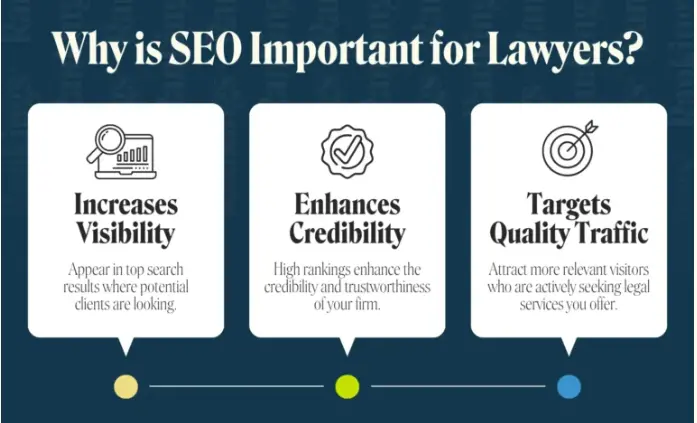
Why Does a Law Firm Need SEO?
Source: Rankings
Law firm SEO strategy is the process of optimizing a law firm’s online presence to attract qualified clients through search engines and AI-driven results. SEO demands a profound understanding of the landscape of the legal industry and the search behavior and search habits of the target audience.
Now, let’s look at the difference. When someone types a legal question into Google, for example, “What should I do after a car accident?” Google displays the answer right at the top of the page. No need to even click. That’s called an AI Overview. And that’s changed everything.
Research shows that for informational searches, the click-through rate falls by 40%, as the user gets the information they need without visiting a website. So, if your entire strategy was to get people to click on your blog posts, I’m guessing you’re a bit frustrated right now.
AI is transforming the marketing of law firms by:
- Automated client intake systems that run around the clock.
- Using predictive analytics to find potential leads.
- Tailored advertising campaigns that generate revenue
- Lowering costs while achieving better outcomes.
The winners are the ones who show up for these searches and appear to be the obvious choice.
These are the SEO tactics that you will need if you wish your legal practice to appear at the top of the search engine results page.
Build a Strong Foundation with Local SEO

Source: LinkedIn
If there’s one thing that drives more calls than anything else, it’s showing up in local search results. When someone searches “lawyer near me” or “divorce attorney in [city],” the results that show up on Google Maps are often the first thing people see.
Learn More About Local SEO.
Optimize Your Google Business Profile
That means your Google Business Profile is one of the most powerful tools you have. And it’s free. But most law firms don’t use it well. It should be complete and accurate. This builds trust and improves visibility. A strong profile increases your chances of appearing in local results.
Make sure to include:
- Correct business name and contact details
- Updated office hours
- Clear service categories
- High-quality images
- Client reviews
Write Content That AI Wants to Cite
Remember how I said AI overviews are taking clicks away? Well, there’s an upside. When AI answers a question, it often cites its sources. And if your content gets cited, you get visibility, even if people don’t click.
So how do you get cited? You create content that AI trusts.
That means writing content that is:
- Specific. Don’t just write “what is medical malpractice.” Write “how to know if you have a medical malpractice case in Texas.”
- Experience-based. Share real examples. What have you actually seen? What mistakes do clients make? What surprises people about the process?
- Well-structured. Use headings, lists, and clear organization. AI reads the structure to understand what’s important.
- Authoritative. Make sure it’s clear who wrote it and why they’re qualified to write it.
When you create content this way, you’re not just hoping to rank. You’re building something that AI systems want to point to as a reliable source. And that’s a huge advantage.
Also, look for user intent. People search with a purpose. Your content should match that purpose.
Types of intent include:
- Informational (learning about legal topics)
- Navigational (finding a law firm)
- Transactional (ready to hire a lawyer)
Read More: How to Optimize Content for AI Search
Use Location-Based Keywords
Adding location terms helps search engines understand where you operate. This improves your chances of ranking for local searches.
Examples include:
- “divorce lawyer in Chicago”
- “personal injury attorney in Houston”
These keywords bring users who are ready to hire.
Create Dedicated Location Pages
If your firm serves multiple cities, create separate pages for each location. This improves relevance and helps users find specific information.
Each page should include:
- Local contact details.
- Services offered in that area.
- Client testimonials from that location.
Use Simple Language
Legal terms can feel complex. But your content should be easy to read. Short sentences help users understand faster. This also improves engagement and keeps visitors on your site longer.
Add Helpful Content Formats
Different formats improve user experience and SEO performance. Use:
- Blog posts to answer common questions
- Guides to explain legal processes
- FAQs for quick answers
- Case examples for real insights
This mix makes your website more useful.
Use AI SEO to Stay Competitive
AI is changing how people search and how results appear. A modern SEO company for attorneys must focus on both traditional SEO and AI-driven SEO strategies.
Optimize for AI Answers
AI tools now provide direct responses. To appear in these answers, your content must be structured clearly.
Key steps include:
- Use headings that answer questions
- Add structured data
- Provide clear and direct explanations
- Keep content factual and reliable
Write in a Natural Tone
AI systems prefer content that feels human. Write in a conversational tone. Avoid complex sentences. This improves both readability and AI visibility.
Combine AI with Human Expertise
AI can help with research and data analysis. But human insight is still important. This creates stronger and more trusted content.
Balance both by:
- Using AI tools for keyword research
- Adding real experience to content
- Updating content regularly
Clients’ Reviews Are Your Secret Weapon

Source: Landingi
If you could tell every law firm one thing to focus on, it would be reviews. Not because they make you feel good. Because they actually drive business.
Reviews affect your local ranking. They affect whether someone clicks on your listing. And they affect whether that person actually calls. A firm with 200 reviews and a 4.7-star average is going to get more calls than a firm with 10 reviews, even if both are good lawyers.
The trick is to make it easy for clients to leave reviews. Send them a direct link. Ask at the right time, after a positive outcome, when they’ve said thank you.
And when you get a negative review?
Stay calm. Be professional. Offer to make it right offline. Future clients are watching how you respond
Answer Engines: The New Way People Find Lawyers
As mentioned earlier, people are using ChatGPT and Gemini to find lawyers. This is called “answer engine” searching. And it is growing fast.
Here is how it works. Someone types, “What should I do if I am hurt at work?” The answer engine reads through websites and gives a direct answer. It might pull from your website if you have clear, helpful content.
So, how do you get your content pulled into these answers? You write in plain language. You use headings that ask questions. You give clear, step-by-step answers.
You also add things that AI cannot make up. Real stories from your cases (without client names). The data you have collected. Insights that only come from experience.
When you do this, answer engines see your site as trustworthy. They quote you. And that means more people find your firm
Learn More: Answer Engine Optimization Guide
Target High-Intent Keywords
Keywords help search engines understand your content. But choosing the right ones is important.
Focus on Conversion Keywords
These keywords bring users ready to act.
Examples:
- “Hire a family lawyer.”
- “best criminal attorney near me”
Use Long-Tail Keywords
Longer keywords often bring better results. They match specific searches and attract qualified leads.
Benefits include:
- Lower competition
- Higher conversion rates
- Better targeting
Video: The Tool Most Lawyers Ignore
Let me share a secret weapon that most law firms are not using.
Video.
And in 2026, video matters more than ever. Answer engines are pulling from video content. YouTube is the second biggest search engine in the world. People watch videos to understand their legal problems.
You do not need fancy equipment. Use your phone. Record short videos answering common questions. Things like, “What happens at a first divorce consultation?” or “How do I know if I have a personal injury case?”
Keep them short. Two to three minutes. Post them on your website and on YouTube.
Then add a transcript. That helps search engines understand what the video is about.
Small firms can beat big firms just by using video. Because video builds trust faster than any blog post ever could.
Answer the Questions People Are Actually Asking
When you’re looking for a lawyer, you generally have the same questions. What’s going to happen? How much is this going to cost me? How long is this going to take? Do I even have a case?
If your website doesn’t answer those questions, people are going to go to someone who does. One of the most powerful types of content you can create is what I call a “do I have a case?” page.
Examples:
- Do I have a wrongful termination claim?
- Can I sue for medical malpractice?
- How do I know if I have a personal injury case?
- What counts as workplace discrimination?
The pages on your site will be exactly what people are searching for when they’re ready to take action. And when you answer clearly, you build trust before they ever pick up the phone.
Build Trust with E-E-A-T
Google’s E-E-A-T guidelines include Experience, Expertise, Authoritativeness, and Trustworthiness. These guidelines are extremely important for legal content.
Law firms are classified as “Your Money or Your Life” (YMYL) types, which means that if there is any false information on your site, it could have serious consequences for someone’s life or finances. To build trust with your users, law firms should share their experiences.
- Experience: Has the author handled cases like this? Real client work matters.
- Expertise: Is the creator qualified? Practicing attorneys or specialized legal marketers carry more weight.
- Authoritativeness: Does your firm have external recognition? Bar memberships, awards, and media mentions help.
- Trustworthiness: Is your content accurate and current? Outdated information damages credibility.
Read More: What Is E-E-A-T and Why It Matters in AI Search
Update Your Website Regularly
A lot of law firms treat their website like it’s finished. They build it, launch it, and then only touch it to add a blog post every few months. But that’s a problem.
AI search tools are constantly evolving. They’re looking for fresh, timely content. They’re looking for sites that are actively maintained. A static website sends a signal that you’re not paying attention.
Plan to update your website regularly. Not just the blog. Update your service pages. Add new case results. Refresh your attorney bios. Make sure your contact information is current. Small updates add up over time.
The Role of AI in Driving Better Client Inquiries
AI is not just changing search. It is also improving how law firms connect with users. However, AI should support your strategy, not replace it. Human expertise still plays a key role in building trust.
AI tools can:
- Analyze user behavior
- Suggest better keywords
- Improve content performance
- Enhance user experience
Why Partner With ResultFirst
If your firm wants more than just website visits, it needs a strategy built around real client actions. As a performance-based lawyers SEO agency, ResultFirst delivers SEO services for Attorneys that focus on turning search visibility into meaningful inquiries, not just higher rankings.
Instead of stopping at traffic, the approach looks at the full client journey, from how potential clients find your firm to what ultimately motivates them to reach out. Your website does not simply attract visitors, it becomes a guided path that encourages action at the right moment.
With ResultFirst, your firm benefits from a clear, focused law firm SEO strategy designed to connect with people who are actively looking for legal help. From strengthening local visibility to creating genuinely helpful content and improving conversion paths, every step is aligned with one goal: making it easier for the right clients to trust your firm and take the next step.
Conclusion: Turn SEO Into a Consistent Client Engine
SEO for law firms is not just about rankings. It is about building trust and driving real inquiries. A strong law firm SEO strategy connects your firm with people who need help right now.
At the same time, AI is changing how search works. Firms that adapt to AI-driven SEO will gain a strong advantage. They will reach users faster and provide better answers.
When you follow these strategies, SEO becomes more than just a marketing effort. It becomes a steady and reliable source of client growth.
If you’re ready to build a law firm SEO strategy that drives real results, ResultFirst is here to help. We focus on what actually works, no fluff, no tricks, just proven strategies that bring in client inquiries.
FAQs:
WHAT TO READ NEXT
READY TO BUILD PREDICTABLE ORGANIC GROWTH?
We are the only TOP SEO services agency providing Real Results in a Real Performance model. We help growth hungry companies outperform their competition and achieve 300%+ growth in their digital marketing initiatives.
- San Jose, CA, 95120

- +1-888-512-1890

- sales@resultfirst.com

300K+
KEYWORDS RANKED
546M+
REVENUE GENERATED
18 Years
SOLVING COMPLEX SEO
150+
TEAM MEMBERS