


 sales@resultfirst.com
 +1-888-512-1890
Answer Engine Optimization: How To Get Your Content Into AI Responses

Traditional search is changing in a big way. When you ask a question with Google, you get the perfect answer at the top. You just don’t need to read ten different websites. The answer is just there.
This is the world we live in now.
Search engines are turning into answer engines. Platforms like ChatGPT, Google AI Overviews, and Perplexity give users direct answers. They pull information from across the web and create one clear response. If your content is not part of those answers, people may never find your brand.
This shift changes everything about how we create content. The old rules of SEO focused on getting clicks. The new rules focus on getting cited. You need to optimize content for answer engines if you want to stay visible.
Today, we’ll go through how to optimize content for answer engines and stay ahead in this new search world. You will learn the best practices for optimizing content for answer engines and why AI SEO are becoming essential for modern brands. Let us dive in.
What is Answer Engine Optimization?
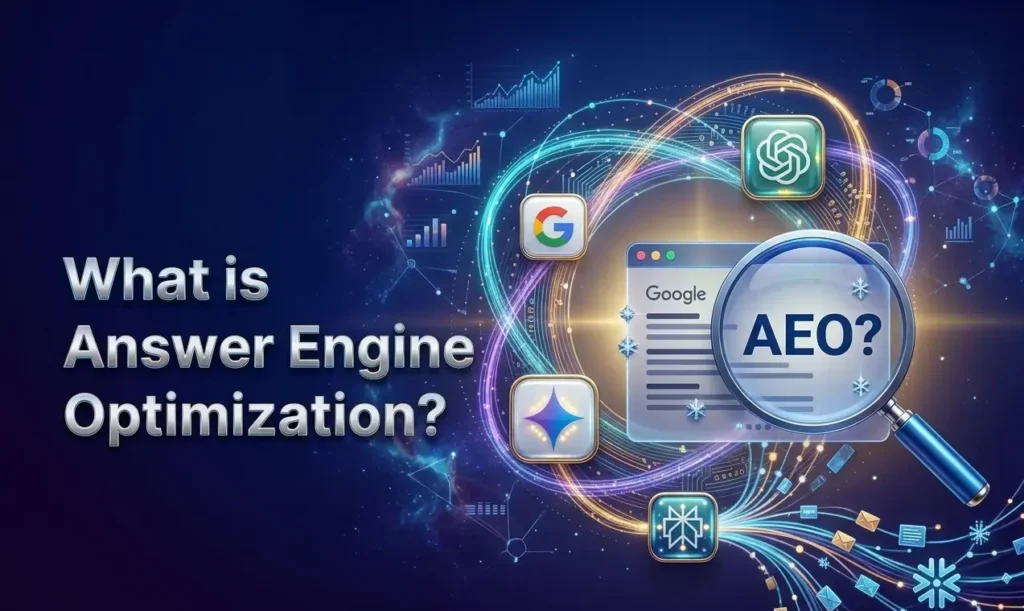
Answer Engine Optimization, or AEO, is the practice of structuring your content so AI systems can find it, understand it, and use it in their answers. Traditional SEO helps search engines find your pages. AEO helps AI models cite your content
AI does not select and display the best page. It selects and combines the best pieces from numerous pages. If your page’s content isn’t organized in sections that AI can extract, it could be ranked #1 on Google and still not be mentioned in an AI response.
The Conductor AEO/GEO Benchmarks Report states that AI traffic now makes up 1.08% of all website sessions, increasing by about 1% every month.
Read More: Answer Engine Optimization (AEO): The Ultimate Guide
How AEO Differs From Traditional SEO
Source: Quantum IT Innovation
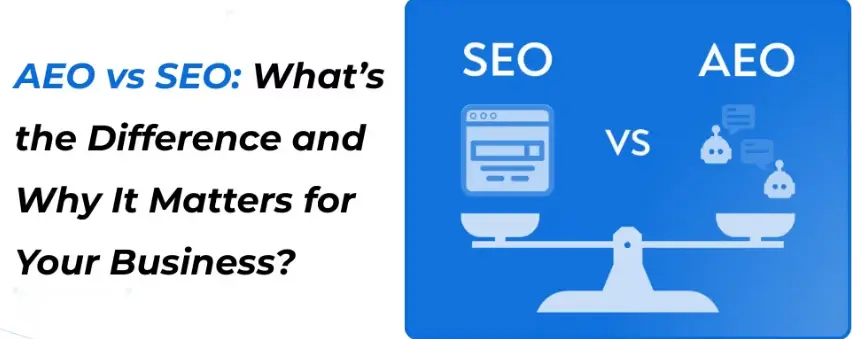
Traditional SEO focuses on keywords, backlinks, and rankings. You try to get people to click your link. AEO focuses on clarity, structure, and authority. You want AI to quote your content directly.
Here is a simple breakdown:
| Traditional SEO | Answer Engine Optimization |
| Rank on page one | Get cited in AI answers |
| Data clicks | Drive brand visibility |
| Keywords matter | Intent and structure matter |
| Backlinks are key | Authority signals are key |
Learn More: AEO vs SEO: Key Differences, Examples & Strategy
Why Does AEO Matter for Your Business?
People now expect direct answers. They do not want to dig through links. They want the solution right away. Over 60% of searches now end without a click to a website. That number is growing.
If your brand is not featured in AI answers, you are invisible to a huge audience. But when you optimize content for answer engines, you show up where customers are already getting answers. You build trust before they even visit your site.
Why You Need Both Strategies
Using only SEO today can limit your reach because search behavior has changed. AI tools now give direct answers, which means users may never visit your website. This is why you need both SEO and AEO working together.
A combined approach works best:
- Use SEO to attract traffic.
- Use AEO to build authority.
- Use both to increase reach.
When you combine both, you cover all touchpoints. You gain traffic from search and visibility from AI, which leads to better reach, stronger authority, and higher engagement.
Why AI Search Is Changing Everything
The way people search has changed. Instead of typing short keywords, they ask full questions. They have conversations with AI. They expect synthesized answers, not just lists of links. This shift is not a passing trend. It is the new normal.
The University of Toronto’s research, published in September 2025, was the first to examine the data across ChatGPT, Perplexity, Gemini, and Claude on a large scale. The most surprising discovery was the overwhelming preference for earned media among AI search results. In the consumer electronics sector, 92.1% of the time, AI cited third-party authoritative sources, while Google’s results preferred them only 54.1% of the time. The automotive sector was similar, with 81.9% relying
The Rise Of Zero-Click Searches
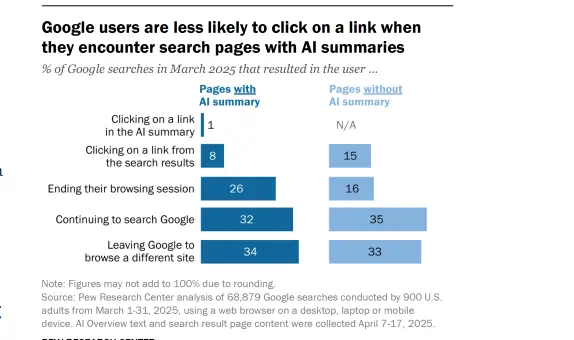
Zero-click searches happen when users find their answer directly on the search results page. They do not need to click through to a website. AI overviews have made this the default for many queries.
Research shows that when an AI summary appears, users click on traditional results only about 8% of the time. Without an AI summary, that number is 15%. That means AI answers cut click-through rates almost in half.
Source: PEW Research
For brands, this changes the goal. You no longer just want traffic. You want visibility inside the answer itself.
How Do AI Models Choose Sources?
AI models like Gemini and GPT do not just grab random content. They evaluate sources carefully. They want clear answers, good structure, and trusted authority.
When an AI answers a question, it analyzes the question and breaks it down into smaller parts. Then it looks for information on all of those parts. It synthesizes all this information into one answer. It cites sources based on whether they gave good information.
This means you have to make your content easy for an AI to digest. You have to optimize your content for answer engines so they see you as a trusted source.
What Are the Best Practices for Optimizing Content for Answer Engines?
Further, below you’ll learn the best practices for optimizing content for answer engines.
Technical Foundations For AEO Success
First, AI must have access to your content to cite it. While this may seem obvious, many companies inadvertently prevent AI crawlers from accessing their content without realizing it.
Allowing AI Crawlers To Access Your Site
AI models use specific crawlers to read content. GPTBot is for ChatGPT. ClaudeBot is for Claude. GoogleBot is for Google AI Overviews. You need to allow these crawlers in your robots.txt file.
Here is what to check:
- Make sure GPTBot is not blocked.
- Allow ClaudeBot and PerplexityBot.
- Keep GoogleBot unrestricted.
- Review your firewall settings.
Many brands accidentally block AI crawlers with aggressive security settings. Check your
Cloudflare or other firewall tools. Create explicit rules that allow these good bots through.
Using Structured Data And Schema Markup
Structured data is like giving AI a map of your content. It helps machines understand what your pages mean. Schema markup is the language you use to add this structure.
Key schema types for AEO include:
- Organization schema to define your brand entity.
- FAQPage schema for question-and-answer content.
- HowTo schema for step-by-step instructions.
- Article schema for blog content and authorship.
When you add schema, you make it easy for AI to extract specific information. It can grab your FAQ answers, product details, or how-to steps without guessing.
Ensuring Fast Loading And Mobile Performance
AI crawlers care about speed and usability. Slow pages get crawled less often. Poor mobile experiences hurt your authority signals.
Focus on these basics:
- Keep page load time under three seconds.
- Ensure your site works well on mobile devices.
- Avoid heavy JavaScript that hides content.
- Pass Core Web Vitals tests.
Creating Content That AI Likes To Cite
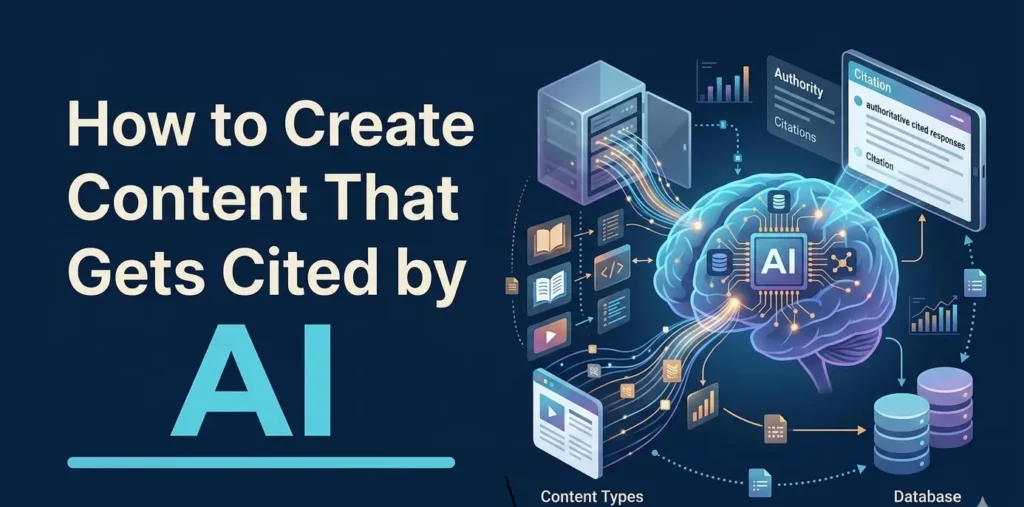
Your content structure determines whether AI picks your page or a competitor’s. You need to make it easy for models to find and quote your answers.
Writing Direct Answers First
When someone reads your page, they should find the answer immediately. Do not bury it in the fourth paragraph. Put the direct answer right after the heading.
This structure works well:
- Use a question as your heading.
- Answer in the first sentence.
- Add supporting details after.
If your heading is “What is answer engine optimization?” for instance, your first sentence must answer this question. Then, provide additional context.
Using Question-Based Headers
People ask questions in natural language. They say, “How do I improve my SEO?” not “SEO improvement methods.” Your headers should match how people actually speak.
Use headers that start with the following:
- What is…
- How do I…
- Why does…
- When should…
- Which one…
These are query-based headers that can help the AI match the content with the user’s query.
Structuring Information With Lists And Tables
AI likes structure. This is why the use of bullet points, numbered lists, and tables can help the AI extract the information with ease. This could make it more likely that the AI will cite the content. On the other hand,
- Bullet points can help highlight important points.
- Tables can be helpful for comparisons.
- Numbered lists can be helpful for procedures.
Building Topic Clusters And Pillar Pages
AI models trust sources that show deep expertise. A single article on a topic is not enough. You need to build clusters of content that cover subjects comprehensively.
Start with a pillar page that covers a broad topic. Then create cluster pages that dive into specific subtopics. Link them all together. This structure signals to AI that you are an authority.
For example, if your pillar page is about Answer Engine Optimization, your cluster pages could cover schema markup, voice search, and citation tracking.
Building Authority AI Can Trust
AI does not just look at your website. It looks at the entire web to decide if you are trustworthy. You need to build authority signals across many platforms.
Establishing Your Brand Entity
An entity is a well-defined thing. Your brand is an entity. AI needs to understand who you are, what you do, and why you matter. When AI sees consistent information everywhere, it builds trust in your brand.
To build your brand entity:
- Use consistent naming across all platforms.
- Claim your Google knowledge panel.
- Ensure your business listings are accurate.
- Add same-as links to authoritative profiles.
Earning Quality Backlinks And Mentions
Backlinks still matter. But now, unlinked mentions also count. AI looks at where your brand appears across the web, not just links. Every positive mention builds your authority. Every citation helps AI see you as a trusted source.
Focus on getting mentioned in:
- Industry publications
- Trusted news sites
- Professional directories
- Review platforms
Read More: 5 Types of Quality Backlinks You Need to Know for SEO
Demonstrating EEAT Signals
EEAT stands for Experience, Expertise, Authority, and Trustworthiness. Google uses it to evaluate content quality. AI models use similar signals. When you demonstrate EEAT, you give AI reasons to trust and cite your content.
Show your expertise by:
- Including author bios with credentials.
- Publishing original research
- Citing trusted sources
- Updating content regularly
- Adding case studies and real examples.
Optimizing For Voice Search And Conversational Queries
Voice search and answer engines go hand in hand. Voice assistants pull from the same content that AI uses for written answers.
Writing For Spoken Answers
Voice searches are conversational. People ask full questions. Your content should answer them in natural language.
Compare these approaches:
- Text search: “AEO best practices”
- Voice search: “What are the best practices for answer engine optimization?”
Your content should target the longer, conversational version. Write answers that sound natural when spoken aloud.
Targeting Long-Tail Questions
Long-tail questions are specific and detailed. They often start with “how,” “what,” “why,” or “where.” These questions match how people use voice search and AI chat. Then create content that answers each question directly.
Build a question inventory from the following:
- Sales calls and support tickets.
- People Also Ask boxes.
- AI Overviews for your topics.
- Customer questions you hear often.
Measuring Your AEO Success
Traditional SEO metrics do not tell the full story anymore. You need new ways to measure your impact in AI answers.
Tracking Citations And Mentions
Instead of just tracking rankings, track how often AI cites your content. Look for your brand and URLs in AI responses across platforms.
Ask yourself:
- Which AI platforms mention us?
- How often do we appear?
- What content formats get cited most?
- Who are our competitors in AI answers?
Monitoring AI Visibility
AI visibility measures how often your brand appears in AI-generated responses. This is becoming the new SEO scoreboard.
Track metrics like:
- Citation frequency across platforms.
- Share of voice in AI answers.
- Sentiment of AI mentions.
- Brand search growth.
Why Partner With ResultFirst for AEO
If your business wants more than rankings and clicks, ResultFirst’s answer engine optimization services can help you move ahead in the AI search era. As a performance-driven SEO partner, we build strategies that focus on real outcomes, not just visibility.
Our team works on the full journey. From search visibility to AI inclusion, we make sure your content does more than rank. It gets picked as an answer. We focus on what AI systems look for, such as clarity, structure, and intent. This helps your content appear where users pay the most attention.
When you invest in the right answer engine optimization services, you get a strategy built around high-intent queries, strong content structure, and user-focused answers. With ResultFirst, we align your content with how people search today and how AI delivers results.
The Key Takeaway
Answer engine optimization is the future of search. It is changing the face of search and how people consume information. In the modern era, it is no longer enough to be found on search engines. You also need to be found on AI Answers.
To accomplish this, you need to take a new approach. You need to ensure that your content is clear, well-structured, and helpful. First, use simple language. Answer questions directly. Make sure that your content is well-structured. Finally, focus on building trust through the provision of accurate information.
If you optimize your content for answer engines, you are more likely to be chosen by AI tools. This is a powerful approach to increasing your visibility and authority.
The best practices for optimizing content for answer engines are simple but powerful. If you follow these best practices, your content is sure to shine in the era of AI search.
FAQs:
WHAT TO READ NEXT
READY TO BUILD PREDICTABLE ORGANIC GROWTH?
We are the only TOP SEO services agency providing Real Results in a Real Performance model. We help growth hungry companies outperform their competition and achieve 300%+ growth in their digital marketing initiatives.
- San Jose, CA, 95120

- +1-888-512-1890

- sales@resultfirst.com

300K+
KEYWORDS RANKED
546M+
REVENUE GENERATED
18 Years
SOLVING COMPLEX SEO
150+
TEAM MEMBERS