



 sales@resultfirst.com
 +1-888-512-1890
How to Optimize Category Pages for Both Google and AI Search

Search is changing fast. AI Overviews, ChatGPT Search, Claude with web search, and Perplexity now generate conversational answers that cite sources. Yet traditional organic results still drive most final clicks. For eCommerce professionals, category pages (Product Listing Pages, or PLPs) sit at the intersection of three audiences: human shoppers, Google’s crawler, and AI assistants that reward short, verifiable facts with clean attribution.
The stakes are high. Research shows that AI Overviews can appear for over 30% of queries in competitive commercial categoriesT, and when they do, they can shift up to 40% of organic clicks away from traditional results. At the same time, AI systems that cite sources (like ChatGPT Search and Perplexity) are more likely to pick pages with clear specs, consistent markup, and fresh data.
This article gives you a precise, on‑page playbook to optimize category pages for both Google and AI search. You’ll get a clear flow: why it matters, what to fix on product pages first, how to structure PLPs for AI extraction, technical and bot considerations, measurement with stats, and a ready‑to‑run audit.
Related Post: The Impact of AI in E-commerce
Why Category Pages Matter in the AI Era
AI systems don’t just rank keywords. They interpret entities, structure, clarity, and topical relevance. Well‑optimized PLPs can be cited in AI summaries even when they don’t rank first organically. That creates a new opportunity: category pages as informational, navigational, and entity hubs that help both AI and users understand relevance.
Three principles govern success:
| Principle | What It Means | Why It Matters |
| Truth & parity | Page content, JSON‑LD, and feed match on the same day | Inconsistent facts kill trust and eligibility |
| Scannable facts | Short nouns/numbers repeated above the fold and in tables | Assistants lift clean entities reliably |
| Human first | Decision‑helping copy, then machine‑friendly structure | Converts shoppers and satisfies extraction |
Consider how people search today:
A user may ask:
- What are the best project management tools for remote teams?
- Which cybersecurity solutions are suitable for small businesses?
- What types of cloud hosting platforms are available?
- Which digital marketing services are best for startups?
These are category-level questions.
Before recommending specific options, AI systems need to understand the category itself. They need information about common features, key differentiators, use cases, benefits, limitations, and relationships between available options.
Well-optimized category pages provide exactly that information.
Rather than acting solely as navigation pages, they become knowledge hubs that help AI systems understand a topic and guide users toward informed decisions.
Do you know? 70% of online sales start on category pages, making them a critical touchpoint for both customer discovery and AI-driven recommendations.
Read More: How AI Search Is Transforming Ecommerce Product Discovery
How Google and AI Search Engines Evaluate Category Pages Differently
Traditional search engines primarily evaluate authority, relevance, content quality, user experience, and technical SEO signals.
AI search engines evaluate many of these same factors, but they also focus heavily on comprehension.
An AI system must determine:
- What the page is about
- Which entities it discusses
- How those entities relate to one another
- Whether the information is trustworthy
- Whether the content can support an answer
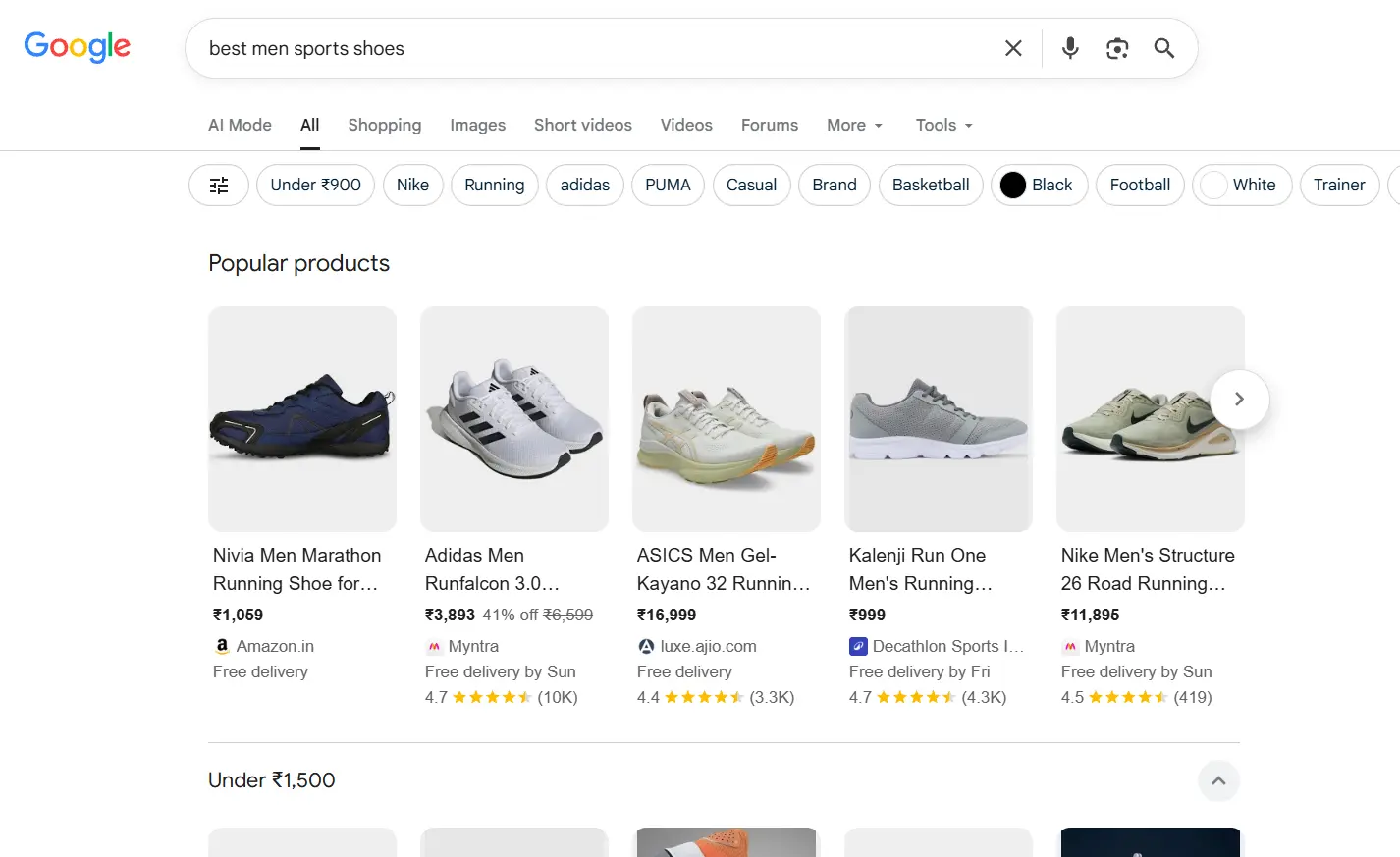
ChatGPT result for the same query below
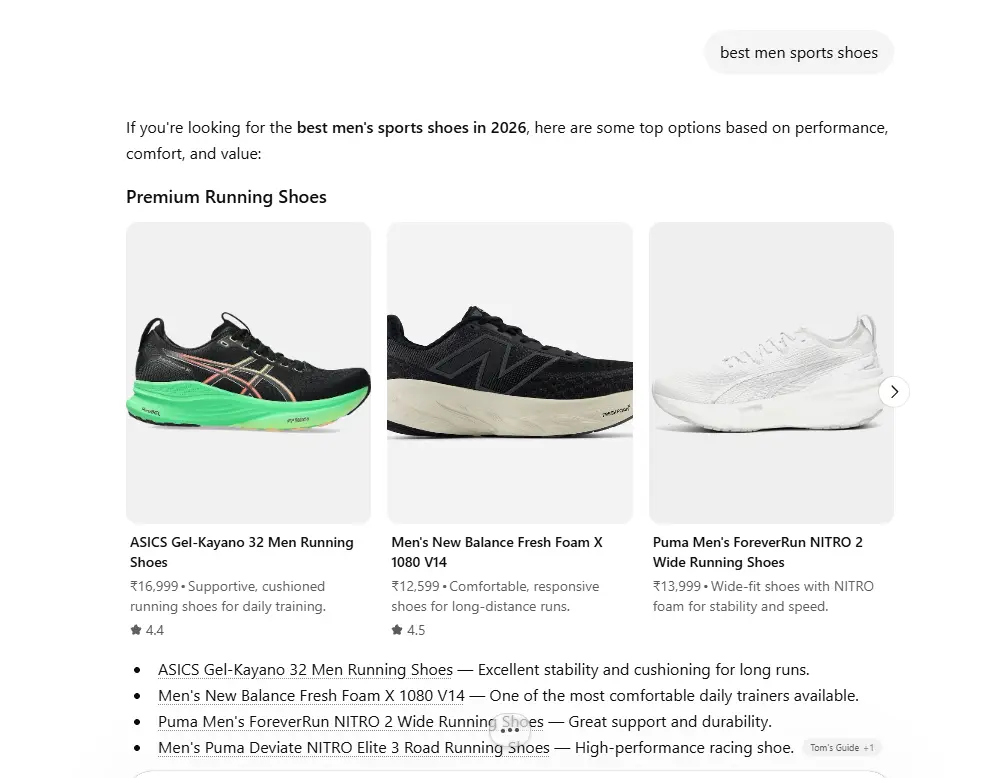
This shift shows that AI search systems evaluate far more than keywords alone. They analyze topics, entities, relationships, page structure, and overall context to determine whether a page is worth referencing. As a result, category pages can no longer function as simple product directories. They need to provide clear explanations, category context, use cases, and supporting information that help both users and AI models understand what the page covers. Businesses that adapt to this change can gain visibility in AI-generated answers, even in cases where they are not the top-ranking organic result.
This distinction is important:
A category page may rank well because it targets a high-volume keyword and has strong backlinks. However, if the content lacks context, structure, or clarity, AI systems may struggle to use it.
Research examining AI-generated search results has found that many cited sources are not necessarily the highest-ranking organic results. Instead, AI systems often prioritize content that provides clear explanations, strong contextual signals, and easily extractable information.
This represents a significant opportunity.
Organizations that create category pages designed for understanding rather than simply ranking can improve their visibility across both traditional and AI-powered search experiences.
How to Make Category Pages (PLPs) AI‑Ready: 5 Steps to Follow –
Step 1: Audit and Intent Mapping
- Pick top 5–10 revenue/traffic products per category. Verify title, price, availability, variants, and 2–3 critical specs match across PDP, JSON‑LD, and feed on the same day.
- Map intents: transactional (buy), commercial investigation (compare), informational (how to choose). Expand keywords into question forms and prefix modifiers (best, types, compare, buy).
- Identify missing entities: brands, materials, certifications, use cases.
Step 2: Re‑structure Above the Fold for Clarity
- Intro (2–3 sentences): Name the category, major subtypes, common use cases, and prominent brands or spec signals.
Example: “Women’s trail running shoes: breathable trail shoes, 10K waterproof, rock plate protection, brands A, B, C.” - Repeat decisive specs: Place the 2–3 most important specs near the top and again in a compact spec table.
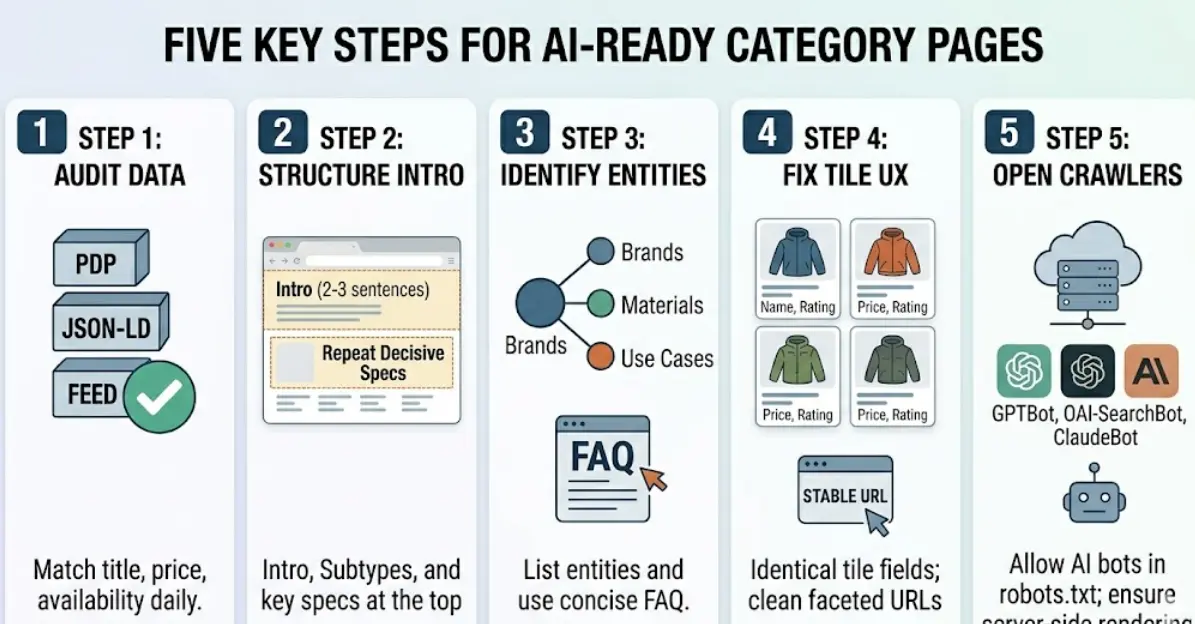
Step 3: Entities, Structured Data, and Q&A
- Entities: List types (e.g., parkas, bombers), materials, compatible device models, certifications. These are anchor points AI uses to match queries.
- Schema for PLPs: ItemList for the listing, Product for featured items, BreadcrumbList, and (if present) FAQPage. Values on PLP tiles must match PDP/feeds.
- FAQ on the page: Include concise Q&A addressing common objections. AI often lifts FAQ snippets; keep answers short, factual, and citeable.
Note: Google limited FAQ rich result visibility and removed most HowTo on desktop. Write Q&A for humans first, machines second.
Step 4: UX and Tile Parity on Category Page
- Tile template parity: Each tile shows the same fields in identical order: product name, price, availability, rating value and count (when present). Values must match the PDP and feed.
- Plain annotations: Short notes like “wide fit,” “10K waterproof,” or “under $100” should be exact, machine‑friendly phrases.
- Filters & URLs: Let key facets resolve to stable, shareable URLs; avoid infinite near‑duplicates from trivial sorting filters.
- Pagination & crawl signals: Use canonicalization and avoid client‑side only product content that blocks crawling.
Read More: Ecommerce SEO Best Practices to Enhance User Experience
Step 5: Access, Bots, and Rendering
- Allow the bots you want: Configure robots.txt for GPTBot, OAI‑SearchBot, ClaudeBot, PerplexityBot. Log and monitor server logs for mismatches.
- Rendering: Server‑render essential product content or provide crawlable snapshots so bots that don’t execute heavy client JavaScript can read facts.
- WAF & bot mitigation: Review rules quarterly; some default bot blocks stop desirable crawlers.
- Partnerships: Major publishers now license content to OpenAI with attribution; Perplexity continues to expand its publisher program. Consider these if you publish original research or buyer guides.
Content Patterns AI Systems Prefer
- Short, factual sentences with clear entities and numbers (e.g., “Battery: 12 hours; waterproof rating: IP67.”).
- Tables and bullet lists for specs and comparisons, easy to quote.
- FAQ entries with question + concise answer pairs.
- Transcribed demos, assistants prefer text to lift.
Measurement: Standard + AI‑Specific Signals
Use these metrics to track performance and correlate changes with results.
| Metric | Tool | Target |
| Organic impressions | Google Search Console | +15–25% after PLP refresh |
| Queries & CTR | Google Search Console | CTR +5–10% for category queries |
| Engagement (time, scrolls) | GA4 | +10% time on page, +15% scroll depth |
| Internal clicks to PDP | GA4 events | +10–20% category-to-PDP clicks |
| Add‑to‑cart from category | GA4 events | +5–10% ATC rate |
| AI citations | Manual or tools | 2–3× more citations after parity fix |
| AI referral traffic | GA4 (regex) | 5–15% of category traffic from AI sources |
| Schema errors | Rich Result Test | 0 errors post‑publish |
| Merchant Center health | Merchant Center | 0 disapprovals for price/availability |
Track changes over a 2‑week window after publishing. Compare pre‑ and post‑optimization baselines.
Common Category Page Mistakes That Reduce AI Visibility
Many organizations continue using optimization practices that were designed for an earlier era of search.
One of the most common issues is thin content.
A category page containing little more than links and short descriptions provides limited value for both users and AI systems.
Another issue is excessive keyword optimization. AI search engines are becoming increasingly effective at identifying genuinely useful information. Pages built primarily around keyword repetition often struggle to provide the depth AI systems seek.
Poor information architecture can also limit visibility. When categories, subcategories, and supporting resources are disconnected, search engines have difficulty understanding relationships.
Quick Audit You Can Run Now (10–30 Minutes)
- Pick five important products in a category.
- Verify title, price, availability, and one key spec match across PDP, JSON‑LD, and feed.
- Check shipping and returns appear beside price and in return policy markup with the correct country.
- Validate JSON‑LD in Google Rich Results Test; fix errors.
- Ensure PLP tiles display the same fields in the same order as PDPs.
- Run one AI query (ChatGPT or Perplexity) for the category and note whether your pages are cited.
Related Post: Ecommerce SEO Audit Checklist.
Conclusion
Optimizing PLPs for Google and AI search is a technical and editorial discipline: get the facts right, keep them consistent across page/markup/feeds, make key specs scannable, and ensure AI crawlers can read them. These changes support traditional organic rankings and increase the chance your pages will be cited by assistants that value short, verifiable facts with clean attribution.
Start with the PDP audit, enforce parity, then restructure PLPs with clear entities, structured data, and FAQ content. Measure both traditional and AI signals, and govern updates with a simple cadence. This approach aligns with how Google, ChatGPT, Claude, and Perplexity pick and cite sources, and it’s simply better conversion optimization practice.
The most effective category pages combine intent-driven content, strong entity relationships, contextual explanations, structured information, and supporting resources. They function as topic hubs rather than simple navigation pages.
Want your category pages to perform better in Google, AI Overviews, ChatGPT Search, and Perplexity? Partner with ResultFirst, a professional ecommerce SEO agency. With years of experience in enterprise SEO, eCommerce optimization, and AI search visibility, ResultFirst helps brands build category pages that rank, convert, and earn AI citations. Contact us today to get started.
Source Referenced:
- https://searchatlas.com/blog/ai-overviews
- https://magebit.com/blogs/seo-for-ecommerce-category-pages-a-step-by-step-optimization-guide
FAQs:
WHAT TO READ NEXT
READY TO BUILD PREDICTABLE ORGANIC GROWTH?
We are the only TOP SEO services agency providing Real Results in a Real Performance model. We help growth hungry companies outperform their competition and achieve 300%+ growth in their digital marketing initiatives.
- San Jose, CA, 95120

- +1-888-512-1890

- sales@resultfirst.com

300K+
KEYWORDS RANKED
546M+
REVENUE GENERATED
18 Years
SOLVING COMPLEX SEO
150+
TEAM MEMBERS