


 sales@resultfirst.com
 +1-888-512-1890
How to Appear When Someone Searches for Alternatives to Your SaaS Competitor

SaaS buyers rarely purchase the first tool they find. Most people compare several options before making a decision. In fact, AI-driven search experiences and Google AI Overviews now appear in a large share of searches, which means users often get answers before clicking websites.
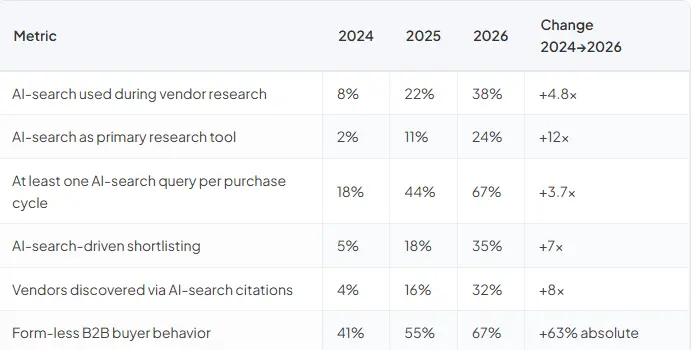
According to 2026 B2B buyer data, 67% of buyers now use AI search at least once during a purchase cycle, and 38% use it to research vendors.
That creates a big opportunity for SaaS companies.
When a buyer searches for phrases like “HubSpot alternatives” or “Asana competitors,” they already have purchase intent. They are actively looking for a better solution.
If your brand appears during that moment, you can win highly qualified traffic without competing only for broad keywords.
The question is not if buyers compare. It is whether you are there when they do. This guide shows you exactly how to appear first.
Why “Alternative” Searches Are Pure Gold for SaaS Brands
Let’s get real about the numbers. A 2026 analysis of search intent found that 58.5% of searches now result in zero clicks. That means people get their answer without ever visiting your site. Unless you show up in the answer.
Source: Growthspree
Here is the good news. Alternative searches are different. According to GrackerAI, these searchers are desperate to switch right now. They already know the category. You do not have to explain what a CRM does. You just have to show why yours fixes their problem.
The Two Types of High-Intent Buyers You Must Target
Not all searchers are the same. You need to understand who is typing which words.
The Frustrated User. This person types “Zoho alternative” or “Salesforce too expensive.” They are angry at their current provider. Maybe the price just went up. Maybe the support is terrible. They want out today. Their buying cycle is very short.
The Comparison Shopper. This person types “HubSpot vs Marketo” or “Asana vs Monday.com.” They are earlier in the process. They want to see which tool wins. But they still have high intent because they are comparing before buying.
The strategy for each is a little different. But the goal is the same. You need to be the brand they discover when they search.
Real-World Example of Capturing Alternative Traffic
Take the CRM market. It is worth $65 billion. A recent study of 233 AI search responses showed Salesforce got a 31.4% share of voice. HubSpot got 24.2%. But Zoho, often seen as a “budget” option, grabbed 21.0%.
How? By owning the value conversation. They show up every time someone searches “cheap alternative to Salesforce.” That is a win.
Your takeaway: Map out every competitor in your space. Then write down the top three reasons a customer would leave them. Use those reasons as keywords.
Step 1: Build Content That Answers the “Alternative” Question Directly
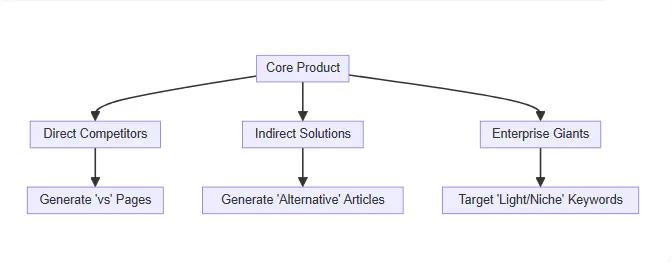
You need a system. You cannot just write one blog post and pray. According to GrackerAI, the best approach is programmatic SEO (pSEO). That means creating many comparison pages at scale. You list every competitor. You list every variation of their name. Then you build a structured page for each one.
Source: Gracker AI
But here is the rule that changes everything. Answer the question in the first sentence. AI engines scan the opening of each section first. If your first sentence does not directly answer the question, the AI will pull from a competitor who does.
How to Structure a “Competitor Alternative” Landing Page
Do not write a long, fluffy essay. Use this proven structure instead.
Start with a direct headline. Example: “X Alternative That Costs 40% Less.” Then write a one-sentence answer right below it. “Yes, our tool does everything X does for half the price.” Then show a comparison table. Buyers love tables because they can see the differences in seconds. After the table, list the top three features where you win. Be honest about where you lose too. That builds trust.
Then add a clear call to action. “Switch today in under 10 minutes.”
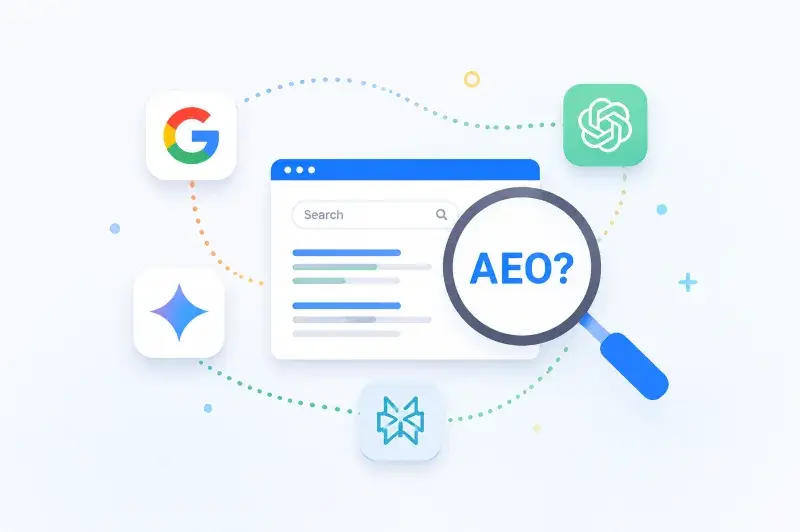
Use Answer Engine Optimization (AEO) to Get Cited by AI
Source: Devenup
This is not optional anymore. According to HubSpot, 16% of Google searches now show AI Overviews. For comparison and alternative queries, that number is even higher. In fact, a 2026 study of 100 SaaS shopping queries found 99 of them triggered an AI overview.
How do you win there? Use the question-and-answer format. State your answer immediately. Use clear headings like H2 and H3. Add FAQ schema markup so Google can parse your answers easily. And be specific. Do not use hedging words like “maybe” or “we think.” Use confident, direct statements.
Step 2: Use Competitive Battle Cards to Unite Your Sales and SEO Teams
Your content team writes blog posts. Your sales team talks to prospects. But they often do not share the same information. That is a disaster when a hot lead searches for an alternative.
Battle cards fix this. A battle card is a one-page cheat sheet that tells your sales reps exactly how to beat a specific competitor. It lists their weaknesses. It lists your strengths. It gives real customer stories of people who switched.
What to Include in Every Competitor Battle Card
Keep it simple. One page or one slide. Include these sections:
- Competitor name and product focus. (What do they sell best?)
- Their top 3 weaknesses. (Bad support? Hidden fees? Weak security?)
- Your top 3 counter-arguments. (How to reframe those weaknesses.)
- One real customer win. (“Company X switched because…)
- Pricing comparison. (Use a table.)
Turn Battle Cards into SEO Content That Converts
Here is the trick. Do not keep battle cards hidden in a sales folder. Publish them. Create an “X vs. Y” page on your website. Fill it with the same information your sales team uses. This does two things. First, it ranks for comparison keywords. Second, it pre-sells the prospect before they ever talk to a sales rep. When they finally book a demo, they already know why you win.
Real-world impact: One B2B SaaS team published a “Notion vs Trello for SaaS content” page. It ranked #1 within 11 hours. That is the power of owning the comparison conversation.
Step 3: Track Intent Signals to Strike When the Iron Is Hot
Source: SpurIQ
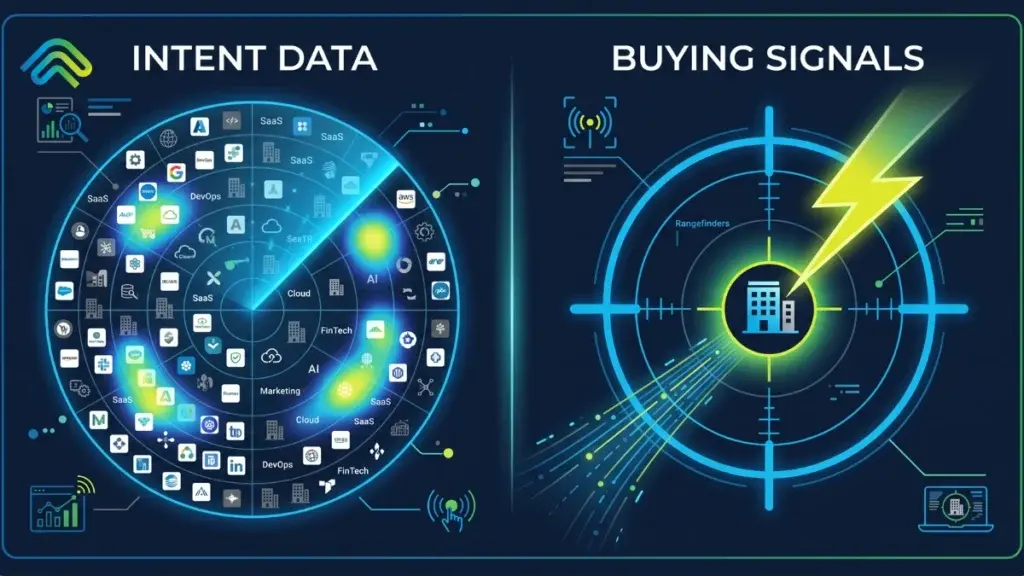
You cannot just wait for people to find you. You need to know who is searching for alternatives right now. That is where intent data comes in.
Intent data shows which companies are actively researching solutions in your category. According to 2026 research, 35% of purchase cycles are now AI-search-driven shortlists. That is huge. It means more than a third of buyers arrive with your competitor’s name in their search bar.
Tools to Detect When Leads Are Searching for Competitor Alternatives
You have options. Many SaaS teams use a combination of tools:
- Technological stack intelligence (Apollo, Wappalyzer) to know who uses your competitor’s product.
- Social listening by tracking such keywords as “switching from X” on Reddit or Twitter.
- Review monitoring to detect dissatisfied users on G2 or Capterra. If a customer leaves a 1-star review, they’re literally screaming for a change.
How to Nurture These Leads
Once you know someone is researching, do not bombard them with ads. Send helpful content instead. Share your comparison guide. Offer a free trial or a migration checklist. The goal is to be useful, not pushy.
Best practice: Build a retargeting audience of people who visited your “X alternative” page. Then show them a simple ad. “Still comparing? See why 500+ teams switched.” That gentle nudge can seal the deal.
Step 4: Convert Lookers into Loyal Buyers with the Right Message
You have their attention. Now what? You cannot just say “we are better.” You need proof.
By 2026, an analysis of business-to-business interactions revealed that 67% of buyers were researching without filling out any paperwork. The buyers wanted to be self-educated. Provide them with the resources to achieve this.
Use Comparison Tables, Case Studies, and Migration Guides

Source: Saasyntic
Create a migration guide for each competitor. “How to switch from X in 30 minutes.” This removes fear. It shows you understand their pain.
Show a side-by-side feature comparison. Be honest. If they have a feature you do not, say so. Then explain why your approach is better anyway. Honesty sells.
Add a case study of a customer who switched. Use their real words. Say what they hated about the old tool and what they love about yours.
The One Sentence That Wins the Sale
When a prospect is comparing, they have one question in their head. “Why should I take a risk on you?” Your job is to remove that risk. Use a simple line like:
“Join 1,000+ teams who switched and saved 40% in the first month.”
That is specific. It is believable. And it answers their fear directly.
Step 5: Monitor and Optimize Your Visibility for the Long Term
This is not a one-and-done task. Competitors change. Search behavior evolves. AI engines update constantly. You need a system to stay ahead.
Here is the cold truth: If your SaaS brand is not showing up in ChatGPT, Perplexity, or Google’s AI Overviews, you are already losing to competitors who are. The time to act is now.
Track Your Share of Voice in AI Answers
You cannot improve what you do not measure. Use tools to check where you appear. Run your own competitor alternative searches once a month. See who shows up. Check Google AI Overviews. See if your brand is cited. Review your “share of voice” compared to rivals.
The 90-Day Content Refresh That Keeps You Winning
Every quarter, audit your comparison pages. Update pricing if it has changed. Add new features. Remove old screenshots. Check for new competitors that have entered the market. Then repeat the process. Consistency beats intensity here.
Conclusion
You now have a complete playbook. You know why alternative searches matter. You know how to structure pages that win. You know how to use battle cards, intent data, and AI optimization to stay visible.
But knowing is not enough. You must act. Start today. Pick your top competitor. Write one “X alternatives” page. Optimize it for answer engines. Share it with your sales team. Then measure the results.
The buyer journey in 2026 will have undergone a revolution. The use of AI by buyers to filter potential vendors even before sales engagement means that if you are not one of the selected few, then you do not exist. The good news? You have a clear path forward. Follow these steps. Be helpful. Be honest. And be everywhere your buyers are looking.
Ready to Own Every “Alternative” Search in Your Market?
Tracking competitor moves and staying visible across hundreds of search queries is hard work. You need a dedicated partner who watches your back 24/7. We helps SaaS brands stay ahead by monitoring competitor activity, identifying emerging opportunities, and strengthening visibility across high-intent searches. As part of our SaaS SEO Services, we help businesses track market shifts, uncover content gaps, and stay competitive when prospects are actively comparing solutions.
[Contact Us today] and never be surprised by a competitor again.
Frequently Asked Questions
WHAT TO READ NEXT
READY TO BUILD PREDICTABLE ORGANIC GROWTH?
We are the only TOP SEO services agency providing Real Results in a Real Performance model. We help growth hungry companies outperform their competition and achieve 300%+ growth in their digital marketing initiatives.
- San Jose, CA, 95120

- +1-888-512-1890

- sales@resultfirst.com

300K+
KEYWORDS RANKED
546M+
REVENUE GENERATED
18 Years
SOLVING COMPLEX SEO
150+
TEAM MEMBERS