



 sales@resultfirst.com
 +1-888-512-1890
Ecommerce Conversion Rate Optimization Tips for Higher Revenue & ROI

Studies have consistently shown that generating leads and sales isn’t that simple for eCommerce websites, but with eCommerce conversion rate optimization (CRO), you can get a better conversion rate and ROI. E-Commerce CRO focuses on improving user experience, trust, and decision-making across the buyer journey.
A higher conversion rate for online retailers is one of the most valuable means to measure return on investment (ROI) and see whether or not you’re meeting your business goals. Even small conversion rate improvements can lead to significant revenue gains at scale.
It’s a metric to monitor while you build your business and increase revenue. strategically optimize your website and raise your ROI. CRO is an ongoing, data-driven process rather than a one-time optimization task.
However, conversions don’t grow overnight — you need to prioritize CRO them and, perhaps more importantly, optimize your website based on user behavior and data-driven insights. Modern CRO relies heavily on behavioral analytics, heatmaps, and experimentation.
What is the eCommerce Conversion Rate?
eCommerce conversion rate is the percentage of visitors to your ecommerce website or page that a desired action that can be counted as a conversion.These actions can include purchases, sign-ups, or add-to-cart events depending on business goals.
Conversion Rate Formula
Conversion Rate = (Converting Visitors / Total Visitors) * 100%
The average conversion rate can alsovisitor sessions rather than visitors, depending on your business objectives. Advanced CRO teams track both user-based and session-based conversion metrics.
3 Types of Conversion Rate Formulas
Calculate Conversion Rates as per different metrics – sessions, unique visitors, and leads
- Conversion Rate = Total number of conversions / Total number of sessions * 100
- Conversion Rate = Total number of conversions / Total number of unique visitors * 100
- Conversion Rate = Total number of conversions / Total number of leads * 100
eCommerce Conversion Rate Optimization Tips
Improve Your Product Page
Your product pages must fulfill visitors’ needs and encourage purchases. If they don’t perform well, optimize and redesign them for clarity and conversion . Product pages play a critical role in influencing purchase confidence and reducing friction.
Key tips to improve product pages and conversions:
-
-
- Keep the most important information above the fold
- Always use high-quality images and videos
- Highlight product benefits clearly
- Add customer notification modules (e.g., stock alerts
- Create SEO-friendly product descriptions
- Include related products for up-selling and cross-selling
-
Pro Tip: Display your most popular products on the homepage to maximize immediate engagement and sales potential.Personalized product recommendations can further boost conversions.
Click to learn Effective SEO Tactics to Optimize Ecommerce Category Pages
Offer Free Shipping
In today’s market, FREE SHIPPING is an absolute must. Shipping transparency directly impacts checkout completion rates. After all, online shoppers expect it.
They will most likely look elsewhere if you don’t offer a free shipping facility.
An alternative is to increase your product prices to cover the shipping costs. Nonetheless, buyers are savvy — if your prices are not reasonable, they will quickly move elsewhere.
Use High-Quality Images & Videos
Use only top-quality images and videos. Put yourself in the customer’s shoes and think about what you want to think when you shop.
The best is to use a detailed image or video to let people see and know exactly what you are selling. High-quality images and videos help users better visualize products they want to buy. This increases conversion rates.360-degree images and short product videos are increasingly preferred by shoppers.
Improve Page Load Speed
Page load time and conversion rate are directly related as the longer the page takes to load to retrieve all its resources—images, styling information, scripts to run, etc.—and display it, the more the chance of a visitor is to click the back button and leave the page without any interaction. Your page should load in less than 2 seconds for a better conversion rate. Page speed is now a Core Web Vitals ranking and CRO factor. Also, per skilled.co, testing by found that:
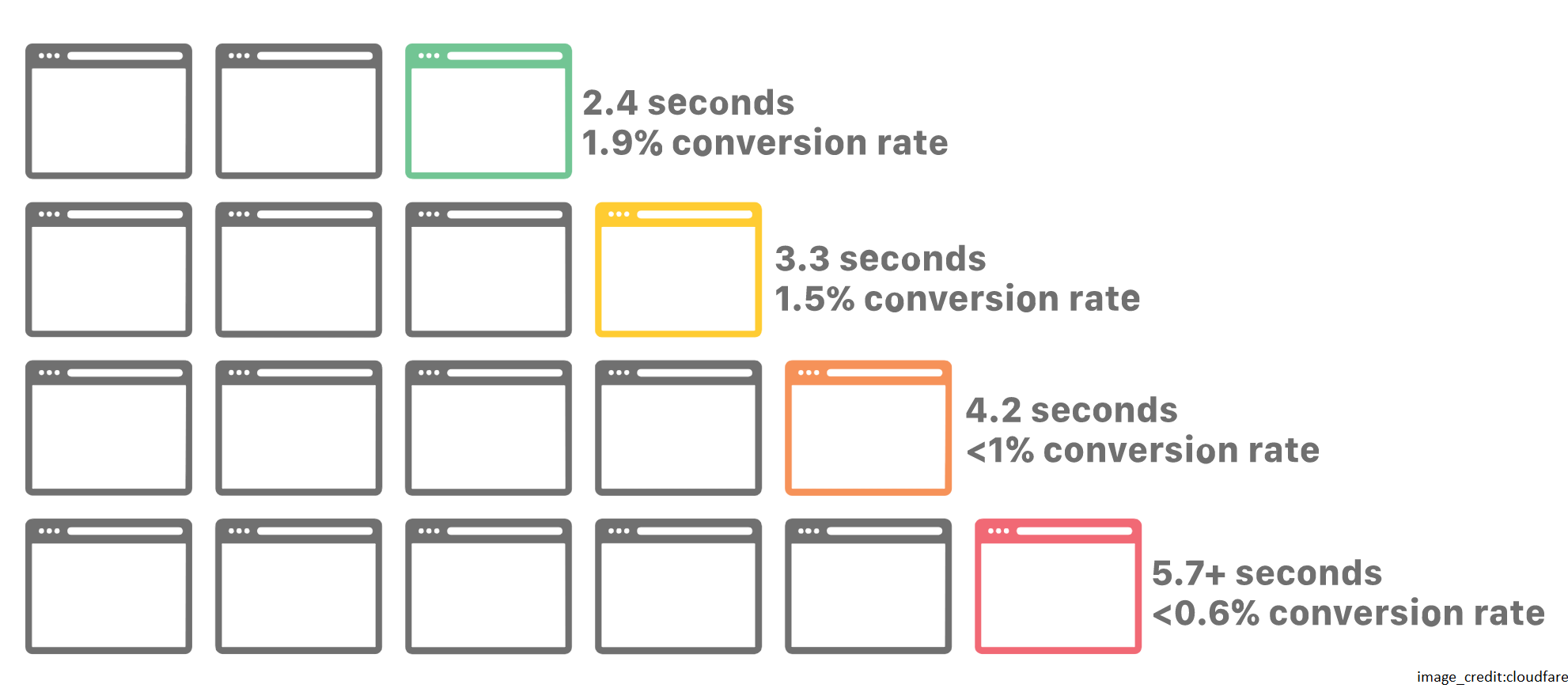
- 40% of visitors leave websites that load more than 3 seconds.
- Amazon Found Every 100ms of Latency Costs them 1% in Sales, Slow-loading pages negatively affect both SEO and CRO performance according to Amazon.
SEO companies generally focus on the below activities to improve their site’s loading speed.
- Use a lightweight theme
- Remove unnecessary plugins
- Reduce the size of images and videos
- Use a cache plugin
- Compress JavaScript and CSS files
- Set up a Content Delivery Network (CDN)
After you execute these steps successfully, you’ll notice a significant improvement in site load time.
A few of the best performance tools eCommerce SEO agencies use to measure a site’s speed are GTmetrix, Pingdom Tools, and Google PageSpeed Insights.
Use any of these tools to monitor your site speed.
Optimize Checkout Process
Every unnecessary form on a mobile device makes its length look more unwieldy than on a desktop. Your checkout form should allow users to input more information on a single screen.
According to Baymard’s research,
18% of users abandon orders just because of checkout UX issues. Their experience on the site has either been too long or too complicated.
Ensure the checkout process is easy and seamless so your customer does not hit any snags when buying from your store. A frictionless checkout experience directly reduces cart abandonment.
How to optimize the checkout process
- Have a Single “Name” Field (avoid “First Name” and “Last Name” fields). Users usually type their full name in the “First Name” field. So, keep a single named field like in the second image.
- Hide “Address Line 2
- Use Zip/Postal Code Autodetection
- Hide “Billing Address” Fields
Let the users (who need separate billing addresses) uncheck the checkbox to get those fields for separate addresses.
Launch Limited-time Deals/Offers
Creating DEALS or OFFERS is a smart move.
Customers can use them at checkout for a limited time for better pricing.
When your deals or offers are likely to expire, this triggers a sense of urgency, Urgency-based CRO tactics leverage behavioral psychology to accelerate decisions and buyers can make purchase decisions without distractions.
Use Call to Action Sparingly
For better eCommerce SEO, avoid overwhelming visitors by giving too many options and adding CTA buttons on one screen. It is good to place CTAs on all your product pages and make them noticeable.

Whether it is ‘ Share Icons,’ ‘Add to Wishlist, or ‘Add to Cart,’ having your CTAs all in the same area on the same page can ensure that your pages aren’t over-cluttered.
Keep these things in mind when creating CTAs:
- Place your CTA at the top of your fold.
- Make your CTA stand out with the shape and color of the button.
However, knowing which call-to-action button works well for you is not always easy. So, use the A/B testing method to determine what works well and what doesn’t!
Make your CTA benefit-oriented. Avoid too many of them. Clear and focused CTAs outperform cluttered layouts.
For example,
‘Download,’ ‘continue,’ and ‘click here’ are bland and are not action-oriented. Examples of benefit-centric CTA’s are ‘Show me more,’ Get my eBook,’ and ‘Stay connected.’
Implement a Live Chat Feature
Implement live chat support software to interact with customers. AI-powered chat and hybrid human chat solutions are now widely used in eCommerce CRO. This allows customers to get answers to their questions faster.
But, before this, you need to learn how to implement it correctly. Constantly interrupting users must be avoided. Make sure it does not irritate and deter users.
These days, life chat pop-up boxes can be seen anywhere on the page, which is bad for users.
The live chat, a non-user initiative, is perceived as irritating and distracting. It is useful and helpful when users have specific questions they need answers to.
Be Reasonably Priced
Don’t forget to price your products at or below the average price to compete, especially if you sell brand-name items that other stores offer.
Also, modify your pricing often to see what resonates. Dynamic pricing and A/B-tested price points can uncover optimal conversion thresholds.
The quality of your images and marketing strategy impacts the price users are willing to pay.
It is, therefore, important to look for the best SEO agency and market your brand to the right audience with the right messages. Conversions will increase.
Implement Shopping Cart Abandonment Software
Increase your store conversion rates by using abandonment cart software. The tool grabs the email address and sends it to an automated email marketing sequence.
For example,
If any purchase occurs, no emails will be sent by this software. Instead, an email automation process will continue if the purchase is not made.
Some eCommerce platforms offer this type of software for free as part of the store functionality, and BigCommerce is one of them.
The success of Cart Abandonment Software depends on every business. Personalized recovery emails significantly improve cart recovery rates. Nevertheless, it helps eCommerce stores.
Allow Visitors to Find Products Easily
Structure your product categories to provide shoppers with options like ‘Shop by Product Type’ and ‘Shop by Color.’ The goal is to make sure users can reach a product as fast as possible.
- Set up a rotating banner to showcase top products
- Implement a website search to allow customers to find products easily
Note that the faster users find a product on your eCommerce store, the more likely they will buy from you.Improved site navigation reduces bounce rates and increases conversions.
Display Shopping Cart Contents
If your visitors cannot find their cart, they will likely not checkout.
Be sure that your site has a shopping cart icon with a link to get it (cart) after entering an item into the cart.
It is important to get your customers to see what they buy as they check out.
Build an SEO-Friendly Online Store
If your store is not SEO-optimized, you’re hurting your sales. SEO and CRO work best when aligned to attract and convert high-intent traffic. eCommerce SEO is important to help audiences find your site on Google.
Here are some tips to increase traffic and visibility and improve conversions.
- Keep products near the homepage (just a three-click aware from the homepage)
- Write effective title tags using a typical search term for your products
- Find the right keywords and use them in your content
- Improve page URL. Keep it short and easy to understand, and include your title tag
- Add appropriate tags that link to identical items or products
- Enter the rel=canonical tag in the categories to avoid the duplicate content issue
Read the step-by-step guide for SEO Best Practices for e-commerce Websites.
Create Valuable Content
When we discuss the best SEO practices for eCommerce businesses, high-quality and user-friendly content with enriched keywords is important.

Supplement your products by writing valuable and functional copy. The more valued and informative your content is, the more likely people will buy from you.
Focus and clearly mention your Unique Selling Propositions (USPs). Let your audiences know why they should buy from you and what keeps you unique among competitors in selling the same products.
Ensure your headline (copy, title, or tagline) sells your USPs. Create short, crisp, and to-the-point taglines. They should tempt customers to read ahead and breed their interest in the products.
The goal is to educate, inform, and engage your audience by writing content on your product landing pages. Content that answers user questions reduces hesitation and builds trust. This boosts organic SEO traffic.
Also Read: 4 Ways To Boost Ecommerce Lead Generation Using Content
Place Trust Signals on Your eCommerce Site.
You need to build trust for customers so that they can feed their card/bank account details on your website. Trust signals are one of the strongest conversion drivers for new users. Let visitors know that they are dealing with a legitimate store. Consider these few things:
- Add SSL certificate at checkout and site-wide if possible
- Show small images of PayPal, credit cards, and other payment options. It shows that you use customer-trust payment options.
- Display McAfee, GeoTrust, or other security badges. Ensure that you have an active account with them.
Enable Guest Login
Let your customers checkout as guests. Allow them to checkout without signing up for an account because you will have their contact details (name and email address) when they buy from you.
Pushing them to register is another possible reason to leave your store.
Allow Customer Reviews
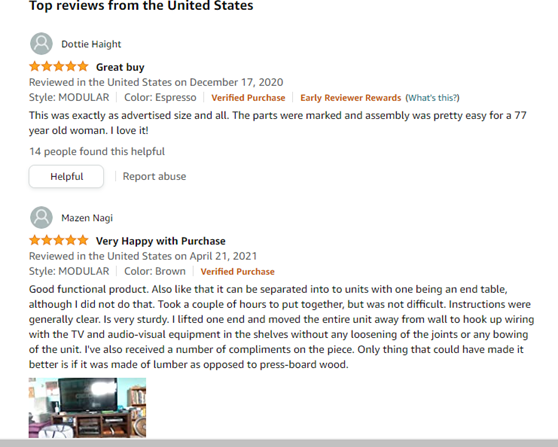
Allowing customer reviews in the digital shopping world to improve eCommerce CRO is essential. Reviews act as social proof and reduce buyer uncertainty. To encourage customers to write reviews, offer them some incentives (like coupon codes) next time they buy as a reward for providing a review.
See below why many people buy from AMAZON.
Go Mobile-Friendly
Smartphones are the future.
By 2025, more than 10% of all retail sales in the USA are anticipated to be generated through mobile commerce, according to Statista.

You’re missing out on significant sales if your online shop fails to provide a great mobile experience. Mobile-first CRO is no longer optional—it’s a revenue necessity.
So, make your website mobile-friendly.
For this,
- Pick a mobile-responsive theme
- Consider user experience (UX)
- Browse your site on mobile to check if everything is visible
- Ensure your buttons are easy for people with large fingers to press
- Reduce how much text you use and avoid using Flash
- Check if people don’t accidentally press the wrong button
- Evaluate how accessible fonts are
For the full list, click here.
A mobile-friendly site is a foolproof strategy to improve eCommerce conversion rates.
Have a Great Return and Exchange Policy
Customers read the return and exchange policy before buying.
So, create a great policy about product return and exchange. But avoid over-promising. Instead, make it painless and easy for customers to return or exchange products.
It’s not for conversion optimization but a basic business practice acting as CRO.
However, you can drive sales and improve conversion rates by earning trust values from your customers.Transparent policies reduce purchase anxiety.
Measure your eCommerce CRO Success.
Ensure your tweaks and changes are working by measuring your eCommerce CRO success. Continuous testing and measurement are key to long-term CRO growth.
Track your store’s conversion rates day-over-day, week-over-week, month-over-month, quarter-over-quarter, and year-over-year. An eCommerce platform like BigCommerce can help you with this.
You can see the progress on your dashboard or the Analytics dashboard.
Offer 24/7 Live Support
Transparency is one of the major factors to increase trust. Live Chat Support is a good means of transparency. Real-time support accelerates purchase decisions. Integrate a live chat support option to make visitors believe your site is trustworthy subconsciously.
Not only can people ask questions through live chat that create doubt in their minds, but they can also make quick purchase decisions to buy your product.
The Final Word
Conversions are important for your store’s growth. E-Commerce CRO is a continuous optimization cycle driven by user behavior, data, and experimentation.
Make conversion rates your no-one priority because they motivate customers to do what is important. Future-ready eCommerce brands combine CRO, SEO, AI, and UX for sustainable growth. The aforementioned points are top practices. They have helped your competitors and will help you achieve better results.
If you think we have missed some points in the list, let us know in the comment section below!
WHAT TO READ NEXT
READY TO BUILD PREDICTABLE ORGANIC GROWTH?
We are the only TOP SEO services agency providing Real Results in a Real Performance model. We help growth hungry companies outperform their competition and achieve 300%+ growth in their digital marketing initiatives.
- San Jose, CA, 95120

- +1-888-512-1890

- sales@resultfirst.com

300K+
KEYWORDS RANKED
546M+
REVENUE GENERATED
18 Years
SOLVING COMPLEX SEO
150+
TEAM MEMBERS