


 sales@resultfirst.com
 +1-888-512-1890
How to Win Featured Snippets and AI Overviews for Competitive High-Value Keywords

Search is no longer just about ranking on page one. Today, the real prize is appearing on page one, inside a Featured Snippet or an AI Overview. These are the answers Google shows users before they ever scroll down. And the numbers make the stakes crystal clear.
According to a recent study by Stackmatix, AI overviews now appear on roughly 58% of all searches. Yet, over 42% of clicks go to featured snippets when they show up.
For enterprise brands, this creates a major opportunity. The companies that provide the clearest answers often earn the most visibility. They gain trust before users even visit a website.
This guide explains how to optimize content for answer engines and increase your chances of earning Featured Snippets and AI Overview citations for competitive high-value keywords.
Why Featured Snippets and AI Overviews Matter More Than Rankings
Many marketers still focus only on traditional rankings. However, search engines now deliver answers directly on the results page.
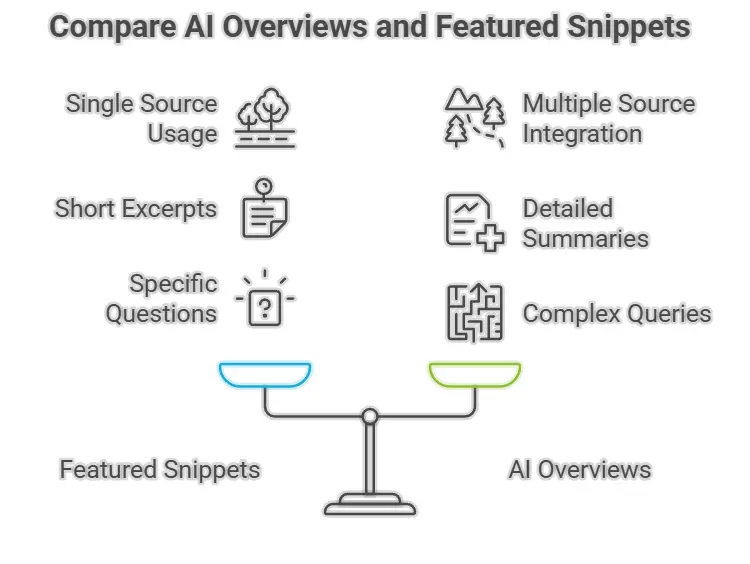
Featured Snippets pull a specific answer from one source. AI overviews combine information from multiple sources and create a summary for users. This shift means visibility depends on how well your content answers questions rather than how many keywords you use.
DataSlayer analysis showed a 61% drop in organic click-through rates when an AI Overview is present
Related Post: How AI Overviews Impact CTR.
For enterprise companies, this change affects every stage of the buying journey.
Benefits include:
- Higher brand visibility
- Greater authority and trust
- More qualified traffic
- Better brand recall
- Increased presence in answer engines
Users often see your brand before they visit your website. This makes answer engine optimization a critical part of modern SEO.
The Growing Impact of AI Search
AI search experiences continue to expand across industries. Informational and educational searches trigger AI-generated responses most frequently. Businesses that create detailed and trustworthy content have a stronger chance of appearing in these answers.
Understanding the Difference: Snippets vs. AI Overviews
Source: FloatingChips
To win, you need to know what you are trying to win. Featured snippets and AI Overviews look similar. But they work in very different ways. One is a direct quote. The other is a smart summary. Let’s break it down.
| Features | Feature Snippet | AI overview |
| Source of Information | Usually pulled from a single webpage | Collected from multiple webpages and sources |
| Content format | Direct quote, list, table, or definition | AI-generated summary with citations |
| Best content type | Concise answers, definitions, step-by-step instructions | Comprehensive, authoritative, and well-structured content |
| Position in SERP | Position zero above organic results | Often appears above both snippets and organic listings |
| Ideal answer length | 40–60 words for paragraph snippets | Detailed content covering multiple related questions |
| Primary goal | Capture Position Zero | Become a trusted source cited by AI systems |
What is a Featured Snippet?
A featured snippet is a direct block of text pulled from your page. It sits at the top of Google results. It is often called “position zero.” There are three main types:
- Paragraph snippets: A short block of 40-60 words that answers a “what is” or “why” question.
- List snippets: Numbered or bulleted lists for steps or best items.
- Table snippets: Data shown in rows and columns for comparisons.
To win these, you must put the answer right under a clear heading. Keep it short. Keep it exact.
Detailed Guide: Types of Featured Snippets
What is an AI Overview?
An AI overview is different. It is written by Google’s AI, not just copied from one site. It pulls facts from many sources to make a brand new answer. It might cite your page, or it might quote a competitor. It looks for “E-E-A-T”: Experience, Expertise, Authoritativeness, and Trust. AI overviews are now the default for many informational searches. If you don’t make the cut, your competitor will.
Can Featured Snippets Lead to AI Overviews?
Yes, they work together. Think of a featured snippet as a building block. If you win a snippet, you are much more likely to be cited in the AI Overview. The AI reads the top ten results. It takes the best parts. If your snippet is clean and well-structured, the AI will use it. So, by winning the snippet, you build a path to winning the bigger AI box. It is a dual strategy.
Below are the steps to optimize your content for AI overviews and featured snippets.
Step 1: Find the Right Keywords to Target First
Winning Featured Snippets and AI Overviews starts with smart keyword selection. Not every keyword triggers these formats. You need to pick the ones that do, and then beat the current winner.
Prioritize Question-Based Keywords
Source: Neil Patel
Question keywords, searches that start with “how,” “what,” “why,” “when,” or “can.” Are your highest-priority targets? They trigger featured snippets far more often than short-tail terms. A question-style title alone can increase the average click-through rate by 14.1%.
For enterprise teams, start with your existing page-one rankings. Use SEMrush or Google Search Console to find keywords where you rank between positions 2 and 10 but do not yet own the snippet. These are your fastest wins.
Look for Weakness in Competitor Snippets
When a competitor holds a snippet, analyze their content. Is their answer too long or vague? Is their list incomplete? Is their table outdated on mobile? Every weakness is an opening. Write a cleaner, more direct answer that Google’s AI would rather pull.
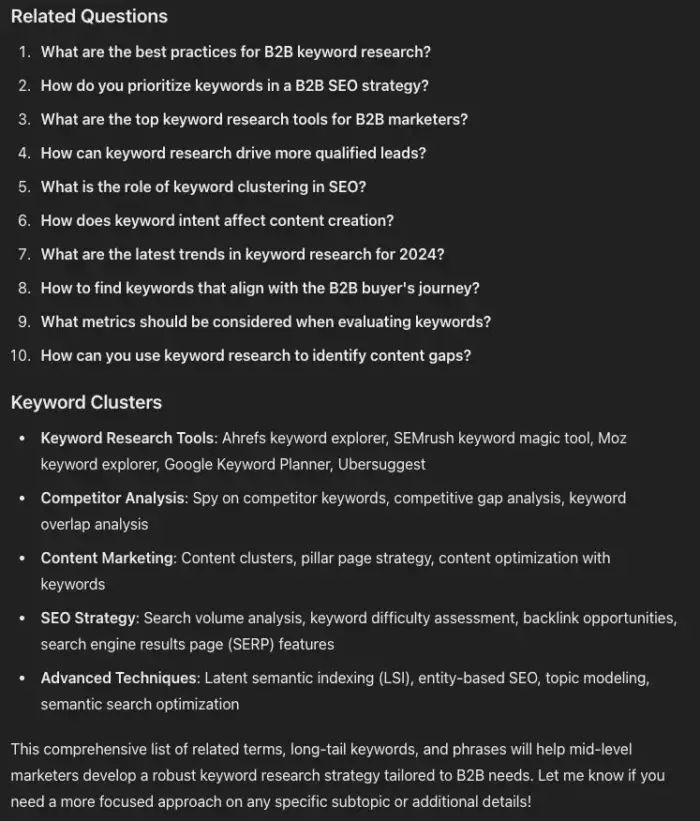
Use “People Also Ask” to Build Topic Clusters
Every PAA question is a potential Featured Snippet or AI Overview opportunity. Pull all PAA questions related to your keyword and create dedicated H2 or H3 sections that answer each one directly. This builds topical authority, the signal that tells Google you cover a subject completely.
Step 2: Structure Your Content the Right Way
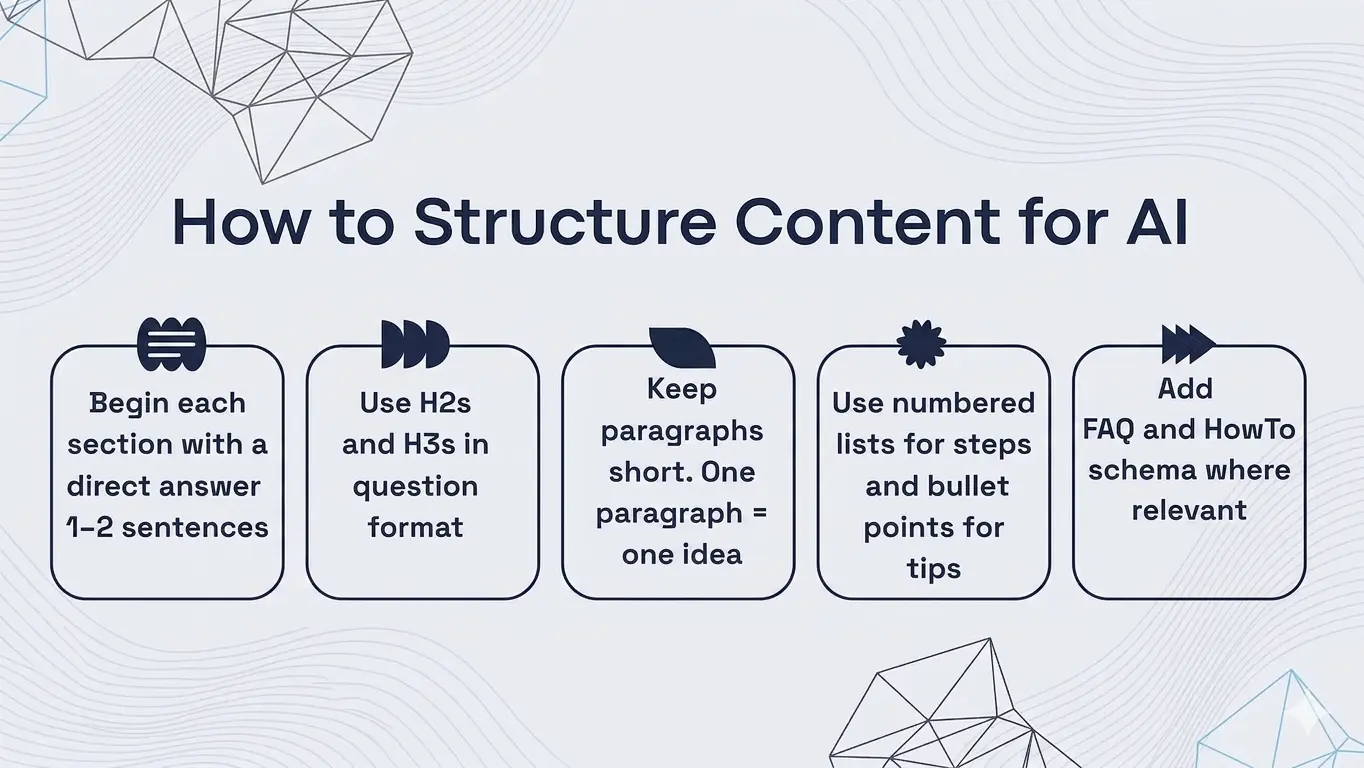
Content structure is the single biggest lever you can pull. Google’s AI does not just read your content; it parses it. Poor structure means poor citability.
Read More: How Structured Content Builds Brand Authority in AI Search
Write a Direct Answer First
Every page targeting a high-value keyword needs a direct answer within the first 100 words. Lead with a 50–70 word summary that answers the query without burying it in the background. Think of it like an inverted pyramid: the answer at the top and context and detail below.
Match the Right Format to the Right Query
Different queries trigger different snippet types. Use the wrong format, and you lose the box:
- Definition queries: Short paragraph of 40–60 words
- Process queries: Numbered list with steps starting with a strong action verb
- Comparison queries: Clean HTML table, three columns, five to six rows maximum
- Data queries: Table or short paragraph with a specific number in the first sentence
Google often shows only the first five to eight list items. Put your most valuable points at the top to encourage the “See More” click.
Keep Paragraphs Short and Scannable
Long, dense paragraphs hurt citability. Keep paragraphs to two to four sentences. Aim for 15–20 words per sentence on average. AI systems extract contextually; a single clean sentence from anywhere in your article can earn a citation. Every sentence is a potential opportunity.
Step 3: Add Schema Markup: It Is No Longer Optional
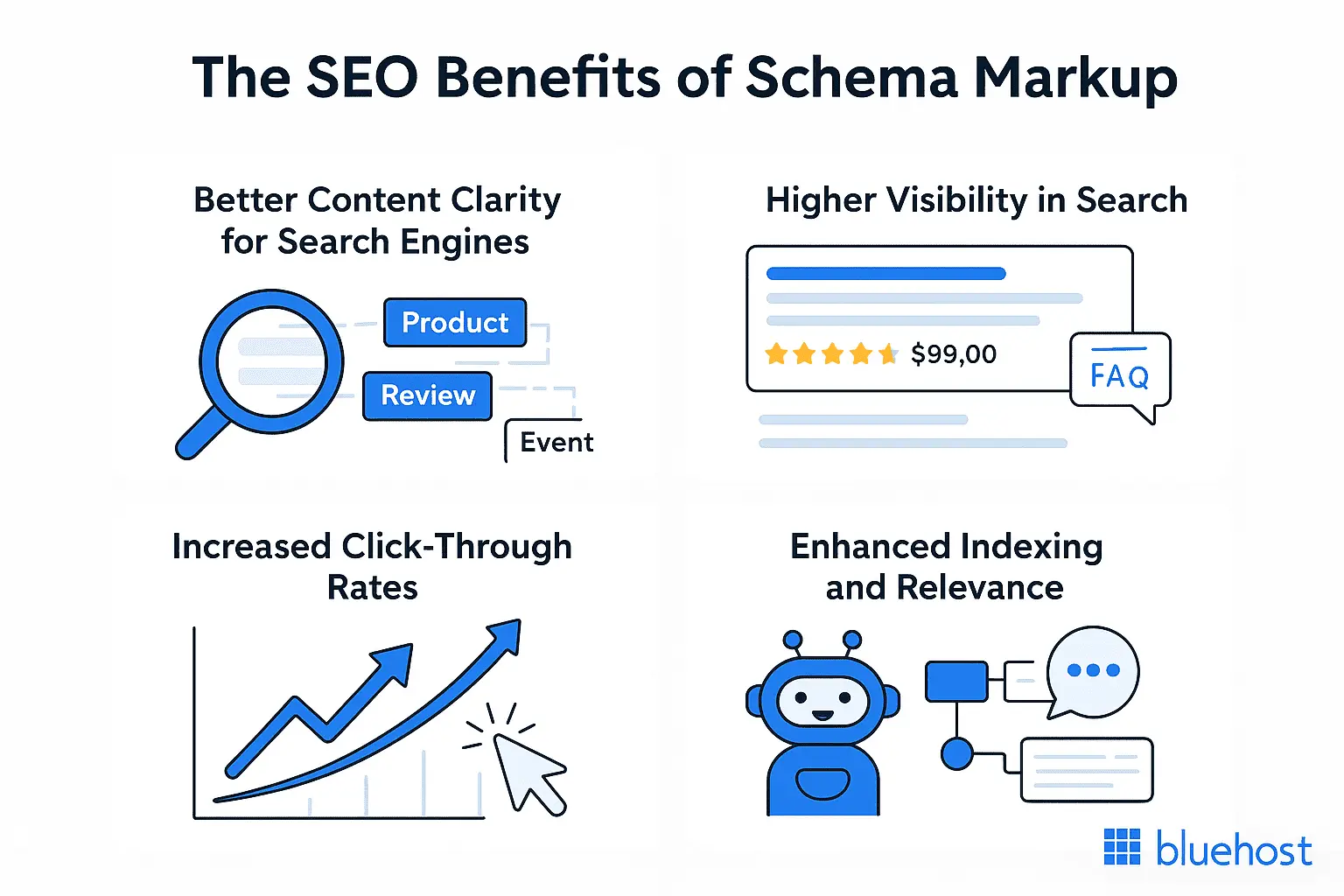
Source: BlueHost
If your team still treats schema as a nice-to-have, this is your wake-up call. In 2026, structured data is a core requirement for AI visibility.
Why Schema Now Drives AI Citations
Google, Microsoft, and ChatGPT all confirmed in 2025 that they use schema markup to power their generative AI features. Pages with valid schema are two to four times more likely to appear in AI Overviews and Featured Snippets. Sites with complete schema implementation see up to 40% more AI Overview appearances.
The Schema Types That Matter Most
Prioritize these five right now:
- FAQ Schema: Enables AI to pull Q&A pairs directly into results and voice assistants
- HowTo Schema: Marks up each step so AI can parse and cite individual instructions
- Article Schema: Adds authorship, publish date, and title signals to blog content
- Organization Schema: Strengthens your brand entity in Google’s Knowledge Graph
- Product Schema: Delivers pricing, availability, and review signals for commercial pages
Use JSON-LD format. Run pages through Google’s Rich Results. Test regularly to catch errors before they cost you visibility.
Step 4: Build E-E-A-T Signals That AI Systems Trust
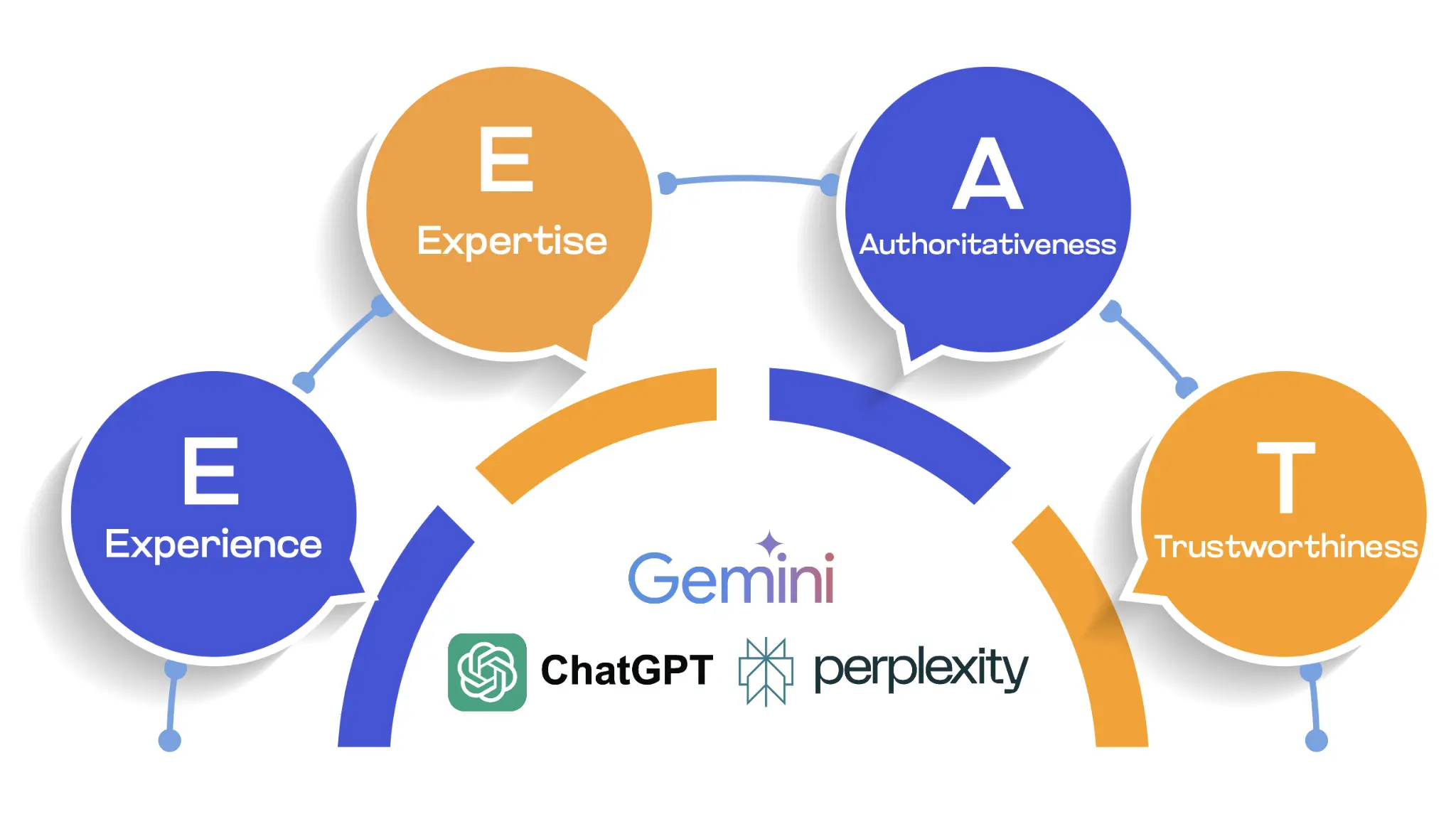
Source: Tacticone
AI overviews pull from pages that Google classifies as credible, evaluated through the E-E-A-T framework: Experience, Expertise, Authoritativeness, and Trustworthiness.
Show Real Experience and Expertise
Enterprise content written by generalists rarely wins against specialist competitors. Include first-hand data, internal research, customer case studies, and proprietary benchmarks. Name real authors with real credentials. Cite specific numbers from named studies rather than vague claims. A page that cites “a 2025 SEMrush study” outperforms one that says “studies show.”
Keep Content Fresh
AI systems use content freshness as a quality signal. Add a visible “Last Updated” timestamp to every page. Include 2025 or 2026 data wherever possible. Use Google Search Console to identify pages with declining impressions on snippet-triggering queries, those are your highest-priority refresh targets.
Step 5: Optimize for Answer Engines, Not Just Google
Enterprise decision-makers now research Perplexity, ChatGPT Search, and Microsoft Copilot before they ever reach a sales call. Your content strategy needs to reach them there.
Write in Self-Contained Content Chunks
Answer engines extract the most relevant chunk, sometimes a single paragraph deep inside a long article. Every H2 and H3 section must fully answer a specific sub-question on its own. Do not split an answer across sections. Do not assume the reader has read your introduction.
Use Consistent Entity Language and Internal Links
AI systems use entity recognition to match your content to queries. If you call a concept by three different names, AI cannot reliably cite you. Pick one consistent term per concept and use it throughout, in body copy and schema markup alike.
Internal linking is equally powerful. When content on a broad topic links to deeper articles on related subtopics, you signal comprehensive domain coverage. This increases the chance that multiple pages from your site get cited in a single AI overview, a strong brand visibility win.
Read More: Best Practices for Answer Engine Optimization
Step 6: Track What Is Actually Working
Ranking position alone does not tell you whether your content is winning AI visibility. You need a different measurement framework.
Use Google Search Console’s Performance Report filtered by “Featured Snippet” appearance to track impressions, clicks, and CTR, query by query. Watch for high impressions with low CTR; this signals AI Overview appearance without earning a click. Those pages need stronger meta signals or deeper content.
For AI Overview citations, use enterprise tools like SE Ranking, Semrush, or Ahrefs. Set up weekly SERP snapshots for your top 50 high-value keywords. Track who holds each snippet and citation. That competitive map tells you exactly where to strike next.
Final Thoughts
Winning Featured Snippets and AI Overviews is no longer optional. It is the new front line of SEO. For enterprise brands, the path is clear. Target question-based keywords. Put your best answer in the first 100 words. Use schema markup. Build real trust through E-E-A-T. And write for answer engines like Perplexity and ChatGPT Search.
The brands that follow these six steps are winning the visibility that competitors are losing. They show up before the first click. They build trust before the visit. And they turn zero-click search into a brand-building engine.
You do not have to figure this out alone. ResultFirst specializes in helping enterprise teams win answer engine visibility through expert AEO services. From schema audits to content restructuring, they deliver the technical and strategic firepower you need. Contact us today and start winning the answers that matter most.
Source Referenced:
- https://www.forbes.com/sites/terdawn-deboe/2026/05/18/google-ai-overviews-are-eating-your-website-traffic-fight-back/
- https://aioseo.com/seo-statistics/#:~:text=%2C%20the%20CTR-,grows,-to%2042.9%25
- https://www.linkedin.com/posts/davidmihm_fabrice-canel-confirms-that-schema-markup-activity-7307785448548941830-AkW8/
- https://dataslayer.ai/blog/google-ai-overviews-impact-organic-traffic-2026
- https://llmpulse.ai/blog/glossary/structured-data-for-ai/#:~:text=up%20to%2040-,%25,-more%20AI%20Overview
FAQs:
WHAT TO READ NEXT
READY TO BUILD PREDICTABLE ORGANIC GROWTH?
We are the only TOP SEO services agency providing Real Results in a Real Performance model. We help growth hungry companies outperform their competition and achieve 300%+ growth in their digital marketing initiatives.
- San Jose, CA, 95120

- +1-888-512-1890

- sales@resultfirst.com

300K+
KEYWORDS RANKED
546M+
REVENUE GENERATED
18 Years
SOLVING COMPLEX SEO
150+
TEAM MEMBERS