


 sales@resultfirst.com
 +1-888-512-1890
What SEO Strategy Do SaaS Companies Use To Grow From $1M to $10M ARR?

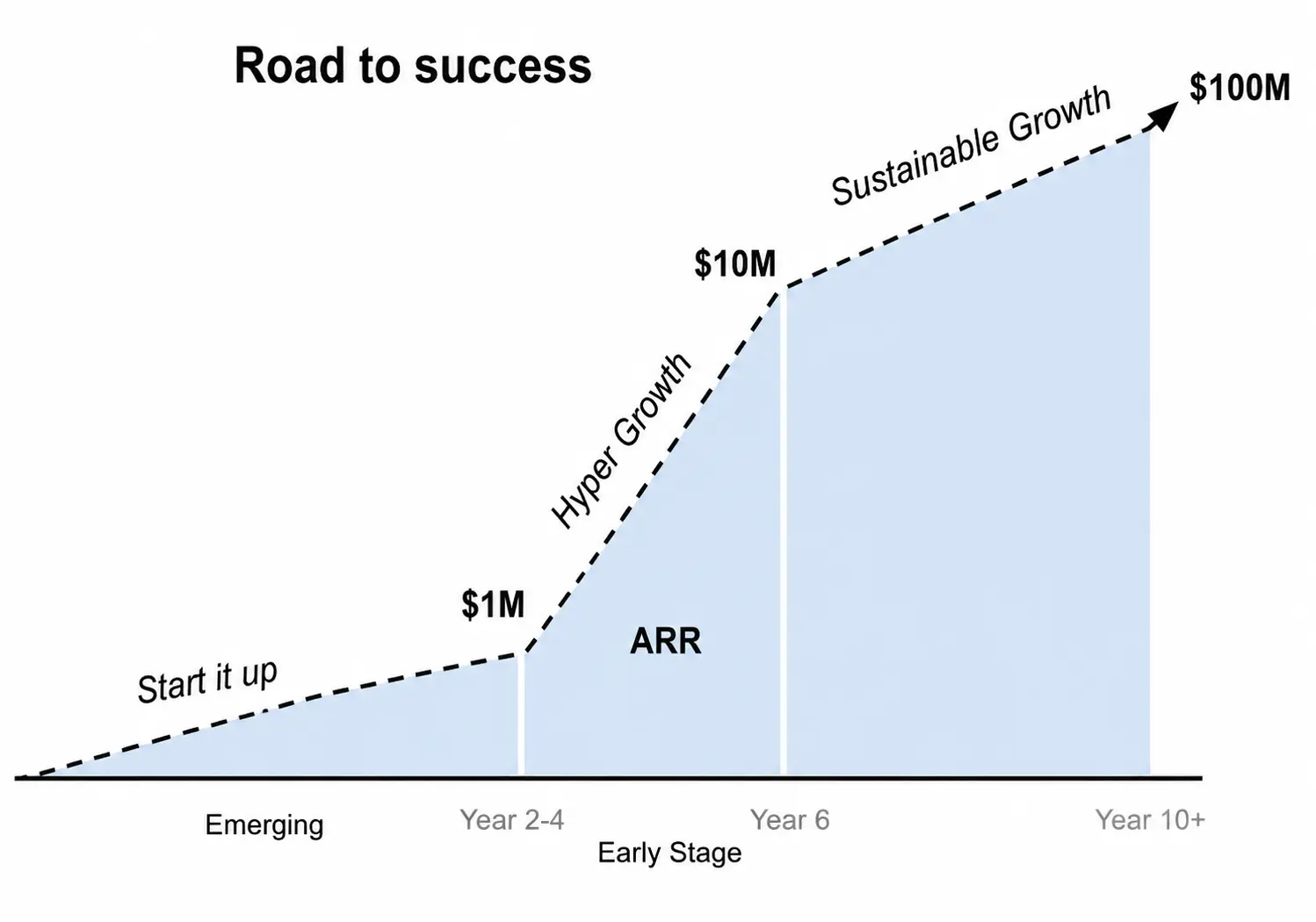
Only 3% of SaaS companies successfully scale from $1M to $10M ARR within three years. That number should stop you in your tracks. Most founders assume the tactics that got them to their first million will carry them to ten. They invest more budget into the same channels. They hire more writers. They run more ads. And then they hit a wall that feels invisible but is entirely predictable.
A SaaS growth strategy is a stage-specific roadmap that helps B2B software companies move from one ARR milestone to the next. Rather than relying on the same marketing channels or sales tactics, successful SaaS brands adjust their strategy to match their current stage of growth.
The global SaaS market hit $375 billion in 2026 growing at 20% annually. That growth sounds exciting until you realize most companies in that market are fighting for the same slice. The ones pulling ahead are not spending more. They are spending smarter on SEO built for their specific stage. This guide explores the strategies, metrics, and proven tactics that help SaaS companies scale sustainably in 2026 and beyond.
Why Your $1M ARR SEO Strategy Won’t Scale to $10M
At $1M ARR, you are still learning who your buyer really is. SEO at that stage feels like a bonus channel. A blog post ranks. A few leads come in. It works well enough that nobody questions it.
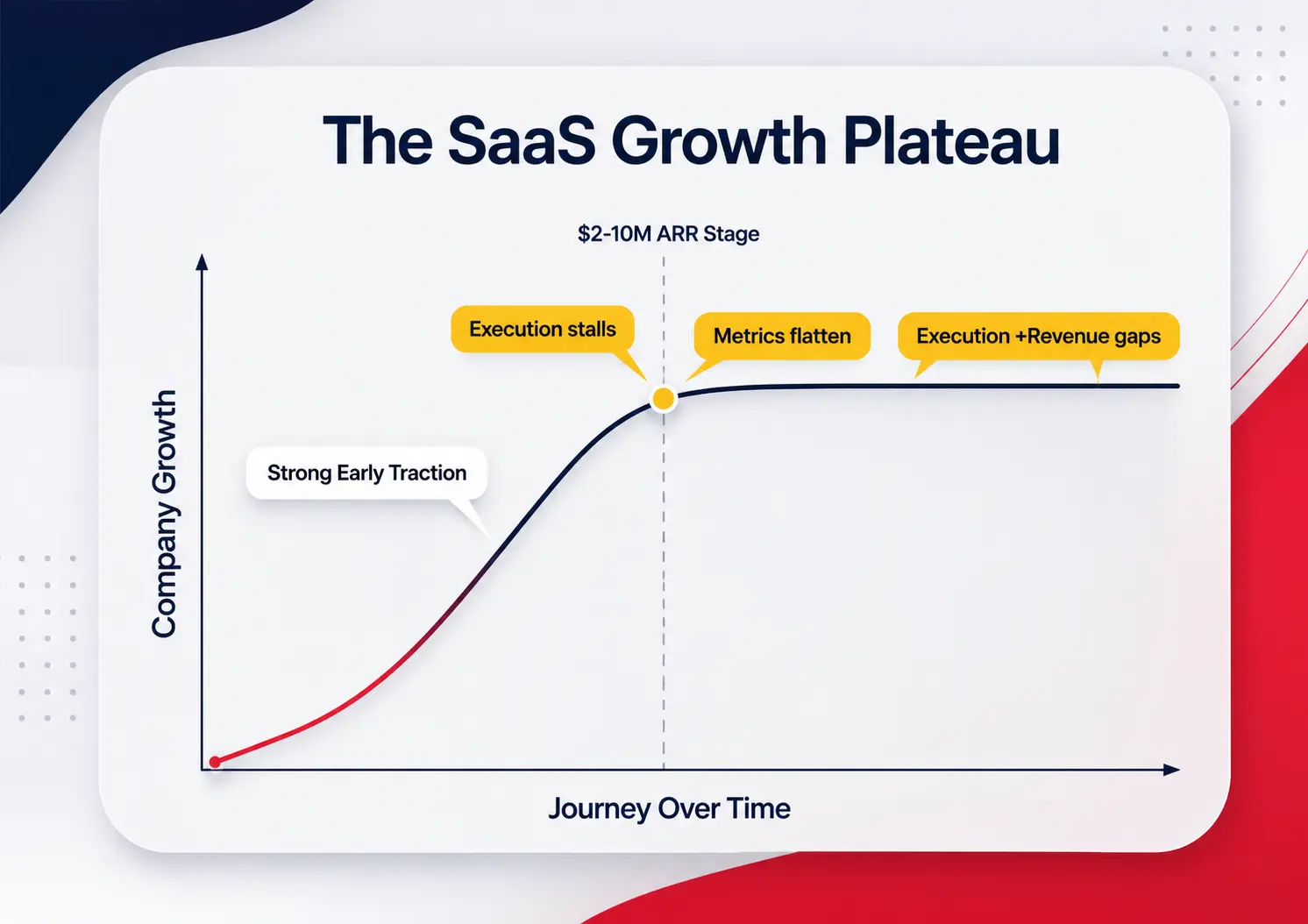
Then revenue grows. The team hires more people. The content calendar fills up. And somehow, the pipeline from organic starts flatlining even though you are publishing more than ever.
The Real Problem Is Stage Mismatch
The issue is not execution. The issue is that you are running a $1M playbook inside a $10M business. The SEO strategy that works at early traction focuses on volume. The SEO strategy that works at scale focuses on buyer intent.
These two things are not the same. Publishing 30 blog posts a quarter attracts traffic. Publishing five buyer-intent pages attracts a pipeline. At $5M ARR, you need a pipeline, not traffic. The moment you understand that difference, everything about your SEO changes.
Here is what changes between the two stages:
- From keyword volume to purchase intent: You stop targeting broad informational terms and start targeting decision-stage searches like “best [tool] for [segment]” and “[your category] pricing”
- From traffic metrics to demo attribution: Pageviews stop mattering. Demos sourced from organic start mattering completely
- From blogs to conversion assets: Comparison pages, alternatives pages, integration pages, and use-case pages replace generic educational content
- From rankings to pipeline: Your SEO team stops reporting on position 1 wins and starts reporting on revenue influenced by organic
The Three SEO Stages Inside the $1M to $10M Journey
Not all of the $1M to $10M window looks the same. Companies move through at least three distinct SEO mini-stages. Treating the whole range as one phase is one of the most common reasons growth stalls at $5M.
| ARR Stage | SEO Priority | Monthly Spend Range | Key Deliverable |
| $1M – $3M | Foundation + BOFU pages | $5K – $8K | 3–5 buyer-intent pages per quarter |
| $3M – $7M | Content velocity + entity work | $8K – $12K | 15–20 assets per quarter + AI citation tracking |
| $7M – $10M | Cluster strategy + competitive displacement | $12K – $15K | Hub-and-spoke content + 50+ tracked AI prompts |
Each stage has its own primary goal. Each stage also has a trap that kills growth if you do not see it coming.
1. Build the Foundation Before You Scale Anything
At $1M to $3M ARR, your SEO foundation is almost certainly broken. Not because you did something wrong. Because early-stage teams ship fast, and SEO infrastructure rarely keeps pace with product development.
The first move is a full technical audit. Schema markup. Internal linking. Page speed. Robots.txt. Sitemap architecture. All of them directly affect whether Google can crawl and rank your pages.
After the technical cleanup, the next move is building three to five buyer-intent pages. These are the pages that convert searchers into demo requests. They include:
- Pricing pages with transparent tier breakdowns that answer cost questions before a buyer asks sales
- Alternatives pages targeting searchers who are already evaluating your category (“best [competitor] alternatives”)
- Comparison pages that put you directly against named competitors with honest capability breakdowns
- Use-case pages targeting specific buyer segments like “project management software for marketing teams”
- Integration pages that capture searches from buyers already using tools you connect with
These five page types outperform blogs by a wide margin at this stage. A single high-intent comparison page can generate more demos in a month than twenty educational blog posts.
2. Understanding Buyer Intent in Search
Most SaaS teams chase search volume. High volume feels like an opportunity. But the searches with the most buyer intent often have the lowest search volume and the highest conversion rate.
Here is the practical difference:
A search for “what is project management software” gets 8,000 monthly searches. The person typing is learning about a category. They are not buying this week.
A search for “Asana vs Monday pricing comparison” gets 400 monthly searches. The person typing that has already shortlisted two tools and needs one final signal to pick between them. That person is buying this week.
SEO for the $1M to $10M window means building content for the second type of search, not the first. Volume is a vanity metric at this stage. Purchase proximity is what matters.
How to Map Your Buyer’s Search Journey
Your buyer does not arrive at a demo request in one search. They move through a sequence of searches that mirrors their buying journey. Your SEO strategy needs to cover each stage.
The sequence usually looks like this:
- Awareness searches: “how to reduce customer churn rate” or “ways to improve team collaboration”
- Category searches: “customer success software” or “team collaboration platform”
- Comparison searches: “Gainsight vs ChurnZero” or “Notion vs Confluence for teams”
- Decision searches: “Gainsight pricing enterprise” or “ChurnZero implementation timeline”
Most SaaS companies publish content for awareness searches and ignore everything else. The result is high traffic and a low pipeline. Fixing this means auditing your existing content by funnel stage and filling the gaps at the bottom where purchase decisions actually happen.
3. Connecting SEO to Customer Retention
SEO at the $1M to $10M stage is not just an acquisition play. It is also a retention tool. Companies with NRR above 100% grow at least 1.5 to 3x faster than peers. And SEO directly influences NRR in ways most teams do not track.
Here is how the connection works:
When buyers find you through high-intent content, they already understand your product before they sign up. They signed up because they read a comparison page or a use-case breakdown that was specific to their workflow. That specificity means they signed up for the right reasons.
Buyers who sign up for the right reasons activate faster. Buyers who activate faster stay longer. Buyers who stay longer expand their accounts. The pipeline quality from buyer-intent SEO directly feeds the retention metrics that determine whether your growth compounds.
This is why top-quartile SaaS companies sustain 115% to 125% NRR. They are not just acquiring customers. They are acquiring the right customers who already know what they are signing up for.
4. Adapting to AI-Powered Search
The $1M to $10M ARR window in 2026 is different from the same window in 2022. Generative Engine Optimization (GEO) is no longer optional. Roughly 2.5 to 5.0% of ChatGPT-referred sessions convert into pipelines for B2B SaaS. That conversion rate is 5x higher than standard Google organic traffic on the same sites.

If your SEO strategy does not include a GEO budget line, you are running a 2022 playbook in a 2026 market.
GEO is not a replacement for traditional SEO. It is a parallel channel that needs its own infrastructure and its own KPIs.
What GEO Investment Looks Like at This Stage
At $1M to $10M ARR, the GEO budget sits between 25% and 35% of your total organic spend. The buy-list for GEO at this stage includes:
- Citation Engineering: Building content that AI models cite deliberately rather than appearing in answers by accident
- Entity reinforcement: Making sure ChatGPT, Perplexity, Gemini, and Claude have consistent, clear information about what your product does and who it serves
- Tracked prompt monitoring: Following 30 to 50 specific buyer prompts across AI platforms to measure visibility
- . llms.txt implementation: A structured file that helps AI models index your site’s key information accurately
- Claim-dense content: Writing that makes specific verifiable statements about your product so AI models have something concrete to cite
The brands that win the GEO channel at this stage will own buyer conversations in AI search by the time they reach $10M ARR. The brands that ignore it will spend heavily trying to catch up.
5. Content Velocity vs Content Strategy: Know the Difference
At some point in the $1M to $10M window, almost every SaaS team faces a choice between publishing more or publishing smarter. Most teams choose more. Most teams regret it.
- Content velocity is the number of pieces you publish per quarter.
- Content strategy is the buyer-intent logic behind each piece.
You can have high velocity and no strategy. You can have low velocity and a sharp strategy. The second option produces more pipelines every time.
The benchmark numbers make this clear. B2B SaaS companies with 120%+ NRR do not publish the most content. They publish the most targeted content. Their articles answer the specific questions buyers ask at the decision stage, not the questions that attract the most general traffic.
A practical framework for getting this right:
- Run a buyer intent audit every quarter: Review your last 30 organic conversions and identify which pages generated them
- Build content clusters around your top-converting themes: If integration pages drive demos, build five more integration pages before writing another blog post.
- Avoid content that attracts traffic but not pipeline: A post ranking in position two for a high-volume keyword that produces zero demo requests is a liability, not an asset.
- Map every new piece to a funnel stage before writing it: If you cannot answer “where does this sit in the buyer journey,” do not publish it.
6. Building Links That Drive Revenue
Backlinks remain one of Google’s strongest ranking signals in 2026. But the approach to link building at the $1M to $10M stage needs to be different from what most agencies sell.
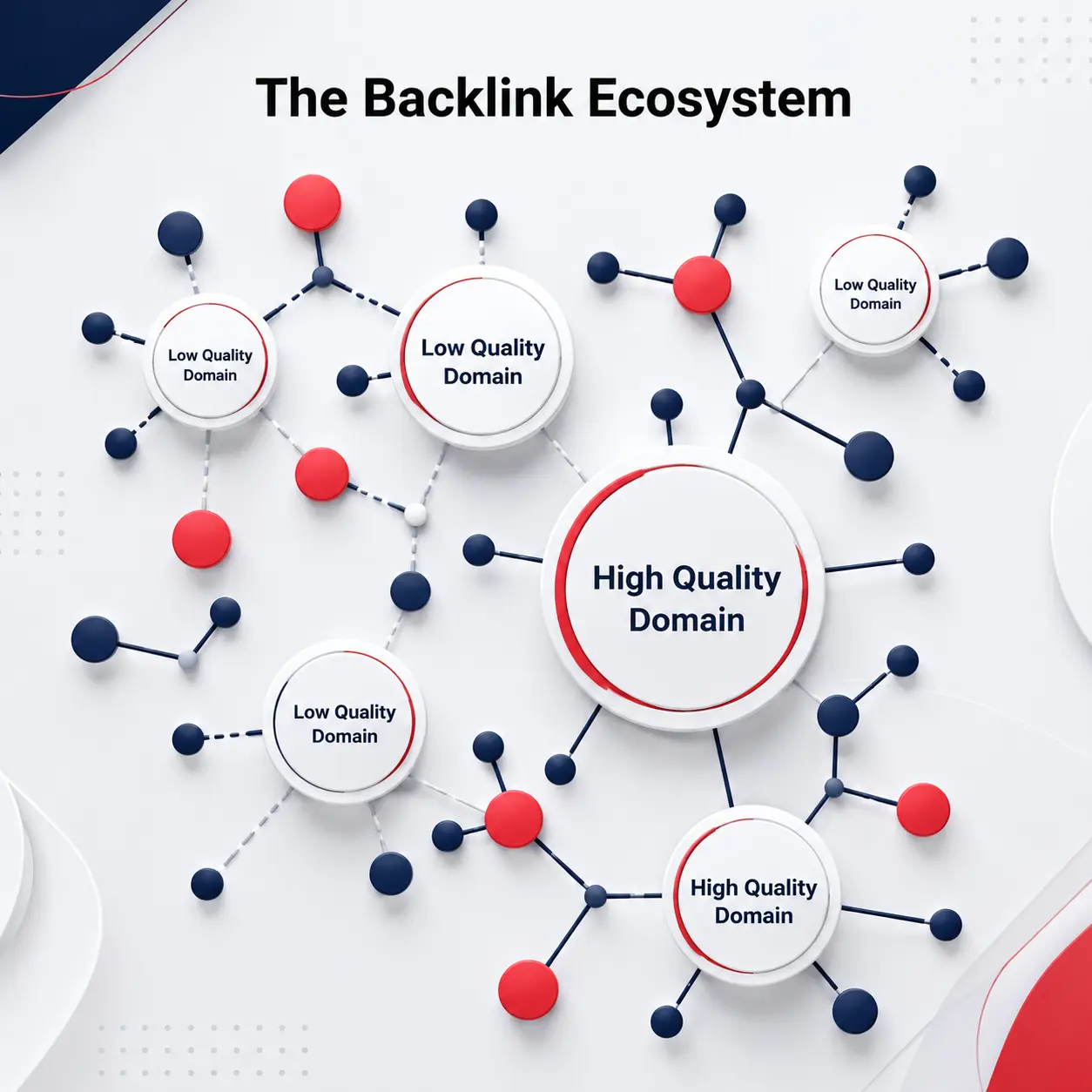
As per industry research, high-quality backlinks have a greater impact on search rankings than simply acquiring more links. For SaaS companies, earning links from trusted industry publications builds both search authority and buyer trust.
Random domain authority does not build a pipeline. The relevant authority does.
A link from a marketing industry publication drives brand credibility with your target buyer. A link from a random tech blog with high DA drives rankings for keywords that may never convert. The difference matters enormously when your goal is pipeline, not traffic.
At Series A, the right link-building buy-list includes:
- 8 to 12 authority placements per quarter from DA60+ publications that your ICP actually reads
- Digital PR campaigns built around original research or benchmark data that earn coverage
- Integration partner content swaps that place your product in the ecosystem your buyer already lives in
- Thought leadership placements from your founders or executives that build brand authority alongside backlink authority
CAC payback period on paid acquisition rose 14% through 2025 while growth rates slowed. That compression makes organic authority link building one of the highest-ROI plays in the entire marketing stack right now.
7. Tracking the Right SEO Metrics
Vanity metrics will lie to you at this stage. Rankings feel good. Traffic feels good. Neither of them pays salaries.
The metrics that actually predict revenue growth from SEO at the $1M to $10M stage:
| Metric | What It Measures | Healthy Benchmark |
| Organic demo rate | Demos booked from organic sessions | 2%+ |
| ICP fit rate from organic | % of organic leads matching your ideal customer | 70%+ |
| Activation rate from organic signups | % hitting the first value moment within 7 days | 40%+ |
| AI citation share | Visibility across tracked buyer prompts in AI platforms | Growing quarter over quarter |
| CAC payback on organic | Months to recover the organic channel cost | Under 14 months |
If you track these five numbers and nothing else, you will have a cleaner picture of your SEO performance than 80% of SaaS companies at your stage.
One Number That Predicts Everything Else
Net Revenue Retention is the single most predictive number for long-term SaaS growth. And your SEO strategy directly influences it through the quality of buyers it attracts.
Top-quartile companies sustain 115% to 125% NRR. Below 100% means churn is eating new sales faster than SEO can replace them. If your NRR is below 100%, fixing your product-market fit and onboarding comes before scaling SEO.
If your NRR is above 100%, scaling your buyer-intent SEO is the highest-leverage growth investment available to you right now.
Building Your 90-Day SEO Sprint Plan
Most SaaS teams have no formal SEO sprint structure. They publish when they have capacity and audit when something breaks. That approach produces random results at a stage where compounding results are the only thing that matters.
A focused 90-day SEO sprint at the $1M to $10M stage looks like this:
Days 1–30: Fix the Foundation
- Complete technical SEO audit and implement all critical fixes
- Set up GA4 with proper organic attribution through to CRM
- Identify the five highest-priority buyer-intent pages not yet built
- Run baseline AI citation audit across ChatGPT, Perplexity, and Claude
Days 31–60: Build the Conversion Layer
- Publish the five buyer-intent pages with proper schema markup
- Build or update pricing page with transparent tier comparisons
- Launch two competitor comparison pages targeting high-intent alternative searches
- Begin tracking 20 to 30 buyer prompts across AI platforms
Days 61–90: Amplify and Measure
- Execute link outreach for the new buyer-intent pages
- Publish original research asset designed for AI citation pickup
- Review conversion data from new pages against baseline
- Identify which page type drives the highest demo rate and double it next quarter
Three months of focused execution on this framework will produce more pipeline signal than twelve months of publishing volume.
The One Thing That Separates Companies That Make It to $10M
After analyzing what actually separates SaaS companies that break through the $5M ARR wall from the ones that plateau there, one truth stands out above everything else.
The companies that make it treat SEO as a revenue channel with measurable pipeline attribution. The companies that plateau treat SEO as a marketing activity with content deliverables.
The playbook is not complicated.
- Build technical foundations that let Google index your work properly.
- Create buyer-intent content that answers decision-stage questions.
- Track the demos and pipeline that result.
- Shift budget toward what converts and away from what just ranks.
- Add a GEO line item and measure AI citation visibility quarterly.
Do those five things with discipline across the $1M to $10M journey, and you will find yourself in the 3% of companies that actually leap. The other 97% will still be publishing blog posts about topics their buyers stopped Googling three stages ago.
Start executing it today, and the compounding results will show up exactly when you need them most, at the growth stage where every pipeline dollar determines whether you break through or plateau.
The journey from $1M to $10M ARR is where most SaaS companies lose momentum. ResultFirst builds SEO strategies around buyer intent, pipeline growth, and sustainable revenue instead of vanity metrics. Our SaaS SEO Services help growing software companies attract qualified buyers, strengthen organic visibility, and scale with confidence at every stage of growth. Get in touch with our team to discuss your growth strategy.
Sources Referenced:
- https://linkedin.com/posts/swell-country-llc_saas-growthmarketing-scaleup-activity-7447344154105323520-sVjJ
- https://www.fortunebusinessinsights.com/software-as-a-service-saas-market-102222
- https://chartmogul.com/reports/
- https://firstpagesage.com/seo-blog/chatgpt-conversion-rates/
FAQs:
WHAT TO READ NEXT
READY TO BUILD PREDICTABLE ORGANIC GROWTH?
We are the only TOP SEO services agency providing Real Results in a Real Performance model. We help growth hungry companies outperform their competition and achieve 300%+ growth in their digital marketing initiatives.
- San Jose, CA, 95120

- +1-888-512-1890

- sales@resultfirst.com

300K+
KEYWORDS RANKED
546M+
REVENUE GENERATED
18 Years
SOLVING COMPLEX SEO
150+
TEAM MEMBERS