



 sales@resultfirst.com
 +1-888-512-1890
The Biggest SEO Risks for Enterprise Brands in 2026

Enterprise SEO feels different in 2026. Zero-click searches now account for 58.5% of all US Google queries, while position-one click-through rates on AI-influenced searches have fallen from 27% to 11%. These shifts show that traditional SEO strategies are losing effectiveness as AI changes how people discover information online.
Many enterprise brands are not falling behind because of limited budgets or talent. The real risks often come from within. Siloed data, unclear ownership, outdated KPIs, and poor collaboration can weaken even the strongest SEO programs. At the same time, SEO is expanding beyond websites into AI-powered discovery platforms, making responsibilities more complex and harder to manage.
This article explores the biggest enterprise SEO risks brands face in 2026 and the practical solutions needed to protect visibility, improve performance, and stay ahead of changing search behavior.
Why Enterprise SEO Risk Looks Different Now
SEO used to mean ranking pages and tracking clicks. That world is shrinking fast. AI Overviews, chat assistants, and answer engines now sit between your brand and your customer. Search engines answer questions directly on the results page. Users often never click through to your website at all.
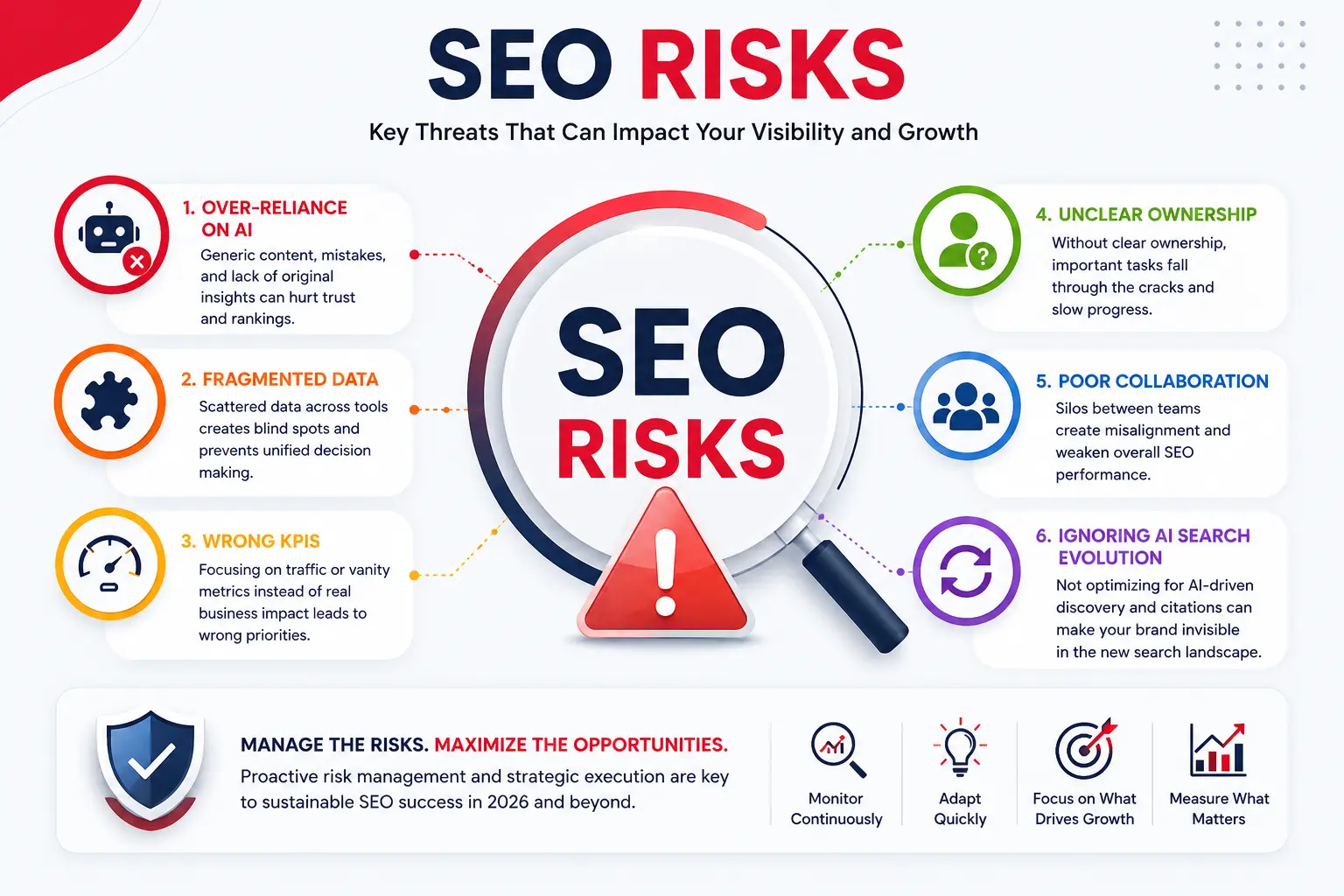
This shift changes what risk means for enterprise teams. Old risks like algorithm updates and weak backlinks still matter. But new risks have appeared alongside them. These include AI overreliance, fragmented data, unclear ownership, and outdated KPIs. Enterprise brands juggle many products, regions, and stakeholders. That complexity multiplies every risk on this list.
The Shift From Rankings to Citations
Ranking position alone no longer tells the full story. Brands that earn citations inside AI answers get 35% more organic clicks than brands that do not. This matters because most enterprise teams still measure success the old way. They track rankings and sessions. They ignore whether AI tools cite their brand at all.
One 2026 audit found that 62% of enterprise brands are technically invisible to generative AI models, even though 94% of those same brands invest heavily in traditional SEO. That gap is the risk. You can spend big on SEO and still vanish from AI search results.
Risk #1: Leaning Too Hard on AI
AI can create content fast, but speed alone is not enough. Brands need a unique perspective and a clear message. Without original insights and expertise, content starts to look like everyone else’s. The result is generic content that fails to stand out, build trust, or create a lasting impact.
AI also makes mistakes that look confident. It can misread data or invent numbers without warning you. A wrong calculation early in a report can quietly corrupt every insight that follows. Humans need to check AI work, not just trust it blindly.
Here is how to manage this risk:
- Keep a human editor on every piece of AI-assisted content
- Build a clear point of view before you prompt any AI tool
- Double-check AI-generated stats and data claims against source data
- Train your team to spot AI hallucinations in reports and dashboards
- Use proprietary data and original research that AI tools cannot replicate
Risk #2: Data Spread Across Too Many Tools
Enterprise teams often pull data from ten or more platforms. Analytics tools, CRM systems, AI visibility trackers, and ad platforms all hold separate pieces of the puzzle. Nobody owns the full picture. That gap is dangerous.
Users now research products inside AI assistants before they ever visit your site. They compare options and build shortlists inside a chat window. By the time they reach your homepage, much of their decision is already made. Your analytics tools cannot see any of that early research. You only see the final click.
This blind spot grows every year. Only 14% of marketers currently track AI visibility in any structured way. The rest fly without instruments through the most important part of the funnel.
Building One Source of Truth
Enterprise brands need a unified data view, not ten disconnected dashboards. Start by mapping every tool that touches search data. Then connect them through one reporting layer that leadership actually checks every week.
A simple data audit table helps clarify ownership fast:
| Data Source | What It Tracks | Who Owns It | Connected to Main Dashboard? |
| Google Search Console | Rankings, clicks, impressions | SEO team | Yes |
| AI visibility tool | Citations, mentions, prompts | SEO team | Often no |
| CRM | Leads, deal source | Sales team | Rarely |
| Analytics platform | Sessions, conversions | Marketing ops | Yes |
| Social listening | Brand mentions | Brand team | Rarely |
Fill this table out for your own organization. Every “no” or “rarely” answer marks a blind spot worth fixing this quarter.
Risk #3: Chasing the Wrong KPIs
Stakeholders still ask about traffic first. That habit runs deep. Years of “more sessions equals more success” do not disappear overnight. But traffic alone misleads everyone now that answers appear directly on the results page.
AI visibility metrics bring their own trap too. Teams can chase prompts that look good in a report instead of prompts that drive real buyer intent. Showing up for “what is X software” feels nice. Showing up for “which X software is best” actually drives revenue. Those are very different wins.
Watch for these warning signs in your own KPI setup:
- Reports focus only on traffic, never on conversion or revenue impact
- AI visibility scores track easy prompts instead of buyer-intent prompts
- Nobody asks how many tracked prompts actually relate to purchase decisions
- Stakeholders celebrate ranking gains that never translate into leads
- Teams spend more time debating which prompts to track than acting on data
Fix this by tying every KPI to a dollar outcome. Ask one question before tracking anything new. Does this metric explain revenue, or does it just look good in a slide?
Risk #4: Weak Collaboration Between Teams
Even companies that understand AI visibility still struggle with teamwork. Roles stay fuzzy. SEO expects content and product teams to execute changes. Those teams assume SEO will handle everything alone. Both sides wait for the other to move first.
This breakdown often traces back to mismatched goals. When AI visibility sits only inside SEO’s KPIs, other departments feel no pressure to help. Enterprise AI search strategy rests on three structural concepts: content accessibility, clarity, and credibility, and none of those three live inside SEO’s job description alone.
Some practical collaboration fixes include:
- Add AI visibility goals to KPIs across content, product, and PR teams
- Invite other departments into SEO strategy meetings from day one
- Translate SEO findings into plain business language, not jargon
- Show the revenue cost of low visibility in dollar terms, not just rankings
- Create shared dashboards that every team checks together each week
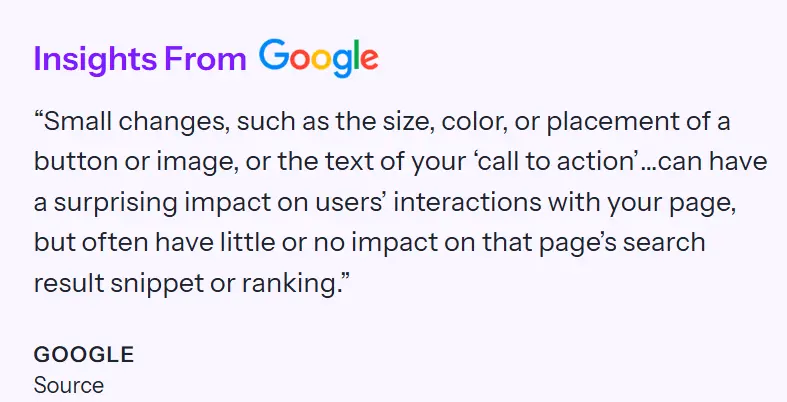
97% of employees say team misalignment negatively impacts project outcomes. When departments operate in silos, initiatives struggle to gain traction and deliver results.
Source: Google
Risk #5: AI Crawlers Cannot Read Your Site
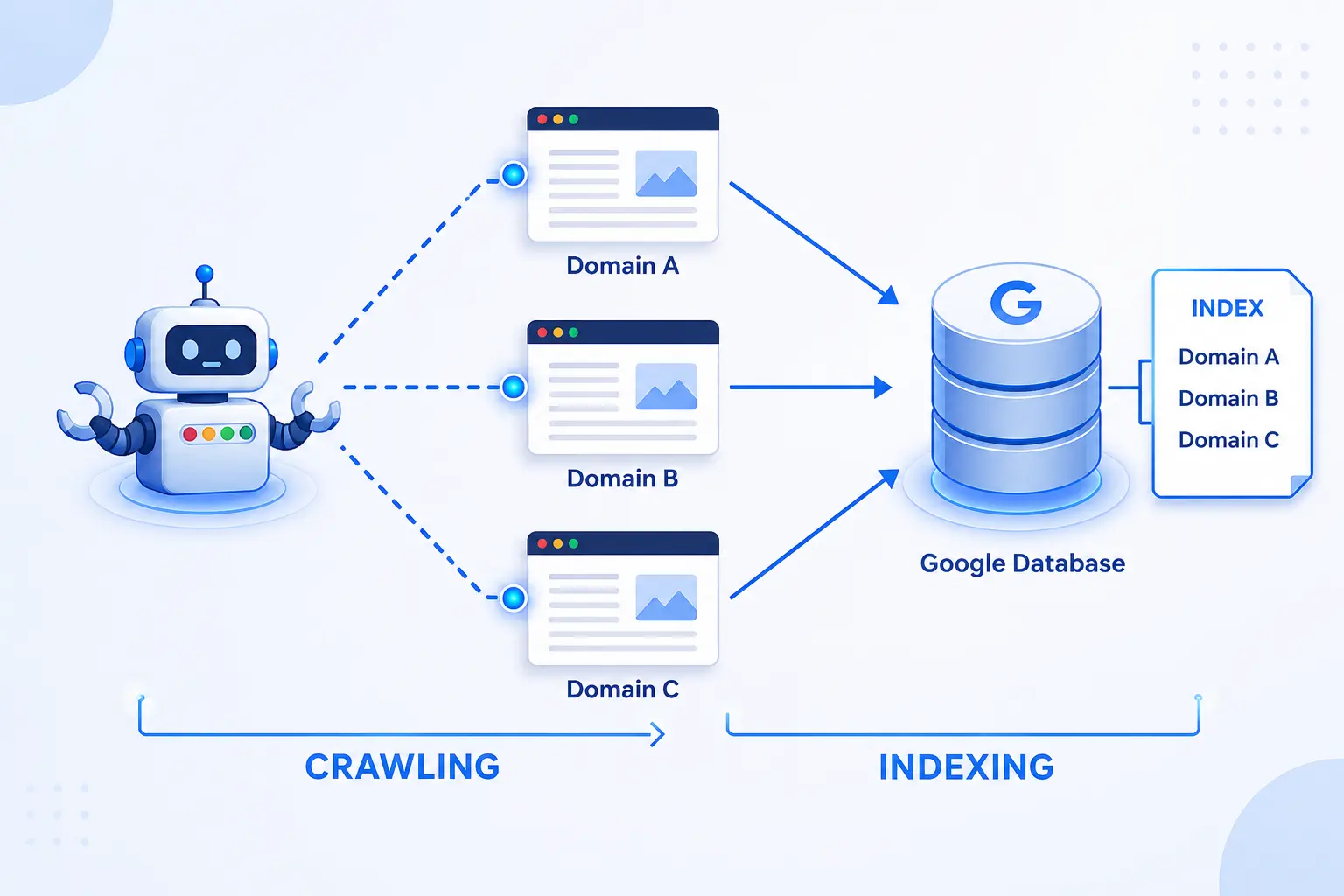
Here is a risk many enterprise teams overlook completely. AI agents now browse the web on behalf of users in real time. These bots account for roughly 57.4% of organic search requests, and that share keeps climbing. They behave nothing like human visitors or even old search crawlers.
AI crawlers do not render JavaScript and need plain text information to work properly. Many enterprise sites lean heavily on JavaScript frameworks for design flexibility. That choice now creates a real visibility risk. If a crawler cannot read your content, your brand becomes invisible to the next wave of AI-driven discovery.
- Run a quick technical check this month.
- Disable JavaScript in your browser and reload your top product pages.
- If the content disappears, AI agents likely see the same blank page.
Fixing this often requires close work between SEO and engineering teams, which loops right back to the collaboration risk above.
Risk #6: Too Much Strategy, Not Enough Action
Search changes fast in 2026. Many enterprise SEO teams respond by writing longer strategy documents. They build detailed frameworks, run endless analysis, and schedule more planning meetings. Meanwhile, the actual website barely changes.
This pattern feels productive but rarely delivers results. Strategy documents often go unread outside the SEO team itself. They explain the “why” in great detail but skip the “what.” Other teams finish reading and still have no idea what action to take next.
A faster, leaner approach works better today. Pick one direction. Make a small change. Watch what happens. Adjust based on real results. Repeat that loop every few weeks instead of every few quarters. Speed beats perfection when search itself changes this quickly.
Turning Risk Into a Real Plan
Every risk above shares one root cause. Enterprise teams treat SEO like a website task instead of a business capability. That mindset must shift in 2026. The brands that win will measure citations and revenue impact, not just clicks and rankings.
Start small this week. Pick one risk from this list that matches your biggest gap. Run the technical crawler check. Build the unified data table. Schedule one cross-team meeting about AI visibility ownership. Small, fast moves beat big plans that never launch.
Search will keep changing through 2026 and beyond. Enterprise brands that stay flexible, fix their internal gaps, and connect SEO to real business goals will keep their visibility strong, no matter how many times the search engines rewrite the rules.
Risk #7: Ignoring Content Structure for AI Extraction
Most enterprise content still reads like a magazine article. Long intros. Slow build-ups. The main answer is buried halfway down the page. That style worked fine for human readers scanning a blog post. It works terribly for AI systems trying to extract a quick answer.
Research backs this up clearly. Adding direct quotations to a page produced a 42.6% lift in LLM citation rates, and adding statistics with named sources produced a 32.8% lift. Placement matters as much as quality. If your key answer sits at the bottom of a long page, AI tools may skip it entirely and cite a competitor instead.
Enterprise content teams need a new writing habit. Open each section with a direct, complete answer in the first few sentences. Save background and nuance for later in the section. This small structural shift can change whether your brand gets cited or gets ignored.
Auditing Your Top Pages for Citation Readiness
Pull your top fifty landing pages by organic traffic and run a simple test on each one. Check whether every section opens with a clear answer in the first sentence or two. Check whether the page includes named expert attribution and specific statistics with sources attached. Check whether structured data markup exists on the page at all.
If more than half your pages fail this test, your content library was built for an older visibility model. That model is shrinking fast. Rebuilding pages around clear, quotable, well-sourced answers is one of the highest-leverage fixes available to enterprise teams this year.
Risk #8: Treating Every Region the Same Way
Global enterprise brands often run one SEO playbook across every market. That approach ignores how differently search behavior splits by region. ChatGPT holds nearly four-fifths of the global AI chatbot market,, but the runner-up tools and their adoption rates shift noticeably between North America, Europe, and Asia-Pacific markets.
A brand that only optimizes for Google in the United States may miss huge opportunity elsewhere. In some APAC markets, TikTok search and Perplexity already pull meaningful discovery traffic away from traditional search. Treating every region like a copy of your home market leaves real visibility on the table.
Build a lightweight regional review into your quarterly SEO planning. Ask which AI platforms actually matter in each major market you serve. Adjust content and structured data plans accordingly instead of assuming one global template fits everyone.
Risk #9: Forgetting That Humans Still Click Too
It is easy to obsess over AI visibility and forget that plenty of searches still end in a real click. Commercial and transactional searches, where someone wants a quote, a price, or a comparison, still send meaningful traffic to ranking pages. The number one organic result still captures around 27.6% of all clicks on these queries, even as AI summaries dominate broader informational searches.
This means enterprise teams should not abandon classic ranking work entirely. Balance matters. Put deeper investment into commercial-intent pages where a ranking still produces a visit and a sale. Treat purely informational content differently, since AI tools will often summarize it before a user ever reaches your site.
Building Your 2026 Risk Checklist
Reviewing ten risks at once feels overwhelming. Break the work into a simple checklist your team can revisit every month. Use this as a starting template and adjust it to fit your organization’s size and resources.
| Risk Area | Quick Check | Owner |
| AI overreliance | Is a human editing every AI draft? | Content Lead |
| Fragmented data | Do all tools feed one dashboard? | Marketing Ops |
| Wrong KPIs | Does every metric tie to revenue? | SEO Lead |
| Unclear ownership | Does leadership own cross-team assignments? | VO Marketing |
| Weak collaboration | Do other teams share AI visibility goals? | Department Heads |
| Crawler access | Can AI bots read pages without JavaScript? | Engineering |
| Strategy without action | Did last month’s plan ship real changes? | SEO Lead |
| Content structure | Do top pages open sections with direct answers? | Content Lead |
| Regional gaps | Does each market have its own platform mix? | Regional marketing |
| Click balance | Are commercial pages prioritized over informational ones? | SEO lead |
Run through this table once a month with your leadership team. Mark each row green, yellow, or red based on honest progress. This habit alone will catch most of the silent risks before they cost real revenue.
Conclusion
Every risk in this article shares one root cause. Enterprise teams still treat SEO like a website task instead of a business capability. That mindset has to change in 2026. The brands that win will measure citations and revenue impact, not just clicks and rankings.Start small this week. Pick one risk from this list that matches your biggest gap. Run the technical crawler check. Build the unified data table. Schedule one cross-team meeting about AI visibility ownership. Small, fast moves beat big plans that never launch.
Want to stay ahead of the biggest SEO risks in 2026? ResultFirst helps enterprise brands improve AI visibility, strengthen search performance, and connect SEO efforts to real business growth. Our Enterprise Search Engine Optimization Services combine technical expertise, strategic guidance, and data-driven execution to help enterprise organizations adapt to AI-powered search while building sustainable long-term visibility.
Sources Referenced:
- https://www.linkedin.com/posts/david-clement-rivers_97-of-employees-say-misalignment-directly-activity-7465550529411321856-TY0L/
- https://www.linkedin.com/pulse/zero-click-extinction-why-ai-search-erasing-92-brands-nanewortor–gcpde
- https://searchengineland.com/google-zero-click-searches-2026-study-479717
- https://ppc.land/original-research-tops-ai-search-citations-at-82-np-digital-survey-finds/
- https://finance.yahoo.com/sectors/technology/articles/only-14-marketers-track-ai-133000383.html
- https://www.cnet.com/tech/services-and-software/bots-now-outnumber-humans-on-the-internet-heres-what-that-actually-means/
- https://wotnot.io/blog/chatbot-statistics
- https://backlinko.com/google-ctr-stats
FAQs:
WHAT TO READ NEXT
READY TO BUILD PREDICTABLE ORGANIC GROWTH?
We are the only TOP SEO services agency providing Real Results in a Real Performance model. We help growth hungry companies outperform their competition and achieve 300%+ growth in their digital marketing initiatives.
- San Jose, CA, 95120

- +1-888-512-1890

- sales@resultfirst.com

300K+
KEYWORDS RANKED
546M+
REVENUE GENERATED
18 Years
SOLVING COMPLEX SEO
150+
TEAM MEMBERS