



 sales@resultfirst.com
 +1-888-512-1890
How to Do SEO for Ecommerce Websites (2026)

A hard truth – you can’t make sales if you don’t get traffic to your eCommerce website. Traffic doesn’t fall from the sky.
So, eCommerce SEO crosses our minds once or twice regarding growing ROI for online retail stores.
Needless to say, ecommerce SEO for online stores is an effective cum affordable way to increase visibility around your brand, consistently get high-quality organic traffic, and make a huge difference in your sales.
What Is Ecommerce SEO?
eCommerce SEO drives organic traffic from search engines like Google, Bing, and Yahoo. It makes your online store more visible on the search engine results pages (SERPs). Increased visibility means your site will rank and get more traffic when people search for products you sell.
Effective eCommerce SEO services helps improve brand awareness, fill the marketing funnel (i.e., deliver marketing messages that speak to people who are in different stages of the buying process), rank your content better, expand remarketing audiences, improve user experience, rescue paid search costs, and create lasting value.
How AI Is Changing Ecommerce Search and Buying Behavior
Modern e-commerce search behavior has shifted. Customers no longer rely on short keywords. They now search using longer, conversational phrases like “best winter boots for kids under $50” or “top-rated gaming chair for back pain.” This change is influenced by AI-powered search features, voice search, and Google’s Search Generative Experience. Before choosing a product, buyers expect faster answers, comparisons, and personalized recommendations.
AI shopping assistants are also becoming a part of the buying journey. Many users now ask tools such as Google AI Overview, ChatGPT Shopping, and platform-based assistants for product suggestions before visiting a store. This means e-commerce websites need content that clearly answers questions, compares products, highlights benefits, and supports decision-making.
Ranking in this environment means focusing on intent-based keywords, helpful content, structured data, reviews, and trust signals. When your store answers real questions and supports users throughout their buying journey, search engines and AI systems are more likely to recommend your products.
Effective Tips to Improve SEO for Ecommerce Websites
Understanding how to do SEO for an ecommerce website is key to turning visibility into measurable growth. While ecommerce optimization can seem complex, breaking it into clear, actionable steps helps streamline the process. The following SEO strategy framework for e-commerce websites outlines the essential elements needed to improve rankings, drive qualified traffic, and increase conversions for your online store.
Keyword Research
eCommerce SEO strategy begins with keyword research, especially for two important pages:
- Category pages
- Product pages
Identify those high-value search terms that your target audiences use. Keywords research for eCommerce websites are different from most keyword research. Why? Because most sites care about information keywords, like:
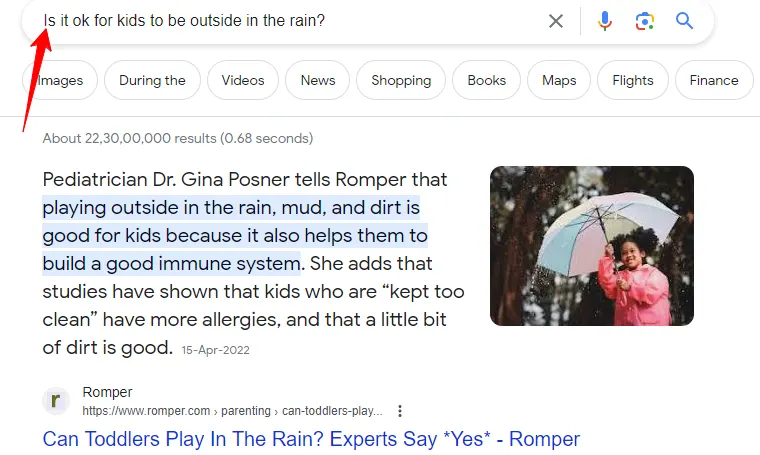
It would be best if you also ranked for commercial keywords like this:
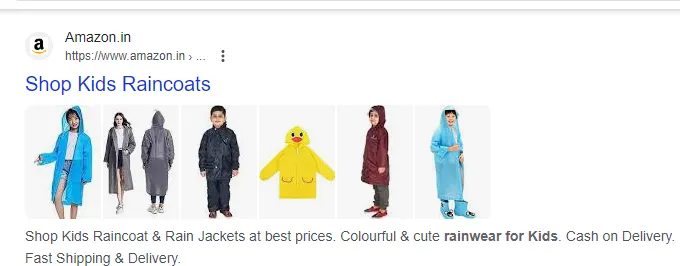
Are you able to spot the difference?
Informational keywords are for information. Blogs and content-centric sites care about these keywords.
eCommerce keywords care about COMMERCIAL KEYWORDS that show buying intent.
Today, keyword research should also include conversational and question based keywords because AI powered search tools and voice assistants use natural language queries.
Read More: 11 Best Keyword Research Tools in 2026
Prioritize Your Pages
Performing keyword research on a page-by-page level is important. But start with the most important pages FIRST.
Ensure your site has eCommerce tracking in Google Analytics to understand the most important pages. To get a rough sense of these pages, go to:
Behavior > Site Content > Landing Pages > Sort by revenue (high to low)
Related: A 5-Step Guide to Setting Up Google Analytics (GA4)
Optimize Your Homepage
Good homepage SEO for ecommerce websites is very important. Keep call-to-action front and centre. Keep menus short and sweet. Make it easy to get back to the homepage. Make site search visible. For better SEO results, follow the below instructions.
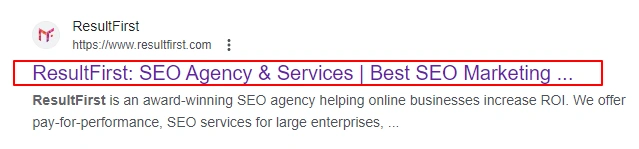
Homepage Title Tag
Include your business name with the main keyword phrase you are targeting. Create a title within 70 characters and keep it appealing.
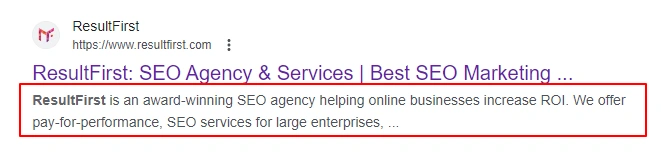
Homepage Meta Description
A meta description is a short description of your business within 160 characters. It is displayed in the search beneath the title tag. Briefly sketch out the content and quality of the page to encourage people to visit your website.
Homepage Content
Create homepage content that helps visitors learn more about your business and products clearly and precisely. A cluttered homepage or too much information confuses visitors and search engines.
So, a big ‘NO’ to too much information! Just feature your top few products or services with your unique selling proposition on the homepage.
User-friendly Site Structure
A user-friendly site structure is great for users and SEO. A flat, simple architecture enables browsers to find the products they want easily.
You need to develop a distinct hierarchy of navigation, right from your homepage to product categories to the products listed within them.
The rule of thumb is to ensure visitors can reach everything in a maximum of three clicks to any product from the homepage.
You can do this with internal linking. Internal links serve two purposes.
- They boost eCommerce SEO as they show how pages are related to one another
- They increase time on site by prompting people to navigate your site further
A simple structure also supports AI search systems by clearly defining relationships between categories and products.
Try to add links to relevant products or to information-rich blog articles. This improves SEO for eCommerce websites, making your site more tempting for deep dives.
Choose the Right URLs
For optimal ranking for eCommerce SEO, create the right URLs. Rand Fishkin, the CEO and co-founder of SEOmoz, has shared a few URL guidelines for the best SEO strategy for eCommerce websites.
- Create URLs for real, live humans to read and interpret, as accessibility matters to Google.
- Use the main keyword in URLs because they show up in search results.
- Make short URLs – try to keep it below 50 to 60 characters.
- Use the main keyword in the page title. No need to include the full page title in the URL.
- Avoid including stop words like “of,” “and,” “the,” and “a” unless they’re part of the keyword.
- Don’t overuse keywords, and avoid pointless repetition.
Remember these guidelines when deciding URLs for your product and category page.
Avoid Broken Links
Broken links are confusing for your site visitors and search engines. Ultimately, links let Google understand your site structure and entrust that you share valid information.
However, monitoring all links manually is difficult and time-consuming. So, use online SEO tools like the Broken Link Checker plugin or Screaming Frog. If you make any changes to the URL of a page, remember to set up a 301 redirect and let search engines know that the link has been updated.
Optimize Product Pages
Product pages are crucial for any ecommerce website. Optimizing them properly contributes to the overall success of your online retail store.
Detailed and structured product information also helps AI systems identify product relevance and recommend your items in shopping results.
It enhances user experience (UX), improves search engine visibility (SEO), increases conversion rates, builds trust and credibility, and sets your e-commerce site apart from competitors.
The fundamental elements of every eCommerce store revolve around product pages and product content.
According to a report from Convertcart, “87% of customers feel that content is the deciding factor when looking to purchase an item.”
Content such as product specifications, reviews, FAQs, and videos is vital for consumers when purchasing a product or visiting its website.
Optimizing every element on your e-commerce product page may not be necessary. Let’s focus on the essential elements that require attention: The product’s name, descriptions, images, and reviews.
Related Post: Effective Strategies for E-Commerce Product Page SEO
Product Name
Your product’s name is very important. Using it in the SEO title and URL of the product page could be a bonus.
Adding a common search term or keyword phrase to your products is advisable.
- Create descriptive and keyword-rich product titles.
- Make sure titles accurately represent the item.
Ensure they are concise but informative.
Let’s say you’re selling smartphones. It would be best if you made certain to include the brand and model in the product name.
For instance,
- Instead of just ‘Android Smartphone,’ go for something like ‘Samsung Galaxy S21.’
You can include specific keywords in the title and URL. This detailed product naming helps customers find the exact device they want.
| Page Title | URL |
| Samsung Galaxy S21-TechHub | www.techhub.com/samsung-galaxy-s21 |
Image Optimization

Images are a crucial part of your product page. An unoptimized image holds up to 75% of the total webpage weight. To properly optimize images for website search, you must follow the below-mentioned steps:
- Start with the filename.
- Never add images named IMG0010.jpg to your product pages.
- Use the product name and main keyword.
Video
Video offers room to your customers to become more confident about their purchases.
So, create videos with basic information about your product. DIY and educational videos can be incorporated with your customers too easily.
‘How-to videos on ways to use the product’ is a plus for obtaining results. Videos on your testimonials from people who have used the product also offer better results.
Customer Reviews
Good reviews boost customer’s confidence. On the flip side, bad ones demotivate them. So you have to check reviews about your products accordingly.
FAQ Content
A FAQ page is like an asset on any eCommerce website. The main motive of this page is to answer questions frequently asked by customers related to products.
Through the FAQ, try to answer basic questions about your products, their features, and the website’s security, shipping, and return policies. This can increase buyer confidence, leading to more sales.
FAQs also help AI understand common questions and match your products to user intent.
Use Responsive Design
Mobile users often search for a product or service when they’re in dire need for your products. So, make sure your website is responsive and mobile-friendly. Responsive design offers customers a room to make purchases.
On the other hand, using responsive design for an eCommerce website boosts user experience and improves search results. This aspect of ecommerce website optimization is crucial for maintaining a competitive edge.
Note that Google’s mobile-first index uses mobile-friendliness as a ranking signal.
Reduce Page Load Speed
The faster your pages load, the better for ranking.
A page load time of 2 seconds or less is good.
Pointers for enhancing page load speed:
- Choose appropriate file formats: JPEG for photographs, PNG for images with text or transparency, and WebP for modern browsers.
- Compress images: Use tools like TinyPNG, JPEGmini, or online compressors to reduce file size without significant quality loss.
- Lazy load images: Defer loading images below the fold until they are scrolled into view, reducing initial load time.
- Limit the number of font styles and weights.
- Consider inlining critical CSS to avoid additional HTTP requests
Minify CSS, JavaScript, and HTML:
- Remove unnecessary characters: Eliminate spaces, comments, and line breaks to reduce file size.
- Combine files: Merge multiple CSS or JavaScript files into single files to reduce HTTP requests.
- Minify code with tools: Use online minifiers or plugins for your content management system (CMS).
Related Post: How To Improve Page Load Speed of Your Website
Create Backlinks for Your Ecommerce Website
Building backlinks isn’t difficult for an eCommerce website; you have to boost the probability of guest posting on blogs related to your niche.
Backlinks also signal authority to AI ranking systems, increasing the likelihood your products appear in recommendations.
Secure Your Site with HTTPS
As a store owner, you collect personal information from your customers. Encrypt and secure their information. If people browsing your eCommerce store feel unsafe, they may jump to your competitor’s website.
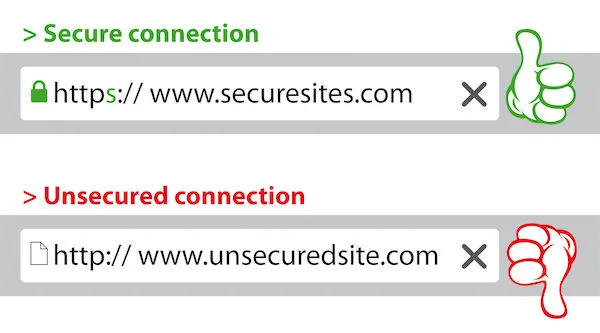
In addition, Google has declared HTTPS a ranking factor for websites. Also, your competitors may have moved to HTTPS because HTTPS prevents cyber criminals from intercepting the data and the information your customers enter on your website.
To obtain an HTTPS certificate, connect with the ResultFirst team.
Best Ecommerce SEO Tools
- Ubersuggest:
Ubersuggest offers keyword research, backlink analysis, and site audit features. It aids in discovering keyword opportunities, competitor insights, and data-driven SEO suggestions.
- Ahrefs:
A comprehensive tool for SEO analysis, Ahrefs excels in backlink tracking, keyword research, and competitor analysis. Its robust features assist in understanding and enhancing website performance.
- Screaming Frog:
Screaming Frog is primarily a website crawler Identifying SEO issues like broken links, duplicate content, and missing metadata. It aids in comprehensive site audits and optimization.
- Moz:
Moz provides various SEO tools, including keyword research, site audits, and link analysis. Features like MozBar and Moz Pro help improve search visibility and site performance.
Check out our full list: Top 10 Ecommerce SEO Tools to Boost Traffic
How to Choose the Best SEO-friendly eCommerce Platform
Choosing the best eCommerce platform for SEO is very important as it directly impacts your business. There are many platforms, but not all are suitable for your business. Some of the popular platforms include:
- Magento
- Shopify
- BigCommerce
- WooCommerce
- Squarespace
- Volusion
- Wix
- Weebly
- osCommerce
- PrestaShop
Conclusion
Optimizing an ecommerce website for search is not a quick task and SEO strategies continue to evolve with AI-driven search, changing user behavior, and new algorithm updates. While the process may feel complex at first, taking a structured approach and focusing on the fundamentals makes it manageable.
When keyword research, technical SEO, content optimization, user experience, and trust signals work together, organic visibility can grow steadily and sustainably. With consistency, ecommerce SEO often outperforms paid channels in long-term traffic, conversions, and return on investment.
We hope this guide helps you get started with effective ecommerce SEO and gives you a clear direction for improving your online store performance.
If you want to increase organic visibility, drive qualified traffic, and grow revenue with a proven ecommerce SEO approach, our team at ResultFirst is here to help. We specialize in scalable SEO strategies backed by data, ongoing optimization, and measurable performance.
Get a customized ecommerce SEO strategy for your store. Connect with ResultFirst today.
Also Read:
6 Unique Strategies To Increase ROI For Your Ecommerce Business
FAQ’s
WHAT TO READ NEXT
READY TO BUILD PREDICTABLE ORGANIC GROWTH?
We are the only TOP SEO services agency providing Real Results in a Real Performance model. We help growth hungry companies outperform their competition and achieve 300%+ growth in their digital marketing initiatives.
- San Jose, CA, 95120

- +1-888-512-1890

- sales@resultfirst.com

300K+
KEYWORDS RANKED
546M+
REVENUE GENERATED
18 Years
SOLVING COMPLEX SEO
150+
TEAM MEMBERS