



 sales@resultfirst.com
 +1-888-512-1890
Top 11 AI Shopping Assistants for E-commerce in 2026

The best AI shopping assistants for e-commerce in 2026 help shoppers discover products, compare options, get answers, and complete purchases through AI-powered conversation and search. Built on natural language processing, predictive analytics, and sentiment analysis, these tools follow a shopper’s intent across a conversation and respond around the clock.
The right AI shopping assistant for your business depends on what problem you’re solving: consumer-facing product discovery, on-site recommendations, conversational sales, or automated customer support. In fact, 39% of U.S. consumers have already used an AI assistant while shopping online, signaling a clear shift toward AI-powered commerce.
This guide explores the 11 best AI shopping assistants for e-commerce and helps you identify the right solution for your Shopify store or online business.
Before adopting AI-powered tools, e-commerce brands can run an AI visibility analysis to understand how well their site is prepared for AI-driven search and assistant interactions.
Quick Comparison: Best AI Shopping Assistants for E-commerce
| Tool | Best For | Platform | Pricing |
| Alexa for Shopping (formerly Rufus) | Comparing products, researching items, and automating purchases | Amazon app, site, Echo | Entirely free to use |
| Shop.app | Discovering Shopify merchant products | Shop app / Shopify checkout | Free to use. Merchants require no subscription fees to list their products |
| Manifest AI | Maximizing the pre-purchase sequences in Shopify stores | Shopify and BigCommerce.Shopify and BigCommerce. | Free: Chatbot, recommendations, cart recoveryBasic
($99/mo): AI recommendations, quizzes, widgets |
| Rep AI | Shopify stores fighting cart abandonment | Shopify | AI Sales Agent: From $578/moAI Support Agent: From $250/mo
AI Concierge: From $726/mo |
| Fin (formerly Intercom) | Autonomous customer service resolution, answering complex questions using your existing Help Center across channels like chat, email, and voice | Multi-channel: chat, email, voice | Fin AI Agent: From $0.99/outcomeFin + Intercom: From $0.99/outcome + $19/seat/mo
Pro Add-on: $99/month Copilot Add-on: $35/user/month |
| Tidio AI (Lyro) | Small-to-mid stores wanting live chat and AI in one tool | Website, Shopify, WordPress | Free Plan: $0/monthStarter: $24/month
Growth: From $49/month Plus: From $300/month + usage Premium: Custom pricing |
| Verloop.io | Automating omnichannel customer support and sales interactions through AI-driven chatbots and voice agents | Web, app, WhatsApp, Instagram | Custom pricing |
| Shopyly AI | Combined AI search + support chatbot in one install | Shopify | Forever Free: Free (50 chats/mo)Smart Start: From $49.99/30 days
Pro Perform: From $149.99/30 days Elite Engage: From $449.99/30 days Enterprise: Custom Pricing |
| Alhena AI | Shopify/multi-platform brands wanting discovery, sales, and support in one owned assistant | Shopify, WooCommerce, BigCommerce, Magento | Free: $0/monthEssentials: From $199/month
Growth: From $499/month Scale: From $999/month Enterprise: Custom Pricing |
| ChatGPT Shopping | Shoppers doing deep product research before buying | ChatGPT app and web | Free to use; merchant participation requires Agentic Commerce Protocol integration |
| Perplexity Shopping | Shoppers who want source-cited research with instant checkout | Perplexity app and web | Free to use; one-click checkout requires Perplexity Pro (~$20/mo) |
What Is An AI Shopping Assistant?
An AI shopping assistant refers to a virtual tool based on Artificial Intelligence, providing assistance in buying through chat, voice, or SMS. These virtual assistants understand natural language, make product recommendations based on the individual, and respond in real time, for a user-friendly, interactive buying experience.
Unlike a static FAQ page or a keyword-based search bar, it interprets intent, holds context across follow-up questions, and responds in real time.
How AI Shopping Assistants Work?
Most AI combine three components:
- a language model that interprets what a shopper is asking,
- a retrieval layer that pulls from a product catalog, reviews, or a knowledge base,
- and a memory or session layer that carries context from one question to the next.
The stronger tools also connect to live inventory and order data, so answers about stock or shipping are accurate rather than guessed, and this is also what an AI SEO and Generative Engine Optimization (GEO) strategy relies on: clean, structured product data that both shoppers and AI assistants can retrieve accurately.
What are the different types of AI Shopping Assistants
Product Discovery Assistants: Help shoppers discover and compare products across marketplaces and the web. Brands improve visibility through optimized product feeds and structured data. Examples: ChatGPT Shopping, Alexa for Shopping.
AI Product Recommendation Assistants: Merchant-installed AI that delivers personalized product recommendations based on customer preferences, browsing behavior, and purchase intent. Examples: Manifest AI, Alhena AI.
Conversational Commerce Assistants: AI shopping assistants that engage visitors in real time, answer buying questions, recommend products, upsell, and recover abandoned carts. Examples: Rep AI, Shoply AI.
AI Customer Support Assistants: AI tools that automate customer service by handling FAQs, order tracking, shipping, returns, and pre-purchase questions. Examples: Fin AI, Tidio AI, Verloop.io.
Voice & Visual Shopping Assistants: AI assistants that let shoppers search and buy products using voice commands or images instead of text. Examples: Alexa for Shopping, Perplexity Shopping (Snap to Shop).
Top 11 AI Shopping Assistants for E-commerce in 2026
Consumer AI Shopping Assistants
1. Alexa for Shopping (formerly Amazon Rufus)
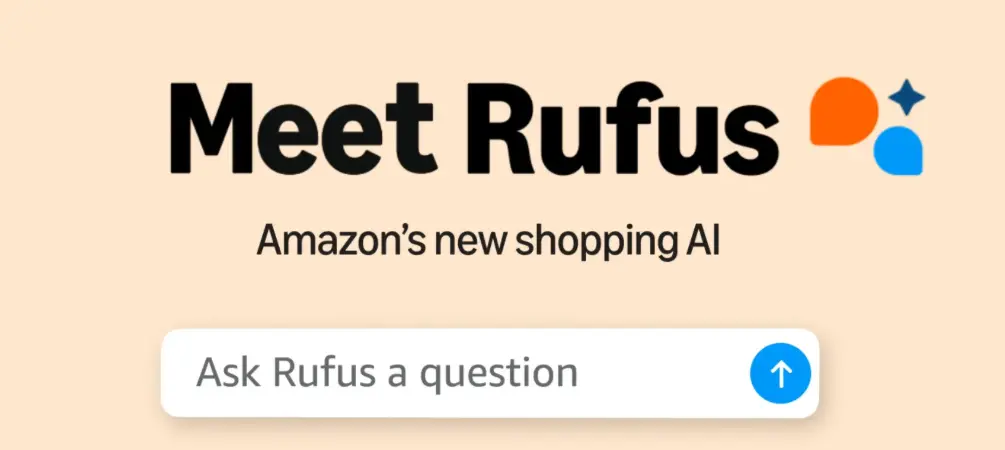
Rufus AI shopping assistant from Amazon is designed to make product discovery feel more like a conversation than a search. Instead of typing basic keywords, users can ask detailed questions like what to look for in a product, how two items compare, or which option fits their specific needs.
- Best for: Shoppers researching and buying within the Amazon ecosystem
- Platform: Amazon Shopping app, Amazon.com, Echo Show devices
- Key features: Product research and comparisons, personalized recommendations based on shopping history, price tracking, and agentic actions like reordering or buying at a target price
- Main strength: It carries shopping context across devices, so a search that starts on a phone can continue on an Echo Show without repeating yourself
- Pricing: Free for shoppers; not applicable to merchants
- Potential limitation: It’s a consumer tool inside Amazon’s ecosystem; brands cannot install or customize it, only optimize their listings for it
In May 2026, Amazon folded its Rufus chatbot into Alexa, rebranding the combined experience as Alexa for Shopping and rolling it out to all U.S. customers. Functionality carried over largely unchanged; Rufus had been used by more than 300 million customers in 2025, but sellers should now optimize for “Alexa for Shopping” rather than “Rufus” going forward, since some documentation and screenshots may still reference the old name during the transition.
2. Shop.app (Shopify)
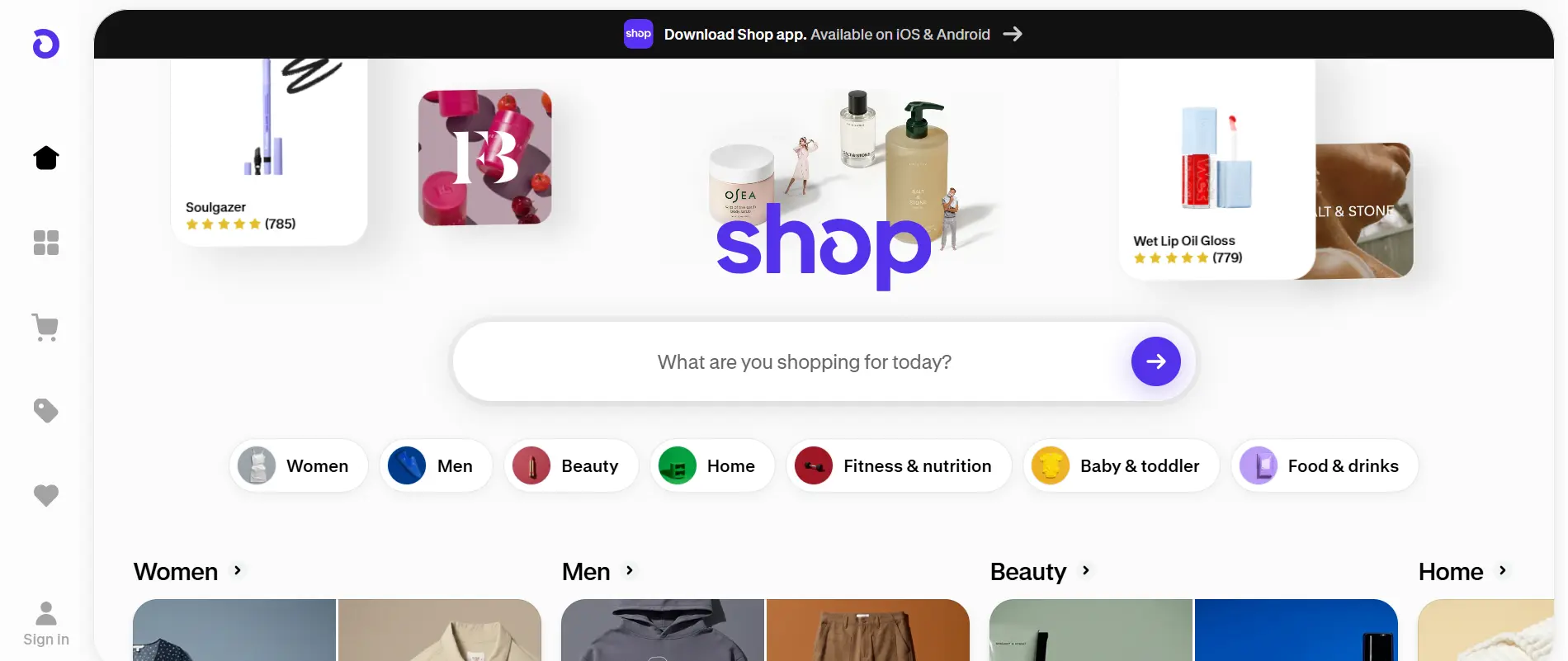
Shop.app is Shopify’s AI shopping assistant that helps shoppers discover products through natural language conversations. It remembers context during a session, refines recommendations based on user preferences, and displays personalized product suggestions from Shopify merchants. It’s especially useful for discovering independent and direct-to-consumer (DTC) brands.
- Best for: Shoppers browsing and buying from independent Shopify merchants
- Platform: Shop app and Shop Pay checkout
- Key features: Split-screen chat and product browsing, personalized results based on past interactions, direct checkout via Shop Pay
- Main strength: It only surfaces products from real Shopify merchants, which makes it useful for discovering independent brands rather than mass-market listings.
- Potential limitation: Like Alexa for Shopping, it’s a consumer app; a merchant benefits from being discoverable in it, but doesn’t install or configure it directly on their own site
- Pricing: Free for shoppers
3. ChatGPT Shopping
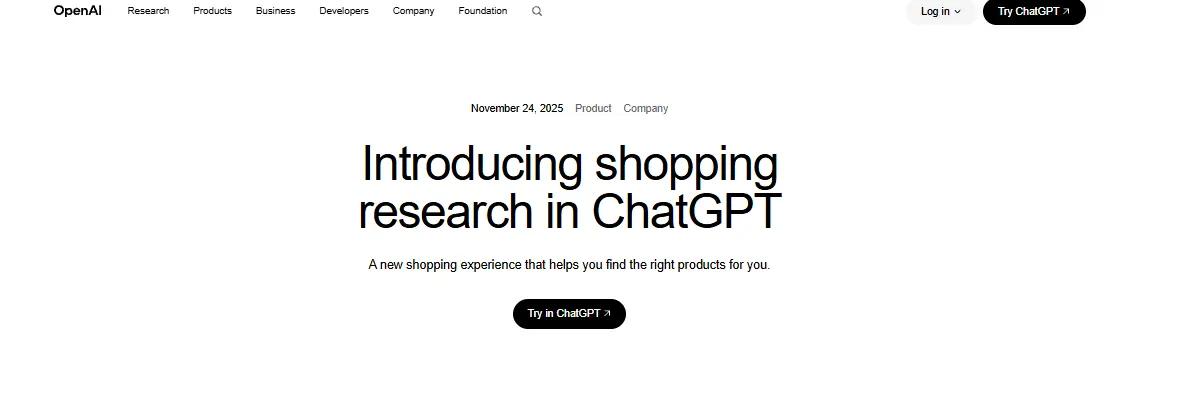
ChatGPT Shopping is OpenAI’s AI shopping experience that helps users discover, compare, and evaluate products using natural language conversations. It provides personalized recommendations, explains product differences, and surfaces product details from across the web. Instead of relying on keyword searches, shoppers can ask complex questions to find products that best match their needs.
- Best for: Shoppers doing deep, comparison-heavy product research before buying
- Platform: ChatGPT app and web (chatgpt.com)
- Key features: Conversational product research, visual search, side-by-side comparisons, and Instant Checkout for merchants connected through OpenAI’s Agentic Commerce Protocol (ACP)
- Main strength: The largest reach of any AI shopping surface, around 900 million weekly active users, with major retailers including Target, Sephora, Nordstrom, Best Buy, Lowe’s, and The Home Depot feeding product data directly in
- Potential limitation: It’s a consumer-facing assistant, not a merchant-installed tool. Brands must connect their catalog through ACP for better visibility, and purchases redirect shoppers to the merchant’s website to complete checkout.
- Pricing: Free to use for shoppers; merchant participation requires ACP integration, not a simple app install
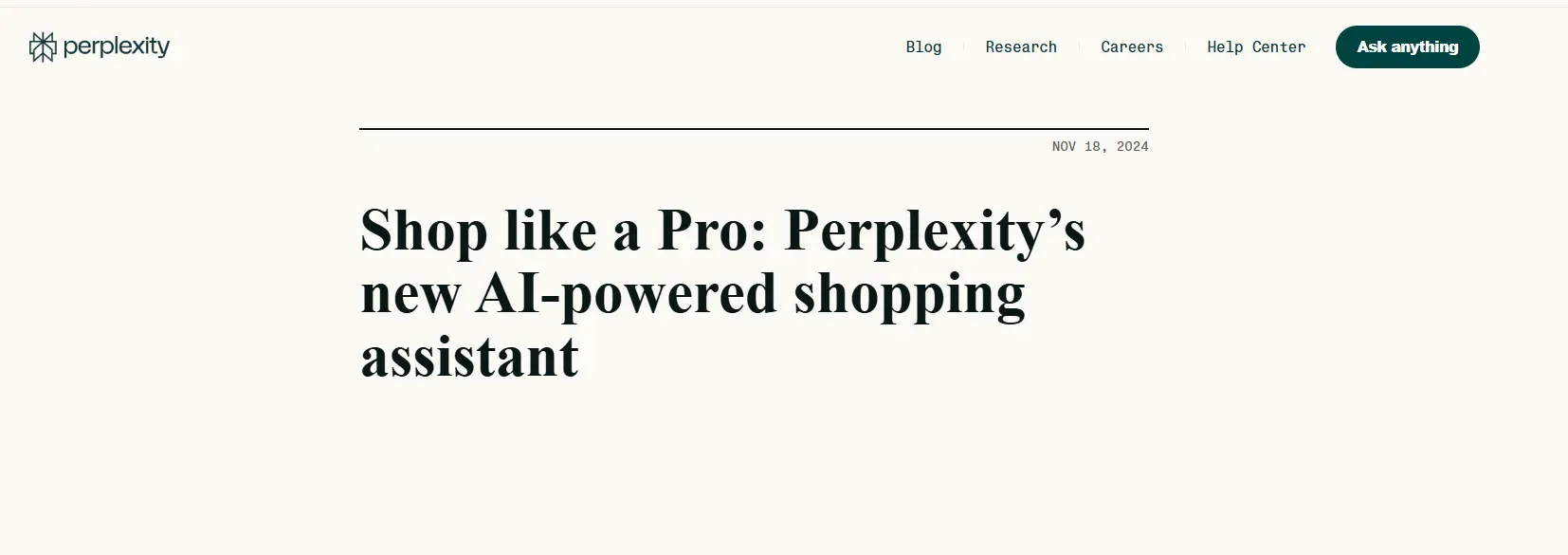
4. Perplexity Shopping
Perplexity Shopping is an AI shopping assistant that helps users research, compare, and discover products through conversational search. It provides personalized recommendations, answers buying questions, and supports visual search with Snap to Shop, allowing shoppers to find products using images.
- Best for: Shoppers who want source-cited product research with one-click checkout
- Platform: Perplexity app and web (perplexity.ai)
- Key features: Natural-language product search across 5,000+ connected merchants, “Snap to Shop” visual search from an uploaded photo, and in-chat checkout via PayPal
- Main strength: A notably higher-spending user base; Shopify’s own analysis found Perplexity shoppers carry a meaningfully higher average order value than traffic from other AI referral sources.
- Potential limitation: Like ChatGPT Shopping, this is a consumer research and discovery tool, not a widget a merchant installs; checkout is currently limited to merchants connected via PayPal, and the service is US-only with no announced international rollout.
- Pricing: Free to use; one-click checkout requires a Perplexity Pro subscription ($20/month)
AI Product Discovery and Recommendation Tools
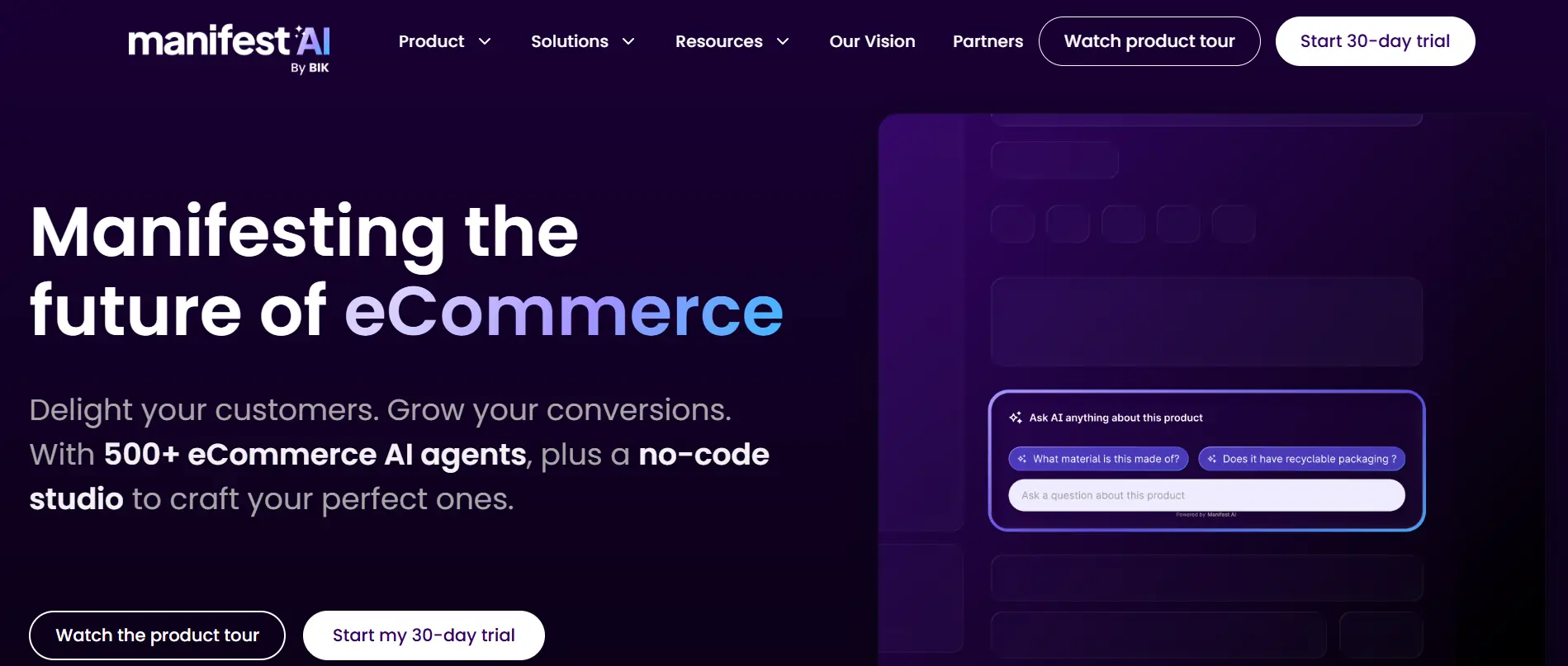
5. Manifest AI
Manifest AI, powered by ChatGPT, is a complete AI shopping guide aimed at maximizing the pre-purchase sequences in Shopify stores. It is based on Natural Language Processing (NLP) and deep learning algorithms, providing users with customized help, allowing them to make the right purchase choices.
- Best for: Shopify stores that want AI-driven search, quizzes, and conversion nudges in a single app
- Platform: Shopify
- Key features: AI-powered product search, personalized nudges, interactive quizzes, and real-time support, trained on a store’s own catalog and documents
- Main strength: It bundles several pre-purchase tools, search, quizzes, and nudges — that would otherwise require separate apps
- Potential limitation: Reviewers note responses can be terse on complex questions unless you invest time customizing the knowledge base
- Pricing: Free plan available; paid plans scale with usage; confirm current tiers on Manifest AI’s pricing page, since published third-party numbers vary
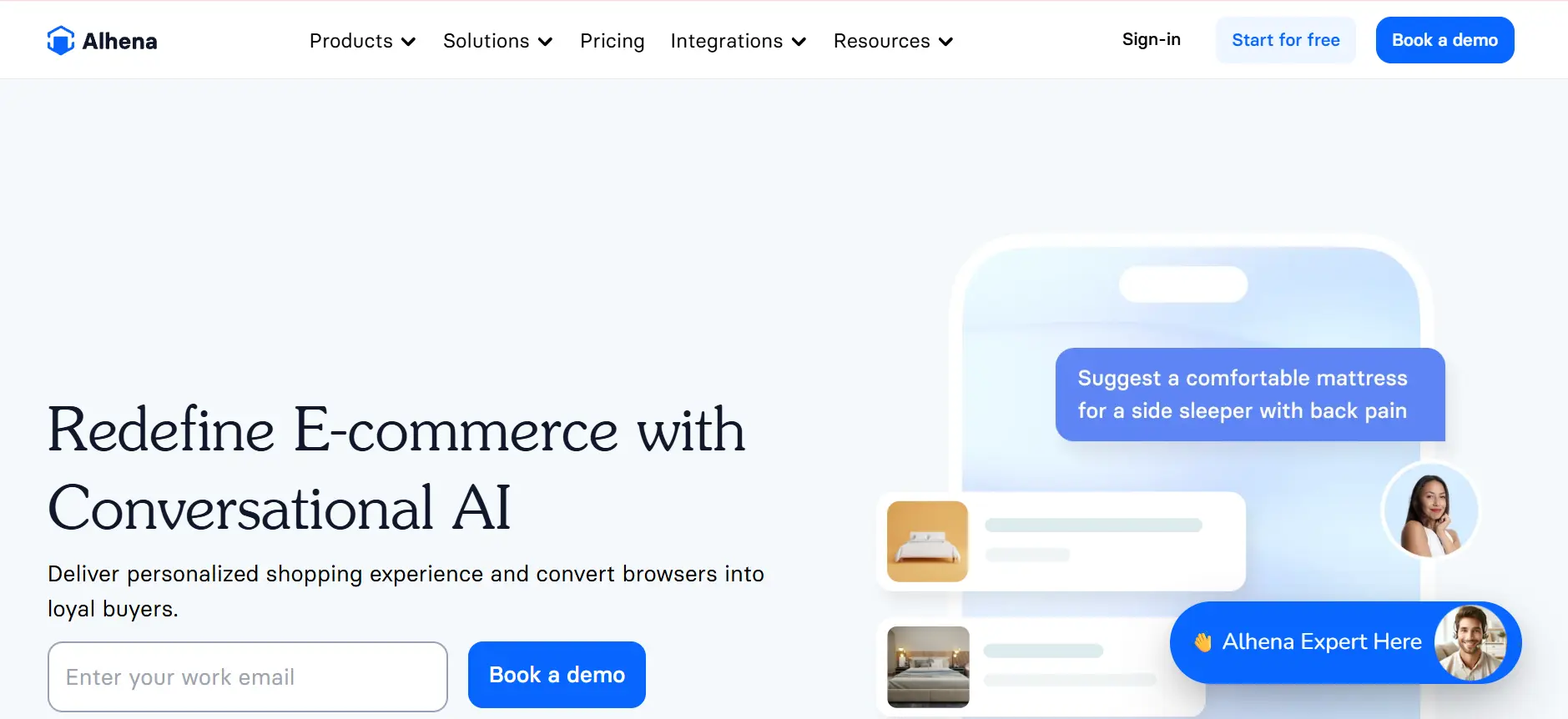
6. Alhena AI
Alhena AI is a conversational commerce assistant that helps shoppers discover products, receive personalized recommendations, and complete purchases through natural, AI-powered conversations. It connects with your product catalog and support content to deliver accurate answers, guide buying decisions, and improve conversions across the customer journey.
- Best for: Shopify merchants who want proactive, behavior-triggered sales conversations
- Platform: Shopify exclusively
- Key features: Behavioral AI that detects drop-off risk and intervenes with product suggestions, real-time inventory sync, brand-voice customization, and analytics on why visitors don’t convert
- Main strength: Fast to deploy (often live in under 15 minutes) with strong conversion-lift data from case studies
- Potential limitation: Pricing is visitor-based, so traffic spikes from a sale or ad campaign can increase your bill without a matching increase in resolved conversations, and it doesn’t work outside Shopify
- Pricing: Plans generally start around $99–250/month depending on monthly visitors, plus roughly $12 per additional 1,000 visitors over the plan limit.
7. ShoplyAI
Shoply AI is a conversational commerce assistant that combines AI-powered product search and live chat in a single tool. It helps shoppers find products using natural language, answers pre-purchase questions, and delivers personalized recommendations to improve the shopping experience and increase conversions.

- Best for: Shopify stores that want AI product search and a support chatbot without running two separate apps
- Platform: Shopify
- Key features: Natural-language product search across large catalogs, an AI chat widget for pre-purchase questions, multilingual coverage, and zero-setup catalog learning
- Main strength: Combines search and chat in one billing relationship and one install, which avoids the context loss that happens when a search tool and a chatbot don’t share session data
- Potential limitation: It’s newer and less widely reviewed than long-established players like Tidio or Intercom, so due diligence on support quality at scale is worthwhile
- Pricing: Free plan available (limited chats/searches); paid tiers from around $49.99/month
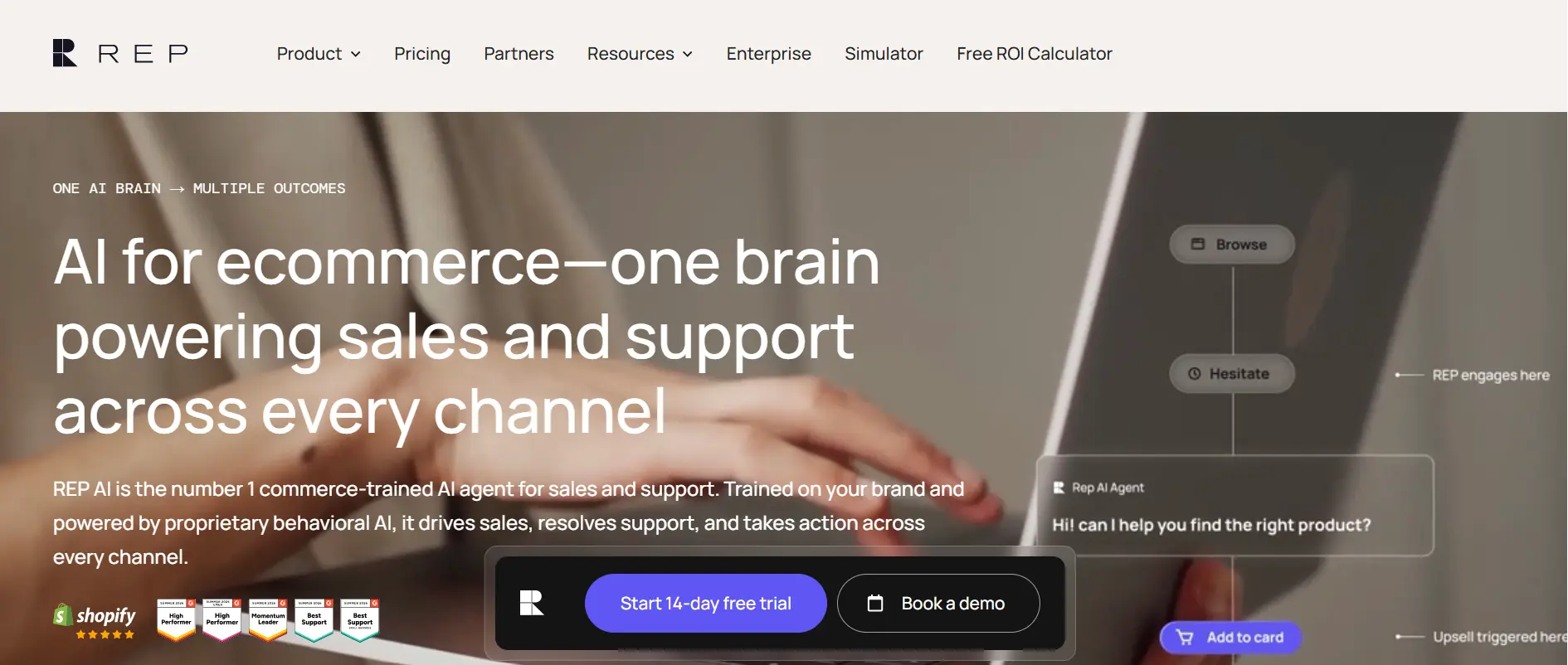
8. Rep AI
The Rep AI Assistant is a ChatGPT-powered conversational shopping tool and assistant providing hyper-personalized support for every step in the buying journey. Using deep learning and behavioral AI, the system detects situations where customers require assistance and offers context-based product suggestions, upsells, and support. It is fast to deploy and only takes 5-10 minutes to integrate.
- Best for: Shopify stores focused on reducing cart abandonment and increasing conversions.
- Platform: Shopify.
- Key features: Behavioral AI triggers, personalized product recommendations, AI chat, real-time inventory awareness, brand voice customization, and Shopify/Zendesk integrations.
- Main strength: Detects shopper intent in real time and proactively engages visitors with personalized recommendations and upsells to drive more sales.
- Potential limitation: Available only for Shopify stores, with visitor-based pricing that can increase during high-traffic periods.
- Pricing: Plans generally start at around $99–250/month, with pricing based on monthly visitors and overage fees for additional traffic.
AI Customer Support Tools for E-commerce
9. Fin (formerly Intercom)
Built to improve customer engagement and operational efficiency, Intercom Fin AI can resolve up to 67% of customer support conversations without human intervention. Powered by advanced AI language models, Fin delivers accurate, conversational responses while following your brand guidelines. It also provides oversight tools, so your team can review AI-generated replies and maintain quality control.
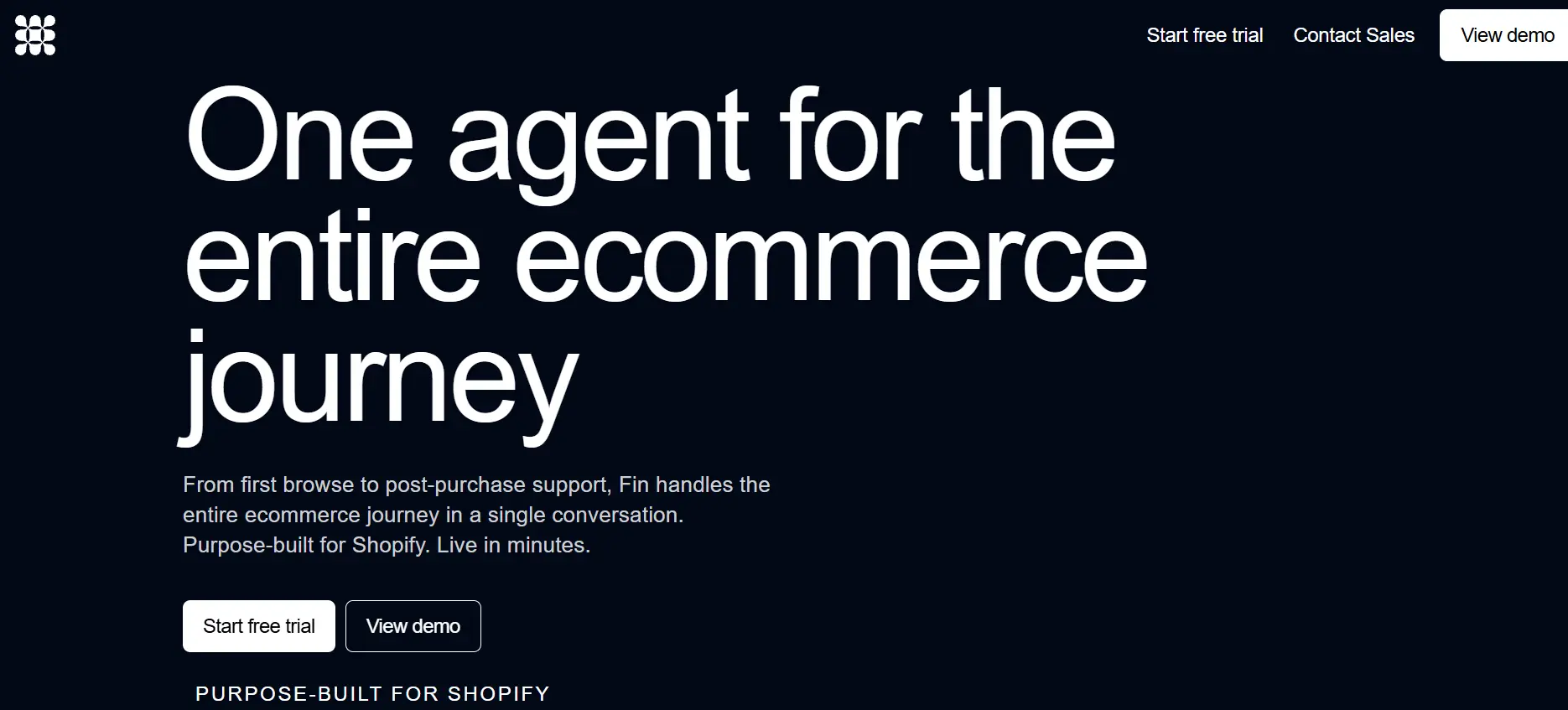
- Best for: Support-led e-commerce brands that want a mature AI agent with transparent, usage-based pricing.
- Platform: Multi-channel (chat, email, and voice) with integrations for Zendesk, Salesforce, Freshdesk, and other helpdesks.
- Key features: AI-powered ticket resolution, procedural handoffs, lead qualification, AI Copilot, and human-agent assistance.
- Main strength: One of the highest-performing AI support agents, with an average 76% resolution rate across customers, while many businesses report 85%+ resolution rates after optimization. It also uses transparent $0.99 per successful outcome pricing.
- Potential limitation: Costs increase as AI successfully resolves more conversations, so high-volume teams should estimate usage before scaling. Some advanced capabilities require paid add-ons.
- Pricing: $0.99 per outcome with a 50-outcome monthly minimum. Seat pricing depends on the selected Intercom plan.
10. Tidio AI (Lyro)
Tidio AI is an AI-powered chatbot and shopping assistant designed for mid-sized eCommerce enterprises. It boosts sales by attending to some 70% of customer queries autonomously, conducting the conversation naturally and extensively, especially in the case of big-ticket items. It is easily customizable, offering a great range of templates, and allows you to set up proactive chat triggers and engage with customers via multichannel communication.
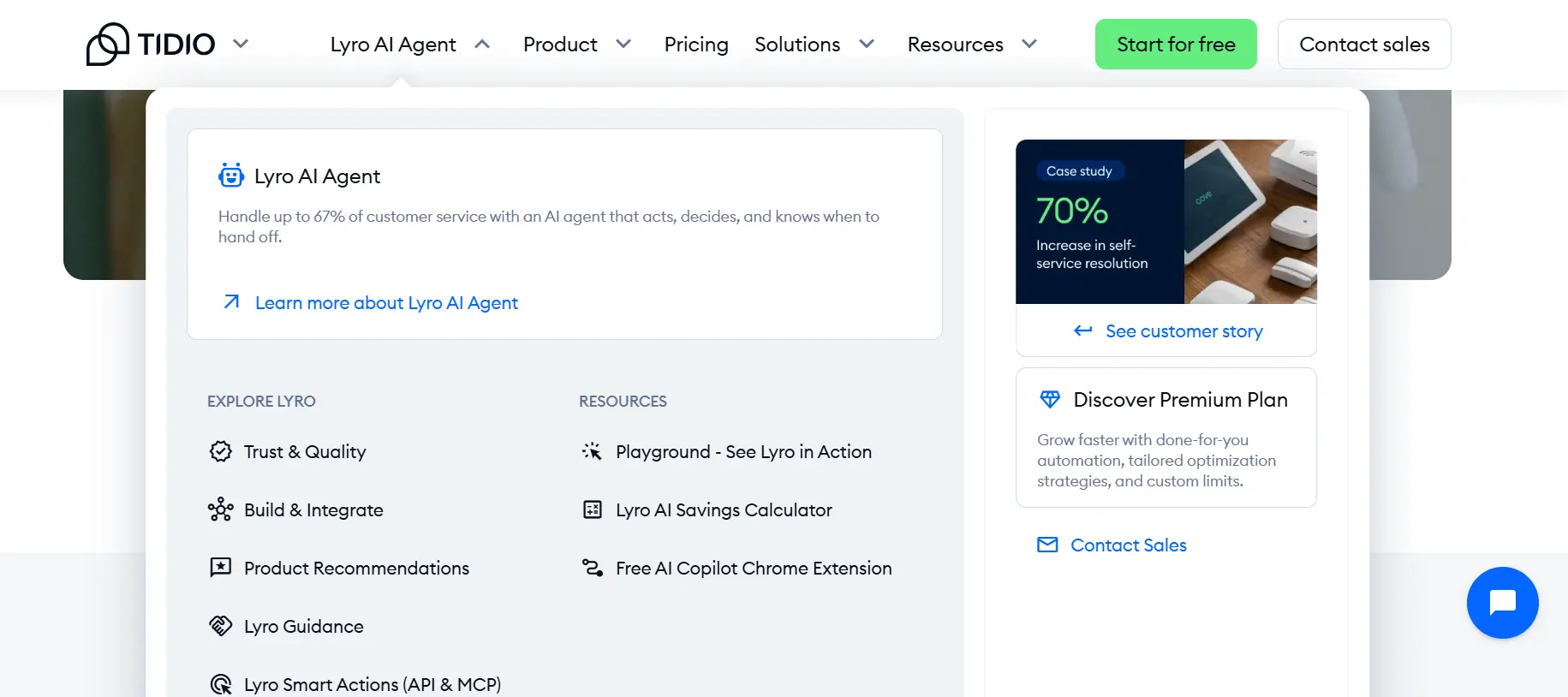
- Best for: Small-to-mid e-commerce stores that want live chat and AI support in one tool.
- Platform: Website, Shopify, and WordPress.
- Key features: Lyro AI chatbot, live chat, visual automation flows, and order tracking.
- Main strength: Easy to set up with a free tier. Tidio reports customers have achieved 25% higher sales, 5× more conversions, 15% fewer product returns, and automated up to 70% of customer queries with Lyro AI.
- Potential limitation: Lyro AI and advanced automation are paid add-ons, so total costs can be significantly higher than the entry-level plan.
- Pricing: Free plan available. Lyro AI starts at around $39/month and is billed separately from Tidio’s paid Customer Service plans.
11. Verloop.io
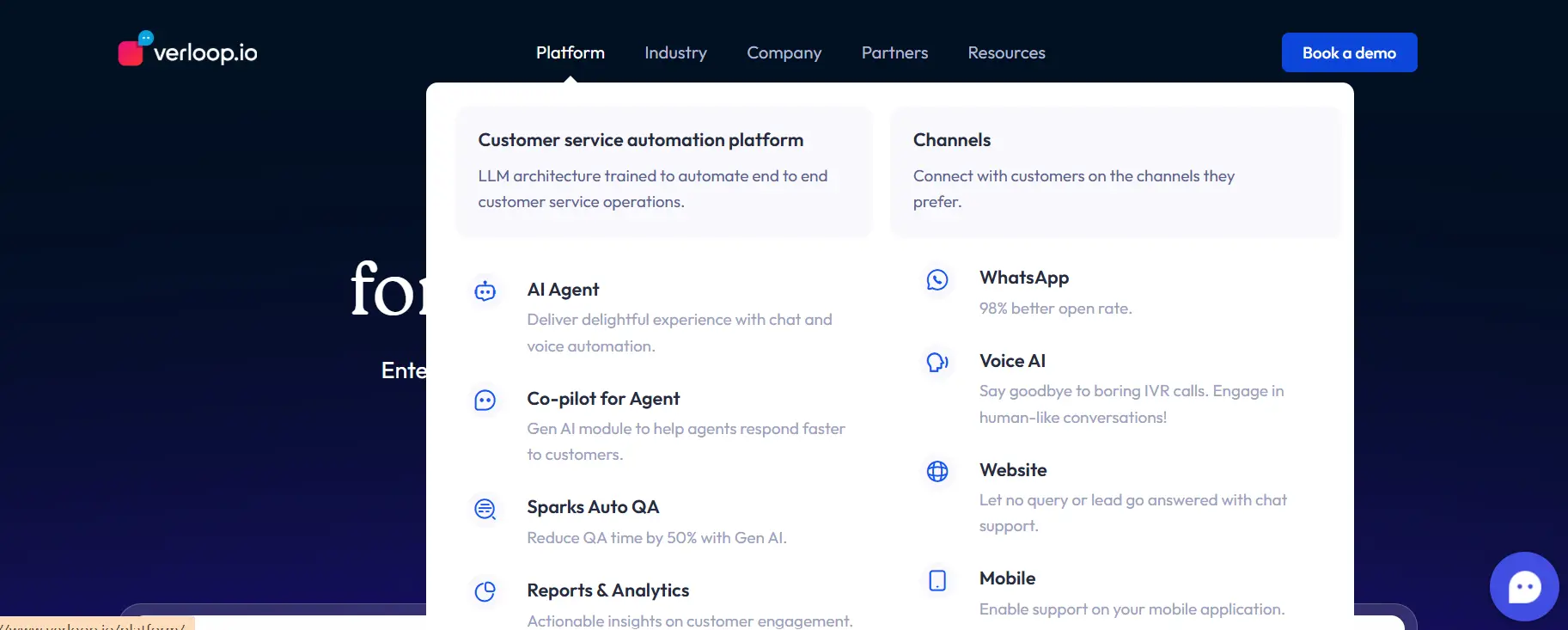
Verloop.io is a generative AI customer support assistant that helps e-commerce brands automate customer conversations across web, mobile, and messaging channels. It answers shopping and support questions, assists human agents, and delivers multilingual support to improve customer experience at scale.
- Best for: High-volume brands needing AI support across multiple languages and channels.
- Platform: Web, mobile apps, WhatsApp, Instagram, and other messaging channels.
- Key features: AI chat and voice support, multilingual conversations (80+ languages), AI agent copilot, automated quality assurance, and omnichannel support.
- Main strength: Can automate up to 90% of repetitive customer queries while supporting customers across multiple channels and languages.
- Potential limitation: Pricing is not publicly available, and implementation typically requires working with the sales team.
- Pricing: Custom pricing. Contact Verloop.io for a quote.
Which AI Shopping Assistant Is Best for Your Business?
- Choose Manifest AI or ShoplyAI if you need AI-powered product discovery on Shopify with quizzes, search, and basic support in one app.
- Choose Alhena AI if you want one assistant covering discovery, sales, and support across Shopify or another platform, with agentic checkout built in.
- Choose Rep AI if cart abandonment and proactive conversational sales are your main problem, and you’re exclusively on Shopify.
- Choose Fin if customer service automation is your main goal and you want a large-scale AI support agent with transparent, pay-per-outcome pricing.
- Choose Tidio AI if you want an approachable, all-in-one live chat plus AI tool for a smaller store.
- Choose Verloop.io if you need a large-scale AI support agent across many languages and messaging channels.
- Optimize your listings for Alexa for Shopping, Shop.app, ChatGPT Shopping, and Perplexity Shopping rather than trying to install them; they are consumer-side discovery layers, not merchant tools.
How to Choose an AI Shopping Assistant?
Start with the specific problem costing you the most money: unanswered pre-purchase questions, cart abandonment, or a support team drowning in repetitive tickets. Then check three things before you buy:
- Does it integrate with your actual platform (Shopify-only tools won’t help a WooCommerce store)?
- Is the pricing model predictable at your traffic volume?
- Does it prevent the AI from inventing prices, stock levels, or promises it can’t keep?
For a broader view of how AI is reshaping discovery beyond any single tool, see our guide to AI search visibility for e-commerce brands.
How to Implement an AI Shopping Assistant
- Define the use case. Decide whether the primary goal is product discovery, recommendations, customer support, cart recovery, or conversational sales; trying to solve all five with one tool usually solves none of them well.
- Audit your product data. Clean product names, descriptions, variants, prices, and stock status before connecting an AI tool. It can only answer as well as the data behind it; this is also where product feed optimization work pays off twice, for both search engines and AI assistants.
- Connect your product catalog and CRM. Integrate with your store platform, help desk, and any inventory system the assistant needs to answer accurately.
- Set guardrails. Configure rules that stop the AI from inventing prices, delivery promises, discounts, or product claims that don’t exist in your catalog.
- Test with real customer questions. Run it against actual questions about sizing, shipping, returns, and product comparisons, not just demo scripts.
- Set up human handoff rules. Define exactly when a conversation should escalate to a person, and make that handoff visible to the customer.
- Track performance continuously. Monitor conversion rate, average order value, resolution or deflection rate, and escalation rate, and retrain based on where the AI gets stuck.
Benefits of AI Shopping Assistants for E-commerce
Digital shopping assistants offer much more than mere automation. They create personalized shopping experiences that improve product discovery, answer customer questions instantly, and streamline the buying journey.
The clearest, evidence-backed benefits include fewer repetitive support tickets, faster responses to pre-purchase questions, and higher conversion rates through relevant product recommendations. McKinsey research cited by Shopify found one lifestyle company increased conversion rates by up to 20% after implementing a generative AI shopping assistant. Results vary depending on the tool, product catalog, and AI training, so performance should be validated through real-world testing rather than relying solely on vendor claims.
The Future of AI Shopping Assistants
Two shifts are already visible heading into the rest of 2026. First, agentic commerce assistants that don’t just recommend but actually complete purchases on a shopper’s behalf, as seen with Alexa for Shopping’s price-triggered buying,
Perplexity Shopping’s in-chat PayPal checkout, and ChatGPT’s Instant Checkout for merchants connected via its Agentic Commerce Protocol.
Second, consolidation: Amazon merged Rufus into Alexa, and Salesforce’s pending acquisition of Fin (formerly Intercom) signals that AI shopping and support tooling is concentrating around fewer, larger platforms rather than fragmenting further. For brands, this also raises the stakes on Answer Engine Optimization (AEO) as fewer, larger assistants control discovery; being correctly represented inside each one matters more, not less.
Ready to Transform Your Store with AI? | Powered by ResultFirst
AI shopping assistants are no longer a futuristic concept—they already deliver faster, personalized, and more profitable shopping experiences today and moving forward. Whether you’re a small business owner or a large e-commerce brand, choosing the right AI assistant can make sure customer satisfaction is maintained and growth is achieved.
If you’re looking to implement the best AI shopping assistant strategies tailored to your store, ResultFirst can help. As a performance-driven AI SEO agency, ResultFirst specializes in AI integrations, e-commerce optimization, and conversion rate enhancement to ensure your online business achieves measurable results.
Sources Referenced:
- https://www.salesforce.com/news/stories/consumers-ready-for-ai-agents-research/
- https://www.shopify.com/blog/ai-personal-shopper
- https://www.verloop.io/blog/benefits-of-automating-support/
- https://www.tidio.com/blog/ai-in-ecommerce/
- https://www.intercom.com/why-choose-intercom/
- https://www.intercom.com/drlp/ai-customer-service
- https://searchengineland.com/chatgpt-900-million-weekly-active-users-470492
- https://www.aboutamazon.com/news/retail/alexa-for-shopping-ai-assistant
FAQ’s:
WHAT TO READ NEXT
READY TO BUILD PREDICTABLE ORGANIC GROWTH?
We are the only TOP SEO services agency providing Real Results in a Real Performance model. We help growth hungry companies outperform their competition and achieve 300%+ growth in their digital marketing initiatives.
- San Jose, CA, 95120

- +1-888-512-1890

- sales@resultfirst.com

300K+
KEYWORDS RANKED
546M+
REVENUE GENERATED
18 Years
SOLVING COMPLEX SEO
150+
TEAM MEMBERS