



 sales@resultfirst.com
 +1-888-512-1890
On-Page SEO for Law Firms: Best Practices That Improve Visibility and Trust

Most people who need a lawyer start with a search. They type a problem in plain words, and they click the result that feels safe. That is why your website must do two jobs at the same time. It must show up in search results, and it must earn trust fast.
When you improve your pages in a thoughtful way, you help search engines understand your services. You also help real people feel calm and guided. Nearly all content marketers bolster their blog posts with additional elements: 88% add images, 60% incorporate statistics, 45% include contributor quotes, and 26% embed videos.
This guide explains how to build that kind of site with on-page SEO for law firms. You will learn practical steps you can apply to practice pages, attorney profiles, and helpful resources.
You will also see when it makes sense to use SEO services for Lawyers. The goal is simple. Better visibility and stronger trust that turns visits into consultations.
Understand The Searcher And The Case Journey
Before you edit a single page, you need to understand what people are trying to solve. A person in a family dispute searches differently than someone hurt in a crash. They also move through a journey. First, they want clarity. Next, they compare options. Then they decide who to call. So your pages should match each stage.
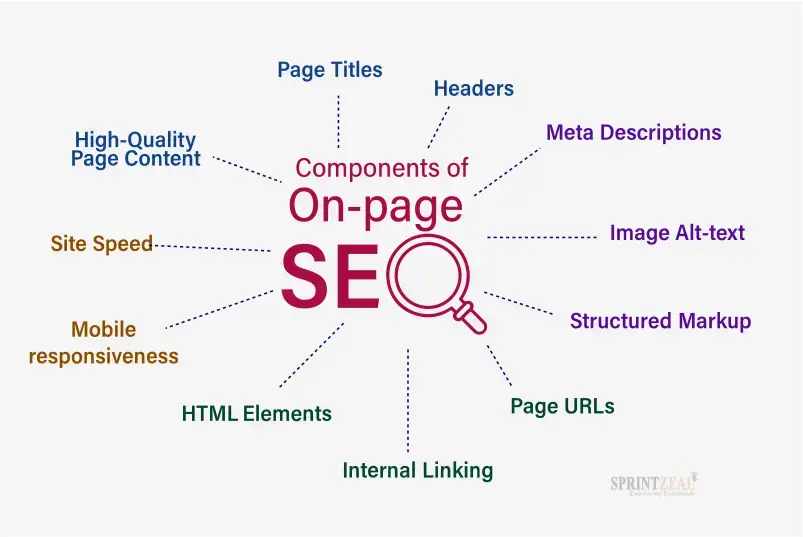
Image Source: Sprintzeal.com
Start by mapping your main practice areas and the questions that show intent. For instance, “DUI lawyer near me” shows urgency. “How does bail work?” shows early research. Both matter because early research builds trust, and trust leads to later calls. As a result, you can plan content that answers questions and then guides the reader to the next step.
You can also listen to your intake team. Ask what callers say and what confuses them. Then use those phrases on your pages in a natural way. Not only that, but you can add short explanations that reduce fear and stress. When people feel understood, they stay longer. That sends positive signals to search engines, and it helps your firm win more qualified leads.
Build Pages Around Clear Practice Areas
A common mistake is to put every service on one page. That makes it hard for search engines to match the page to a specific search. It also makes it hard for a reader to know if you handle their exact issue. Instead, build focused practice area pages. Give each one a clear topic and a clear promise.
Each practice page should explain what the problem is and how you help. It should cover who you serve and what results may look like. It should also set expectations about process and timing. Meanwhile, keep the page honest. Do not guarantee outcomes. Use careful language and include disclaimers where needed.
To do this well, you need consistent on-page SEO for law firms across every practice page. Use one main topic per page. Add related terms in a natural way. Then support the content with internal links to deeper resources. For instance, link a car crash page to a guide on medical bills. Here’s the point. Focused pages rank better, and they feel more helpful.
Write Titles And Meta Descriptions That Earn Clicks
Your title tag is often the first thing a searcher sees. It should be clear, and it should match what is on the page. Include the practice area and your city when it fits. Keep it readable. A human should understand it at one glance.

Image Source: Strikingly
To keep it practical, use a short checklist for titles.
- Lead with the service name
- Add your city when it helps
- Keep the promise clear and plain
- Make each title unique
Meta descriptions do not directly set rankings in a simple way. However, they can lift the click rate. So write descriptions that explain the value of the page in simple words.
- Say what the visitor will learn
- Add one trust detail that is true
- End with a gentle next step
When each snippet feels honest, more people click and stay.
Use Headings And Page Structure For Fast Scanning
People do not read legal pages like novels. They scan. They look for quick reassurance. So you should structure each page with headings that guide the eye. Use one H1 that matches the page topic. Then use H2 headings for major sections. Use H3 headings for details.
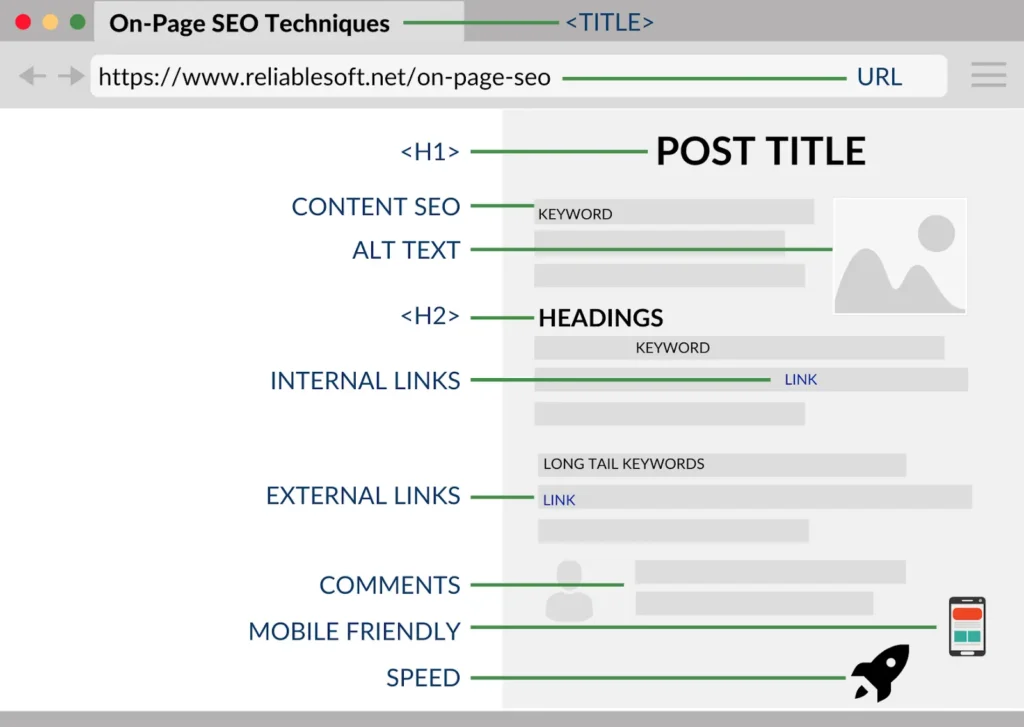
Image Source: Loganix
Write short paragraphs. Use simple sentences. Explain terms as you go. For instance, if you mention “comparative negligence,” add a plain meaning line right after it. As a result, the page stays clear without losing legal accuracy.
Also, place the most important answers near the top. A visitor should quickly learn if you handle their matter and what to do next. Then add deeper details below. This layout helps time on page, and it reduces bounce. Meanwhile, it helps search engines understand the content hierarchy. It also makes your page more accessible for people who use screen readers.
Strengthen Trust With Attorney Bios And Proof
Trust is a ranking factor in real life. It also shapes how people behave on your site. So build strong attorney bio pages. Include education and bar admissions. Add practice focus and years in practice. Add speaking roles and publications when relevant. Keep it factual.
Then add proof that supports what you say. A simple set of trust elements can help.
- Client reviews that follow ethics rules
- Case results with clear disclaimers
- Awards that are real and current
- Memberships and leadership roles
- Media mentions and publications when relevant
Also, make it easy to contact you. Put your phone number in the header and footer. Add a clear contact page. Include office address and service areas. Add an intake form that is simple on mobile. If you work with SEO services for Lawyers, ask them to review trust signals on your pages. That outside view can spot gaps you may miss. Not only that, but it can help you stay consistent across every profile and practice page.
Improve Internal Linking And Navigation
Internal links help visitors move through your site with ease. They also help search engines discover your important pages. So plan your navigation with care. Keep the main menu simple. Use labels that match real language. “Personal Injury” is better than a vague label like “Services.”
Inside the content, add links that make sense in the moment. If you talk about deadlines, then link to a page on statutes of limitations in your state. If you mention evidence, then link to a checklist guide. Meanwhile, avoid linking only for SEO. Every link should help a human.
You should also create a helpful “Resources” area. Add guides and FAQs that answer common questions. Then link to those resources from practice pages. This builds topical depth. It also increases time on site. When done well, it reinforces on-page SEO for law firms without making pages feel stuffed. Here’s the point. Good internal linking turns a set of pages into a clear path that leads to a call.
Add Helpful FAQs And Schema Markup
Many legal searches are questions. That makes FAQ sections very effective. Add a short FAQ block near the end of each practice page. Answer five to eight questions that you hear often. Keep answers short but complete. Use plain words. If a topic needs a longer answer, then link to a full guide.

Image Source: Search Engine Journal
Then consider schema markup. A schema is structured data that helps search engines understand what a page is about. It can also help your results display richer information. For instance FAQ schema can show question snippets in search results when used correctly. Attorney and organization schema can support clarity about your firm name and address.
Be careful, though. Do not mark up content that is hidden or misleading. Use only what appears on the page. If you are not sure how to add it, you can ask a developer or an SEO partner. Many SEO services for Lawyers include schema setup. This can save time and reduce errors. As a result, your pages become easier for search engines to interpret and easier for people to trust.
Make Pages Fast And Mobile Friendly
Speed is a user experience issue first. It is also a search factor. Many legal visitors are on phones. They may be stressed, and they may have limited time. So your pages must load fast and feel easy to use.
Start with changes that create quick wins.
- Compress images and use the right size
- Avoid heavy video headers that slow pages
- Remove scripts and plugins you do not need
- Use a clean theme and simple fonts
- Make buttons easy to tap with enough space
- Keep forms short and clear
Then test core pages on multiple devices. Check your home page and your top practice pages, and your contact page. Make sure the phone number is clickable. Make sure directions open in map apps. If performance is a struggle, then an audit can help. Some SEO services for Lawyers include speed work with a developer. That is often worth it because a faster site leads to more calls and fewer abandoned forms.
Keep Content Accurate And Up To Date
Legal information changes. Court procedures change. Even your own staff and office hours can change. So create a simple update routine. Review top pages every quarter. Update dates and facts. Add new FAQs based on fresh intake questions.
Also, watch for thin pages. If you have a short page that says little more than a list of services, then expand it. Add process steps. Add timelines. Add local details when appropriate. For instance, talk about nearby courthouses and what to expect there. This helps local relevance. It also shows real experience.
Do not forget basic page hygiene. Fix broken links. Update old phone numbers. Remove duplicate pages. Keep your privacy policy and disclaimers current. These steps support trust. They also reduce confusion for crawlers. When you treat your site like a living resource, your results tend to improve. In addition, you make it easier for the right client to choose you.
Measure What Matters And Improve Over Time
On-page work is not a one-time task. It is a cycle. You publish. You measure. Then you refine. Start with metrics that connect to real business goals.
- Organic visits to practice pages
- Calls and form leads from organic traffic
- Queries that bring visitors to each page
- Click rate from search results
- Time on page and next page paths
Then use the data to make focused improvements.
- If impressions are deep but clicks are low, then update the title and description
- If visits are steady but leads are low, then improve clarity and the call to action
- If users stop early, then add internal links to the next helpful page
- If trust feels thin, then add proof and stronger attorney details
Meanwhile, keep the language aligned with your brand. A criminal defense firm may sound direct and firm. A family law firm may sound calm and supportive.
Also, document what you change. That way, you can learn what worked and what did not. Over time, these small improvements add up. They build a stronger site that ranks and converts. They also create a better experience for people who may be facing one of the hardest moments of their lives.
Check out The Complete Guide to On-Page SEO Optimization.
Ready To Improve Your Website Results
If you want expert help turning these page improvements into steady leads, ResultFirst can help. As a performance-based law firm SEO agency, ResultFirst helps legal practices strengthen page structure, improve trust signals, and turn search visibility into real consultations.
Our team reviews your key pages, identifies opportunities to improve clarity and conversions, and builds a roadmap aligned with your practice areas and growth goals. If you want a clear plan to improve your website’s performance, reach out to ResultFirst for an on-page SEO audit and a practical step-by-step strategy.
Conclusion
A law firm website should feel like a steady guide. It should answer questions. It should show real expertise. It should also make it easy to take the next step. When you improve page topics, titles, headings, and internal links, you help search engines match your pages to real needs. When you add strong bios, clear proof, and fast mobile pages, you build trust.
If you keep the work consistent, you will see compounding gains. That is the real value of on-page SEO for law firms. You can do much of it in-house with a clear plan. Still, there are times when law firm SEO services are the right choice. Either way, focus on clarity and honesty. Then your visibility grows, and your reputation grows with it.
FAQs:
WHAT TO READ NEXT
READY TO BUILD PREDICTABLE ORGANIC GROWTH?
We are the only TOP SEO services agency providing Real Results in a Real Performance model. We help growth hungry companies outperform their competition and achieve 300%+ growth in their digital marketing initiatives.
- San Jose, CA, 95120

- +1-888-512-1890

- sales@resultfirst.com

300K+
KEYWORDS RANKED
546M+
REVENUE GENERATED
18 Years
SOLVING COMPLEX SEO
150+
TEAM MEMBERS