



 sales@resultfirst.com
 +1-888-512-1890
What Are LLMs & How to Optimize Your Website for Them

LLM (Large Language Model) is a type of AI model that is built on a deep neural network to analyze and generate human-like responses. They are exposed to massive amounts of textual data and can thereby learn how language functions in terms of structure, patterns, and even subtle aspects of language.
As AI search continues to develop, these best practices are increasingly aligned with SEO, AEO, and GEO. The goal is to improve SEO for AI search, not to eliminate it.
According to a McKinsey enterprise AI survey, 88% of businesses currently employ AI in at least one of their operations.
It underscores how fast AI technologies are becoming mainstreamed. As this trend of AI adoption continues, the need for AI-readable content also arises.
This guide explains what an LLM is and how LLMs assess and fetch content, and what makes citation happen structurally and technically. It also explains how to make your site better for use by ChatGPT, Google Gemini, and Microsoft Copilot.
What is an LLM (Large Language Model)?
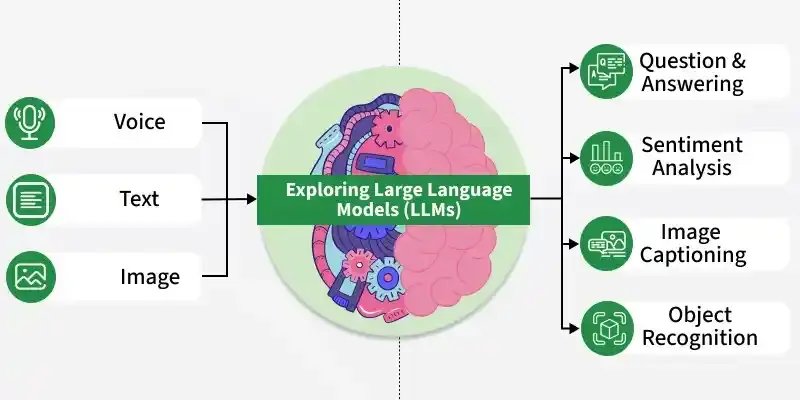
Source: GeeksforGeeks
A large language model (LLM) is an AI system trained to understand and generate human-like text by learning statistical patterns from massive datasets. These models analyze the relationships between words, phrases, and concepts to predict and produce coherent language responses.
According to Semrush studies, AI systems tend to prefer those texts that are clear, credible, and extractable.
This happens because LLMs (Large Language Models) do not rank pages like traditional search engines. They extract clear answers and summarize the credible parts of the texts. Anthropic Claude, Google Gemini, ChatGPT (OpenAI), and other modern LLMs are examples.
Here’s what that means in practice:
- What LLMs do: They predict the most likely next word or phrase based on the input they receive, which lets them write, summarize, translate, and answer questions conversationally.
- How they generate responses: LLMs don’t “look up” facts the way a database does. They generate answers by drawing on patterns learned during training, which is why accuracy and phrasing can vary between models.
- How they may use retrieved information: How they can leverage the information they retrieve: Several AI platforms link their LLMs with retrieval systems that allow them to consume up-to-date web content and are therefore not constrained to what the models learned during the training stage. This approach is sometimes referred to as retrieval-augmented generation.
- The difference between various platforms: Each of the platforms ChatGPT, Gemini, Claude, and Perplexity is built upon a unique model, a unique retrieval system, and unique ranking algorithms. What works for visibility in one platform doesn’t necessarily work in the other.
Always keep in mind this important difference: an LLM is the language model, whereas an AI search platform is the service built around it.
What Is LLM Optimization?
LLM optimization is the practice of making your website and online presence easier for large language models (LLMs) to understand, find, and use when answering questions.
Traditional SEO focuses on helping pages appear in search results. LLM optimization looks beyond rankings and considers how clearly a business, its expertise, products, services, and content are represented across the web.
For example, if someone asks an AI platform to recommend an enterprise SEO agency, the system may consider information from a range of sources. It may look at a company’s website, published content, expert profiles, industry mentions, reviews, and other relevant sources before generating an answer.
This makes the quality and consistency of your online information important. LLM optimization can involve:
- Creating clear content that answers relevant questions
- Showing first-hand experience and subject expertise
- Building strong connections between your brand and the topics you cover
- Keeping company, product, service, and expert information accurate across important sources
- Using structured data to help clarify important entities and relationships
- Earning relevant mentions, citations, links, and references from trusted websites
- Publishing original research, data, insights, and useful resources
The goal is not to find a shortcut for getting mentioned by an LLM. It is to build a clear and trustworthy online presence that gives AI systems enough useful information to understand who you are, what you offer, and why your brand is relevant to a particular question.
LLMs vs. AI Search Platforms
This distinction matters for anyone optimizing a website.
An LLM is the language-processing engine. On its own, it generates text based on patterns learned during training.
An AI search engine uses a combination of the language model along with web search, information retrieval tools, databases, or any other source for responding. ChatGPT, Gemini, Claude, and Perplexity have different search engines, and thus they are not the same type of system.
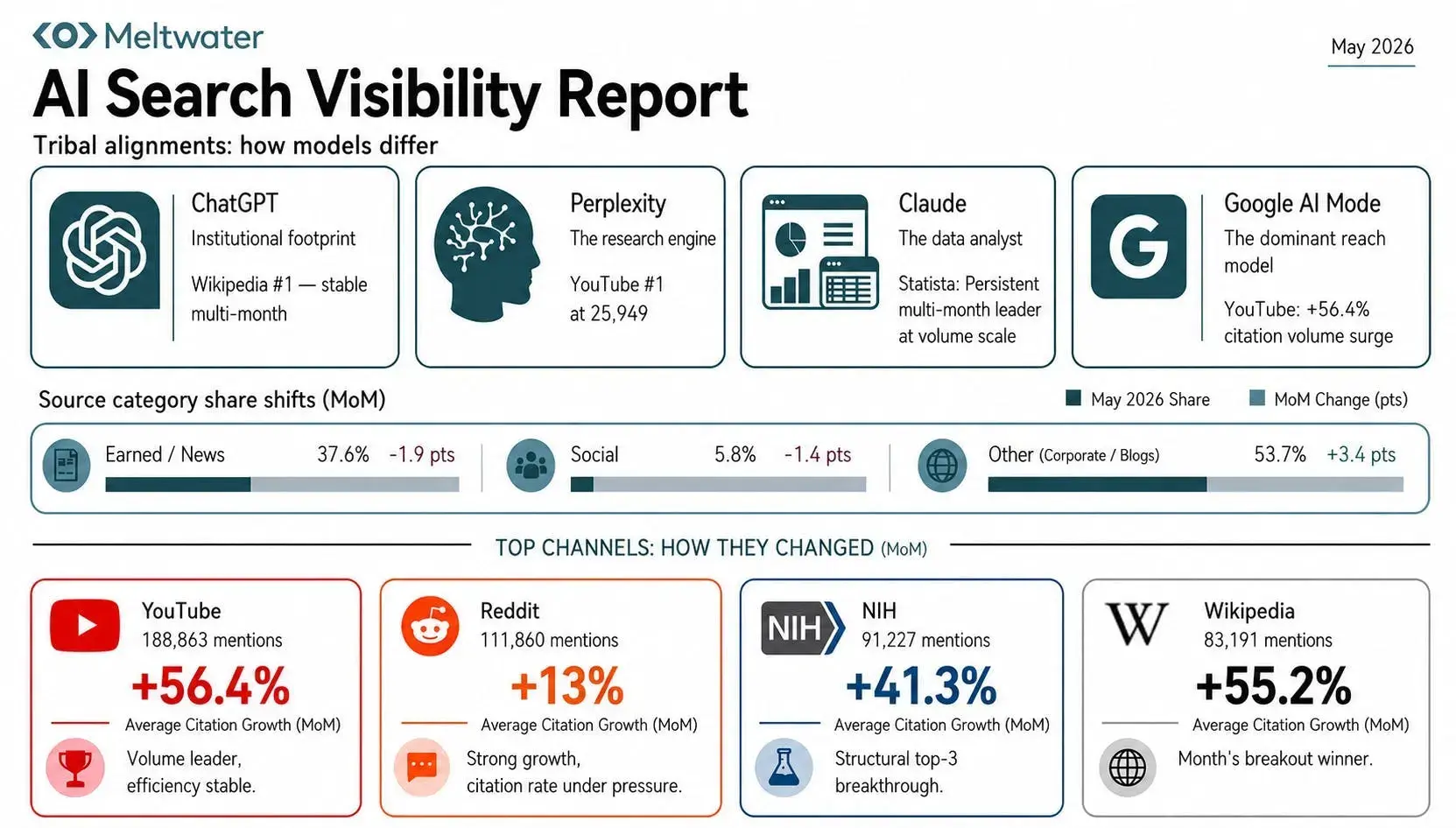
Source: Meltwater
Website optimization can support discoverability across these platforms, but each platform may use different signals and weightings. YouTube, for instance, generated 188,863 AI citations in May 2026 alone. It makes foundational infrastructure for Google AI Mode, Gemini, and Perplexity.
Different models also trust different source ecosystems: Claude prefers data-rich sources like Statista and NIH, while ChatGPT concentrates on Wikipedia and institutional sources. No two platforms are guaranteed to treat that content the same way.
Comparison of SEO vs AEO vs GEO vs LLMO
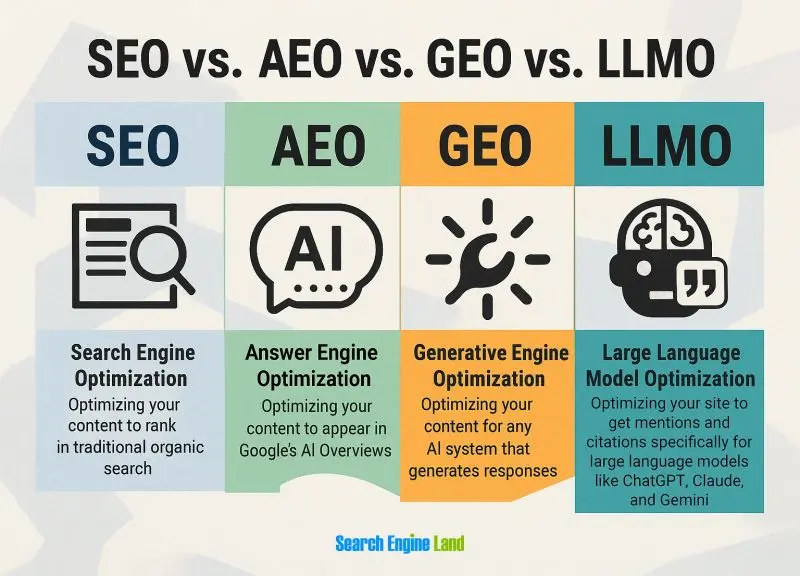
Source: Search Engine Land
SEO is all about making the website rank better on Google so that more clicks and visits happen for that site. AEO helps the content be the quick response that comes at the top of search results or when people use voice searches. GEO makes the content part of AI-generated summaries that come out in modern search engines.
LLMO makes the AI chatbots understand, believe, and mention the brand while giving responses. Hence, SEO drives traffic to the website, AEO gives direct responses, GEO gets featured in AI summaries, and LLMO makes the brand recognizable to AI bots.
Now, let us see the comparison between SEO, AEO, GEO, and LLMO through the following table:
| Approach | Main Goal |
| SEO (Search Engine Optimization) | Improve visibility in traditional search engine results. |
| AEO (Answer Engine Optimization) | Help answer specific user questions clearly and directly. |
| GEO (Generative Engine Optimization) | Improve visibility within AI-generated search experiences. |
| LLMO (Large Language Model Optimization) | Improve how AI systems understand, associate, and represent a brand, its expertise, products, and services. |
These areas overlap significantly. AEO emerged from voice search optimization (2017–2018); GEO originated from academic research at Princeton and Georgia Tech
(2023), and LLMO developed as ChatGPT scaled (2024–2025).
The underlying tactics for all four approaches overlap by approximately 90%. Don’t treat them as completely separate or universally standardized systems.
6 Ways to Optimize Your Website for AI Visibility
1. Publish Original, Well-Sourced Content
Original content gives AI systems something genuinely useful to reference. Generate fresh content that the LLM will be able to cite should relevant users provide prompts that are relevant enough. Freshness may create room for the LLM to cite you instead of another person. Being useful ensures the relevance and quality of the content generated.
Nearly 90 percent of pages scraped by AI bots have been published within the last three years, according to a study by Seer Interactive.
AI systems are naturally inclined to present information that differs from general information about the same topics. This includes:
- Original research and surveys
- First-party data from your company or industry
- Analysis by an expert rather than a generic summary
- Methodology used for the data presented
- Specific sources and specific experts, rather than unnamed sources and experts
Unique, trustworthy information gives AI systems useful content to understand and associate with your brand. The format of your content matters as much as the outlet; data-rich explainers with clear headings, tables, and statistics are more machine-legible than dense narrative content
2. Build Topical Authority and Brand Relevance
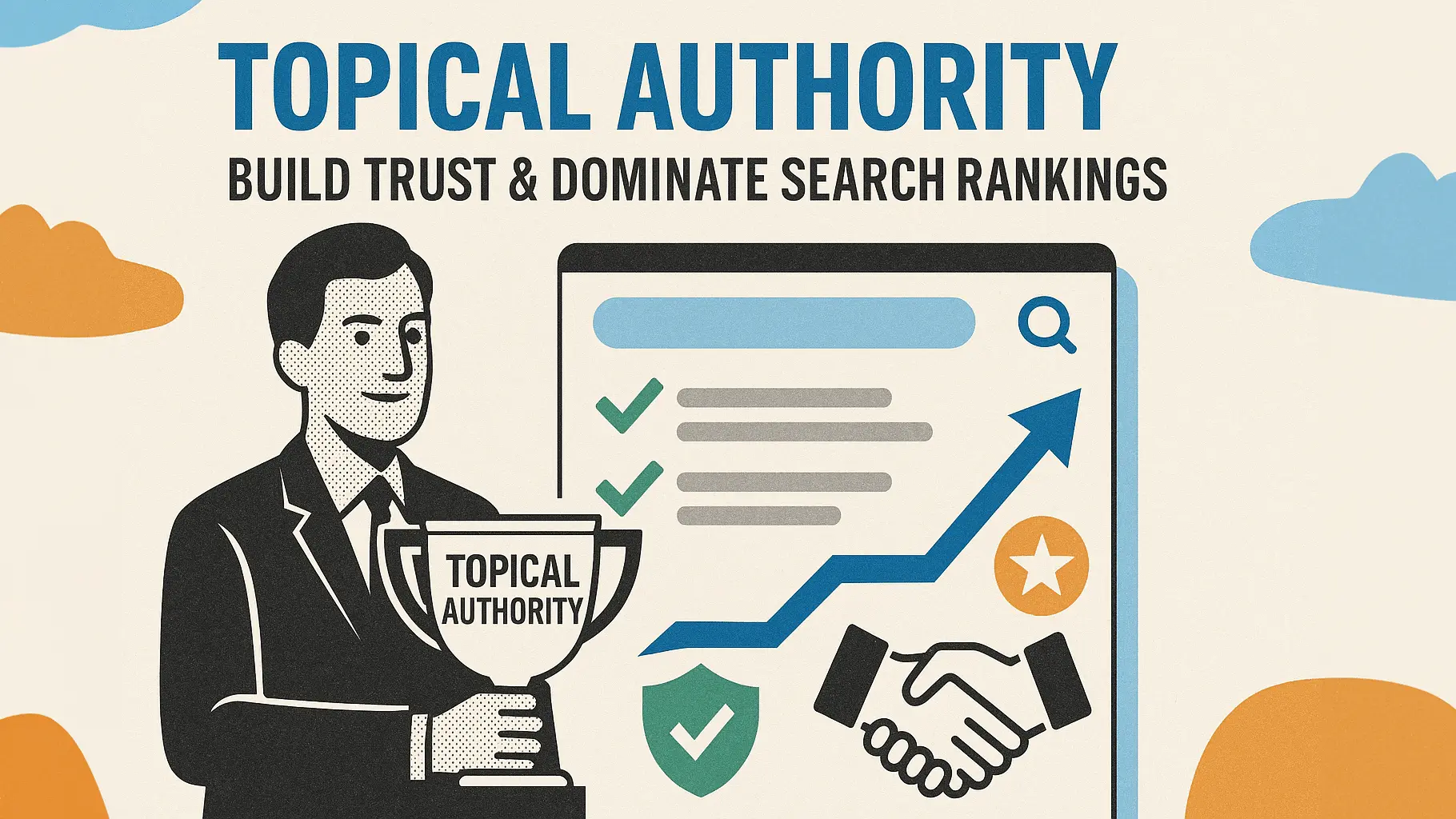
Source: Search Engine Land
A single good article is unlikely to establish any sort of authority all on its own. Create a cohesive ecosystem of content around your subject area with:
- Pillar content that covers the main topic
- Sub-topic articles that cover aspects of that topic
- FAQ content to address particular questions
- Comparison content to establish your brand within its category
- How-to content to show your expertise
- Proof through case studies
What you want to do here is to make sure that the connection between your brand and your subject area is crystal clear to humans and AI alike.
According to HubSpot’s research on the state of marketing today, marketers prioritize educational content for their campaigns. Since it is relevant to organic visibility and audience trust.
3. Make Content Technically Accessible
No matter how great the content is, if AI systems are unable to read or understand the content, the content loses value. The LLM must have access to your content for ingestion and citations to occur.
Here’s what you can do to increase the technical accessibility of your content to LLMs:
- Go for server-side rendering. LLMs learn from the HTML content of a web page rather than the content generated through JavaScript. Therefore, reduce the usage of JavaScript rendering.
- Ensure public accessibility. LLMs only learn from publicly available content and cannot access paid content or content requiring authentication and AI-restrictive licenses.
- Adhere to technical SEO guidelines. LLMs, at times, retrieve information from search engines and, hence, follow technical SEO guidelines.
Also review these technical elements directly:
- Robots.txt
- Meta robots directives
- XML sitemaps
- Canonical tags
- Page rendering
Jeremy Howard, co-founder of Fast.ai, has suggested that a standard file for providing information to the LLMs be developed in the form of llms.txt (similar to robots.txt, which is used to give information to the search engines).
4. Strengthen Brand and Entity Signals
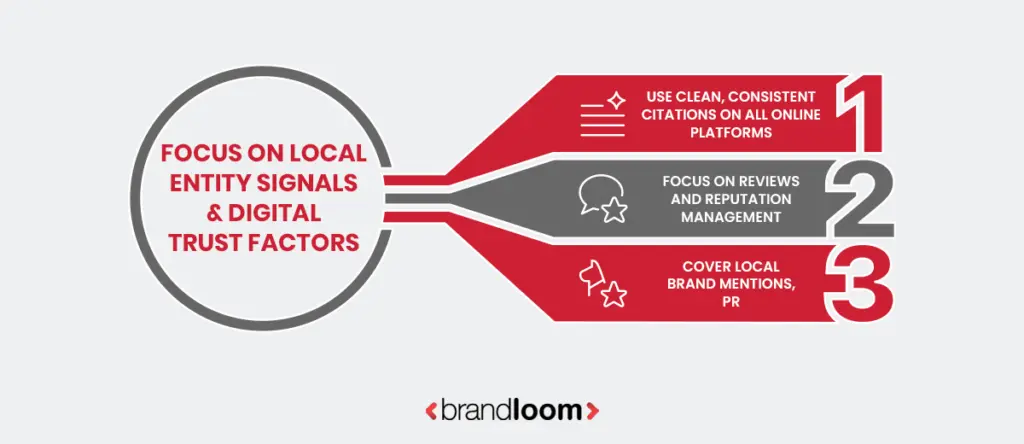
Source: Brandloom
AI systems and search engines try to build a model of who you are as an entity: your company, your offerings, and the people behind it. Make this easy to understand by clarifying:
- Who the company is
- What it offers
- Which products and services it provides
- Which people are associated with the brand
- Which industry and topics connect to the company
The information provided on websites, About Us pages, author pages, business pages, and any other third-party websites should be the same. Structured data should be used whenever possible to allow the machines to read the information, rather than infer the information from the text.
Clear entity definitions also contribute to stronger authority signals. As discussed in our podcast, Authority Signals in AI-First SEO, consistent information about your brand, experts, and areas of expertise can make it easier for search engines and AI systems to connect your brand with relevant topics and recognize its authority.
Keep Entity Information Consistent
AI systems compare information across multiple sources. Inconsistent business names, outdated service descriptions, or conflicting author details can weaken confidence in your brand.
Review these areas regularly:
- Company name
- Logo
- Contact information
- Business description
- Primary services
- Executive profiles
- Product names
Consistency helps search systems build a stronger understanding of your business over time.
5. Make Content Easy to Understand and Extract
Great content should answer readers’ questions quickly. AI systems also benefit from content that presents information clearly and logically.
Instead of writing long paragraphs filled with jargon, organize information into sections that answer one question at a time.
According to Google’s guidance on creating helpful, people-first content, pages should demonstrate expertise, answer user questions directly, and provide original value rather than simply repeating information already available elsewhere.
Structure Content for Humans First
Every major section should communicate a complete idea independently.
Use:
- Clear H2 and H3 headings
- Short paragraphs
- Bullet lists
- Tables
- Definitions
- Examples
- Step-by-step instructions
- Question-and-answer formats
For example, instead of writing:
“Technical optimization improves your website in many different ways.”
Write:
“Structured data helps search systems identify products, services, organizations, reviews, FAQs, and other entities more accurately.”
The second example provides a specific, self-contained answer that readers and AI systems can easily understand.
Write Direct Answers
According to Semrush’s research, question-and-answer formatting and AI citations have a 25.45% correlation.
Many AI-generated responses summarize content from pages that answer questions clearly.
When possible:
- Define technical terms immediately.
- Answer the main question in the opening paragraph.
- Expand with supporting details afterwards.
- Use descriptive headings instead of generic titles.
- Explain acronyms before using them repeatedly.
This structure improves readability and allows AI systems to extract meaningful information from individual sections.
According to Semrush’s research, pages with strong section structure were 22.91% more likely to be cited by AI systems than comparable pages that weren’t.
Avoid Ambiguous Language
Replace vague statements with precise explanations.
Instead of:
- “This may improve your website.”
Write:
- “Internal links help search systems understand relationships between related pages.”
Instead of:
- “Optimize your content.”
Write:
- “Update outdated statistics, improve heading structure, and cite authoritative sources.”
Specific language improves clarity for both readers and AI systems.
6. Earn Relevant Third-Party Mentions
Find out which sites/pages in your industry segment usually link to LLMs. Then find ways for your brand to be included in those sites/pages. The LLMs will find it simpler to incorporate your brand into their work as a result.
Focus on relevant, contextual mentions from:
- Industry publications
- Expert websites
- News websites
- Reviews
- Digital PR campaigns
- Relevant communities
The goal isn’t simply to collect backlinks. The goal is to build a consistent relationship between your brand and the topics you want to be known for so that every mention across the web reinforces the same story about who you are and what you do.
What Does AI Visibility Actually Include?
“AI visibility” covers more than a single citation. Many organizations think AI visibility only means appearing as a citation inside ChatGPT or another AI assistant. In reality, AI visibility includes several types of exposure across different platforms.
It can include:
- Brand mentions in an AI-generated answer, with or without a link
- Product or service recommendations when a user asks for options
- Citations, where the platform explicitly credits your content
- Source links, where the platform links directly to your page
- Inclusion in AI-generated comparisons against competitors
- Visibility for relevant user prompts across a range of related questions, not just one
As reported in Bain & Company’s “Goodbye Clicks, Hello AI” study, 80% of today’s customers depend on AI-powered snippets for no less than 40% of all searches, and the traditional search experience often finishes without clicking at all.
Brands are increasingly required to go beyond mere keyword ranking and pay attention to brand mentions, citations, recommendations, and visibility on AI platforms.
Focus on Long-Term Discoverability
Rather than asking:
“How do I get ChatGPT to cite my website?”
Ask:
- Does my content demonstrate real expertise?
- Can AI systems clearly identify my brand?
- Is my information accurate and well-sourced?
- Does my website provide comprehensive coverage of my topic?
- Can users quickly find answers to their questions?
Businesses that consistently answer these questions are better positioned as AI-powered search continues to mature.
Technical SEO Checklist for AI Visibility
Before publishing new content, review this checklist to ensure your website supports both traditional search engines and AI-powered discovery.
| Checklist Items | Why It Matters |
| Important pages are crawlable | Allows search engines and retrieval systems to access content. |
| Key information appears in HTML | Makes content easier for crawlers and AI systems to process. |
| Internal links connect related pages | Strengthens topical relationships across your website |
| Pages load reliably across desktop and mobile devices | Supports usability, crawling, and indexing. |
| Important content is not hidden behind unnecessary interactions | Improves accessibility for crawlers and users. |
| Relevant schema markup is added | Helps search systems interpret organizations, products, services, FAQs, and articles. |
| Canonical tags are correctly implemented | Reduces duplicate content confusion. |
| Robots directives are reviewed | Prevents accidental blocking of valuable content. |
| XML sitemap stays updated | Helps search engines discover new and updated pages. |
This checklist does not guarantee inclusion in AI-generated responses. However, it creates a stronger technical foundation that helps search engines and AI retrieval systems access, interpret, and understand your website more effectively.
How to Measure AI Search Visibility
Traditional rank tracking doesn’t capture how a brand shows up in AI-generated answers, so AI visibility needs its own measurement approach. Track:
- Brand mentions for target prompts
- Competitor mentions for the same prompts
- Citation frequency across platforms
- Source links included in responses
- Share of voice relative to competitors
- Product or service recommendations
- Referral traffic from AI platforms, where measurable
Run the same set of prompts over time so you’re comparing consistent data points rather than one-off snapshots. AI platforms are still growing quickly and shifting how they generate and cite responses, which changes the numbers behind this.
Use the same prompts over time to compare changes. Don’t treat one AI response as proof of overall visibility.
Among the top 1,000 pages cited by ChatGPT, 28.3% have no traditional ranking in Google Search results visibility. Only 32.3% of those pages include an opportunity for brands or publishers to influence what information AI presents
ResultFirst Case Studies
PlushBeds
Challenge: PlushBeds needed stronger visibility inside AI-generated answers and Google’s AI Overviews, on top of its existing organic search presence.
Strategy: The team restructured content around clear, extractable answers and strengthened the technical and topical signals that AI systems rely on to identify a credible source.
Result: PlushBeds saw a 753% increase in LLM traffic and a 950% lift in AI Overview visibility within five months, alongside a 32% rise in organic search traffic.
AI Search Lesson: Improvements to AI visibility and traditional organic performance can reinforce each other when the underlying content strategy addresses both at once.
Codewars
Challenge: Codewars wanted to become a go-to source for AI-generated coding answers across multiple AI platforms, not just one.
Strategy: The team focused on making technical, question-based content clear and citation-ready for AI systems that answer coding queries.
Result: Codewars achieved a 22x increase in Copilot traffic and roughly 2x to 3.5x growth in Gemini traffic within about three months.
AI Search Lesson: Different AI platforms can respond very differently to the same optimization work. Tracking platform-by-platform results reveals where the biggest gains are actually happening.
Conclusion
Large language models are transforming how people discover information, compare brands, and make purchasing decisions. While AI platforms use different technologies and retrieval systems, the principles of effective optimization remain consistent. This approach supports long-term visibility across both traditional search and AI-powered experiences.
Ready to Improve Your AI Search Visibility?
Build a stronger presence across AI-powered search experiences with ResultFirst, an AI SEO services agency focused on improving how search engines and AI platforms understand your brand. Our SEO, AEO, and LLMO specialists develop data-driven strategies that strengthen your content, entity signals, and online authority, helping you reach the right audience and drive sustainable growth.
Get in touch with ResultFirst and dominate AI Search with unmatched visibility.
Sources Referenced:
- https://www.emarketer.com/content/ai-citations-leave-top-search-rankings-behind-youtube-gains-influence?hierarchicalMenu%5Bgeographies.lvl0%5D=Worldwide
- https://www.mckinsey.com/capabilities/quantumblack/our-insights/the-state-of-ai/
- https://www.meltwater.com/en/blog/ai-search-visibility-april-may-2026/
- https://contently.com/2026/04/29/aeo-vs-geo-vs-llmo/
- https://llmstxt.org/#:~:text=A%20proposal%20to%20standardise%20on,Jeremy%20Howard
- https://developers.google.com/search/docs/fundamentals/creating-helpful-content
- https://www.semrush.com/blog/optimize-content-for-llms-with-semrush/
- https://www.semrush.com/blog/optimize-content-for-llms-with-semrush/
- https://www.bain.com/insights/goodbye-clicks-hello-ai-zero-click-search-redefines-marketing/
FAQs
WHAT TO READ NEXT
READY TO BUILD PREDICTABLE ORGANIC GROWTH?
We are the only TOP SEO services agency providing Real Results in a Real Performance model. We help growth hungry companies outperform their competition and achieve 300%+ growth in their digital marketing initiatives.
- San Jose, CA, 95120

- +1-888-512-1890

- sales@resultfirst.com

300K+
KEYWORDS RANKED
546M+
REVENUE GENERATED
18 Years
SOLVING COMPLEX SEO
150+
TEAM MEMBERS