



 sales@resultfirst.com
 +1-888-512-1890
E-Commerce vs. Retail: Key Differences, Trends, and The Future (2026 Guide)

Retail involves selling products through physical stores where customers can inspect items, receive in-person assistance, and complete their purchase immediately. E-commerce delivers the same transaction online, enabling customers to browse, compare, and buy products from any location with home delivery.
Neither is disappearing: e-commerce made up just 16.9% of total U.S. retail sales in early 2026, according to the U.S. Census Bureau, meaning over 80% of retail spending still happens in physical stores. The real shift isn’t retail versus e-commerce; it’s how fast the two are merging into one connected shopping experience, driven by AI, mobile devices, and social platforms that now sit between browsing and buying at almost every step.
This guide compares them head-to-head, explains when each model wins, and breaks down how AI, mobile, and social shopping are reshaping commerce heading into 2027.
Retail vs. E-Commerce Comparison Table
| Factor | Retail (In-Store) | E-Commerce (Online) |
| Customer experience | Sensory, hands-on, staff-assisted | Visual, self-directed, review-driven |
| Convenience | Limited by hours and location | Available 24/7 from any device |
| Product availability | Constrained by shelf space | Near-unlimited catalog depth |
| Pricing | Higher real estate and staffing costs | Often lower, leaner overhead |
| Personalization | Manual, relationship-based | Automated, AI- and data-driven |
| Delivery speed | Immediate/ Hand to hand | Hours to days; same-day is growing fast |
| Returns | Instant, no shipping required | Slower, often costlier |
| Customer trust | High, see and test before buying | Built through reviews, photos, policies |
| Technology | POS systems, mobile staff tools | AI search, recommendation engines, chatbots |
| Best use case | Urgent, high-touch, try-before-you-buy items | Research-heavy, price-sensitive, niche purchases |
Where Each Model Actually Wins?
Retail and e-commerce excel in different areas. Here’s how they compare across the factors that matter most.
Convenience and Speed:
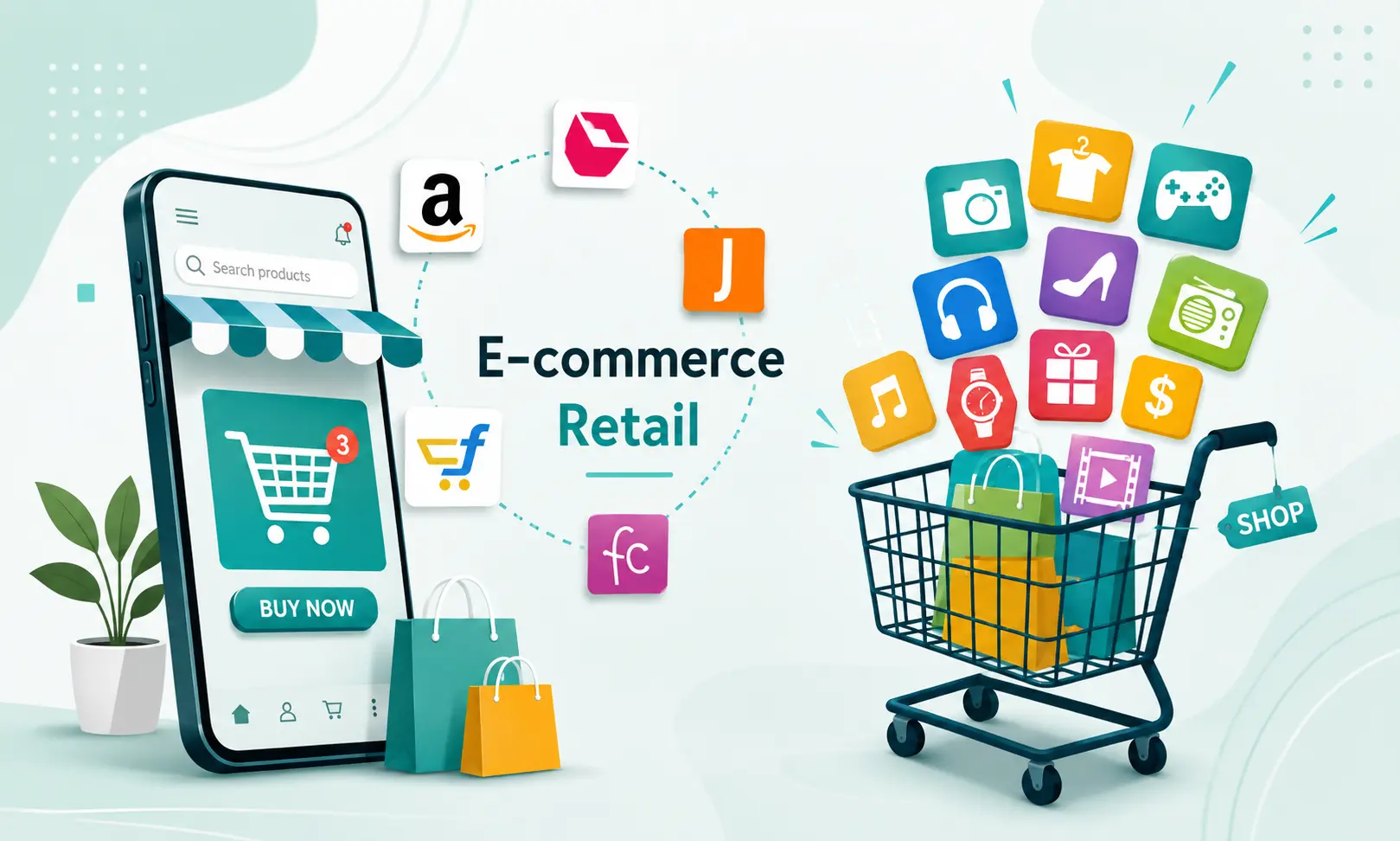
E-commerce wins here because mobile devices now drive roughly 59% of global online retail sales, letting shoppers buy from anywhere at any hour, and same-day delivery is now standard in most major metros.
Retail offers less flexibility because customers must visit a physical store during business hours. However, it provides immediate product access, allowing shoppers to inspect items, complete their purchase, and use the product without any delivery delay.
E-commerce strengths:
- Always-on purchasing across devices and channels.
- Rapid product discovery and price comparison.
- Same-day or next-day fulfillment in many markets.
- AI-powered recommendations that streamline purchase decisions.
Retail strengths:
- Immediate product ownership with no shipping wait.
- In-store evaluation before purchase.
- Instant exchanges and returns.
- Superior for urgent, time-sensitive purchasing scenarios.
Cost and Pricing
E-commerce generally has the cost advantage because it avoids many expenses associated with physical stores, such as rent, utilities, and large in-store teams. These savings often allow online retailers to offer lower prices and frequent discounts. However, shipping costs and return expenses can reduce that advantage, especially for low-value or bulky products.
Retail typically operates with higher overhead, making products appear more expensive. However, in-store promotions, loyalty programs, and the absence of shipping fees can narrow the price gap while giving customers immediate access to their purchases.
Where e-commerce performs better:
- Lower operating costs support competitive pricing.
- Frequent online discounts and promotional offers.
- Easy price comparison across multiple sellers.
Where retail performs better:
- No shipping or delivery charges.
- Immediate product ownership.
- In-store promotions and loyalty rewards can offset higher prices.
E-commerce usually wins on price because of lower operating costs. However, NRF’s 2025 Retail Returns Landscape found that 19.3% of online purchases are returned, adding nearly $850 billion in retail returns. These return and shipping costs reduce e-commerce’s price advantage, while retail stores avoid delivery fees and provide immediate product access
3. Trust and Personalization
Retail leads in trust, while e-commerce leads in personalization. Physical stores build confidence through in-person interactions and product inspection. E-commerce relies on reviews and return policies to earn trust but delivers highly personalized experiences using AI.
Where e-commerce performs better:
- AI-powered product recommendations.
- Personalized offers based on browsing and purchase history.
- Reviews and ratings that support purchase decisions.
Where retail performs better:
- Hands-on product inspection before purchase.
- Immediate assistance from sales staff.
- Stronger personal interaction and relationship building.
Product Availability
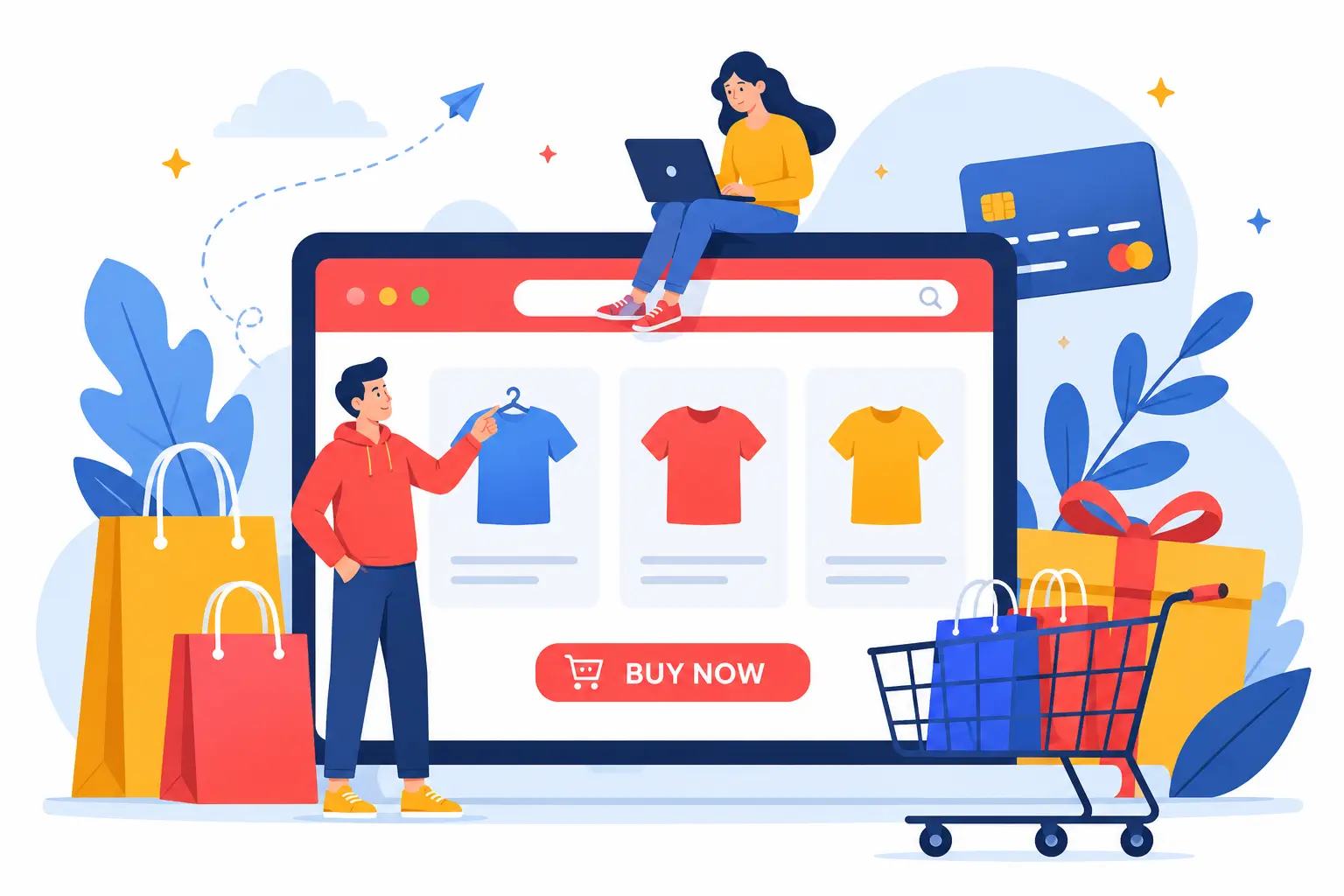
E-commerce has a clear advantage in product availability. Physical stores are capped by shelf space, so even a large-format store only carries a fraction of what a category actually offers. E-commerce catalogs can list hundreds of thousands of SKUs with no such ceiling, letting shoppers find niche sizes, rare items, or entire categories a local store would never stock. This is one of the clearest, least-debatable wins for online retail.
A 2025 AlixPartners study of 30 retailers found that only 9% of online women’s apparel inventory was available in physical stores. Availability dropped to 7% for department stores and just 2% for mass merchants, highlighting the inventory limits imposed by shelf space.
Where e-commerce performs better:
- Significantly larger product catalogs.
- Access to niche and specialty products.
- Greater size, color, and variant availability.
- Easy access to products from multiple sellers.
Where retail performs better:
- Immediate access to in-stock products.
- Ability to inspect products before purchase.
- No waiting for shipping.
Product discovery.
Retail has the advantage in product discovery, while e-commerce excels at product search. Physical stores encourage browsing, allowing customers to discover products they were not initially looking for. E-commerce uses search functionality and AI-driven recommendations to help shoppers quickly find relevant products and make faster purchase decisions
Where e-commerce performs better:
- Fast and precise product search.
- AI-powered recommendations.
- Personalized product suggestions.
- Easy filtering and comparison.
Where retail performs better:
- Encourages spontaneous product discovery.
- Creates engaging in-store browsing experiences.
- Enables cross-selling through product displays.
Retail is where people discover; e-commerce is where people decide.
Read More: Enhance E-Commerce Product Discoverability in ChatGPT
The Future of Shopping: 7 Major Trends Redefining Retail and E-Commerce
Trend #1: AI Shopping Assistants
AI shopping has rapidly moved into the mainstream. AI shopping assistants like Amazon Rufus now compare products, summarize reviews, and recommend purchases in real time. According to PYMNTS Intelligence, AI influenced nearly 46% of U.S. consumers’ most recent online purchases in 2026. However, adoption of dedicated AI shopping assistants is still developing.
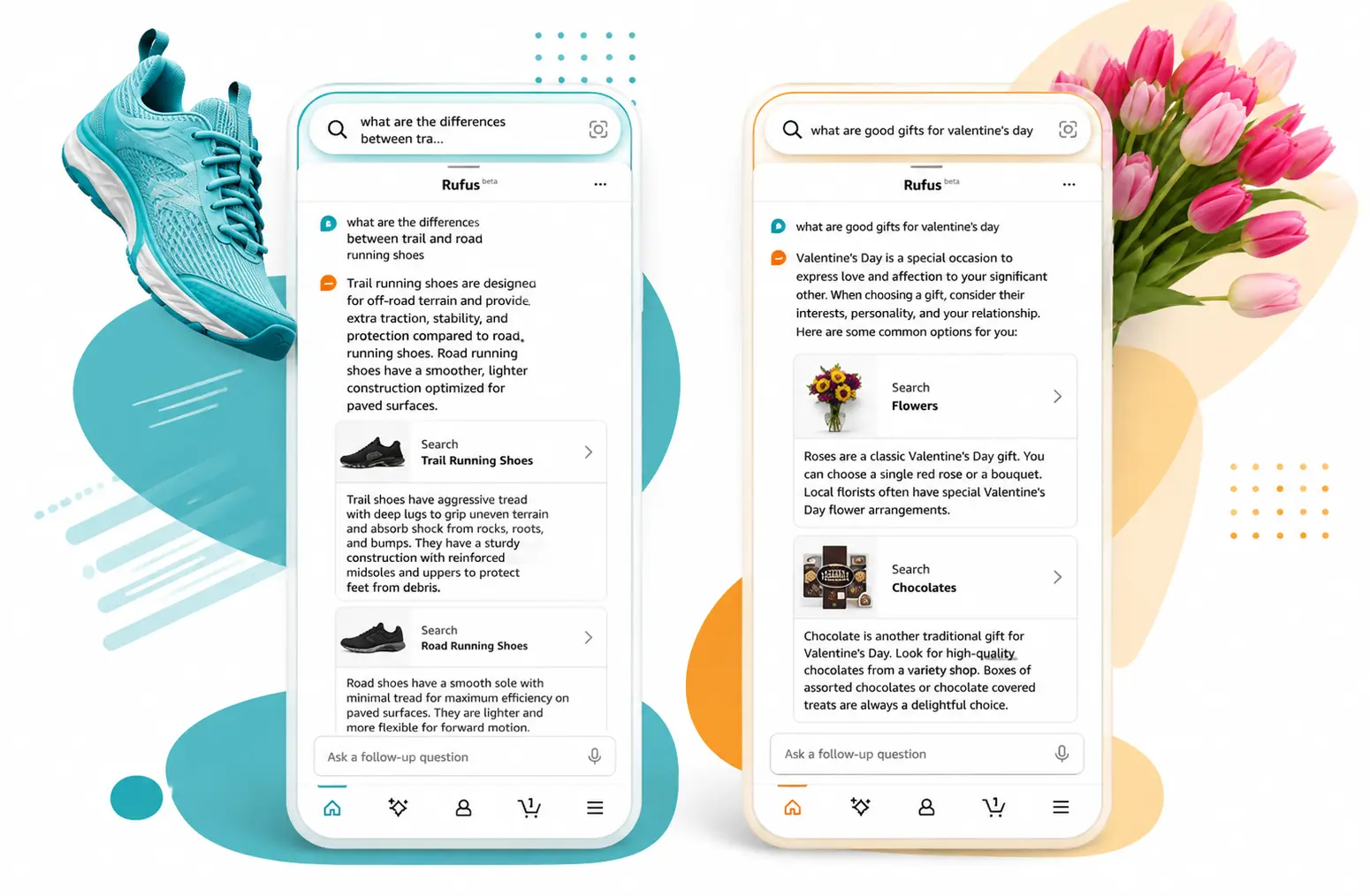
Research from YouGov and Visualsoft found that only 14% of consumers have used one by name, while 33% say they are open to using one.
Trend #2: Personalized Shopping Experiences
Personalization has become an expectation, not a feature. ,
Shopping experiences now extend well beyond “customers who bought this also bought.” Platforms adjust homepage layout, search ranking, and even individual promotions based on real-time browsing behavior, while loyalty apps trigger in-store offers the moment a shopper walks through the door. The retailers doing this well treat personalization as a continuous signal, not a one-time email segment.
In fact, a report by McKinsey found that 71% of consumers expect personalized shopping experiences, while 76% become frustrated when retailers fail to deliver them. This is why leading retailers now personalize search results, promotions, and recommendations in real time.
Trend #3: Voice commerce
Voice commerce (V-commerce) lets shoppers search, compare, and buy products using voice assistants such as Alexa, Siri, and Google Assistant. Instead of typing, customers simply speak their requests to browse products, place orders, or reorder past purchases. As AI-powered assistants become more accurate, voice shopping is making online buying faster and more convenient. Retailers are adapting by optimizing product listings and shopping experiences for conversational voice searches.
Trend #4: Visual search
Visual search lets shoppers snap a photo of an item they like and get matching or near-identical products instantly. It’s especially powerful in fashion, home decor, and furniture, where “I don’t know what this is called, but I want one” is a common starting point for a purchase that a text search would struggle to satisfy.
The best example of Visual search can be Google Lens. Instead of typing product names, shoppers can simply photograph an item. Google Lens now connects those images with more than 45 billion products in Google’s Shopping Graph, showing matching products, prices, reviews, and where to buy them.
Trend #5: Omnichannel Commerce
It connects digital and physical touchpoints so tightly that “online” and “in-store” stop being separate journeys for the shopper. Instead of treating online and in-store channels separately, businesses integrate them so customers can move effortlessly between websites, mobile apps, marketplaces, social media, and physical stores.
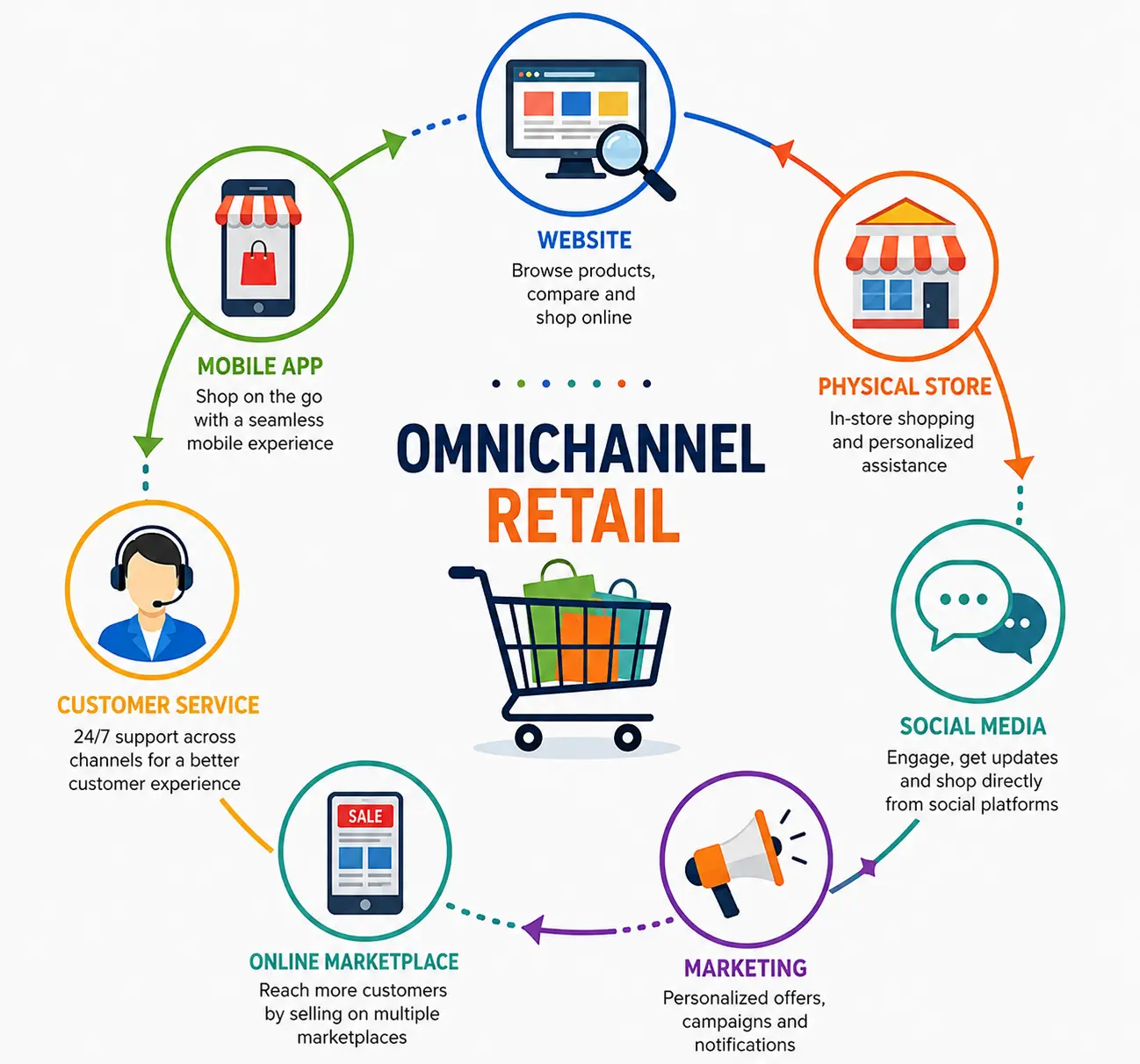
In 2026, this has become the default retail strategy. Shoppers expect to research online and buy in-store, order online for store pickup (BOPIS), return online purchases in-store, or browse in-store before ordering online.
The impact is measurable. Omnichannel shoppers spend about 16% more per order, while retailers with strong omnichannel engagement retain around 89% of customers, compared with 33% for brands that still operate disconnected channels.
Related Post: Advantages and Disadvantages of Online Shopping
Common omnichannel shopping journeys:
|
Trend #6: Retail Media
Retail media lets brands advertise directly where customers shop. By using retailers’ first-party purchase data, brands can reach high-intent shoppers with more relevant ads, leading to better conversions and higher sales.
For example, Amazon Ads allows brands to target customers based on their shopping behavior and purchase history, helping products appear when shoppers are actively searching or ready to buy. This makes retail media one of the most effective ways to influence purchase decisions at the point of sale.
Trend #7: Buy Online, Pick Up In Store (BOPIS)
BOPIS lets customers buy online and collect their orders from a nearby store. It gives shoppers faster delivery without shipping fees while helping retailers use stores as fulfillment hubs. The U.S. click-and-collect market is expected to reach $177.9 billion in 2026, growing 15.3% year over year. Moreover, 85% of BOPIS shoppers buy additional items when picking up their orders, making BOPIS a proven revenue driver. This trend has turned physical stores into fulfillment hubs rather than just showrooms.
Which Shopping Model Is Best for Your Business?
There’s no universal winner; the right model depends on what’s being sold, who’s buying it, and what the customer needs in the moment.
Choose retail if: the product benefits from being touched or tried on (furniture, apparel, instruments); customers need it immediately; your business depends on face-to-face trust and expert guidance; or local foot traffic matters to your brand.
A good example is the IKEA–Best Buy partnership.
- IKEA and Best Buy launched shared in-store planning centers where shoppers can see furniture, get expert advice, and plan their kitchens before buying, a reminder that products requiring touch, visualization, and trust still convert best in physical retail.
Choose e-commerce if: you want to reach customers beyond your local area; your catalog is large or niche; lower overhead and competitive pricing are core to your strategy; or your customers are comfortable buying without handling the product first.
- The best example can be Amazon and Flipkart, offering millions of products that customers can compare, review, and purchase without visiting a store.
Choose omnichannel if: your customers already move between researching online and buying in person; you want to maximize lifetime value rather than optimize one channel; you can invest in connected inventory and cross-channel fulfillment; or you’re competing against retailers who already offer a seamless online-to-offline experience.
A great example is Target Corporation:
- Customers can shop online, check local inventory, pick up orders in-store or curbside, and return online purchases at any store. With over 97% of sales fulfilled by its stores, Target shows how a connected omnichannel strategy improves convenience and customer loyalty.
For most growing businesses, omnichannel isn’t an add-on anymore; it’s the baseline customers expect.
How Winning Brands Are Rethinking Commerce With Omnichannel Strategies
The biggest retail brands are no longer treating physical stores and e-commerce as separate businesses. Instead, they’re building one omnichannel shopping experience where customers can browse online, buy in-store, return anywhere, and receive consistent pricing, inventory, and loyalty benefits across every touchpoint.
- Target is one of the best examples, as mentioned above. More than 97% of its merchandise sales are fulfilled by its stores, allowing customers to buy online, pick up curbside, or return online orders at any location. This approach turns stores into fulfillment hubs while improving convenience and lowering delivery costs.
- Warby Parker, which started as an e-commerce eyewear brand, now operates 300+ retail stores following an omnichannel strategy because customers are more likely to purchase after trying on frames and receiving eye exams in person. Its stores also reduce returns and strengthen customer loyalty.
- Walmart continues investing in both stores and digital commerce. Its global e-commerce sales grew 24% in FY2026, while its physical locations support same-day pickup, local delivery, and faster order fulfillment. Rather than replacing stores, Walmart is using them to make e-commerce faster and more efficient.
The brands gaining market share aren’t choosing between retail and e-commerce; they’re investing in omnichannel commerce, where every channel works together to create a seamless customer experience.
Conclusion
Retail and e-commerce each have unique strengths, but neither is enough on its own to meet modern customer expectations. As shopping journeys become more connected, the real advantage comes from omnichannel commerce, bringing online and offline experiences together into one seamless ecosystem. Businesses that unify inventory, customer data, fulfillment, and marketing across every touchpoint will be better positioned to increase loyalty, drive higher sales, and stay competitive as commerce continues to evolve.
Ready to Grow Your E-Commerce Visibility?
Whether customers discover products through traditional search, AI-powered platforms, or mobile shopping journeys, your e-commerce store needs to be visible at every stage of the buying journey. ResultFirst’s e-commerce SEO services can help improve product visibility, strengthen category and product page rankings, attract high-intent shoppers, and turn organic traffic into measurable revenue.
Ready to build a winning omnichannel strategy? Choose ResultFirst to increase your visibility across search, AI platforms, and every customer touchpoint. Contact our experts today and start driving more qualified traffic, conversions, and long-term revenue.
Sources Referenced:
- https://www.fortunebusinessinsights.com/m-commerce-market-111886/
- https://nrf.com/research/2025-retail-returns-landscape/
- https://www.wsj.com/business/retail/in-store-shopping-stock-sizes-183f78df?
- https://www.pymnts.com/wp-content/uploads/2026/06/PYMNTS-Intelligence-Global-Digital-Shopping-Index-June-2026.pdf
- https://yougov.com/en-us/articles/53808-american-trust-in-ai-for-retail-consumer-sentiment-in-2025
- https://www.mckinsey.com/capabilities/growth-marketing-and-sales/our-insights/unlocking-the-next-frontier-of-personalized-marketing/
- https://blog.google/products-and-platforms/products/shopping/visual-search-lens-shopping/
- https://www.ringly.io/blog/omnichannel-retail-statistics-2026/
- https://capitaloneshopping.com/research/buy-online-pick-up-in-store-statistics/
- https://corporate.target.com/investors/annual/2025-annual-report/10-k-report/10-k-part-i/item-1-business/
- https://www.causeartist.com/case-studies/warby-parker/
- https://finance.yahoo.com/news/walmart-ecommerce-24-digital-momentum-140300385.html
- https://www.census.gov/retail/ecommerce.html
Read more:
What are the Types of Ecommerce Retail Models?
E-Commerce Grocery Trends 2026
In this video, will talk about Retail vs. E-Commerce, the future of Shopping — watch now!
Frequently Asked Questions
WHAT TO READ NEXT
READY TO BUILD PREDICTABLE ORGANIC GROWTH?
We are the only TOP SEO services agency providing Real Results in a Real Performance model. We help growth hungry companies outperform their competition and achieve 300%+ growth in their digital marketing initiatives.
- San Jose, CA, 95120

- +1-888-512-1890

- sales@resultfirst.com

300K+
KEYWORDS RANKED
546M+
REVENUE GENERATED
18 Years
SOLVING COMPLEX SEO
150+
TEAM MEMBERS