-
By Ruchi Pardal

-
 ~ 15 minutes read
~ 15 minutes read

It’s no secret that selling products and services online requires a reliable eCommerce platform. And if you’re planning to launch or scale an online store, your first step is choosing a platform that is fast, flexible, scalable, and SEO-friendly. When it comes to driving organic visibility and conversions, the platform you select plays a major role in how well your store performs on search engines.
One of the most common questions businesses ask today is: Which eCommerce platform is best for SEO? With so many options available, making the right decision can feel overwhelming. Some platforms are designed with strong built-in SEO features, while others provide advanced customization and control for long-term growth.
To make the decision easier, we’ve done the deep research and compiled a list of the most SEO-friendly eCommerce platforms trusted by millions of online retail businesses. This guide will help you understand what makes a platform good for SEO and which option may be the best fit for your business needs.
An SEO-friendly eCommerce platform helps you manage and increase conversions and appear in Search Engine Results Pages. Whether you’re starting your first store or your 10th one, such a platform significantly impacts your business.
Choosing the best eCommerce platform for SEO is a hard start with so many options in the market. Also, regarding SEO, some platforms are better than others. Therefore, we have done some deep research and compiled a list of top eCommerce platforms for SEO.
Choosing the right eCommerce platform plays a major role in how well your online store can rank on search engines. Many business owners ask: “Which eCommerce platform is best for SEO?” The answer depends on key factors such as SEO control, hosting flexibility, speed optimization, URL structure, metadata editing, and scalability.
If fast setup and built-in SEO features are your priority, Shopify and BigCommerce are great options. However, if you want full control over technical SEO elements, schema markup, and structure customization, WooCommerce and Magento typically provide a deeper level of flexibility.
To help you compare the top platforms more effectively, here’s a quick side-by-side SEO-focused comparison chart:
| Criteria | Shopify | WooCommerce | Magento (Adobe Commerce) | BigCommerce | Squarespace | Volusion |
| SEO Flexibility | Strong built-in SEO features, but limited deep URL customization and full technical control. | Excellent SEO control with full customization (built on WordPress). | Advanced SEO flexibility with full control, great for complex sites. | Strong SEO capabilities with good customization options. | Basic SEO features suitable for simple websites. | Supports basic SEO settings but lacks advanced controls. |
| Ease of Use | Very easy to use, ideal for beginners. | Moderate — depends on hosting and plugin setup. | Advanced — requires technical expertise or developer support. | Easy to use with some learning curve for advanced configuration. | Very easy to use, beginner-friendly. | Easy to use with simplified interface. |
| Performance & Hosting | Fully hosted SaaS with optimized performance. | Performance depends on hosting provider and configuration. | Self-hosted with full server control (great performance when optimized). | Fully hosted SaaS with reliable performance. | Fully hosted SaaS. | Fully hosted SaaS. |
| Best For | Small to mid-sized businesses wanting simplicity and fast setup. | SEO-focused businesses or stores relying heavily on content marketing. | Enterprise-level stores, large product catalogs, and advanced custom setups. | Growing mid-sized stores requiring scalability without heavy customization. | Small businesses, portfolios, and simple product catalogs. | Small to mid-sized stores needing simple structure. |
| SEO Tools & Plugin Availability | Large third-party SEO app marketplace. | Extensive SEO plugins and integrations available. | Enterprise extensions available, fewer plug-and-play tools. | Good selection of apps and integrations. | Limited SEO-focused extensions. | Limited plugin ecosystem for SEO. |
| Cost Level | Medium cost (subscription + paid apps). | Low-to-medium cost depending on hosting and plugins. | High cost (licensing + development). | Medium-to-high depending on plan and scaling. | Low-to-medium cost. | Medium cost structure. |
Selecting the right platform is only the first step. To ensure it performs well in search and drives measurable growth, many businesses partner with professional eCommerce SEO services for setup, implementation, and ongoing optimization.

BigCommerce is one of the best online store creation platforms that features robust capabilities in search engine optimization (SEO), hosting, marketing, and security, catering to businesses ranging from small startups to large enterprises. With its powerful tools and customizable features, BigCommerce SEO ensures that your online store is optimized for maximum visibility and effectiveness in driving traffic and conversions.
Features:
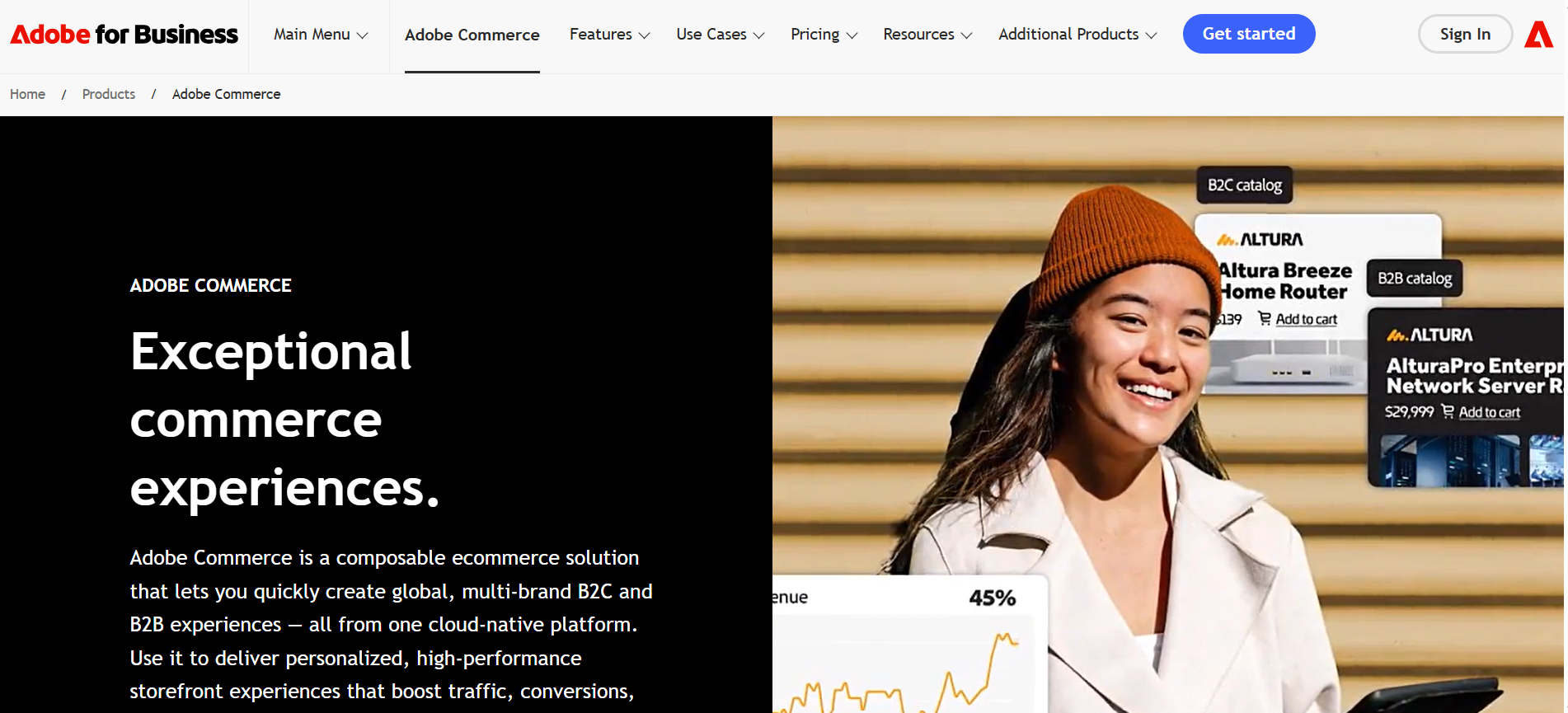
Adobe Commerce (formerly Magento Commerce, powered by Magento Open Source) is another eCommerce platform on the list because of its fully customizable feature, sitemap enhancements, tools for structured markup data optimization, independent navigation links, customizable H1 Tags, integrated content pages, specialized checkout process, and more.
Features:
Related: Magento SEO: The Ultimate Guide for (2026)
Shopify is great for beginners who want to set up their first eCommerce website. It integrates Google Analytics into your website to monitor traffic, leads, and conversions. It allows custom metatags creation, blog features with editable tags, organized site structure, free hosting, and CDN for images to help improve SEO.
Features:
Related: 11 Important Shopify SEO Tips To Rank #1 on Google (2024)
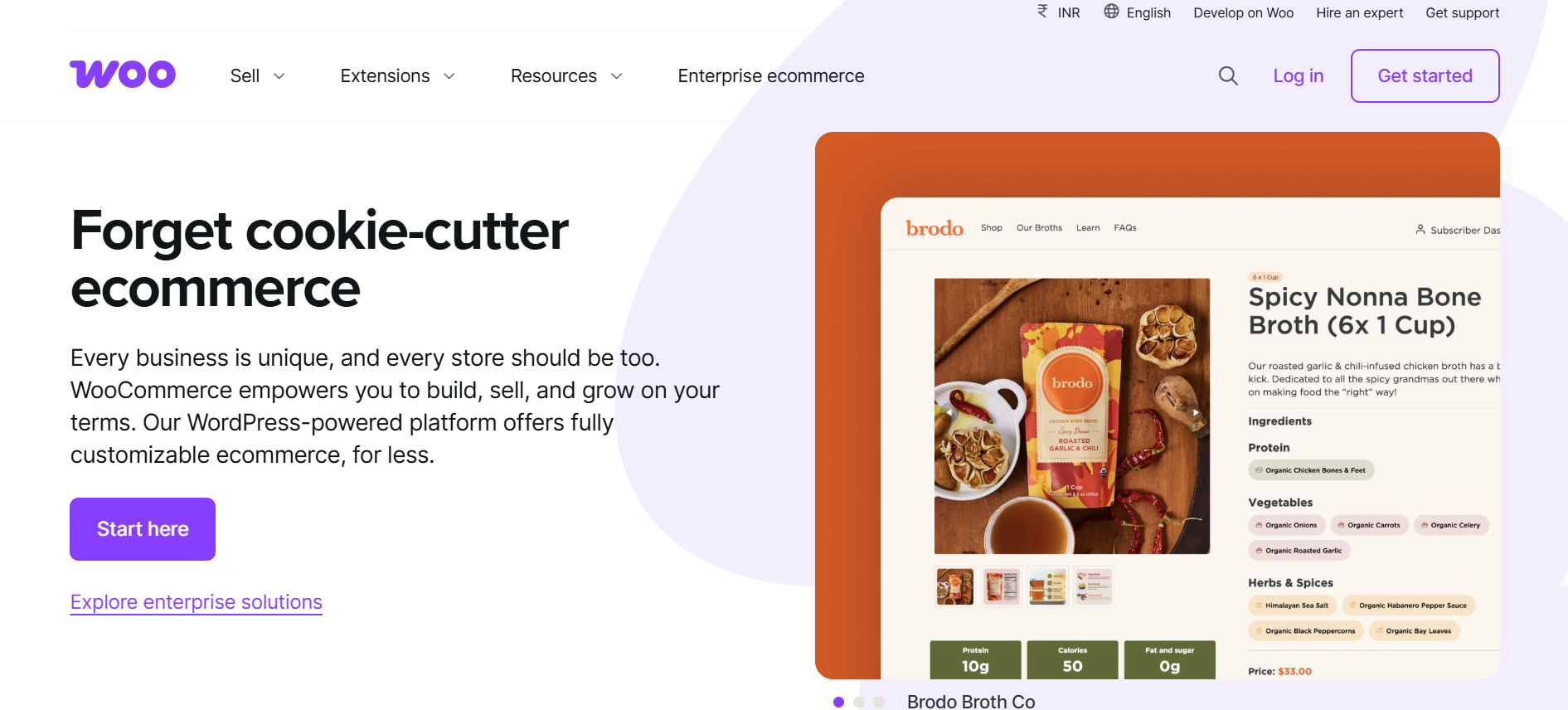
WooCommerce is among the best SEO-friendly e-commerce platforms because of its features like URL customization, built-in 301 redirects, mobile-friendliness, built-in blogging, and text editing.
Features:
Also Read: WooCommerce SEO Tips to Boost Your Ranking

Squarespace is also in the race among top eCommerce platforms for SEO with 100 flexible templates, blogging capabilities, mobile responsiveness, and support from users in the Squarespace community.
Features:

Volusion is SEO-ready due to features like URL customization, 301 redirects, keyword research, content optimization, and blogging.
Features:
Most eCommerce and web design platforms have ample features that let you optimize your eCommerce stores for search engines like Google, Bing, MSN, Yahoo, and other search engines. Since SEO involves several factors (speed, user experience, meta tags, and more), search for an eCommerce platform that excels with all of them.
Sadly, some eCommerce platforms include only basic, automated SEO tools. So, you’ll need more advanced tools to compete with other brands.
For instance,
A few eCommerce platforms automatically create page titles, metadata, and URLs, depending on your product title and category. They don’t allow you to customize your content. This can adversely affect SEO performance because people are reluctant to search for the creative name you gave to your product. Instead, they use something specific like “shoes for long-distance walking.”
This being said, you need an eCommerce platform that has the quality to supersede the automated metadata and allows you to customize independent SEO elements to target what people are searching for!
Some free eCommerce platforms give you no option to override this. They compel you to pay more for the best SEO features. Therefore, choosing the best eCommerce platforms for SEO right from the beginning is important.
Top eCommerce platforms mean you can create the perfect storefront for your business on a relatively modest budget, expand your services and offerings, use built-in tools to engage your customers and prioritize customer service to support customer loyalty, conversion, and retention.

Here’s how to find the best eCommerce platform for SEO to drive more leads and improve conversions.

Key factors that play important roles in how well eCommerce stores rank in the SERPs (search engine results pages):
SEO is an important element in online marketing. When building an online store, ensure your eCommerce platform supports all the features to apply SEO best practices.
But what makes an eCommerce platform great for SEO? Get the answer below.
Related: Mobile SEO: 18 Easy Techniques to Make Your Site Mobile Friendly
Choosing the right eCommerce platform is a strategic decision that directly impacts your SEO performance, search visibility, and long-term revenue. While platforms like WooCommerce and Adobe Commerce (Magento) offer advanced SEO flexibility, solutions such as Shopify and BigCommerce provide strong built-in tools and faster deployment. Each platform serves different business needs.
Ultimately, the best eCommerce platform for SEO isn’t just the one with the most features. It is the one aligned with your growth stage, technical resources, and long-term marketing strategy.
If you’re still unsure which eCommerce platform is best for SEO based on your business model, products, and goals, you’re not alone. Many brands struggle with this decision, and choosing the wrong solution can cost time, rankings, and profitability.
This is where we can help.
At ResultFirst, we help businesses choose, implement, and optimize the right platform while ensuring it is fully SEO-ready from day one. Whether you’re launching a new online store or migrating from an existing system, our experts can guide you toward a solution that supports both immediate performance and scalable growth.
Additional Read:
10 Things to Consider Before Switching Ecommerce Platforms
What’s holding brands back from investing in eCommerce?
Our Pay for performance SEO programe helps companies
achieve impressive results


