



 sales@resultfirst.com
 +1-888-512-1890
Why Your Business Shows Up in Google But Not in AI Assistant Answers

You have invested in SEO. Your Google rankings are stable. Organic traffic is consistent. By every metric your analytics dashboard tracks, your digital presence is doing its job.
And yet, when a potential client types a question into ChatGPT, Perplexity, or Google’s AI Overview, a competitor gets cited, not you. As per a report, around 40 percent of product and service research now begins with an AI assistant rather than Google. This shift is creating a visibility gap that traditional SEO metrics often fail to reveal. While your website may rank well in search results, AI assistants are increasingly selecting sources based on authority, context, entity recognition, and content structure rather than rankings alone.
As a result, ranking well on Google no longer guarantees visibility across every search experience. AI assistants prioritise brands they can easily understand, trust, and reference when generating answers. Google rankings and AI citations are two entirely separate systems, evaluated by different criteria, rewarding different signals. Understanding that distinction is where the fix begins.
Google Rankings vs. AI Citations: Why They Are Not the Same
| Factor | Traditional Google Search | AI Assistant Search |
| Output | Ranked list of links | Single synthesized answer |
| How you compete | For position | For selection of a cited source |
| What’s rewarded | Keywords, backlinks, technical performance | Clarity, structure, verified consistency |
| User behavior | Clicks through options | Acts on AI recommendations |
| Visibility metric | Search position | Citation frequency |
Traditional SEO was built to help your page rank in a list.
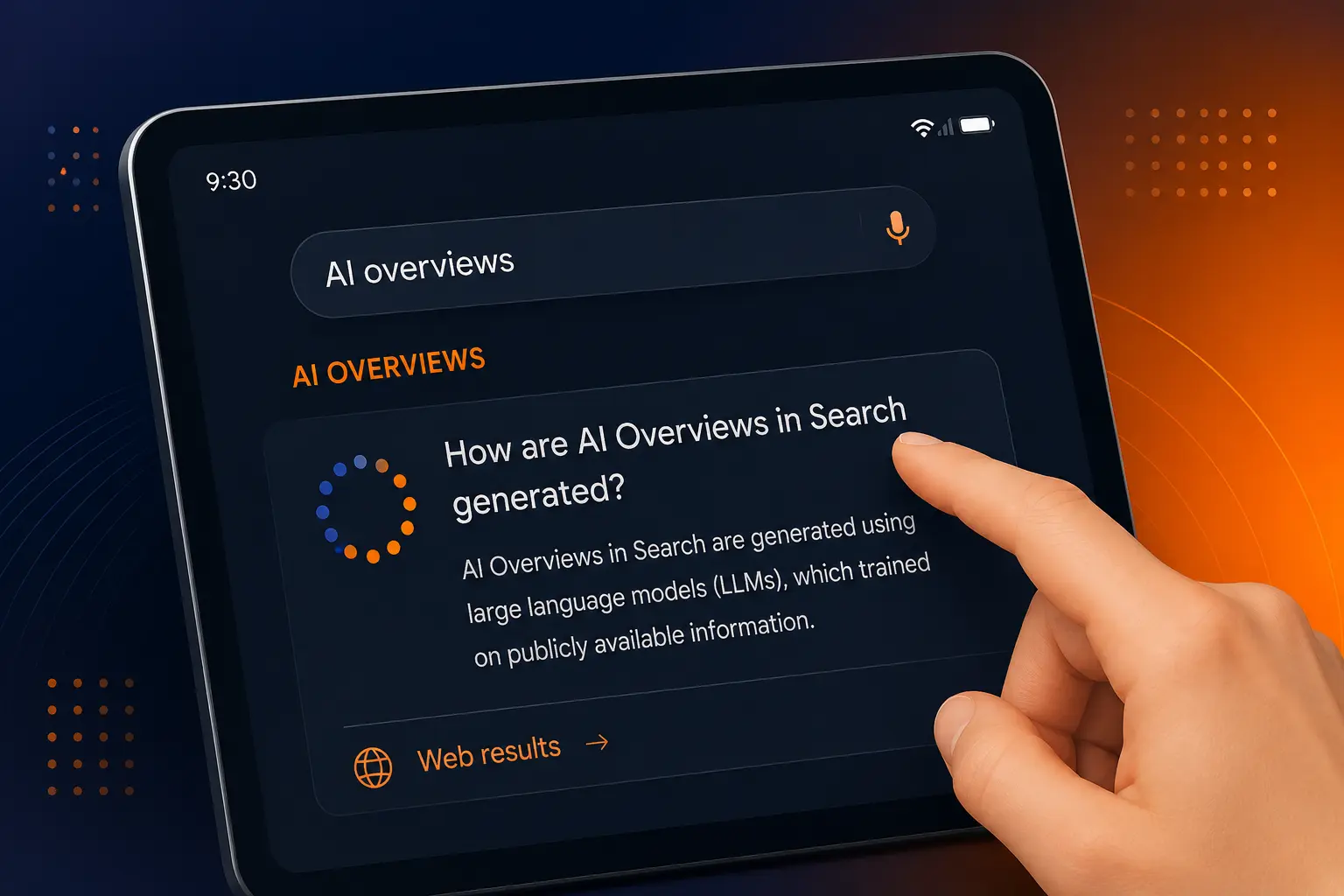
AI search works differently; it reads your content, evaluates how clearly it answers questions, verifies your credibility across the web, and selects sources to cite.
It is not a ranking. It is a judgment call. And if your website was built solely with traditional SEO in mind, it was not built to pass that judgment.
A report by Gartner predicts: traditional search engine volume will decline by 25 percent by 2026 as AI assistants absorb a growing share of search behavior.
Read More: AEO vs SEO: Key Differences, Examples & Strategy
What AI Actually Evaluates When Citing a Business?
AI systems are not searching for the best-ranked website. They are searching for the most confidently citable source. That distinction has significant implications for how you structure your digital presence.
The evaluation happens across several dimensions simultaneously.
Clarity of purpose
Can the AI determine, immediately and without inference, who you serve, what you do, where you operate, and what outcome you deliver? A homepage that leads with brand positioning rather than direct answers creates ambiguity. Ambiguous sources do not get cited.
Content that answers real questions
AI systems are trained on conversational language. They match the way a question is phrased to content that answers it in kind. A service page that explains your methodology is not the same as a page that directly addresses what a prospective client would type into a search bar. The former describes you. The latter answers them. Only one of those gets pulled into an AI response.
Structural legibility
AI crawlers read your site the way an analyst skim a report; they look at headings, extract key claims from short paragraphs, and reference FAQ sections for discrete, quotable answers. A well-written but unstructured page forces the AI to interpret rather than extract. Interpretation introduces uncertainty, and uncertain sources get passed over for ones that are easier to process. As per a report, users often read only about 28% of the text on a webpage, a behavior mirrored by AI systems that prioritize scannable, well-organized information.
Cross-platform consistency
AI systems cross-reference your website against external signals: your Google Business Profile, directory listings, industry platforms, and review sites. When your business name, address, phone number, and service description are consistent across all of these, the AI’s confidence in you as a verifiable entity increases. Inconsistencies, even minor formatting differences, register as trust problems. The technical term is entity authority.
The practical implication is that a business with a polished website but inconsistent directory listings will lose to a competitor whose digital footprint is uniformly accurate.
Third-party credibility signals
A business that only appears on its own website is, from the AI’s perspective, unverified. Reviews that reference specific services or outcomes, mentions in industry publications, guest contributions, case studies with named results- these are the signals that AI systems treat as independent verification. Your website asserting your expertise carries limited weight. External sources corroborating it carry substantially more.
How Can You Increase Your Chances of Appearing in AI Assistant Answers?
The good news is that improving AI visibility does not require starting your digital strategy from scratch. In most cases, businesses already have the expertise, content, and authority needed to be referenced by AI systems. The challenge is presenting that information in a way AI assistants can easily understand, trust, and cite. By making a few targeted changes to your website, business profiles, and content structure, you can significantly improve your chances of being included in AI-generated answers. Here are six practical fixes to get started.
Fix 1: Rewrite Your Service Pages to Answer Questions, Not Describe Services
This is the highest-leverage change most professionals can make, and it requires no technical knowledge.
Go to your most important service page right now. Read the first paragraph. Ask yourself: does this answer the question my client is typing, or does it describe what I want them to know about me?
If it is the latter, rewrite it. The structure that AI systems respond to looks like this:
- Lead with the answer. If a prospect searches “do I need an employment lawyer for a severance negotiation,” the AI-citable answer opens with a direct response, yes or no, with the threshold criteria, not with a paragraph about your firm’s philosophy.
- Follow with specifics. After the direct answer, provide the supporting detail: what the process involves, what a typical outcome looks like, what variables affect the result.
- Close with a clear next step. What should someone do if this applies to them? Make it explicit.
Use short paragraphs, three sentences maximum. Use headings that describe the content of each section precisely. “Our Services” is a vague heading. “What a Monthly Retainer Engagement Includes” is a specific one. Specific headings allow AI systems to understand the topic of each section independently and extract relevant answers from it.
Fix 2: Add an FAQ Section to Every Service Page
FAQ sections are the single most reliable format AI systems extract from. They are structured exactly the way AI processes information: a question, a direct answer, move on. Pages with structured FAQ content are significantly more likely to appear in AI-generated responses than pages with equivalent information presented in prose alone.
The guidelines for writing FAQ content that gets cited:
- Write questions the way a client would actually ask them, not the way a marketer would phrase them. “How much does this cost?” not “What are your pricing structures?”
- Keep answers direct and substantive. One to three paragraphs per question. Front-load the answer; do not build to it.
- Cover the questions you actually get asked: cost, timeline, what distinguishes you from larger competitors, what happens if something goes wrong, who this service is right for and who it is not.
- Aim for five to eight questions per service page minimum.
This content serves two purposes simultaneously. It gives AI systems citable material, and it does the qualification work that saves time in every first consultation. Both returns are immediate.
Fix 3: Audit and Standardize Your Business Information Everywhere It Appears
This fix requires an afternoon of focused work and has lasting impact on AI visibility.
Open a browser tab and search your business name. Document every place it appears: Google Business Profile, Yelp, industry directories, professional associations, review platforms, social profiles. Create a simple spreadsheet with four columns: platform, business name as listed, address as listed, phone number as listed.
Then standardize. Every entry should be identical. Not approximately the same. Exactly the same. The same abbreviations, the same punctuation, the same suite number format. AI systems are pattern-matching engines. Inconsistency reads as unreliability, regardless of what caused it.
Priority platforms to audit and claim if you have not already:
- Google Business Profile: fill out every field, not just the basics. AI systems reference this heavily for local queries.
- Bing Places for Business: ChatGPT’s browsing capability uses Bing’s index. If you are not there, you are invisible to ChatGPT.
- Apple Maps: increasingly referenced by AI assistants on Apple devices
- Industry-specific directories: relevant to your category (Avvo for legal, Healthgrades for healthcare, Houzz for home services, and so on)
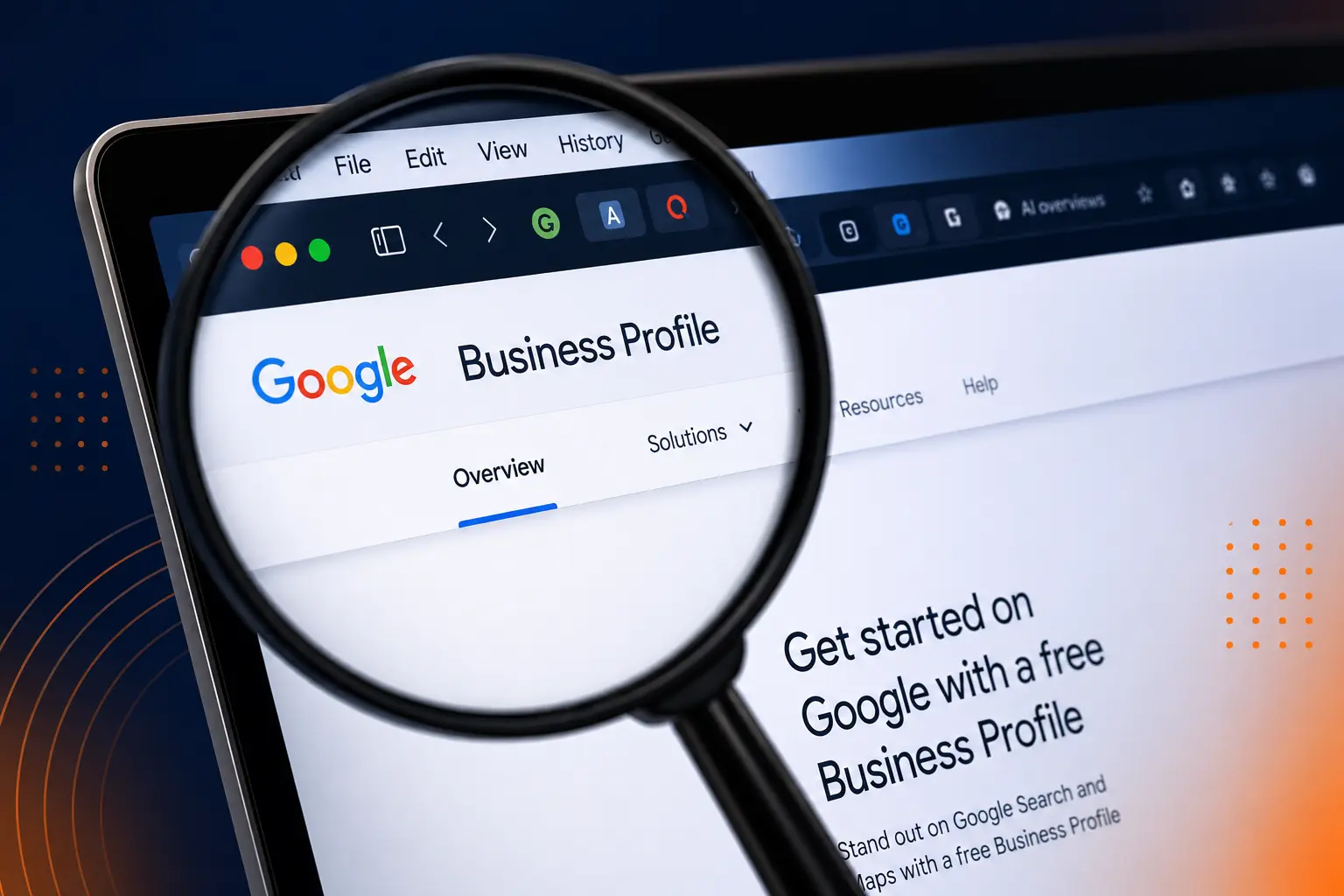
While you are in Google Business Profile, make sure your reviews are active. Ask recent clients personally for a Google review, not with a mass email, but in the moment when work has concluded well. Reviews that mention specific services or outcomes carry more AI weight than generic five-star ratings. A client who writes “helped us structure a complex acquisition agreement under a tight deadline” gives the AI much more to work with than “great service, highly recommend.”
Fix 4: Deploy Schema Markup on Your Key Pages
Schema markup is structured code that lives in your website’s backend. Visitors never see it. AI crawlers rely on it. It tells them exactly what type of entity your site represents, what services you offer, where you operate, who authored your content, and what each page covers without any inference required.
Without schema, every AI system that visits your site is guessing at your classification. With it, they are reading a label you wrote for them.
The schema types that matter most for professional service businesses:
- Organization: identifies your firm, contact information, and category
- LocalBusiness: establishes geographic service area and physical location
- FAQPage: flags structured Q&A content for direct extraction into AI responses
- Article / Author: attributes content to a credentialed individual, which AI systems weight as an expertise signal
- Service: describes individual offerings in machine-readable terms
For most CMS platforms: WordPress, Squarespace, Wix, schema deployment does not require custom development. Plugins like Yoast SEO, Rank Math, or Schema Pro handle the relevant types without writing a single line of code. After deploying, validate using Google’s free Rich Results Test or Schema.org’s validator to confirm everything is rendering correctly.
Fix 5: Create an llms.txt File.
This is the newest item on this list, and the one most professionals have not yet heard of. An llms.txt file is an emerging standard, currently being adopted across the web, that gives AI crawlers a structured summary of your entire website. It tells them which pages exist, what each covers, and which are most authoritative for which topics.
Think of it as a table of contents written specifically for AI systems. It complements your robots.txt file, which handles traditional search engine crawling, by addressing the separate and growing category of AI crawlers specifically.
For a straightforward professional services website, creating an llms.txt file takes less than an hour. The file is plain text, hosted at yourdomain.com/llms.txt, and follows a simple structure: a one-paragraph description of your business and its primary expertise, followed by a list of your most important pages with a one-sentence description of what each covers.
Most competitors have not done this yet. The window to gain early-mover advantage here is still open, but it is narrowing as awareness spreads.
Fix 6: Build Credibility Outside Your Own Website
Your website saying you are excellent carries limited weight with AI systems. Independent sources saying it carries substantially more. This is not about launching a PR campaign. It is about being intentional with the external credibility signals you already have the means to generate.
Practical steps with measurable impact:
- Get quoted or published externally. A contributed article in an industry newsletter, a quote in a regional business publication, a guest appearance on a podcast with a transcript each of these creates an external citation that AI systems can cross-reference against your website. Even a small-audience publication creates a verifiable mention.
- Build reciprocal mentions with complementary businesses. A restructuring attorney and an insolvency accountant. A commercial architect and a construction attorney. A wealth manager and an estate planning lawyer. These relationships already exist in most professional networks. Formalizing them into website mentions costs nothing and creates mutual citation value.
- Make your case studies findable. If you have documented client outcomes, they need to be on your website in a format AI can read, not buried in a PDF, not on a slide deck behind a contact form. Named results, specific outcomes, identifiable industries. Anonymize where confidentiality requires it, but specificity is what creates AI-citable evidence of expertise.
- Author attribution on every piece of content. Every article, every insight, every blog post needs a byline with real credentials and a brief author bio. Anonymous content does not build what AI systems call entity authority. Content attributed to a credentialed professional does.
Read More: How to Get Your Brand Featured in AI-Powered Search Results
How to Know Whether It Is Working
The remaining challenge is measurement. Unlike traditional SEO, where ranking tools provide precise positional data for any keyword, AI citation visibility has historically been opaque.
The manual approach: run the ten queries your ideal clients are most likely to search. Rotate across ChatGPT, Perplexity, Google’s AI Overview, and Gemini. Document which businesses get cited. If competitors appear and you do not, you have a clear baseline and a clear benchmark for progress.
Purpose-built monitoring tools, including GetCitedAI and similar platforms emerging in this space, now automate this tracking, capturing citation frequency across major AI platforms, identifying which competitor pages are being selected over yours, and surfacing the content gaps driving the difference. For professionals managing their own visibility without a dedicated marketing team, these tools make the gap manageable and the progress measurable.
The Standard Has Shifted. The Direction Has Not.
What AI rewards is not different in kind from what good SEO always pointed toward: be genuinely useful, be credibly referenced, and be structurally clear. The businesses appearing in AI answers did not do something clever. They built a presence that a machine can read clearly, verify independently, and cite with confidence. That standard is entirely achievable for any professional who approaches it with the same rigor they apply to their actual work.
The window to address this before it becomes a significant competitive disadvantage is narrowing. The question is not whether AI-driven discovery matters. The data has already answered that. The question is whether you act on it before your competitors do.
Want your business to be cited when potential customers ask AI assistants for recommendations? Partner with ResultFirst. Our AI SEO Services help businesses strengthen the authority, content structure, and trust signals that improve visibility across both traditional search and AI-generated answers. Get in touch today to prepare your digital presence for the future of search.
Sources Referenced:
- https://www.mckinsey.com/capabilities/growth-marketing-and-sales/our-insights/new-front-door-to-the-internet-winning-in-the-age-of-ai-search
- https://www.gartner.com/en/newsroom/press-releases/2024-02-19-gartner-predicts-search-engine-volume-will-drop-25-percent-by-2026-due-to-ai-chatbots-and-other-virtual-agents
- https://www.nngroup.com/articles/how-little-do-users-read/
FAQs:
WHAT TO READ NEXT
READY TO BUILD PREDICTABLE ORGANIC GROWTH?
We are the only TOP SEO services agency providing Real Results in a Real Performance model. We help growth hungry companies outperform their competition and achieve 300%+ growth in their digital marketing initiatives.
- San Jose, CA, 95120

- +1-888-512-1890

- sales@resultfirst.com

300K+
KEYWORDS RANKED
546M+
REVENUE GENERATED
18 Years
SOLVING COMPLEX SEO
150+
TEAM MEMBERS