


 sales@resultfirst.com
 +1-888-512-1890
What Is Programmatic SEO and Should Your SaaS Company Be Doing It?

For SaaS businesses, Organic search remains one of the most valuable customer acquisition channels for SaaS companies, accounting for approximately 44-53% of all trackable website traffic. Yet most companies rely on a content model that cannot scale fast enough to capture the full scope of search demand. While teams create one blog post at a time, potential buyers are searching thousands of variations related to integrations, templates, use cases, industries, locations, and product comparisons.
This is where programmatic SEO creates a competitive advantage. Instead of manually building every page, companies use structured data and scalable content frameworks to create hundreds or thousands of highly relevant pages designed around specific search intent. The opportunity is significant. Programmatic SEO allows SaaS companies to increase search coverage, capture long-tail demand at scale, and build an organic growth engine that continues generating qualified traffic long after publication.
Here is the complete breakdown of what it is and whether your SaaS company should be building it today.
What Exactly Is Programmatic SEO?
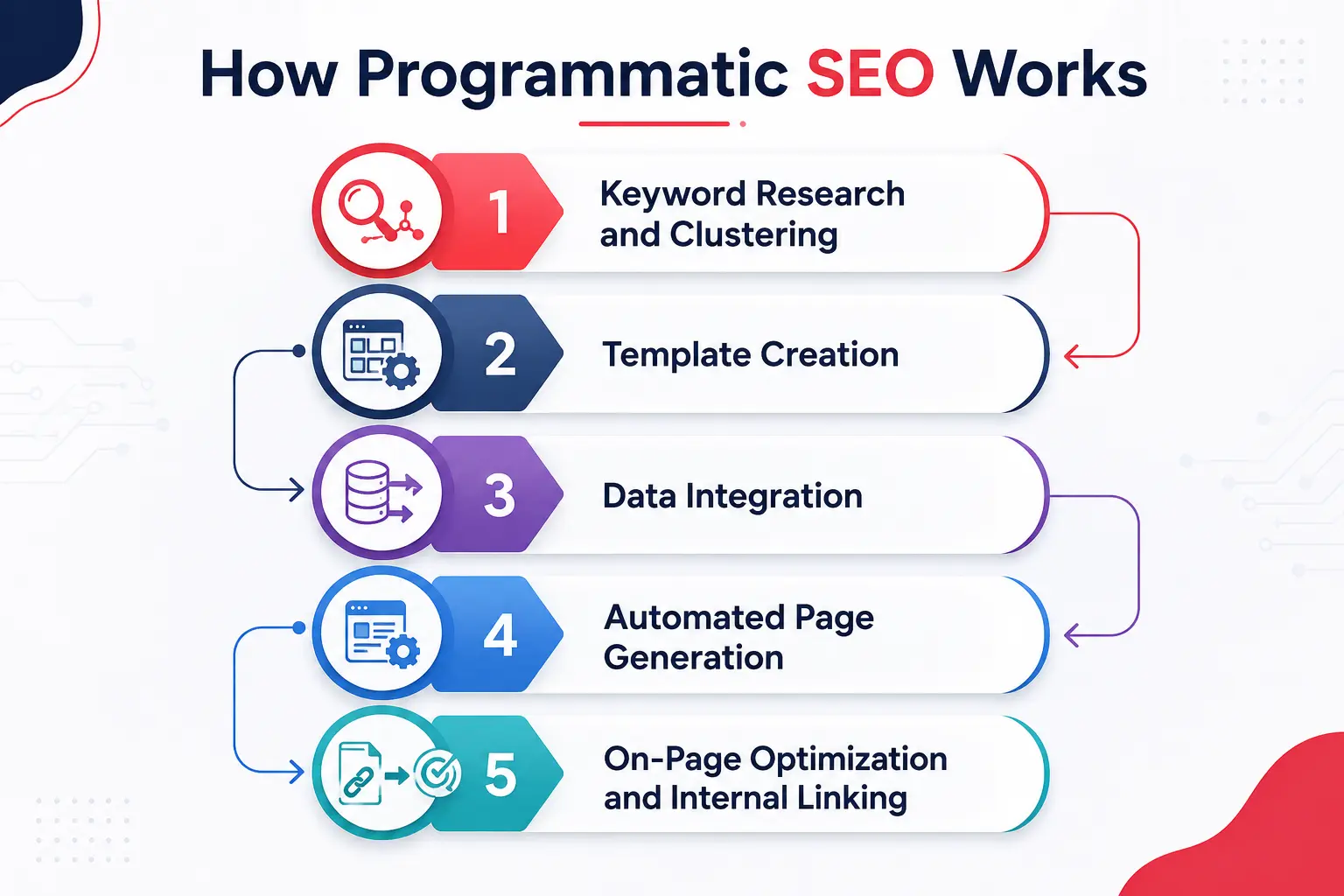
Programmatic SEO is the process of automatically creating large numbers of web pages that target specific search queries. Each page uses a shared template but pulls in unique data to stay relevant.
Think of it this way:
- You identify a repeatable search pattern
- You build one smart template
- You feed it structured data
- The system generates hundreds or thousands of targeted pages
The formula is simple:
Template + Data = Scalable Pages
As per a report, 94.7% of all keywords get fewer than 10 monthly searches. Those are not dead keywords. For SaaS, those are your highest-intent buyers describing their exact problem in their own words. Programmatic SEO is the only way to capture them at scale without building every page by hand.
Why Does This Work So Well for SaaS?
SaaS buyers search with context. They do not just type “CRM software.” They type:
- “CRM for real estate agents”
- “CRM that integrates with Slack”
- “HubSpot alternatives for startups”
- “Salesforce vs Pipedrive for small teams”
Each of those is a different search intent. Each one deserves its own dedicated page. Programmatic SEO makes that possible without building each page by hand.
How Is Programmatic SEO Different From Traditional SEO?
Traditional SEO focuses on creating individual high-effort pages. Programmatic SEO focuses on scaling structured content across hundreds or thousands of keyword variations. Both approaches have a place in a strong SaaS strategy.
Here is a clear comparison:
| Aspect | Traditional SEO | Programmatic SEO |
| Page creation | Manual, one at a time | Automated, hundreds at once |
| Best for | Complex topics needing depth | Scalable keyword patterns |
| Content depth | High, detailed and authoritative | Moderate, structured and useful |
| Time to publish | Days to weeks per piece | Days to weeks for the entire set |
| Keyword type | Head terms and mid-tail keywords | Long-tail and highly specific queries |
| Risk | Low, pages fail individually | Higher, template errors scale fast |
The smartest SaaS companies use both. Traditional SEO builds authority and trust. Programmatic SEO captures long-tail demand at scale.
The Three Building Blocks Every Programmatic SEO Strategy Needs
You cannot launch a programmatic SEO strategy without getting these three things right first.
1. A Repeatable Keyword Pattern
This is the engine of the whole system. A keyword pattern is a search format that can expand into dozens or hundreds of variations.
Strong patterns for SaaS include:
- Alternatives pages: “[Competitor] alternatives”
- Comparison pages: “[Tool A] vs [Tool B]”
- Integration pages: “[Your product] + [app name] integration”
- Use-case pages: “Best [software category] for [industry].”
- Template pages: “[Job to be done] + templates”
Each pattern produces dozens of pages. Each page targets a different buyer at a different stage.
2. Modifiers That Change Across Pages
Modifiers are the variables that make each page unique. In “CRM for [industry]” the modifier is the industry. That one pattern becomes:
- CRM for startups
- CRM for real estate agents
- CRM for marketing agencies
- CRM for healthcare providers
The head term stays the same. The modifier changes. The page serves a completely different search intent.
3. A Strong Data Layer
This is where most weak programmatic SEO strategies collapse. Pages need real structured data to deliver genuine value.
For SaaS, that data could include:
- Integration details and compatibility
- Feature comparisons across tools
- Pricing breakdowns
- Customer reviews and ratings
- Industry-specific use cases
- Templates tied to specific workflows
Without a solid data layer, your pages become thin. Google spots thin pages fast and either ignores them or penalizes them.
Is Programmatic SEO Actually Driving Revenue for SaaS Companies?
The answer is yes. And the logic is straightforward.
More targeted traffic brings in more qualified leads. More qualified leads convert at higher rates. Higher conversion rates drive more revenue.
Here are the numbers that back this up:
- Companies with strong SEO programs generate 2x more revenue or, in many cases, 1,000% more traffic than from other channels, including social media
- Pages built for niche buyer personas achieve 2.7x higher conversion rates from organic search compared to generic blog content.t
- Combining first-party data with programmatic SEO delivers a 220% uplift in keyword rankings for low-competition terms.
These are not vanity metrics. They connect directly to pipeline and revenue.
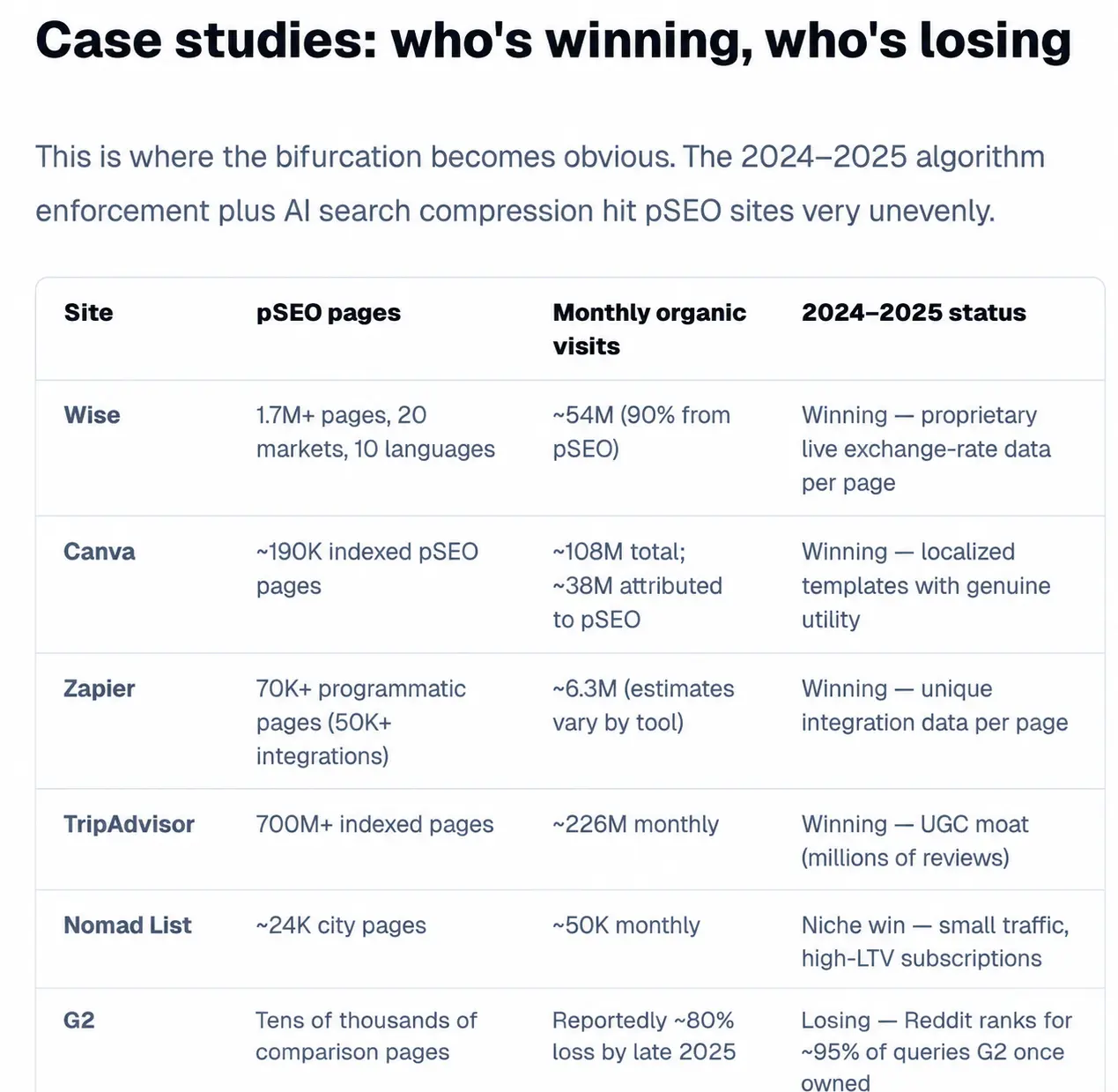
Here is the updated list of SaaS companies doing Programmatic SEO Right:
How to Build a Programmatic SEO Strategy Step by Step
This is where theory becomes action. Follow these steps in order.
Step 1: Start With Your Audience, Not Your Keyword Tool
Most teams make the mistake of jumping straight into keyword tools. The result is a list of generic terms that do not match how real buyers search.
Start here instead:
- Review your support tickets for common questions
- Pull language from sales call transcripts
- Survey current customers about how they searched before finding you
- Study competitor pages that already rank with programmatic content
Then take those real phrases into a keyword tool to validate volume and check competition.
Step 2: Pick One Strong Keyword Pattern and Commit
Do not try to launch five patterns at once. Pick the one most aligned with your product data and your buyer’s search behavior.
Ask yourself:
- Can this pattern expand into at least 50 variations?
- Does my product have structured data to make each page unique?
- Do these keywords signal purchase intent or evaluation intent?
If the answer to all three is yes, then you have your pattern.
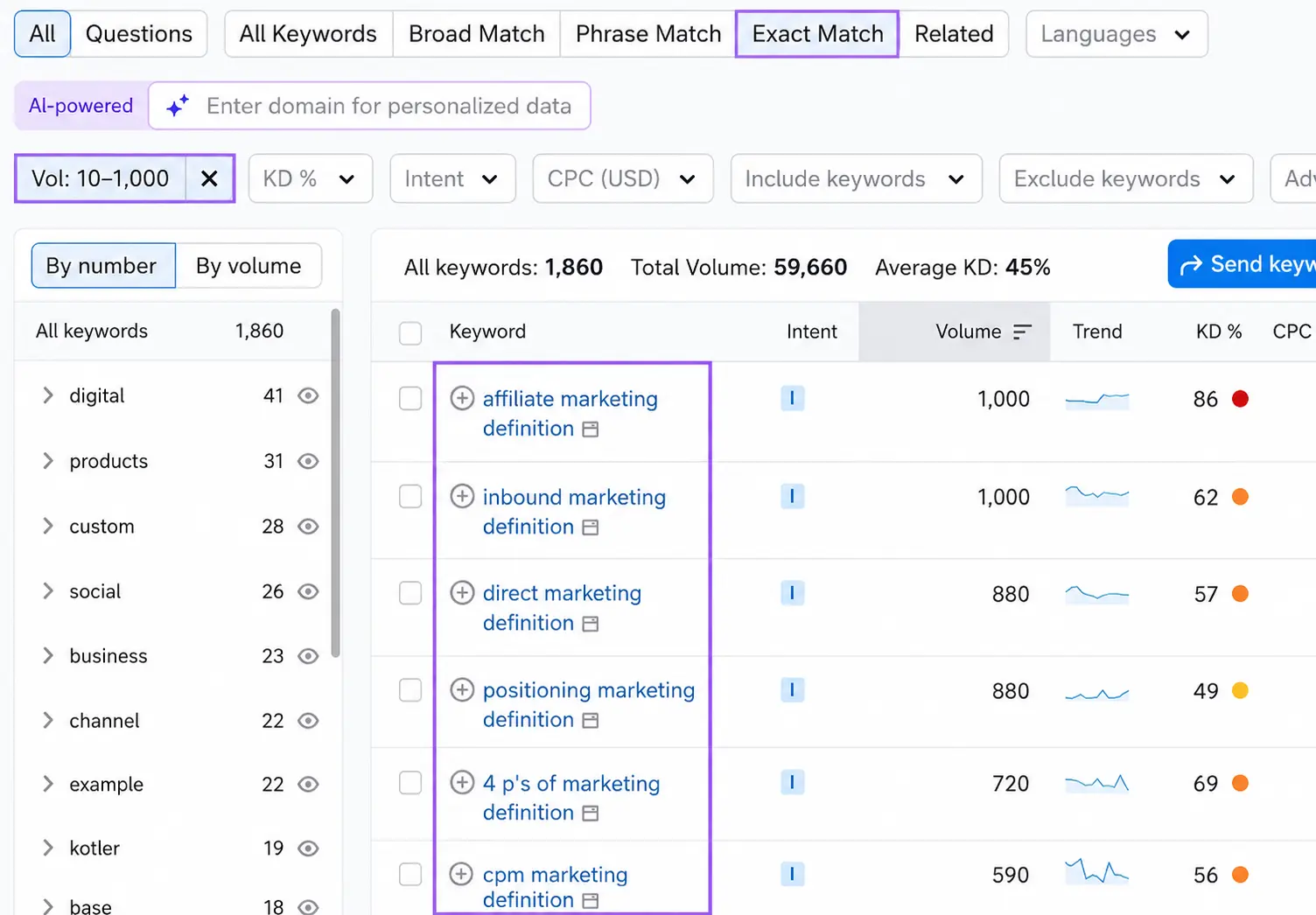
Image Source: Ahfers
Step 3: Build Your Data Layer Before Your Template
Most teams build the template first. That is backwards. The template should be shaped by the data you actually have.
Pull from:
- Your product database (integrations, features, pricing)
- Third-party sources via APIs or web scraping
- Customer reviews and testimonials
- Internal analytics and usage data
Organize everything in a structured database. Airtable works well for mid-sized projects. For larger operations, use an SQL database or data warehouse.
Step 4: Design a Template That Scales Without Feeling Robotic
Your template needs to deliver real value on every page while staying consistent across thousands of variations.
A strong programmatic page template includes:
- H1 heading with the target keyword
- Short intro paragraph unique to that page variation
- Key data block (features, comparisons, integrations)
- Social proof: reviews, testimonials, or case study links
- FAQ section tailored to that specific audience
- Clear CTA pointing toward a trial or demo
- Internal links to related pages
A good test: Would a real user bookmark this page? If not, it needs more value before you scale.
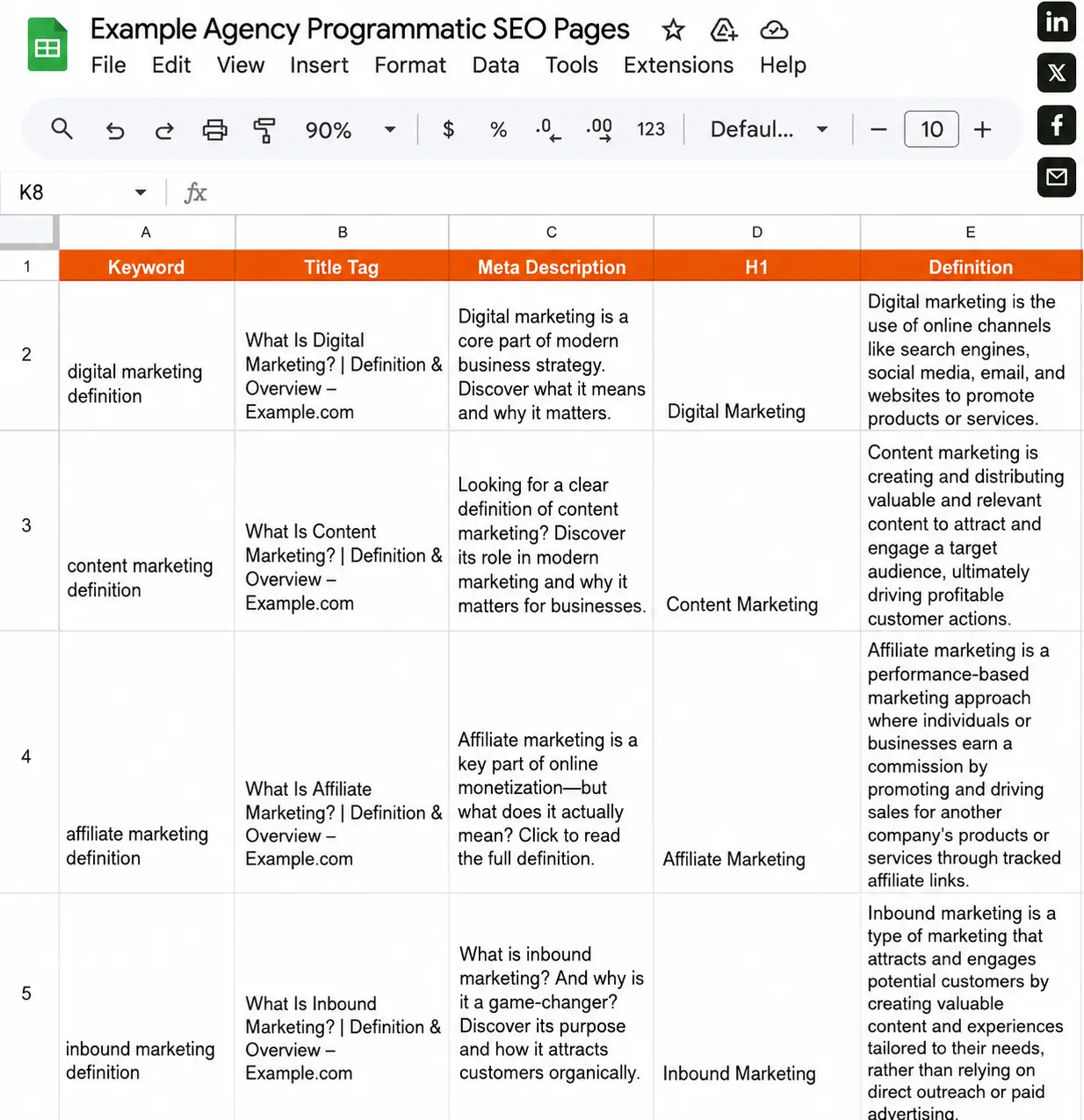
Image Source: Semrush
Step 5: Build a Pillar Page and Link Everything Together
With thousands of pages live, you need a hub page that ties them together. This hub helps search engine bots crawl your content efficiently and creates a clear topical cluster.
- Every programmatic page links back to the pillar page
- The pillar page links out to all related programmatic pages
- Similar pages link to each other where relevant
Without this structure, even good pages end up isolated. Isolated pages rank poorly.
Step 6: Launch a Pilot Batch First
Do not launch 5000 pages on day one. Launch 50. Watch what happens.
Check:
- How many pages get indexed
- Which pages attract early traffic
- Whether the template is generating the right kind of content
Fix what is broken before you scale. One template error across thousands of pages is a serious problem.
Step 7: Monitor, Update and Iterate Continuously
Programmatic SEO is not a set-and-forget tactic. It is a living system.
Set up Google Search Console to track indexing status. Use GA4 to track which pages drive conversions. Update pricing, features and integration details regularly. Stale data kills user trust and search rankings at the same time.
What Are the Biggest Mistakes That Get SaaS Teams Penalized?
Google has gotten sharper at detecting low-quality programmatic content. Here are the mistakes that trigger problems.
- Scaling before validating: launching thousands of pages before testing if the pattern works
- Thin data layers: using generic or AI-filled copy without real structured data
- Ignoring intent: using the same template for queries that need completely different content.
- Skipping canonicalization: without canonical tags, Google picks one page as the original and suppresses the rest
- No internal linking: pages that sit in isolation rarely rank
- Treating it as set-and-forget: stale data and outdated features erode rankings over time
The safest approach is always to start small. Validate the system. Then scale what already works.
Should Your SaaS Company Actually Be Doing Programmatic SEO?
Yes! Programmatic SEO is the right move for your SaaS company if:
- Your product connects with other tools (integration pages are natural)
- Your buyers search by industry, role, or use case
- You have structured product data you can pull into page templates
- You have competitors with established brand recognition you need to get around
- You want to build a compounding organic channel that grows without linear content investment
It is NOT the right move if you have no structured data to power the pages, no technical support to build the pipeline, or you rush into scale before validating the pattern.
Done right, programmatic SEO becomes the growth channel that keeps delivering long after you launch it. Done wrong, it creates thousands of pages that Google ignores or worse penalizes.
As per a report, programmatic content penalties can reduce a website’s organic traffic by approximately 67% within a month to six weeks.
Conclusion: Scale Smarter, Not Harder
Programmatic SEO is not about flooding Google with pages. It is about building a system that turns your product data into targeted traffic at scale. Companies like Zapier, Canva, and G2 did not stumble into millions of monthly visitors. They built repeatable systems with clear keyword patterns, strong data layers, and templates that genuinely help their audience.
Your SaaS product likely has more data than you realize. Integration lists, feature comparisons, use cases, customer segments that data is your raw material. Start with one pattern. Build a tight pilot. Validate before you scale. The SaaS companies that win organic search in 2026 are the ones treating content as a system, not a series of one-off blog posts.
Growth does not come from publishing more content. It comes from capturing the right demand. If you’re ready to build a programmatic SEO strategy that scales with your SaaS business, ResultFirst can help. As a SaaS SEO Agency, we help growing SaaS companies build scalable organic growth strategies that attract qualified buyers and create long-term search visibility.
Source Refernced:
- https://ahrefs.com/blog/seo-statistics/
- https://ahrefs.com/blog/google-penalty/
- https://www.tripledart.com/blog/programmatic-seo-for-saas
FAQs:
WHAT TO READ NEXT
READY TO BUILD PREDICTABLE ORGANIC GROWTH?
We are the only TOP SEO services agency providing Real Results in a Real Performance model. We help growth hungry companies outperform their competition and achieve 300%+ growth in their digital marketing initiatives.
- San Jose, CA, 95120

- +1-888-512-1890

- sales@resultfirst.com

300K+
KEYWORDS RANKED
546M+
REVENUE GENERATED
18 Years
SOLVING COMPLEX SEO
150+
TEAM MEMBERS