



 sales@resultfirst.com
 +1-888-512-1890
How to Track Which SEO Keywords Are Actually Converting To Paying Customers

The difference between attracting website visitors and generating business results comes down to targeting SEO keywords with purchase intent. You put real time and real money into SEO. You research keywords. You watch your rankings climb week after week. And then someone on your team asks the one question you dread the most: “Which of these keywords is actually bringing in paying customers?” Most marketers go quiet at that point. Not because they lack data. Because they have too much of the wrong kind; clicks are easy to track. Revenue is hard. According to a report, 61% of marketers say improving SEO and growing organic presence is their number one priority. Yet most of them stop measuring at the conversion count.
Remember: a conversion is not a customer. And until you track which keywords produce actual buyers, you are flying blind with your budget. This article shows you exactly how to fix that.
How to Identify and Prioritize High-Converting Search Terms?
Not every keyword brings customers. Some attract browsers. Others attract buyers. The difference lives inside the keyword itself.
They signal buyer intent. A person searching “hire a digital marketing agency in Austin” wants to act. A person searching “marketing tips” wants to learn. Only one ends in a sale. Research shows 65% of all clicks go to paid results when searches carry high commercial intent. Intent-rich keywords are where purchase decisions happen.
They are specific. Broad keywords attract everyone. That sounds good. It is not. Specificity filters out the wrong audience naturally. Semrush data shows long-tail keywords convert at 2.5 times the rate of broad head terms. More words in a search phrase usually means more clarity about what the searcher needs.
They match the buyer’s journey. Converting keywords live in the consideration and decision stages. That is where searchers evaluate options and prepare to spend. Awareness-stage keywords drive traffic. Decision-stage keywords drive revenue. Building content for the decision stage is where most businesses leave money on the table.
Target the phrases your ideal customer types when they are ready to spend. Not when they are just starting to look.
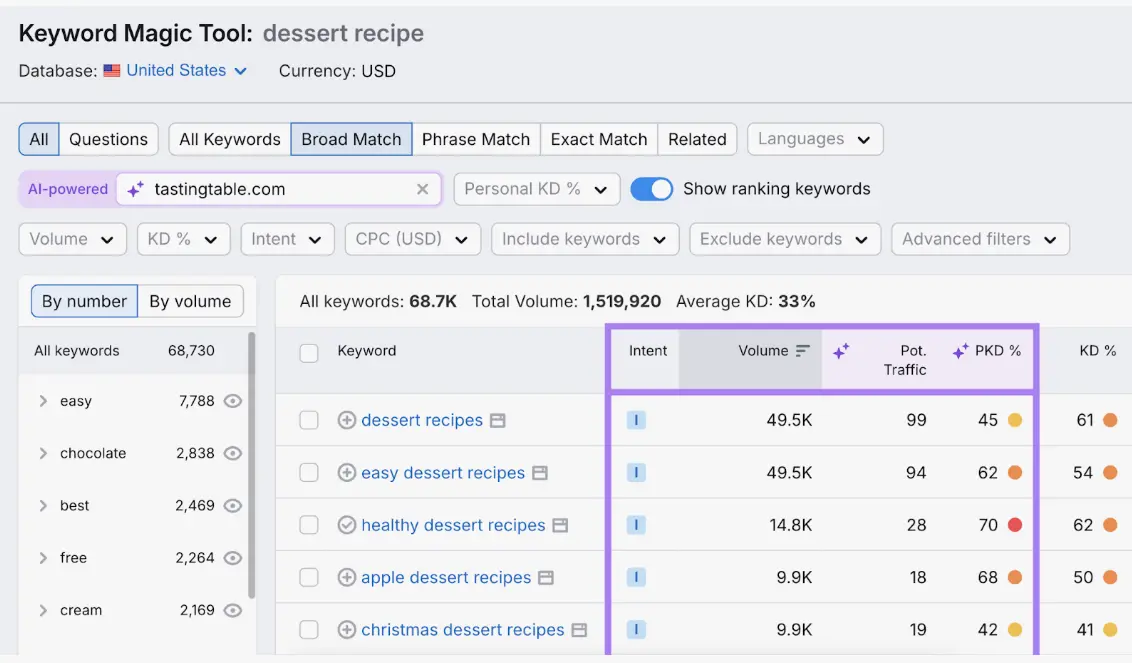
Example from semrush
Step One: Set Up Full Attribution Before You Do Anything Else
You cannot track keyword revenue without knowing which keyword started each customer journey. That sounds obvious. Most setups still get it wrong.
The problem is lead diversity. Customers do not only fill out forms. They call. They chat. They visit the store. They email directly. Each of those touchpoints needs to connect back to the original keyword session.
Here is how to build that attribution properly:
- Dynamic number insertion for calls: Swap your phone number dynamically based on the visitor’s session data. Each call gets tagged with the keyword that drove the visit.
- Hidden UTM fields on forms: Pass keyword data through hidden fields in every form on your site. When someone submits a lead form, the keyword travels with it into your CRM.
- Chat session tagging: Connect your live chat tool to your analytics platform so each chat session carries keyword-level data.
- CRM source tracking: Make keyword a required field in your CRM lead record. Every lead needs an origin keyword attached to it at the point of entry.
Without all four of these in place, your keyword data has gaps. A keyword might look weak in your form data but drive the majority of your inbound calls. You would optimize it away and never know what you lost.
53.3% of all website traffic comes from organic search. If you are not attributing every organic lead back to its source keyword, you are leaving your biggest traffic channel unmeasured.
Step Two: Stop Counting Conversions and Start Qualifying Leads
Here is a step most teams skip entirely. And it changes everything. Not every conversion is a real lead. Not every real lead is a qualified buyer.
Spam submissions come through your forms. Wrong numbers dial your tracking lines. Competitors fill out your lead forms to gather intel. Existing customers contact you through the same channels as new prospects.
When you count all of these as conversions, your keyword data gets distorted. The keywords that attract spam inflate their numbers. The keywords that attract serious buyers look average by comparison.
How Do You Separate Real Buyers from Noise?
Start by reviewing every inbound lead and tagging it as qualified or unqualified. This takes time upfront. But it is the only way to trust your conversion data.
A qualified lead meets specific criteria. Define those criteria clearly for your business. Common qualification standards include:
- The lead is a new prospect and not an existing customer
- The lead is requesting a service or product you actually offer
- The lead has a realistic budget or project scope
Once you apply these filters, your conversion numbers will drop. That is not a bad sign. That is your data getting honest.
Now sort your keywords by qualified lead count. The order will likely shift significantly compared to your raw conversion ranking. The keywords that produce real buyers start to separate from the ones producing noise.
Step Three: Build the Four-Layer Keyword Report That Actually Drives Decisions
A basic keyword report has two layers. Volume and cost. Those two layers describe activity. They do not direct strategy.
A revenue-anchored keyword report has four layers. Each one adds a dimension that raw activity data cannot provide.
| Layer | Metric | What It Tells You |
| Volume | Clicks and impressions | How much reach your keyword has |
| Qualification | Qualified vs total conversions | Whether the traffic is real buyers |
| Lead Value | Average revenue per qualified lead | What each lead is actually worth |
| Revenue Contribution | Total revenue per keyword | Where your money is coming from |
Most teams live in layer one. Some make it to layer two. The teams that consistently grow their clients’ revenue operate in all four layers simultaneously.
How to Assign Real Value to Each Keyword
This is where keyword tracking gets powerful. And it is simpler than most people think.
You have three methods to choose from. Pick the one that fits your data setup and stay consistent with it.
Method one: Average job value by service. Group your services by type. Calculate the average revenue per job for each service type. When a keyword drives leads for a specific service, assign that service’s average job value to each qualified conversion from that keyword.
Method two: Quote value tracking. When a sales conversation produces a quote record, apply the quote amount against the originating keyword. This gives you real-time data on the revenue potential each keyword is generating.
Method three: Closed sale attribution. Pull closed deal revenue from your CRM. Match each closed deal back to the keyword that started the customer journey. This is the most accurate method. It reflects actual revenue, not just potential.
Run all three methods if your data allows it. Compare the numbers. They will rarely be identical. But they will tell a consistent story about which keywords attract high-value buyers.
Step Four: Use Google Search Console to Find Organic Revenue Opportunities
Google Search Console gives you organic keyword data that most teams never fully use. It shows you every search query that drove clicks to your site. It shows your average position. It shows your click-through rate for each query.
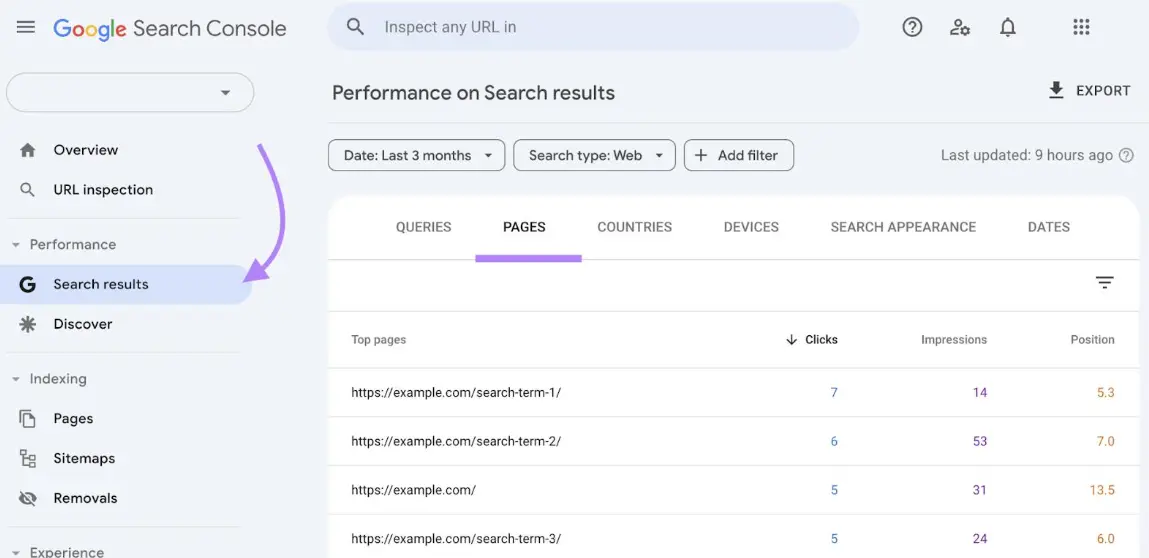
Example Google Search Console
Pair that data with your qualified lead and revenue data, and you get a map of exactly where to invest your content effort.
Here is the workflow:
- Export your top 200 queries from Search Console, filtered to the last 90 days
- Cross-reference those queries with your qualified lead tracking data
- Identify queries that drive qualified leads but where you rank between position 4 and position 15
- These are your highest-priority content improvement opportunities
Why focus on positions 4 through 15? Because the traffic jump from those positions into the top three is dramatic.
Research shows that moving from position 4 to position 1 can increase click-through rate by more than 300%. For a keyword that already drives qualified buyers, that shift is worth a significant content investment.
Now look for a second pattern in your Search Console data. Find queries where you rank well, but click-through rate is low. Those keywords are visible, but your title tag or meta description is not compelling enough to earn the click.
Fixing the on-page headline and description for those keywords can increase qualified traffic without touching your rankings at all.
Step Five: Sort Everything by Revenue and Let the Data Tell You What to Scale
This is the step that changes how marketing decisions get made. Take your four-layer keyword report. Sort it by revenue contribution. Not by clicks. Not by conversion count. Not by CPL. By total qualified revenue generated.
The results will surprise you almost every time.
You will find a small cluster of keywords at the top. These keywords may not have the highest click volume. They may not have the lowest cost per lead. But they generate the majority of your actual customer revenue.
This is your core keyword set. These are the terms worth scaling. These are the keywords that deserve higher bids in paid search and stronger content investment in organic.
Below them you will find a large middle group. These keywords produce some qualified leads. Some generate decent revenue. They are worth maintaining but not prioritizing for aggressive investment.
At the bottom you will find the keywords your reports previously celebrated. High click volume. Low CPL. Lots of conversions. But minimal qualified revenue. These are the terms your budget has been chasing. Now you know to stop.
What Patterns Show Up in High-Revenue Keywords?
High-revenue keywords share common characteristics. Look for these patterns in your own data:
- Specificity: High-revenue keywords tend to be more specific than high-volume head terms. They describe a specific problem, service, or outcome.
- Urgency signals: Words like “emergency” or “same day” or “near me” often indicate a buyer who needs a solution now rather than a researcher gathering information.
- Service + location combinations: Geographic modifiers attached to service keywords consistently attract buyers with higher purchase intent than broad service terms alone.
- Problem-aware language: Keywords where the searcher describes a problem they are experiencing rather than a topic they are researching tend to convert at higher revenue values.
A report mentions that long-tail keywords, those longer and more specific phrases, convert at a rate approximately 2.5 times higher than broad head terms. They also carry lower competition and lower cost per click in paid search.
Step Six: Feed Revenue Data Back Into Google Ads and Smart Bidding
Tracking keyword revenue is only half the job. The second half is using that data to make your paid search campaigns smarter.
Google’s Smart Bidding algorithms optimize toward the signals you give them. If you give them conversion counts, they optimize for volume. If you give them revenue values, they optimize for profit.
Here is how to close that loop:
- Set up conversion values inside Google Ads that reflect your actual qualified lead values by service type
- Use offline conversion imports to pass closed sale data from your CRM back into Google Ads
- Assign different conversion values to different lead types based on their historical revenue contribution
- Review and update those values quarterly as your average deal size shifts
When Smart Bidding receives real revenue data, it shifts spend toward the keywords and audiences that drive customer value. Not just clicks. Not just form fills. Actual business revenue.
This single change, moving from conversion count to conversion value is one of the highest-leverage optimizations available in paid search. And it requires the keyword revenue tracking work you have already done in the steps above.
Step Seven: Review Keyword Revenue Data Every Month Without Exception
Keyword revenue tracking is not a setup-and-forget system. Markets shift. Buyer behavior changes. New competitors enter your space. Seasonal demand moves keyword performance up and down.
A monthly keyword revenue review keeps your strategy current. Here is what to include in each review:
- Which keywords generated the highest total qualified revenue in the past 30 days
- Which keywords showed a drop in qualified lead volume compared to the prior month
- Whether any new keywords are emerging as revenue contributors
- How your cost per qualified lead is trending relative to revenue per keyword
- Which content pieces are ranking for high-revenue keywords and whether they need updates
This review does not need to take long. An hour a month spent on keyword revenue data produces better strategic decisions than weeks spent analyzing raw traffic reports.
Build this review into your standard reporting rhythm. Share the revenue-sorted keyword report with your clients or leadership team instead of the default click and impression report. Watch how the conversation changes.
What Separates a Diagnostic Report From a Strategic One
A diagnostic keyword report describes the past. It tells you what happened last month. It explains which keywords were active and how much they cost.
A strategic keyword report directs the future. It tells you where to put the next dollar. It shows which keywords are building the business and which ones are consuming budget without contributing revenue.
Building that strategic report requires four specific things working together:
- Full attribution across every lead type, calls, forms, chats, and direct contacts
- Lead qualification that separates genuine buyers from noise
- Revenue values attached to each keyword consistently
- A sorting methodology that ranks keywords by contribution, not by volume
When all four are in place, your keyword report stops being a record of activity. It becomes a tool for making decisions that grow real revenue.
Stop Reporting on Keywords That Look Good and Start Tracking the Ones That Pay
Here is the real shift this entire process creates. You stop managing keywords by how they look on a dashboard. You start managing them by what they produce for the business. That shift changes everything. It changes which content you prioritize. It changes where your paid search budget flows. It changes how you talk to clients about results. And it changes how clients talk about the value of your work.
Those are the ones worth scaling. Start there. Build from that foundation. And stop spending your best optimization effort on keywords that look productive but produce nothing that actually matters.
Your SEO strategy deserves to be measured by what it earns. Not just by how much it moves.
If you’re ready to move beyond rankings and understand which keywords actually drive qualified leads and paying customers, ResultFirst can help. Our Performance Based SEO Services combine search strategy with meaningful business metrics, helping you focus on the keywords that generate measurable growth, not just more traffic.
Sources Referenced:
- https://colorlib.com/wp/seo-statistics/
- https://www.get-ryze.ai/blog/google-ads-ppc
- https://www.brightedge.com/resources/research-reports/channel_share
- https://searchatlas.com/blog/seo-statistics/
- https://www.yotpo.com/blog/long-tail-keywords-guide/
FAQs:
WHAT TO READ NEXT
READY TO BUILD PREDICTABLE ORGANIC GROWTH?
We are the only TOP SEO services agency providing Real Results in a Real Performance model. We help growth hungry companies outperform their competition and achieve 300%+ growth in their digital marketing initiatives.
- San Jose, CA, 95120

- +1-888-512-1890

- sales@resultfirst.com

300K+
KEYWORDS RANKED
546M+
REVENUE GENERATED
18 Years
SOLVING COMPLEX SEO
150+
TEAM MEMBERS