



 sales@resultfirst.com
 +1-888-512-1890
10 SEO Strategies to Boost Fashion Ecommerce Website Visibility

After months of working to make product pages as good as possible, getting high-authority backlinks, and ultimately achieving first-page ranking for “sustainable summer dresses.” And suddenly there’s 40% less traffic. Ranking hasn’t budged. But the number of people clicking any search result has plummeted.
Google’s AI Overview now serves the answer directly on the search results page. Your potential customer reads the summary, gets his answer, and doesn’t go to your website at all.
Welcome to 2026. For fashion brands, e-commerce SEO is one of the most lucrative growth opportunities, but the rules have completely changed.
As AI Overviews already cover almost 58% of queries based on questions, blue links just aren’t enough anymore.
Today’s shoppers discover products through Google Lens, ChatGPT conversations, Instagram Reels, and AI-generated summaries. Often without ever clicking a website. The strategies that got you here won’t keep you here.
Today’s guide will outline ten fashion e-commerce SEO strategies that will help you stay ahead of your competitors in 2026.
How Has Fashion Search Changed in 2026
Source: Black Merlin Technologies
The way people search for fashion products has changed significantly over the last few years. Instead of typing a few keywords into Google, shoppers now ask detailed questions, upload images, compare products through AI assistants, and expect instant recommendations tailored to their needs.
Today, when a brand appears in an AI overview, it receives 91% more sponsored clicks and 35% more organic ones.
For example, a shopper is more likely to search using natural language queries such as:
- Best oversized hoodie for winter
- Sustainable dresses under $100
- Comfortable white sneakers for walking
- Linen shirts for hot weather
- Dresses similar to this photo
The search engines and AI systems examine these questions to give direct answers, suggestions, purchase information, and visual search results. Fashion brands now need content that will describe the products and provide the necessary information about them rather than optimizing only keywords.
Modern fashion SEO now extends across multiple discovery channels, including:
- Traditional Google Search
- Google AI Overviews
- AI assistants like ChatGPT, Gemini, and Perplexity
- Google Shopping
- Google Lens and other visual search tools
- Image and video search results
The key to success in 2026 lies in producing content that is useful, structured, technically sound, and intelligible to both humans and machines.
Brands can ensure visibility throughout the customer journey, not just through search ranking competition, by coordinating their marketing efforts with this kind of behavior.
10 Strategies That Actually Work for Fashion Brands
1. Make Yourself Citable to AI (Not Just Rankable on Google)
Source: Searchable
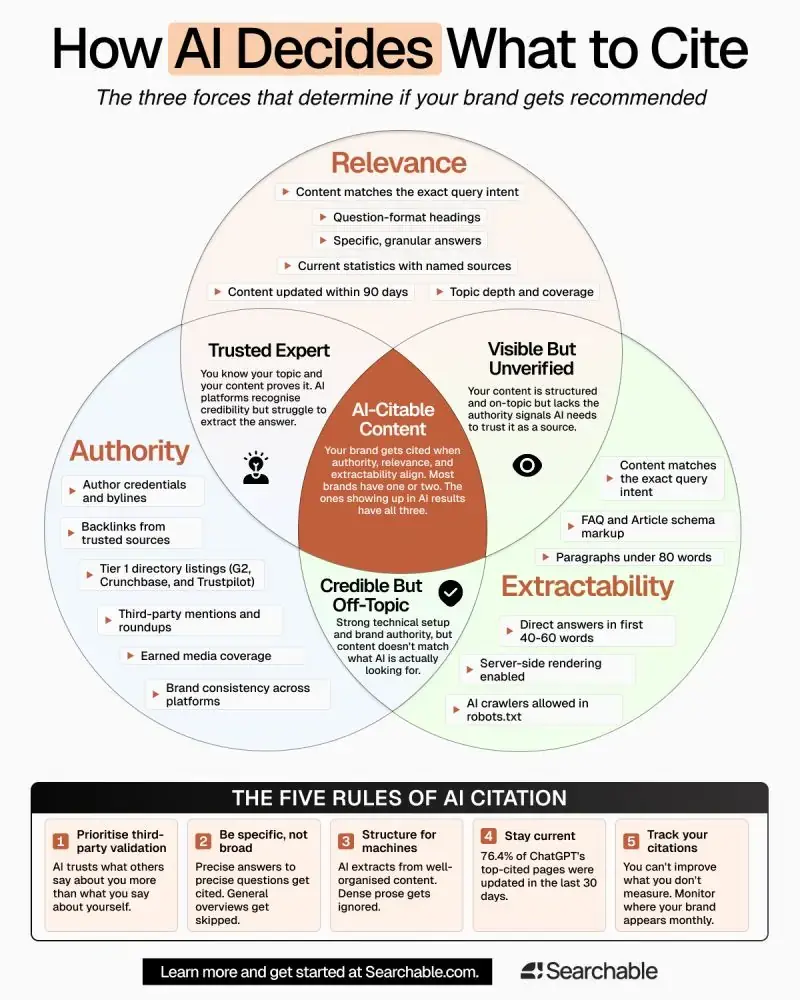
The AI doesn’t “rank” web pages as search engines do. It needs content in which the answers to the posed questions are clearly provided and are authoritative. Your task is to ensure that those answers are impossible to overlook.
What this looks like in practice:
Think in Q&A blocks. When somebody poses a question like, “What is the best linen dress for hot weather?” You should provide the correct answer right away without any marketing bluff.
Be specific. AI systems reward precision. “Our linen dress is made from 100% European flax, weighs 180 gsm, and maintains breathability up to 95°F” is more citable than “the perfect summer dress.”
Create content clusters. One pillar page about “sustainable fabrics” accompanied by ten articles about different sustainable fabrics (hemp, organic cotton, and recycled polyester) demonstrates the depth that is recognized by AI algorithms.
Being quoted is the new being ranked.
2. Stop Saying “Page Speed” and Start Talking Core Web Vitals
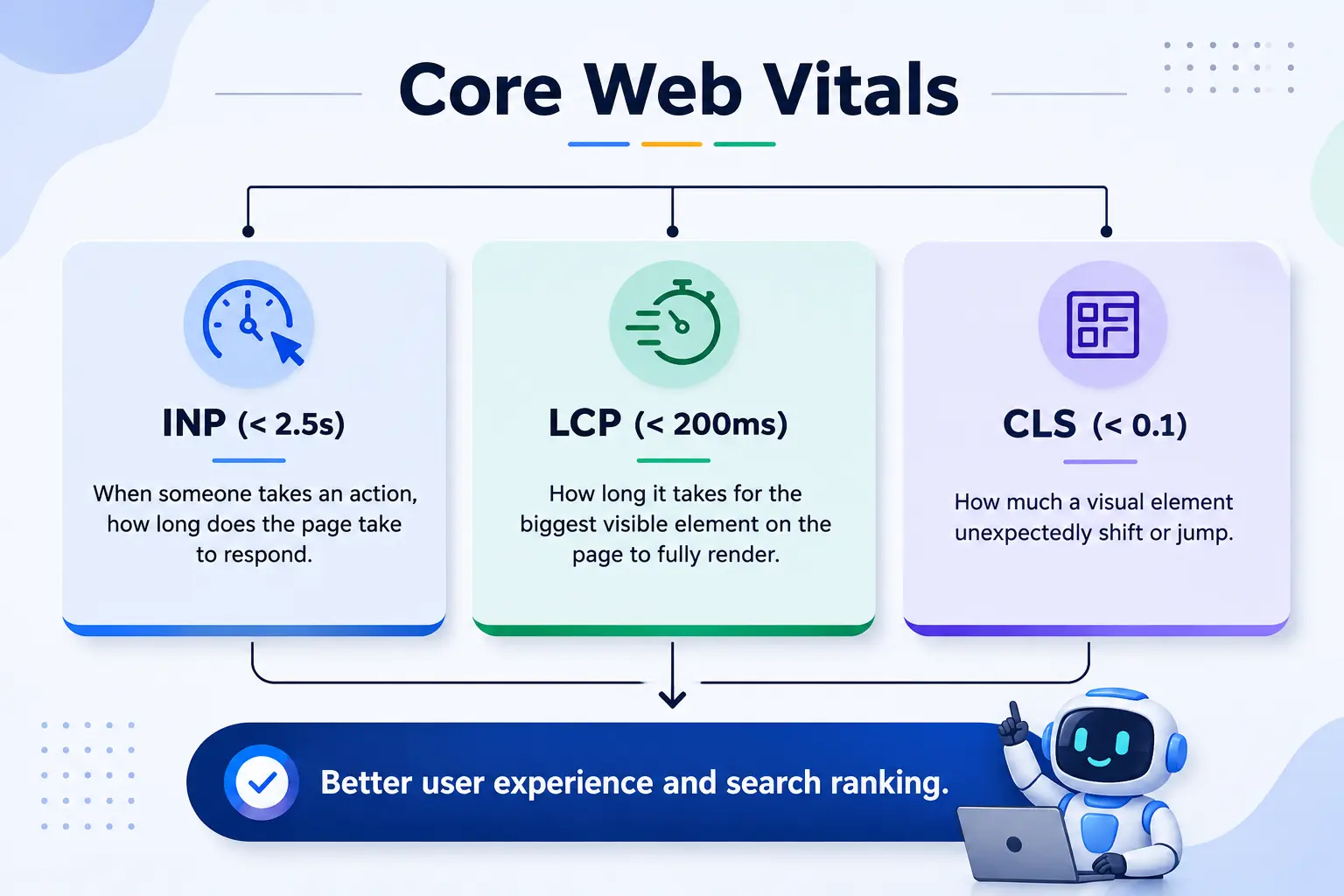
“Page speed” is the term everyone uses. But Google stopped caring about generic speed years ago. What they actually measure are Core Web Vitals, three specific metrics that tell them whether users actually enjoy your site.
The metrics that matter (and the numbers to hit):
| Metric | What It Matters | Good Threshold |
| LCP | How fast the main content loads | Under 2.5 seconds |
| INP | How responsive the page feels | Under 200 milliseconds |
| CLS | How stable the layout stays | Under 0.1 |
The median fashion site scores 4.1 seconds on LCP (mobile). That’s not “needs improvement”; that’s actively losing customers. When a shopper is excited about a dress and your page takes over four seconds to load, they’re gone.
The fixes that actually work:
- Use WebP or AVIF for product images (they’re dramatically smaller)
- Preload your hero images so they appear instantly
- Set dimensions on every image and video (this one simple fix eliminates most CLS issues)
- Break up long JavaScript tasks
Why this matters beyond rankings: Rakuten found that e-commerce sites passing all three
Core Web Vitals thresholds do 33% more conversions and 53% more revenue per visitor. That’s not an SEO win; that’s a business win.
3. Structure Your Data Like Google’s Shopping Graph Depends on It
Because it does.
Product schema isn’t optional anymore. It increases click-through rates by 20-35%. In 2026, you need more than basic price and availability. Google’s AI now demands real-time data on shipping, returns, and materials.
What you absolutely need to mark up:
- Product details (name, description, price, currency, availability)
- Brand information
- Aggregate ratings and reviews
- Multiple images (front, back, detail, on-model)
- Offer details (sale pricing, promotion dates)
- FAQs about the product
When you do it correctly, your products will be featured with snippets, pricing information, reviews, and stock right there in the search engine results page. When you do it incorrectly, your products are invisible.
One practical tip: Even if you can’t implement all schema immediately, start with the Product and Review schema. They deliver the fastest results and the most visible impact.
4. Strengthen Your E-E-A-T Signals
Source: Techticone
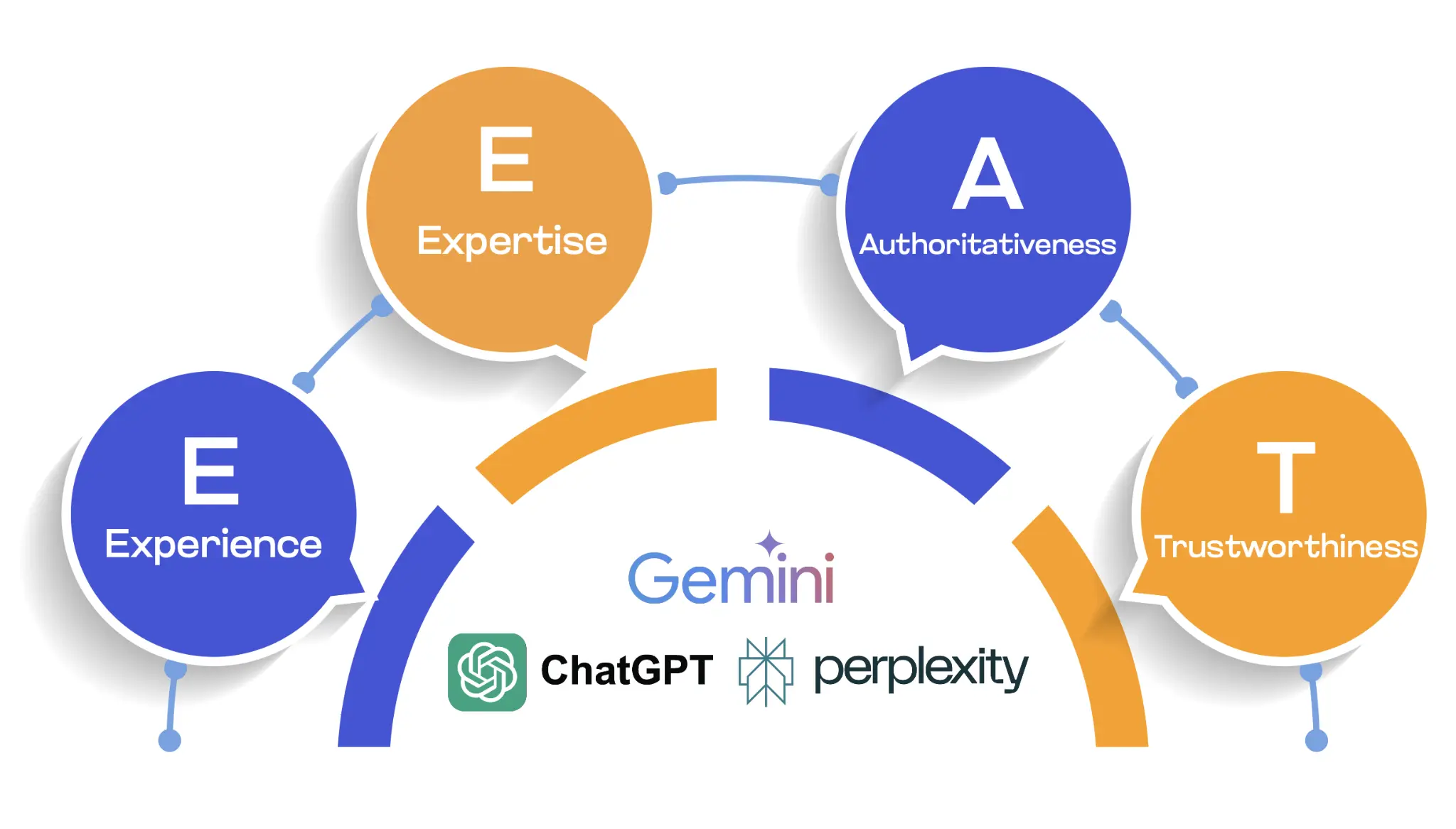
Google’s guidelines on helpful content consider E-E-A-T (Experience, Expertise, Authoritativeness, and Trust) which fashion sites often neglect entirely in favour of product images and copy. Ways to build it in:
- Credit the humans behind your content. Size guides, style advice, and fit notes should carry a real author or stylist byline, not just “Team [Brand].”
- Show real customers, not just campaign shots. User-generated content, customer photos, verified reviews, and fit feedback by body type signal authentic experience with the product in a way professional photography can’t.
- Publish original data or trend reporting, not recycled seasonal advice. “Spring purchases from our clients,” a short internal report, will be more useful to reference and link to compared to common style tips.
- Make policies easy to find and verify: returns, sizing, materials, and shipping, since trust signals extend beyond the content itself to how transparent the site is.
5. Implement Product, Merchant, and Review Schema
Structured data is no longer an option but a requirement. The Shopping Graph by Google makes use of structured data in order to generate shopping results for free. At minimum, add:
- Product schema: price, availability, size/color variants, and aggregate ratings, kept in sync with live inventory
- Merchant/Shopping feed optimization so your catalog is eligible for Google’s free shopping listings, not just paid Shopping ads
- FAQ schema on category and product pages where you’re answering real, common questions (sizing, materials, care)
- Ensure that you have a review schema implemented to display star ratings in search results. Thus, increasing the click-through rate.
Broken schema markup is probably one of the most widespread problems fashion websites face, and it’s also one of the easiest to fix. It deserves a separate audit.
Read More: 7 Important Schema Markups for Ecommerce Websites
6. Optimize for Visual and Video Search
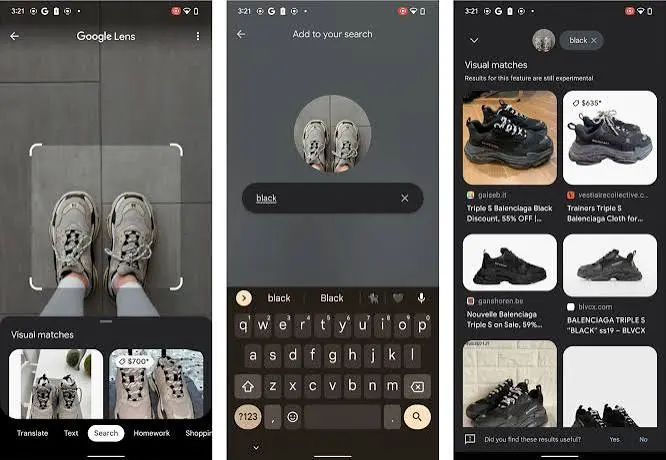
Source: Vogue
The fashion industry relies heavily on visuals, but the SEO best practices usually ignore anything else but alt tags. Do something about it:
- Optimize for Google Lens. Visual search has scaled enormously; Google Lens went from roughly 3 billion monthly visual searches in 2021 to over 20 billion in 2025–2026, and product discovery is one of its biggest use cases. Descriptive filenames, structured product data, and multiple angles per product all improve how well Lens can match your items.
- Index short-form video. Reels, TikTok, and YouTube Shorts content showing products in motion increasingly surfaces in Google’s video search results; tag and describe these consistently with your product naming.
- Use shoppable video. While it does not directly impact the rankings, this factor drives the engagement, dwell time, and backlink creation that supports the SEO efforts indirectly.
- Stick to the basics as well: high-resolution images shot from multiple angles, descriptive file names and alt tags, and correctly sized files to ensure your images do not hurt the Core Web Vitals.
7. Target the Right Keywords: Including Resale and Sustainability
Tailored, narrow keywords outperform generic keywords in terms of conversions. The term “women’s black ankle boots” clearly explains the product the shopper wants to buy; “boots” cannot do that. Keyword targeting should include the following:
- Product keywords: “men’s linen shirt,” “summer maxi dress”
- Trend keywords: “quiet luxury,” “streetwear,” “boho chic”
- Seasonal keywords: “knitwear,” “holiday dresses,” “winter coats”
- Material and style keywords: “organic cotton,” “vegan leather,” “wide-leg denim”
Sustainability and resale keywords: One of the fastest-growing categories of search terms in fashion and one largely ignored by most SEO guides is pre-loved, resale, rentals, sustainable materials, and carbon-neutral shipping, all of which are actually used for searches and could use their own category page rather than being listed in the footer.
8. Write Product Descriptions and Content That Get Cited
Search engines and AI systems both index text to understand and rank pages, so vague copy costs you twice.
Before: “Black dress, size Medium.”
After: “A flowing black midi dress in eco-friendly recycled polyester, with soft ruching detail at the waist. True to size, lined, machine washable. Works for the office or a night out.”
Format content for skimmability and snippet capture:
- List of numbered “how to” style steps (“How to style a slip dress for winter”)
- Comparison table for content types such as fabric or fitting comparisons; the table is extremely popular for featured snippets and AI summaries.
- Short checklist for before-and-after product descriptions throughout your entire product lineup
9. Strengthen Internal Linking and Site Architecture
Internal linking not only distributes authority but also allows Google to know the importance of certain pages on your site. The two most common structures for fashion sites are
- Silo linking (grouping related products under a shared category, e.g., Men > Underwear > Boxers/Trunks/Briefs) and
- Pyramid linking (funneling authority from broad category pages down to specific product pages).
In practice, every category landing page should
- link cleanly to its subcategories,
- every blog post should link to the products it mentions (“Shop our Lily Dress”), and
- every product page should link back to its category
And to genuinely related items, not a generic “you may also like” carousel with no relevance logic behind it.
10. Build Authoritative Backlinks
Backlinks will always be one of the most trusted indicators of ranking as well as AI citations. In the case of fashion:
- Collaborate with fashion bloggers and influencers who are relevant to your niche
- Write guest posts for established fashion and lifestyle websites
- Develop guides, analysis, and data worth citing by other websites
- Run broken-link outreach on fashion sites, offering your relevant page as the replacement
- Pursue partnerships with fashion magazines and online publications for feature coverage
Fix the Technical Foundations
Most fashion brands have a few technical SEO issues they’ve been postponing. In 2026, you can’t afford to.
The foundations:
- Out-of-stock products: Canonicalize or NoIndex; do not allow dead links to eat up your crawling budget
- Pagination: Make sure you have rel=”prev” and rel=”next” on your category pages
- URL structure: They should be concise, descriptive, and secure (HTTPS)
- Breadcrumbs: They do more than help navigation; they send important hierarchy signals to Google
- Mobile-friendly: 72% of consumers shop using mobile devices. All pages must work well on mobile.

Source: Images Retail ME
Final Thoughts
SEO for fashion e-commerce in 2026 is not more difficult than before; it has simply changed. Those brands that are doing well now are those who have adjusted to the changes from search optimization to recommendation optimization, from general tips to credible expertise.
The basics are important: fast loading speed, proper coding, and good content. However, they are not sufficient anymore. You have to become visible to the Google algorithm, image searches, videos, and conscious customers, all to become recommended.
Prepared to make your fashion e-commerce SEO strategy future-proof?
Our specialty at ResultFirst is to help fashion companies cope with their transition from regular searching to searching via AI. Through our SEO Services for fashion ecommerce, we combine technical SEO, GEO, and content strategies to make sure your brand stays visible when customers use Google Search, ChatGPT, and Instagram Reels. Get in touch to have an analysis done for you now!
Sources Referenced:
- https://blog.google/products/ads-commerce/google-lens-ai-overviews-ads-marketers/
- https://metorik.com/blog/mobile-vs-desktop-ecommerce-statistics/
- https://www.businesswire.com/news/home/20260518322756/en/New-Research-Googles-AI-Overviews-Now-Cost-Websites-58-of-Their-Clicks/
- https://web.dev/articles/optimize-lcp/
- https://www.seerinteractive.com/insights/aio-impact-on-google-ctr-september-2025-update/
FAQs
WHAT TO READ NEXT
READY TO BUILD PREDICTABLE ORGANIC GROWTH?
We are the only TOP SEO services agency providing Real Results in a Real Performance model. We help growth hungry companies outperform their competition and achieve 300%+ growth in their digital marketing initiatives.
- San Jose, CA, 95120

- +1-888-512-1890

- sales@resultfirst.com

300K+
KEYWORDS RANKED
546M+
REVENUE GENERATED
18 Years
SOLVING COMPLEX SEO
150+
TEAM MEMBERS